automotivebriefs
Topic

Cars

The object that reorganised the twentieth-century landscape.

388
in automotive
9:54
average
3840 min
in total
468
across the network
Cars across the network →
All briefs388
9:22

Alfa Romeo Giulia Sprint GT

Giorgetto Giugiaro · 1963

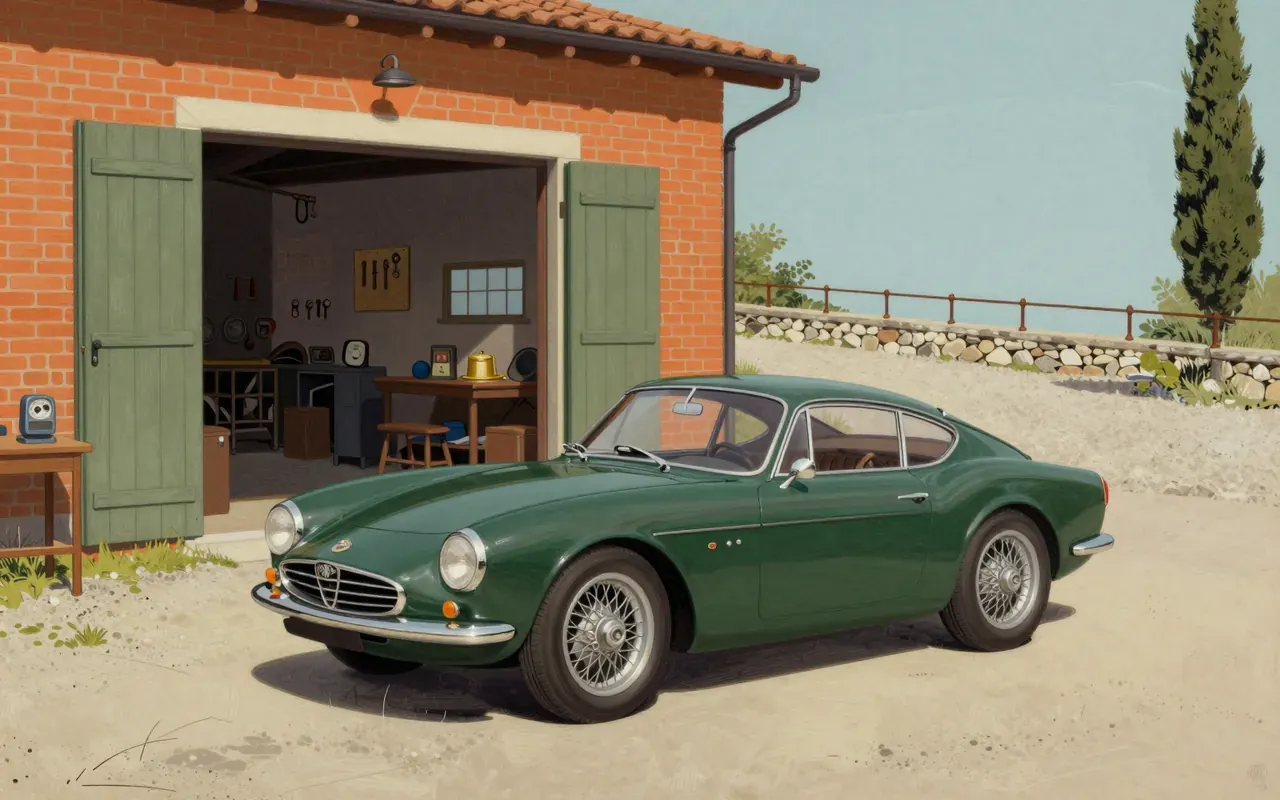
The Giulia Sprint GT was revealed at Alfa Romeo's new Arese plant on 9 September 1963 and built until 1965, when the Sprint GT Veloce replaced it. Giorgetto Giugiaro drew its Bertone body, known as the step front for the raised edge of its bonnet. It paired an all-aluminium 1570 cc twin cam four with a five-speed gearbox and four disc brakes, and 21,902 were built.

10:50

Alfa Romeo TZ2

Zagato · 1964

The TZ2 was shown at the 1964 Turin Auto Show on the Zagato stand. It swapped the TZ's light alloy body for a more streamlined fibreglass one and dropped the weight to 620 kg. It was a racing version only, with an Autodelta-prepared 1,570 cc twin plug engine, and 12 were built. Development of the TZ cars stopped at the end of 1965.

10:13

BMW 1500 Neue Klasse

Wilhelm Hofmeister · 1961

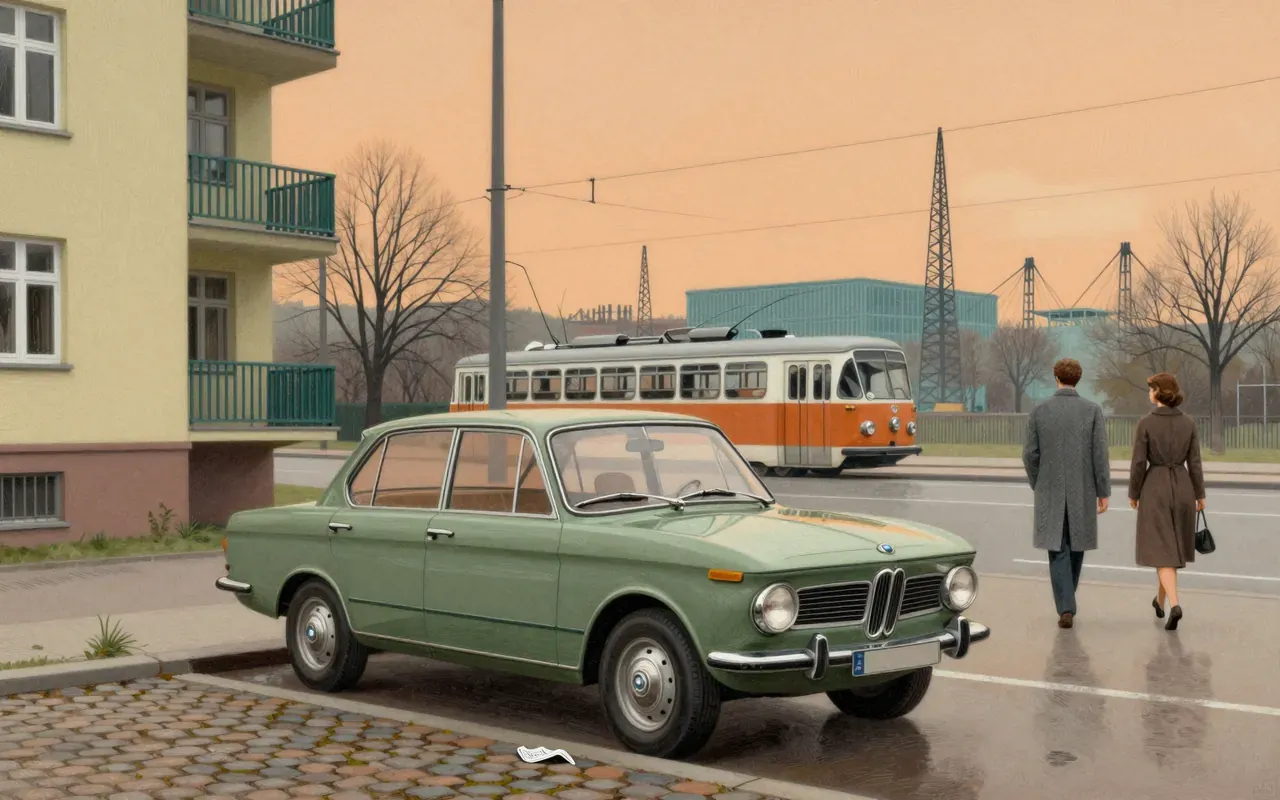
The BMW 1500 was shown at the 1961 Frankfurt Motor Show and built from October 1962 to December 1964. It was a compact four-door executive saloon with the new M10 four-cylinder engine, MacPherson strut front suspension and independent rear suspension. It was the first car of the New Class, the line that arrived as BMW broke even in 1962 after years of losses.

9:36

BMW 2002

Giovanni Michelotti · 1968

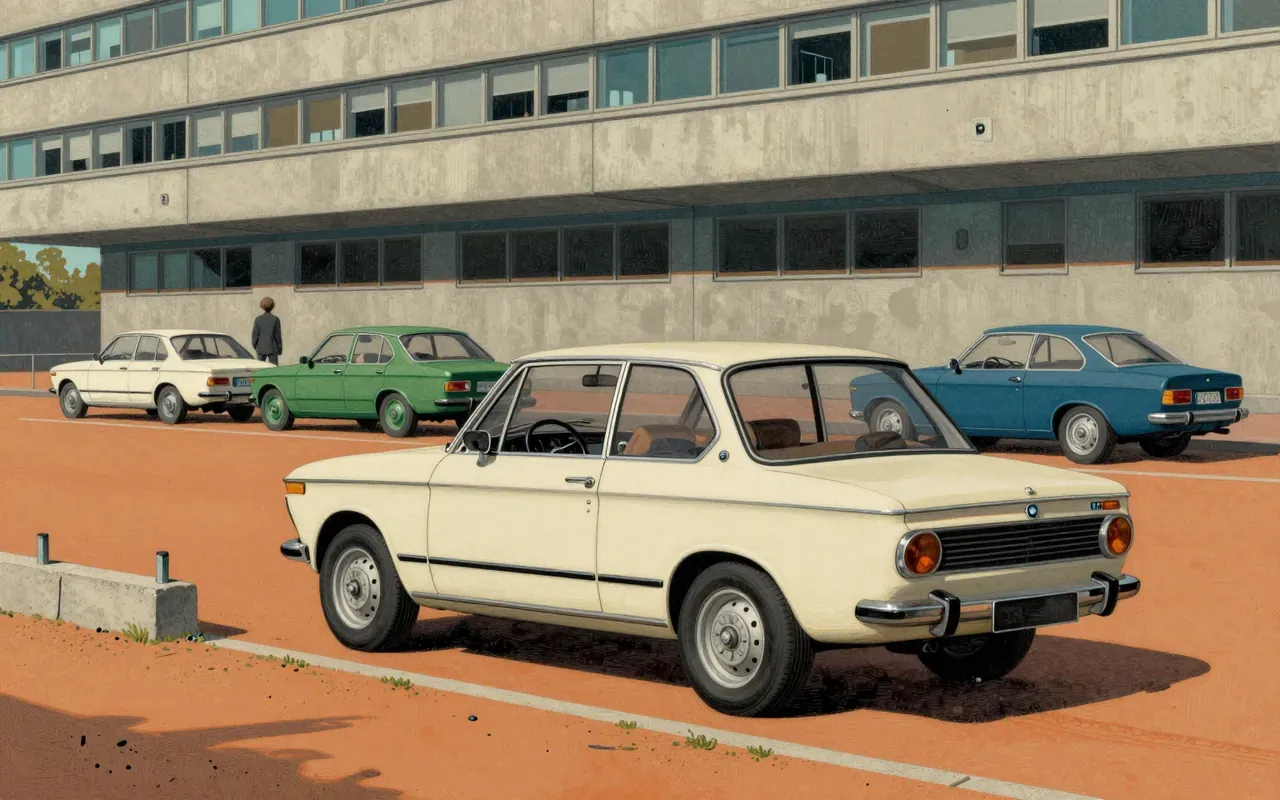
The BMW 2002 went into production in January 1968 as the larger-engined derivative of the 1966 1600-2, itself a shortened New Class saloon. It used a two-litre version of the M10 engine, and the range grew to include the fuel-injected tii, the Touring hatchback, a Baur TopCabriolet and, in 1973, Europe's first turbocharged production car.

9:58

BMW 3.0 CSL

BMW · 1972

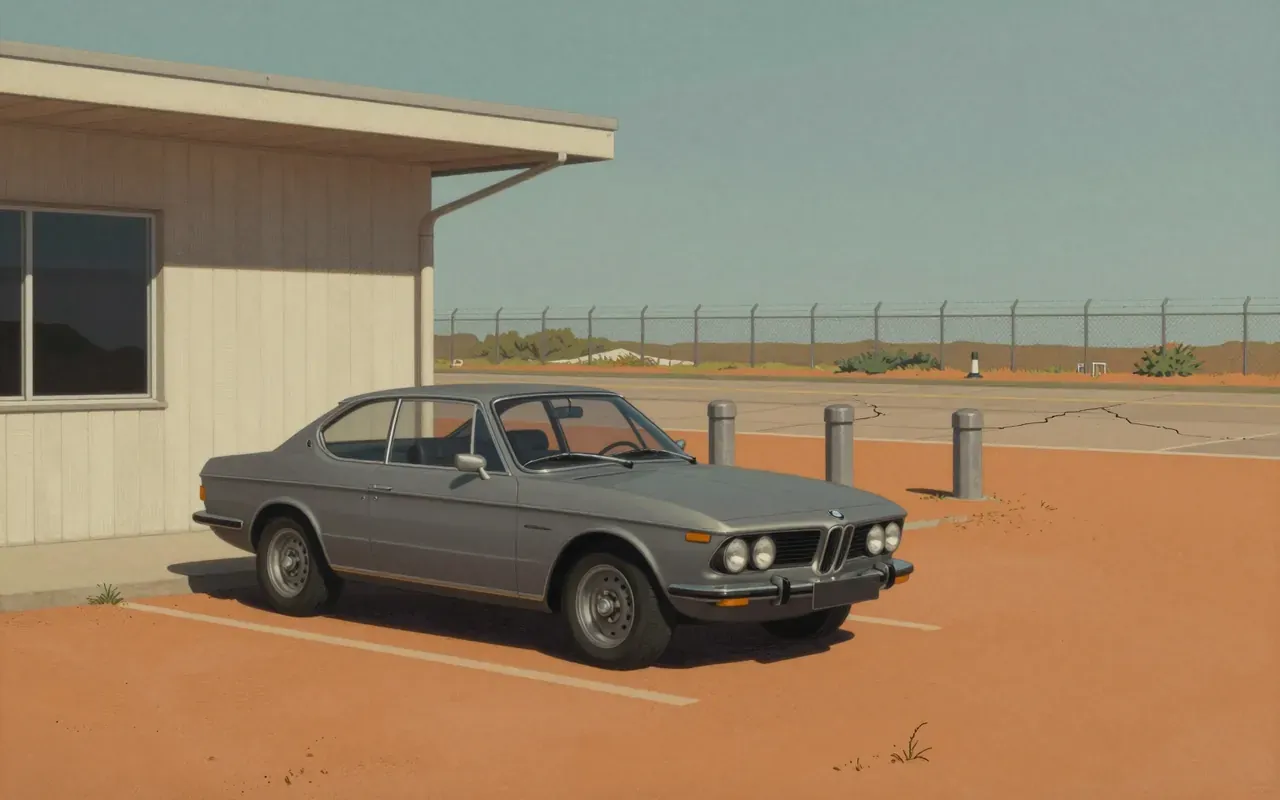
The BMW 3.0 CSL was the homologation special of the E9 coupé range: a lighter six-cylinder car built to make BMW eligible for the European Touring Car Championship. Its winged racing form earned the nickname Batmobile.

9:30

Bugatti Type 57SC Atlantic

Jean Bugatti · 1936

The Atlantic was one of the best-known bodies on the Bugatti Type 57S and 57SC. It was based on Jean Bugatti's 1935 Aérolithe concept, and the dorsal seam that began as a riveting method became its signature.

10:00

Chevrolet Corvette C6

Tom Peters · 2005

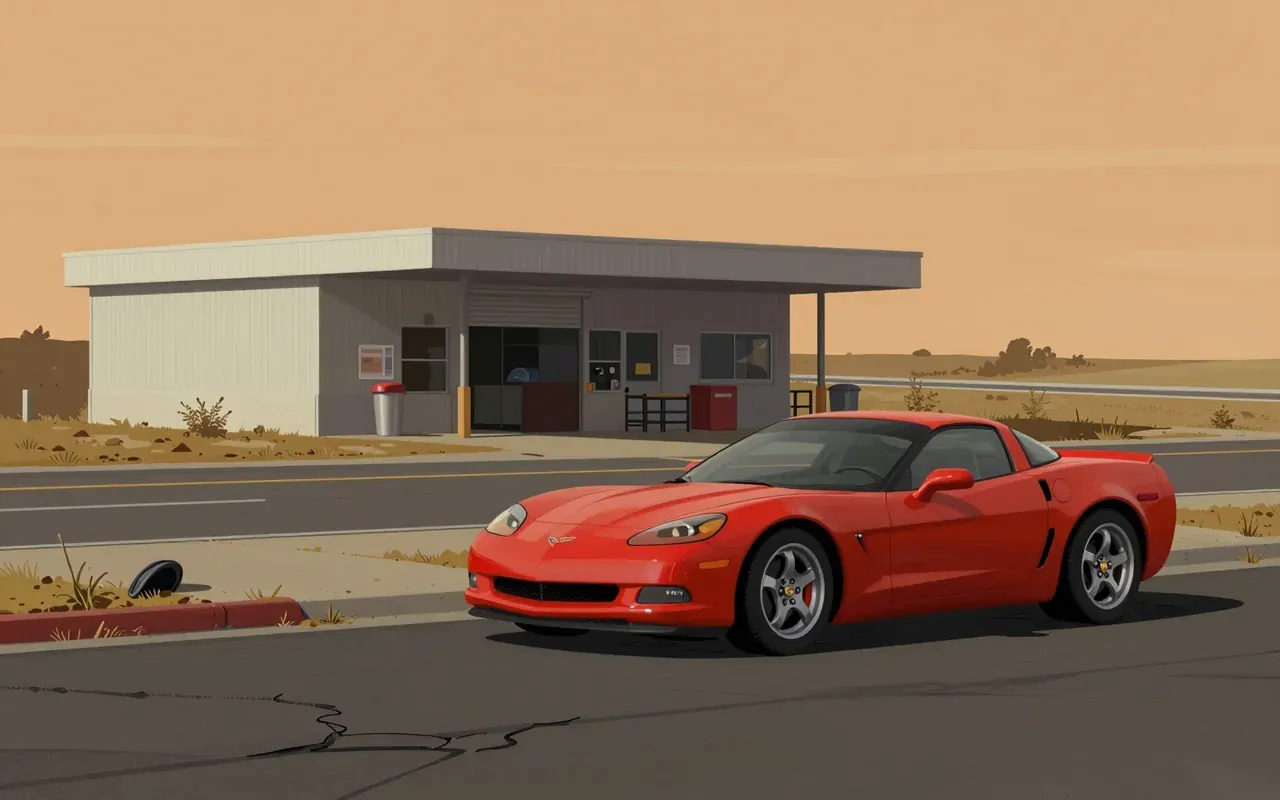
The C6 is the sixth generation of the Chevrolet Corvette, built from 2005 to 2013. It was the first Corvette since the 1962 model with exposed headlamps, and it brought a larger passenger compartment and a 6.0 L LS2 V8 rated at 400 hp, followed from 2008 by the 6.2 L LS3. Z06, ZR1, Grand Sport and 427 Convertible versions were also built.

10:08

Chevrolet Corvette C8

Tom Peters · 2020

The C8 is the eighth generation of the Chevrolet Corvette and the first with a rear mid-engine layout. The Stingray uses a 6.2 L LT2 V8 rated at 490 hp with an 8-speed dual-clutch gearbox and no manual option. Production began on 3 February 2020, and Z06, E-Ray and ZR1 versions followed.

10:40

Facel Vega HK500

Jean Daninos · 1959

The HK500 was introduced for 1959 as a renamed and upgraded FVS from the French maker Facel. It started with the 5.8 L Chrysler V8 and soon moved to a 6.3 L unit rated at 360 hp, good for 237 km/h. The Facel Vega II replaced it in 1962 after 489 were built.

11:52

Ferrari 250 GT SWB

Pininfarina · 1959

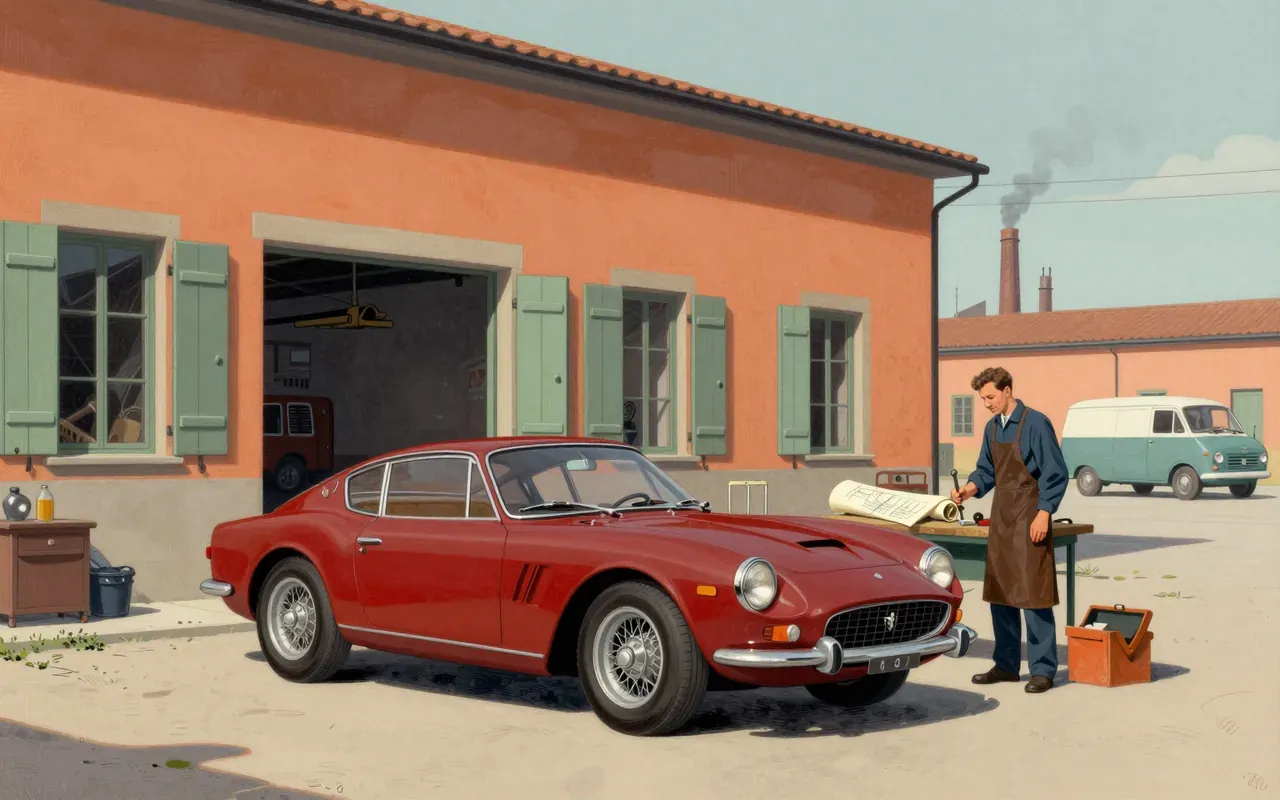
The 250 GT Berlinetta SWB is the 1959 Ferrari that shortened the 250 GT wheelbase from 2,600 mm to 2,400 mm for better handling. 176 were built, in road and racing trims, with 240 to 280 PS from the 3.0 L Colombo V12.

10:08

Ferrari 330 P4

Ferrari · 1967

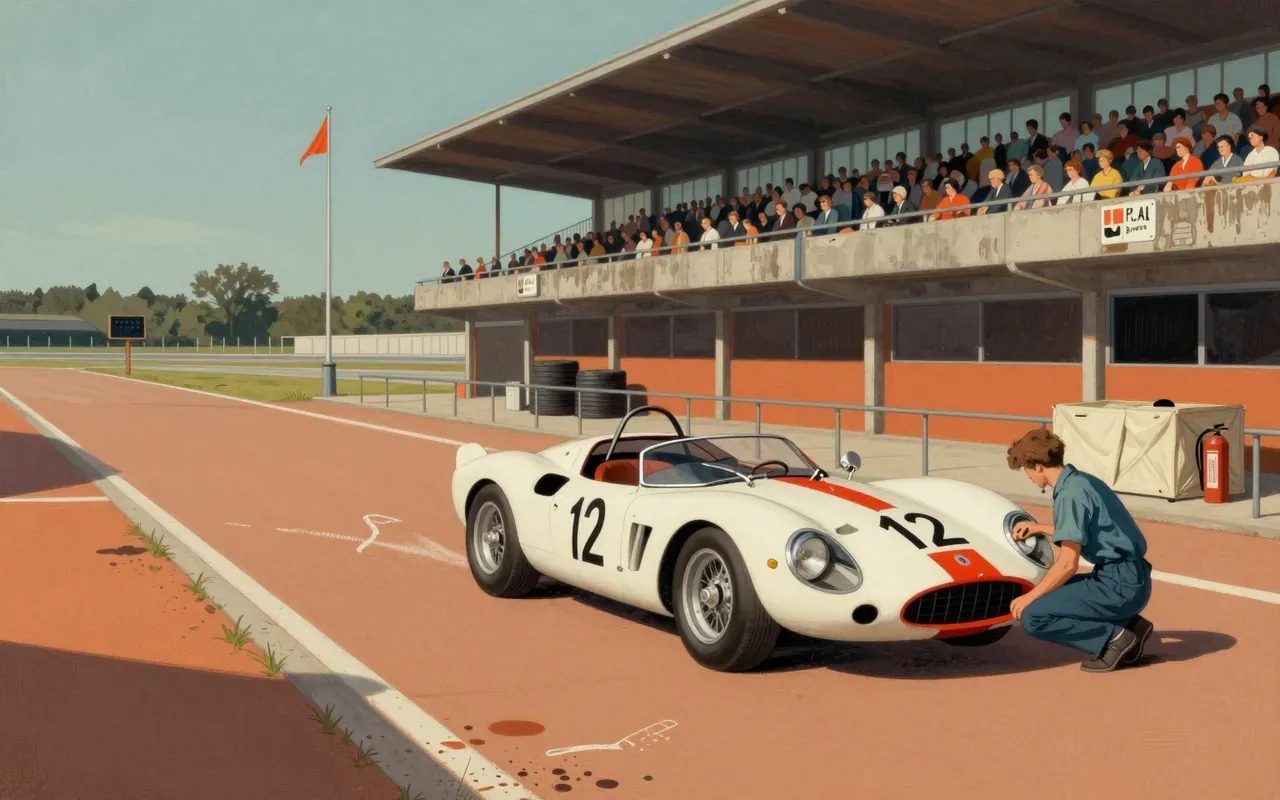
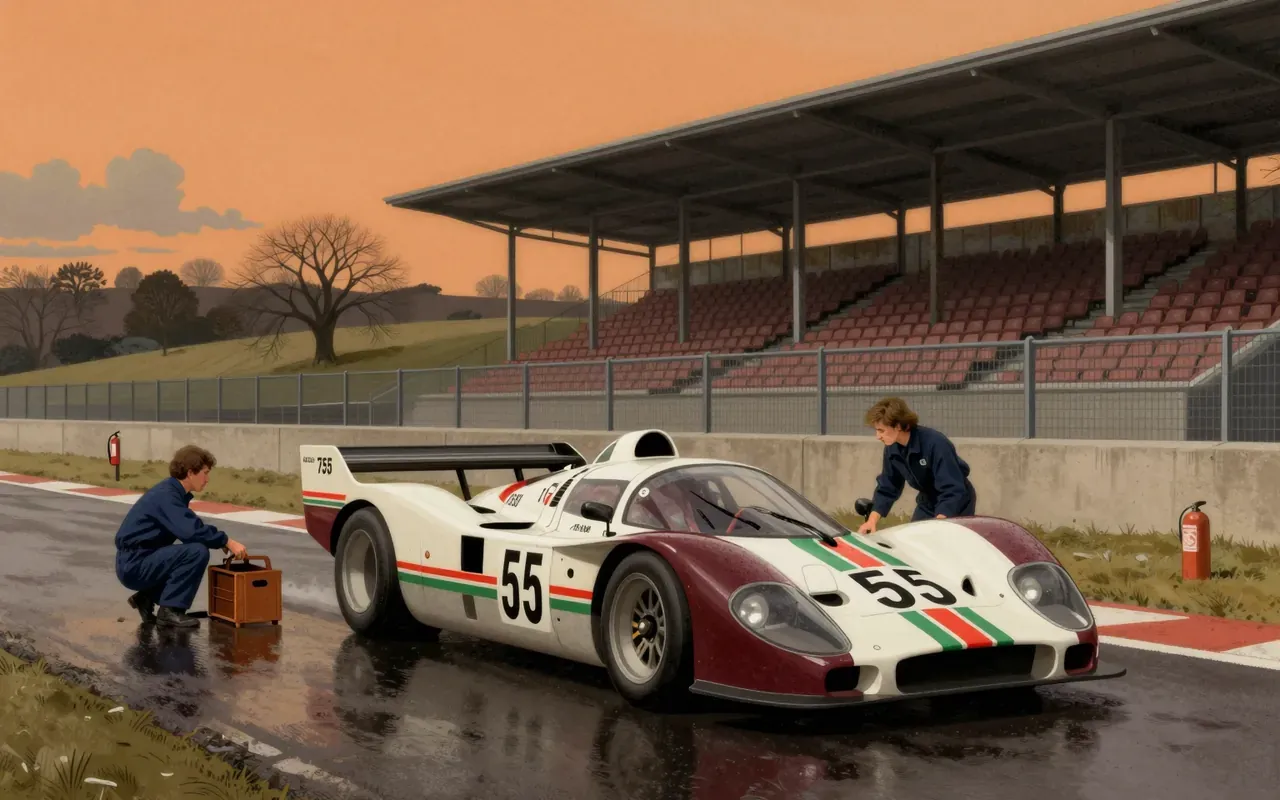
The 330 P4 was a mid-engined V12 endurance car that replaced the 330 P3 in 1967. It kept the P3's fuel injection, added a three-valve cylinder head and produced up to 450 hp. Only four P4-engined cars were made, and it won Monza in 1967.

9:35

Ford Escort RS1600

Ford · 1970

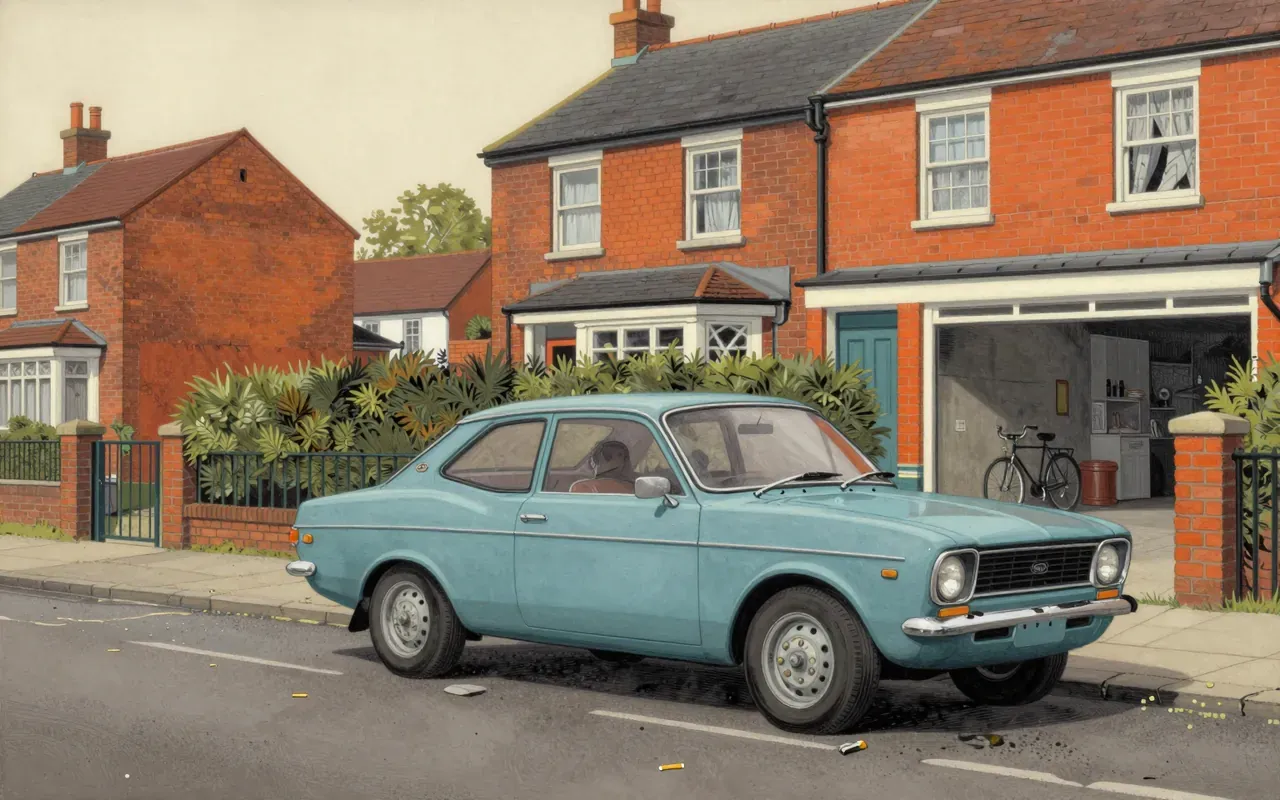
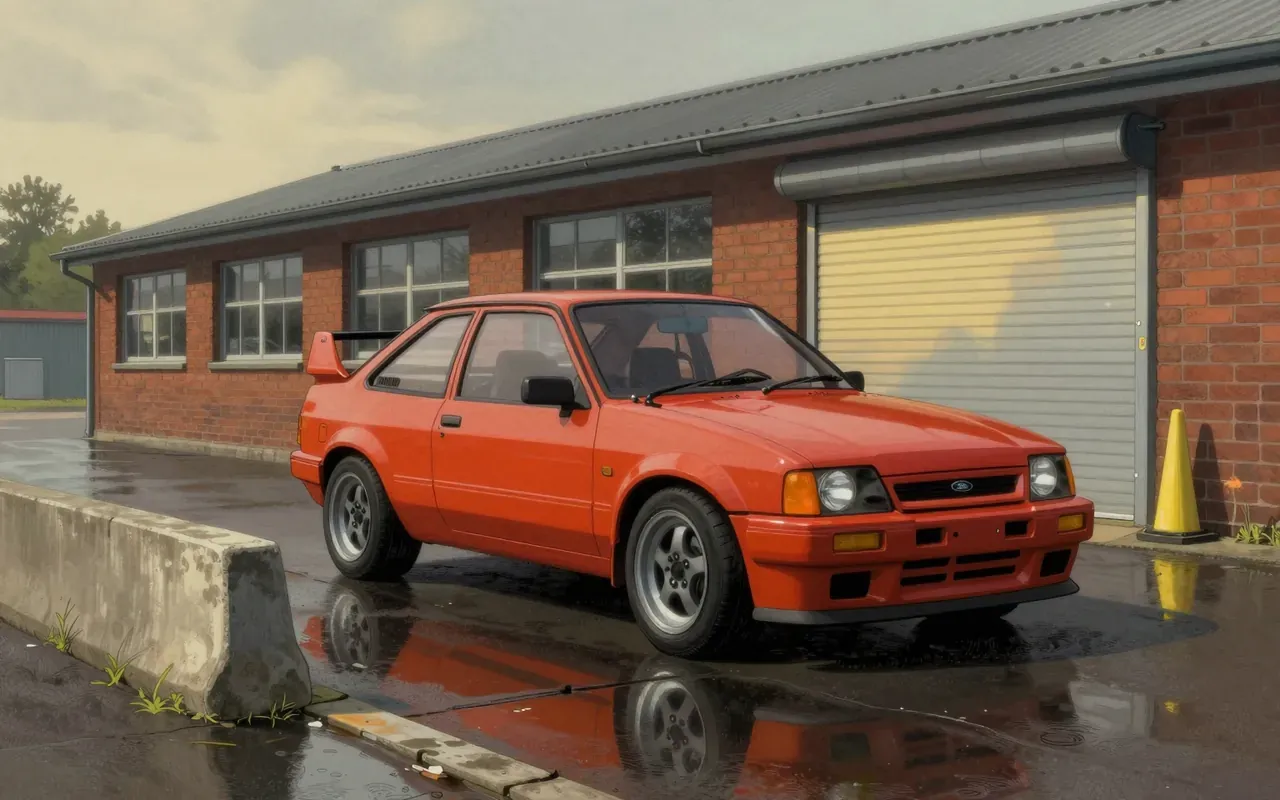
The Escort RS1600 was a performance version of the Mark I Escort, with RS standing for Rallye Sport. It used a 1,601 cc Cosworth BDA engine with a 16-valve head, a strengthened bodyshell and sports suspension, and was built at Ford's Aveley plant in South Essex.

10:32

Honda Integra Type R DC2

Honda · 1995

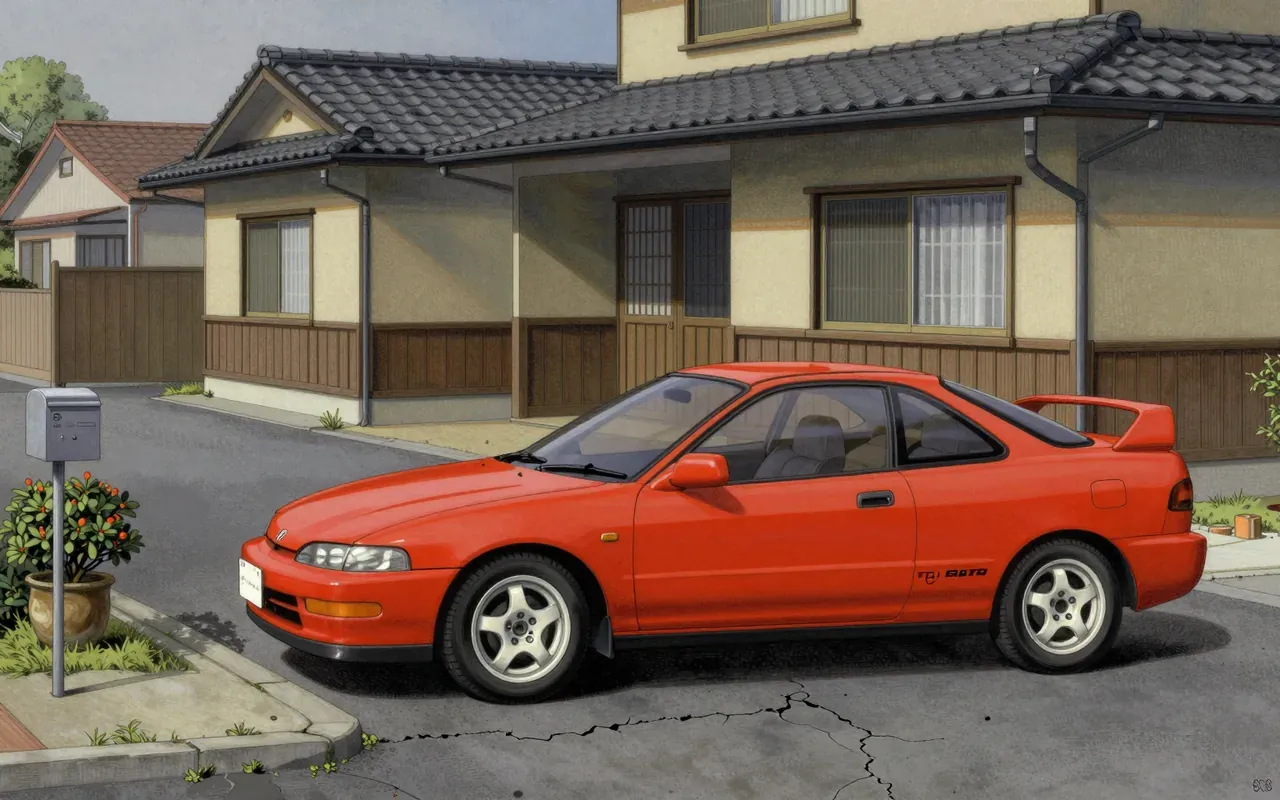
Honda introduced the first Integra Type R to the Japanese market in 1995 and built the DC2 through 2001. It took the B18C VTEC engine, a close-ratio five-speed gearbox and a limited-slip differential, then cut equipment and added chassis stiffening. Journalists rated it among the best front-wheel-drive cars made.

9:00

Jeep CJ

Willys engineering · 1945

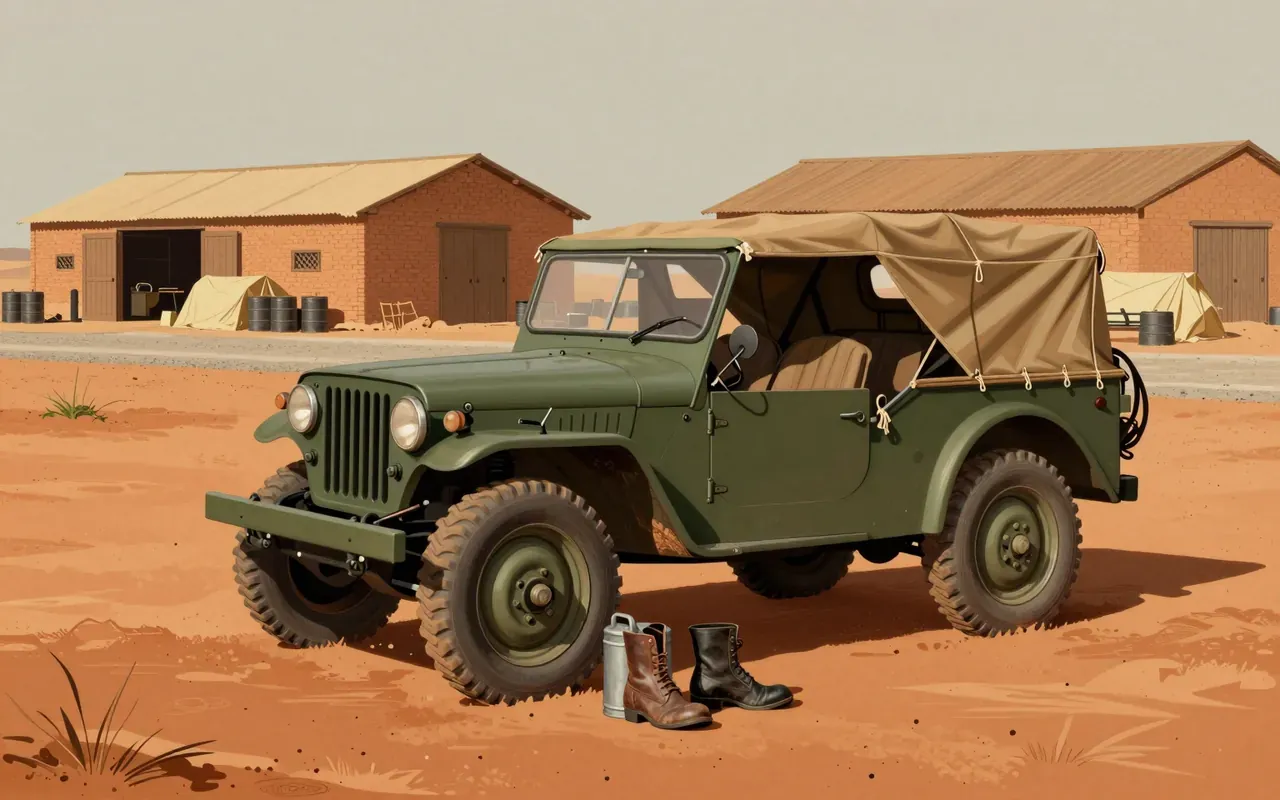
The Jeep CJ began as a 1944 Willys-Overland prototype, a civilian version of the wartime Jeep, and the 1945 Universal Jeep became the first mass-produced civilian four-wheel-drive car. Through the CJ-2A, CJ-3B, CJ-5 and CJ-7 it kept a separate body and frame and live axles, and with few exceptions part-time four-wheel drive. More than 1.5 million were built before the Wrangler replaced it.

9:07

Mazda RX-7 SA22C

Matasaburo Maeda · 1978

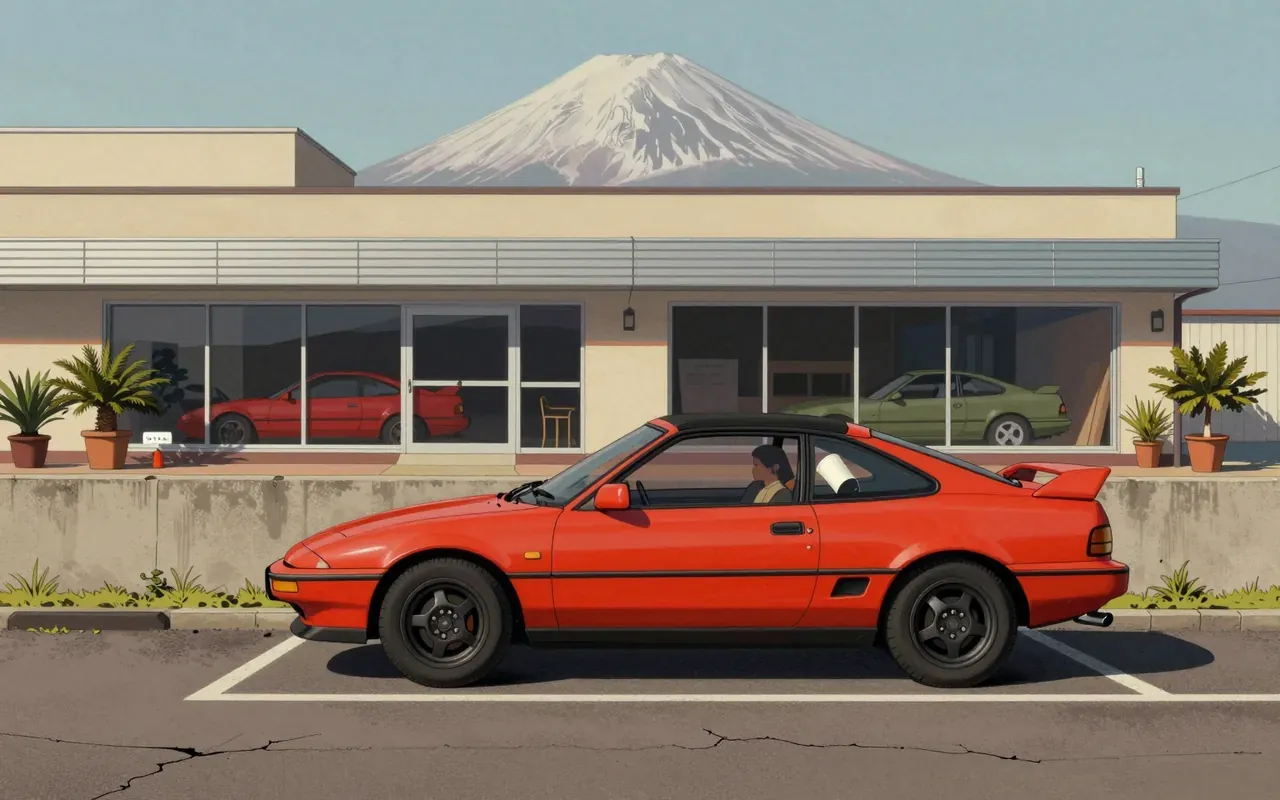
The SA22C is the first-generation Mazda RX-7, a two-seat hatchback coupé with a Wankel rotary engine set behind the front axle and rear-wheel drive. Matasaburo Maeda led its design. Three series ran from 1978 to 1985, and 471,018 cars were built, most of them sold in the United States.

9:57

Nissan 300ZX Z32

Toshio Yamashita · 1989

The Z32 is the second-generation Nissan 300ZX, sold in Japan as the Fairlady Z from 1989 to 2000 and in the US from 1990 to 1996. Isao Sono and Toshio Yamashita designed it, with a 3.0 L V6 offered naturally aspirated or with twin turbochargers, and Nissan drove it up-market, faster, more advanced and dearer than the Z31 it replaced. Car and Driver named it to its Ten Best list seven years running.

9:59

Nissan Silvia S13

Nissan Design · 1988

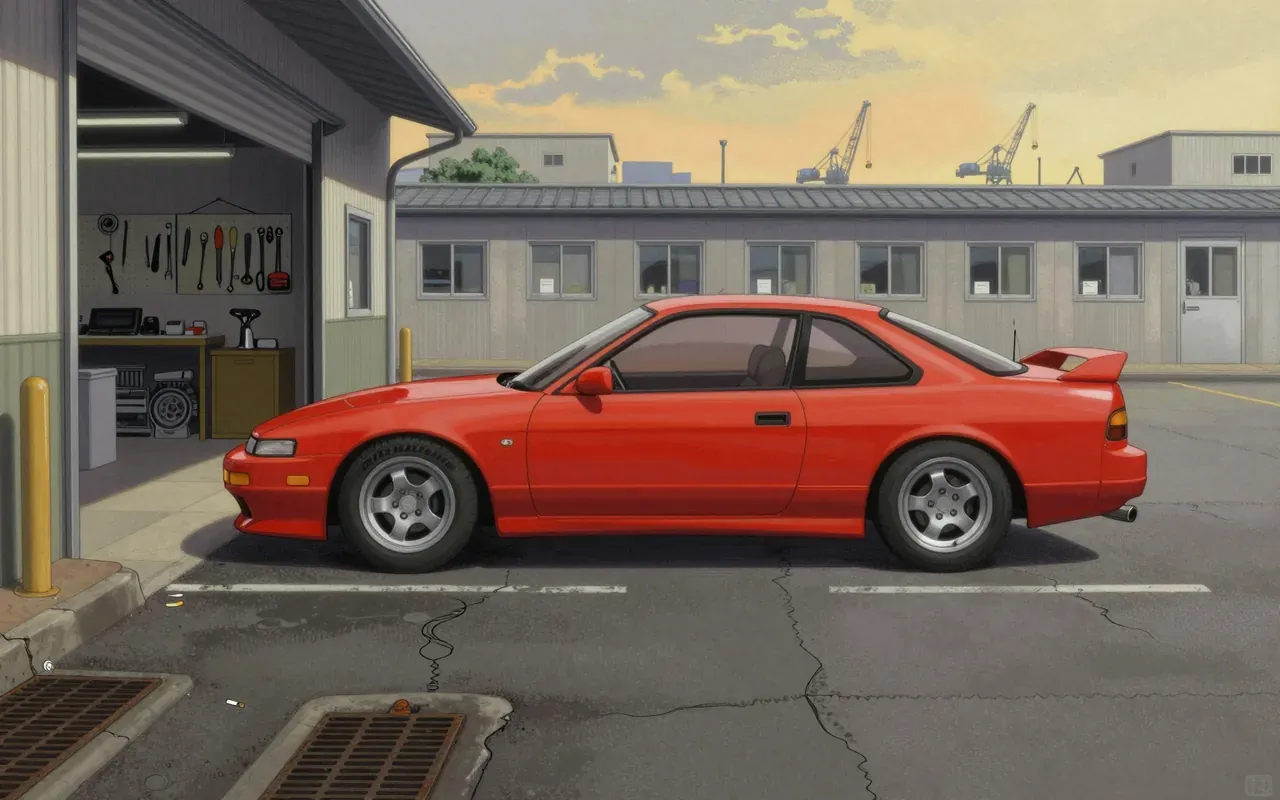
The S13 Silvia went on sale in Japan in May 1988 and won the Car of the Year Japan award in its first year. It paired a multi-link rear suspension with the HICAS four-wheel steering system, moved from the CA18 turbo four to the SR20 in 1991, and was built as a coupé until 1993. Its hatchback sister, the 180SX, carried the platform abroad as the 200SX and 240SX.

8:29

Nissan Skyline GT-R KPGC10

Shinichiro Sakurai · 1970

The KPGC10 is the two-door hardtop coupé version of the first Skyline GT-R, added in October 1970 to the four-door PGC10 that launched in 1969. It carried the same 2.0 L S20 four-valve inline-six, sat on a wheelbase 70 mm shorter, and was built in 1,197 units until 1972. Together with the PGC10 it won 49 consecutive Japanese touring car races.

10:43

Nissan Skyline R30

Nissan · 1981

The R30 Skyline launched in August 1981 on the Laurel platform as a coupé, sedan, Liftback and wagon. Its most famous version was the DR30 RS, powered by the FJ20 four-valve twin-cam four, turbocharged from 1983 and given the Tekkamen front end that year. The RS is credited with rejuvenating the Skyline brand and paved the way for the return of the GT-R badge.

9:20

Pagani Zonda C12

Horacio Pagani · 1999

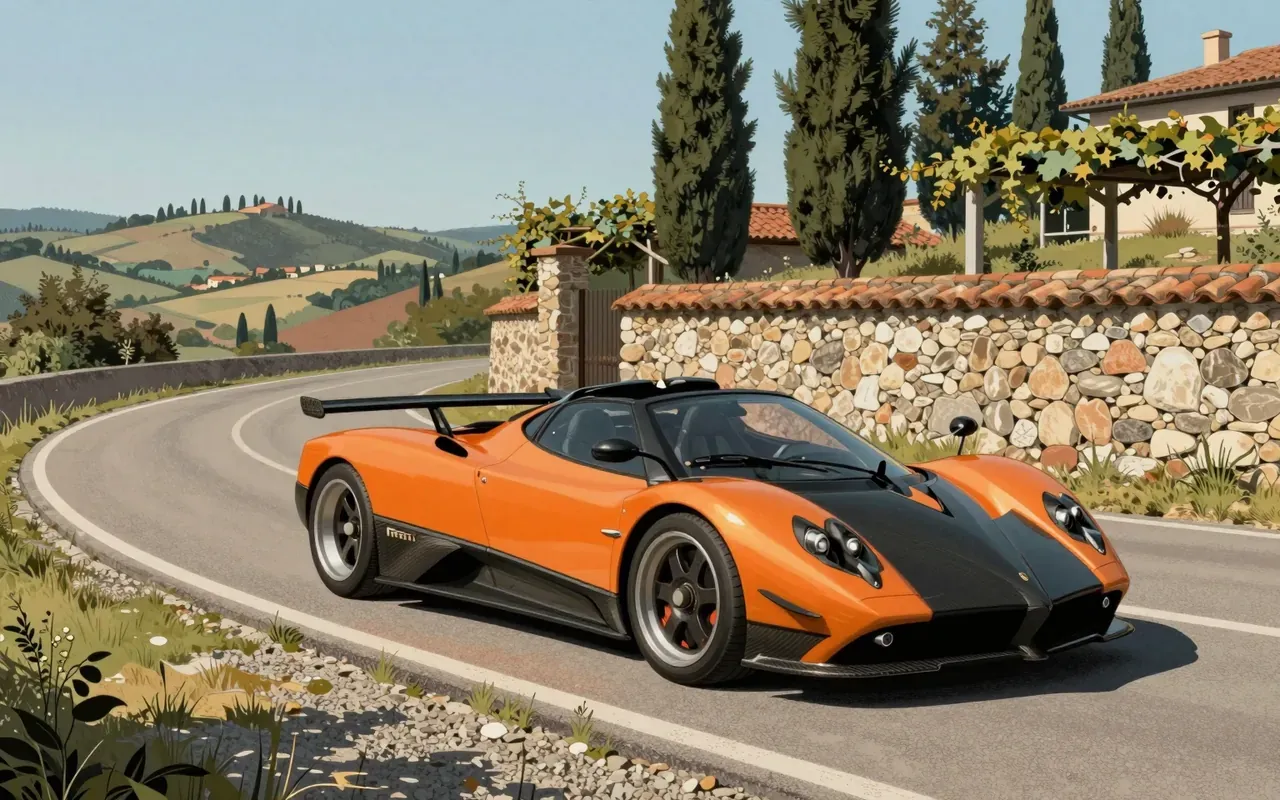
The Zonda C12 was the first car from Pagani, shown at the 1999 Geneva Motor Show. It put a 6.0 L Mercedes-Benz M120 V12 behind the driver in a mainly carbon-fibre car with a five-speed manual gearbox. Only five cars were built with the 6.0 L engine before the 7.0 L C12 S arrived in 2002.

10:06

Renault 8 Gordini

Philippe Charbonneaux · 1964

The Renault 8 Gordini, model R1134, arrived in 1964 as the tuned version of Renault's rear-engine saloon, with a 1108 cc engine rated at 90 PS, a four-speed close-ratio gearbox and a blue livery with two white stripes. A 1967 facelift brought a 1255 cc engine and 100 PS.

10:12

Subaru Impreza 555

Subaru · 1993

The Impreza 555 is the Prodrive-developed Group A rally car that Subaru's World Rally Team debuted at Rally Finland in 1993. Driven by Colin McRae and Carlos Sainz in 1995, it won the team its first manufacturers' title and gave McRae the drivers' championship; the Impreza went on to win the 1996 and 1997 manufacturers' titles too.

9:48

Subaru Impreza WRX STI

Subaru · 1994

The Subaru Impreza WRX STI is the high-performance version of the turbocharged, all-wheel drive Impreza WRX, developed by Subaru Tecnica International, the company's motorsport arm. The first STi went on sale in 1994 as a homologation model for the World Rally Championship and was refined through six Versions, a lightweight Type RA and the widebody 22B. From 2015 the WRX and WRX STI left the Impreza name behind.

12:37

Toyota Celica GT-Four ST185

Toyota · 1989

The ST185 is the second generation of the Celica GT-Four, built from September 1989 to September 1993 as the road-going base for Toyota's WRC cars. It carries a turbocharged 3S-GTE engine and a full-time 4WD system, and the homologation GT-Four RC followed in 1991. In rallying it won the Drivers' Championship in 1992, and the Manufacturers' and Drivers' titles in 1993 and 1994.

9:12

Toyota MR2 AW11

Seiichi Yamauchi · 1984

The first-generation Toyota MR2 arrived in 1984 as Japan's first rear-mid-engine, rear-wheel-drive production car. It grew out of a 1976 project for an enjoyable, economical car, and handling help from Lotus engineer Roger Becker shaped how it drives. The AW11 is the 1.6-litre 4A-GE version, later joined by a supercharged model.

9:15

Volkswagen Scirocco Mk1

Giorgetto Giugiaro · 1974

The first-generation Volkswagen Scirocco, internally the Typ 53, replaced the Karmann Ghia. Giorgetto Giugiaro styled it on the Golf's platform with almost every part re-engineered. It went on sale in 1974, six months before the Golf, and its GTi entered production before the Golf GTI was unveiled.

9:09

Volvo 240

Jan Wilsgaard · 1974

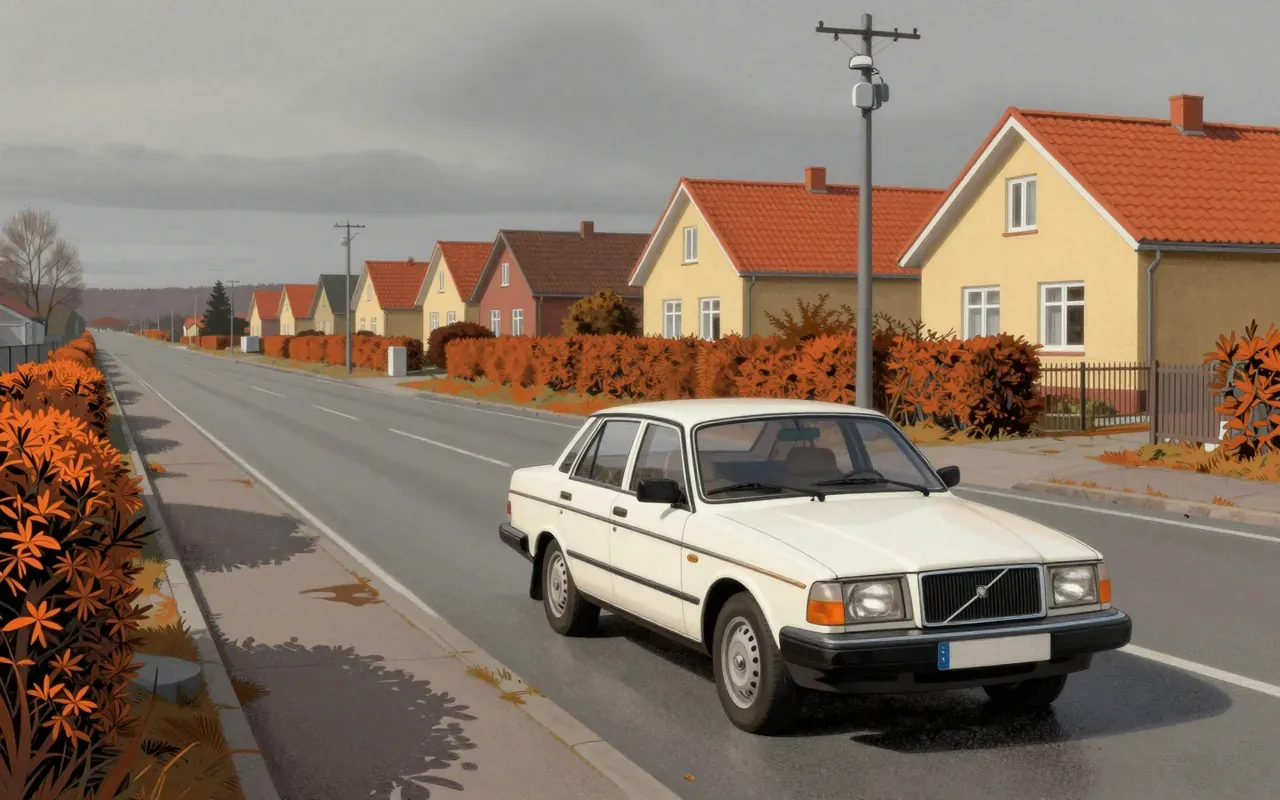
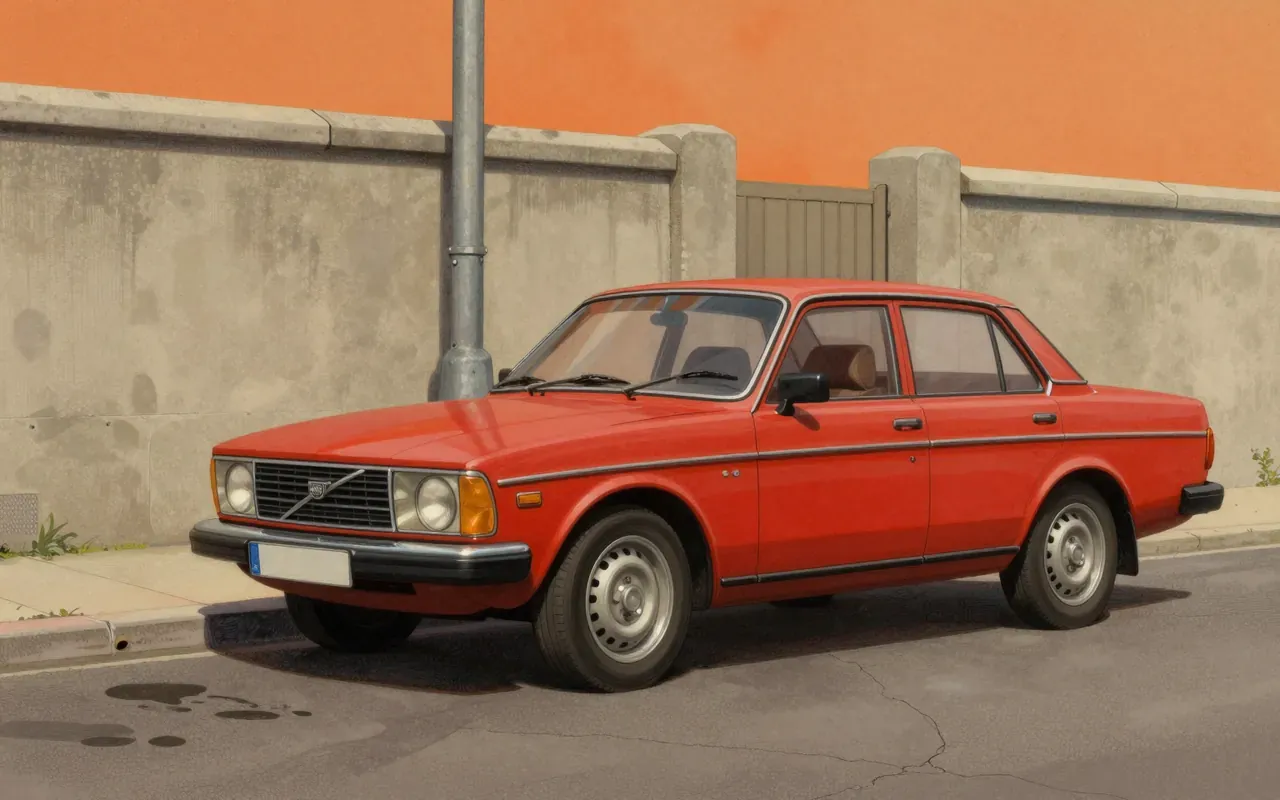
The Volvo 240 was one of the two models of the 200 Series, introduced in autumn 1974 as a two- or four-door saloon and an estate. Designed by Jan Wilsgaard, it kept the 140's body shell behind the cowl and added a crumple-zone nose, MacPherson strut front suspension and rack-and-pinion steering. It outlived its 260 sister and stayed in production until 14 May 1993.

9:23

Volvo 850 T-5R

Jan Wilsgaard · 1995

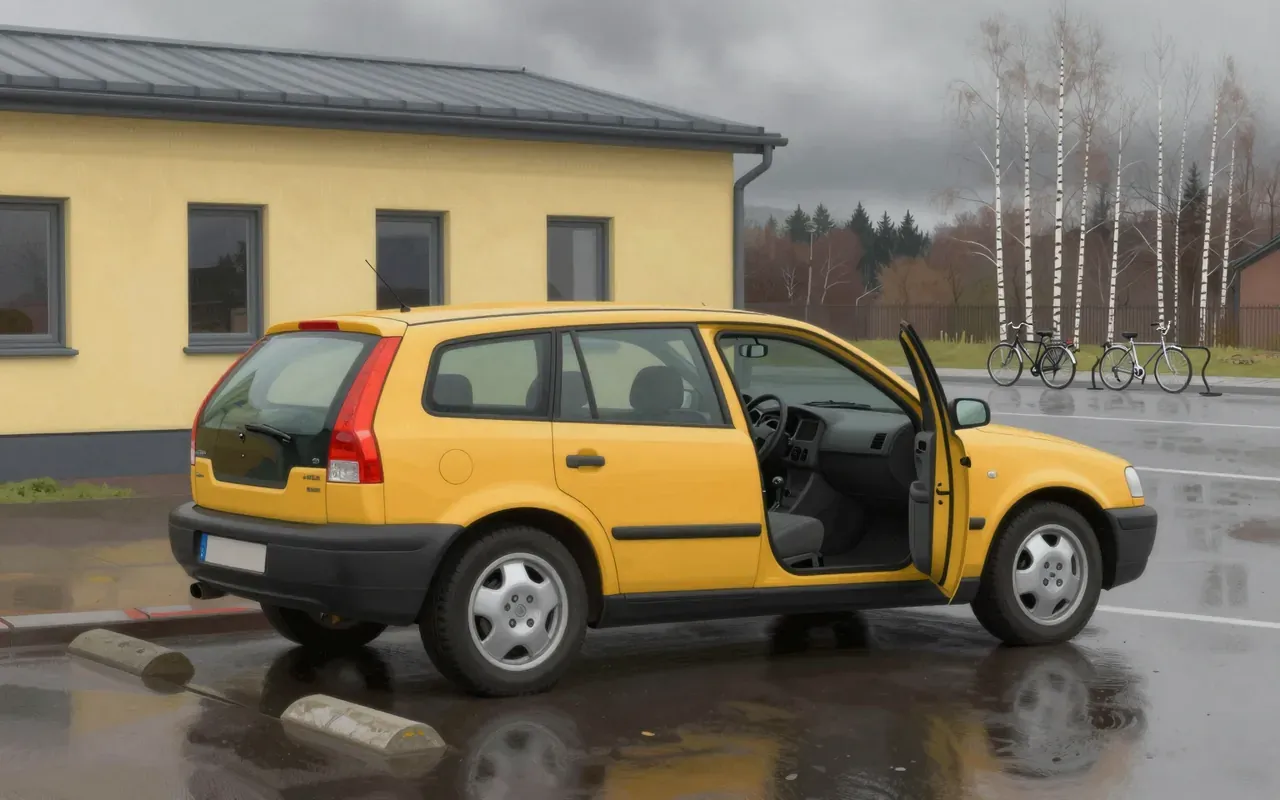
The 850 T-5R was a special edition of the Volvo 850 Turbo, built for 1995 and again in 1996 after it sold well. It raised the turbo's output to 243 hp, was tuned with help from Porsche, and was sold in yellow, black or green. Volvo built 6,964 of them, and the 850 R replaced it in 1996.

10:00

Peugeot 205 T16 Evo 2

Peugeot Talbot Sport · 1985

The Peugeot 205 Turbo 16 is the Group B rally car Peugeot Talbot Sport built on the two-door 205, with a rear-mid turbocharged engine and four-wheel drive. The Evolution 2 version arrived for the 1986 season and used a rear spaceframe made entirely of tubes. Factory cars under Jean Todt won the 1985 and 1986 world rally titles.

9:06

Nissan Pulsar GTI-R

Nissan · 1990

The Nissan Pulsar GTI-R was a homologation special, a road-going version of the N14 hatchback sold as a Pulsar in Japan and a Sunny in Europe. It paired a turbocharged 2.0-litre SR20DET with ATTESA all-wheel drive. The works rally programme never won a Group A round, but the car did well in production-class rallying.

9:50

Auto Union

Ferdinand Porsche · 1932

The Auto Union racing cars (Types A–D) were state-funded, rear mid-engine Grand Prix machines built from 1934 to 1939. Ferdinand Porsche designed the foundational P-Wagen Project, which Auto Union acquired in 1932. Their central fuel tank, forward driver position, and supercharged engines delivering up to 550 hp defined pre-war racing engineering — and established solutions still used in modern open-wheel cars.

9:13

Fiat 130

Paolo Martin · 1971

The Fiat 130 Coupé is a 1971 Pininfarina design by Paolo Martin — a production car, not a concept — built on the Fiat 130 saloon platform. It uses a front-mounted V6 engine driving the rear wheels. Its influence lies in its resolved, copied-but-never-equaled balance of sharp angles and soft curves.

11:26

Lancia Fulvia

Piero Castagnero · 1965

The Lancia Fulvia Coupé is a 1965 front-wheel-drive compact sports saloon designed by Piero Castagnero. It was built alongside the Antonio Fessia–designed Berlina, sharing no components with the outgoing Appia. It launched as part of a three-variant line — Berlina, Coupé, and Zagato Sport — all named after the Via Fulvia and debuted at the 1963 Geneva Motor Show.

11:09

Peugeot 406

Pininfarina · 1997

The Peugeot 406 Coupé is a front-wheel-drive large family car designed and built by Pininfarina. It shares its platform with the saloon and estate. Davide Arcangeli led its design. 107,633 were made. It succeeded in UK fleet sales, won 1997 What Car? Car of the Year, and set a world fuel-efficiency record in 2002.

9:12

Shelby Mustang GT350

Ford · 1965

The 1965 Shelby Mustang GT350 is a race-focused fastback built by Shelby American. It uses a modified 289 cu in V8. It wins SCCA B-Production for three years. It abandons comfort entirely. After 1967, Shelby’s involvement ends and Ford reduces later models to styling upgrades.

10:20

Talbot-Lago T150-C SS

Figoni & Falaschi · 1936

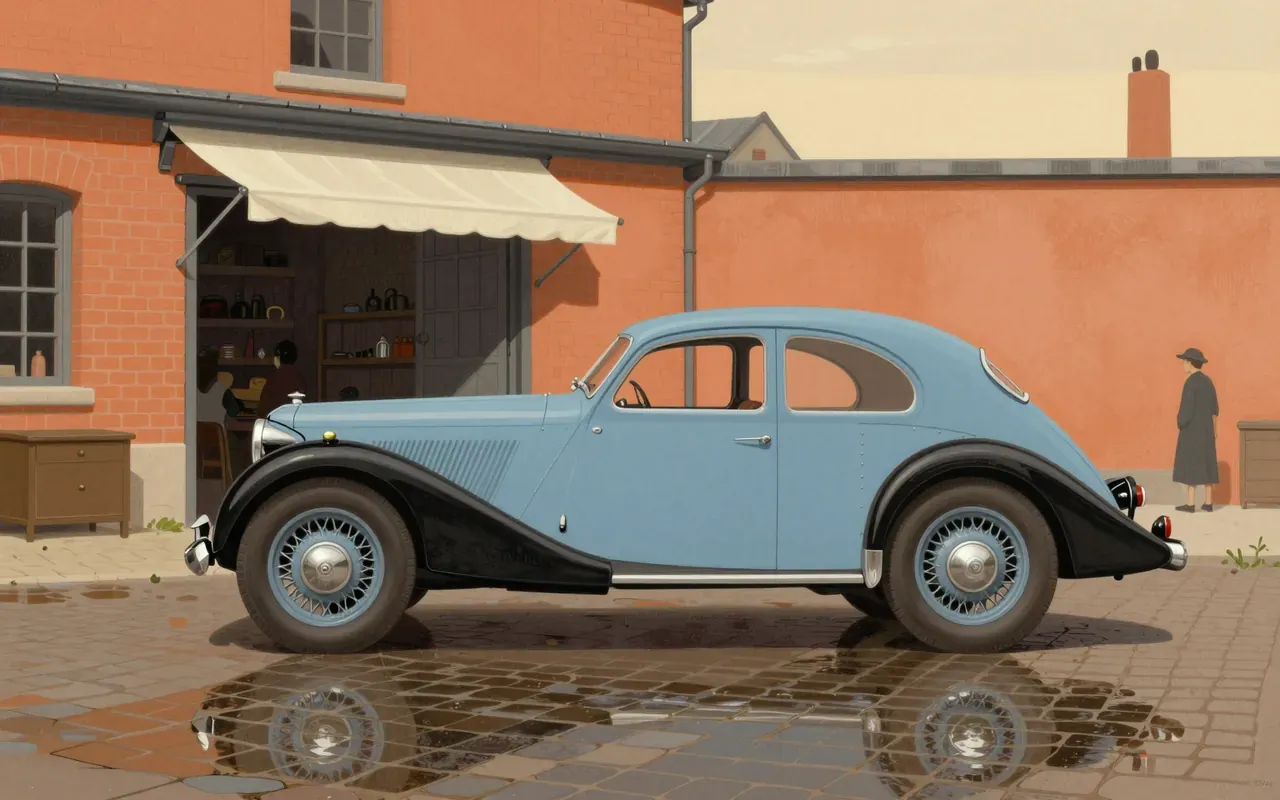
The Talbot-Lago T150C SS Teardrop Coupe is a 1936 Figoni & Falaschi-bodied car commissioned by Antonio Lago to revive the Talbot marque. Its teardrop form was among the most aerodynamic of its era—and the most frequently specified for the Lago-SS. It established no new chassis or engine architecture, but it did establish a visual language for speed that resonated at concours and auction alike.

13:50

Alfa Romeo Tonale

Alfa Romeo Centro Stile · 2022

The Alfa Romeo Tonale is a compact luxury crossover SUV launched in February 2022. It is Alfa Romeo’s first hybrid vehicle and first new model in six years. It sits between the Junior and Stelvio in the SUV lineup. It uses a modified SCCS platform shared with the Jeep Compass. It offers mild-hybrid and plug-in hybrid variants, the latter with a 15.5 kWh battery and 48 km electric range. It was delayed from 2021 to 2022 due to semiconductor shortages and drivetrain requirements. A rebadged version, the Dodge Hornet, launched in North America in August 2022.

10:20

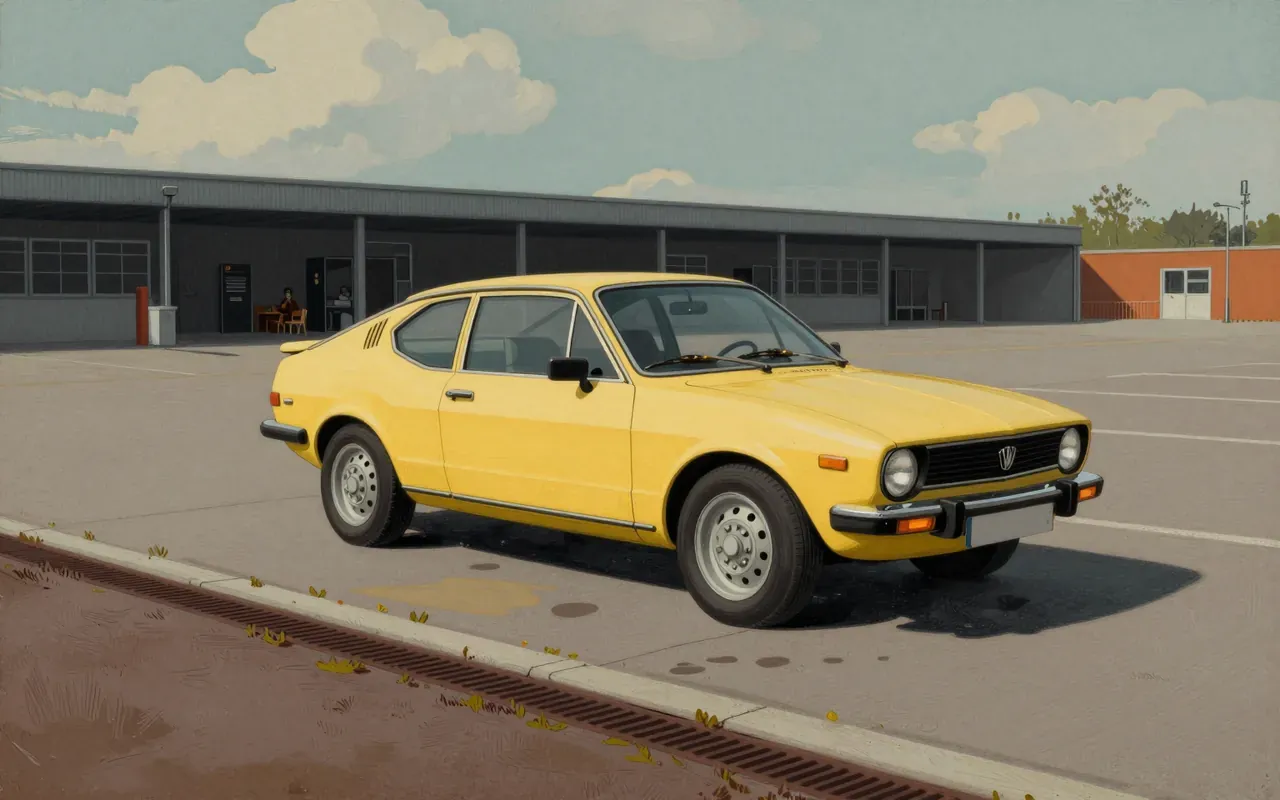
Alfa Romeo Alfasud

Giorgetto Giugiaro · 1971

The Alfasud was Alfa Romeo’s first front-wheel-drive, boxer-engined, mass-market car — conceived in Turin, built in Pomigliano d’Arco, styled by Giugiaro, engineered by Hruska. It prioritised low centre of gravity and aerodynamic efficiency over corrosion resistance. Its legacy is mechanical clarity, not durability.

8:12

Alpine A110 (2017)

Antony Villain · 2017

The Alpine A110 (2017) is a rear mid-engine, rear-wheel-drive sports car built on an all-aluminium chassis and powered by a Nissan-derived 1.8-litre turbocharged inline-four engine. It debuted at the 2017 Geneva Motor Show. Production ended in June 2026.

8:32

Alpine A310

Michel Beligond · 1971

The Alpine A310 is a French sports car, launched in 1971 as Jean Rédélé’s final Alpine model. It debuted at the 1971 Geneva Motor Show. It used a tubular steel backbone chassis and a one-piece fiberglass body. Its engine was mounted longitudinally in the rear and drove the rear wheels via a five-speed manual gearbox. The driving position was low and sporty, with footwells angled toward the car’s centre.

9:14

Renault Alpine GTA/A610

Heuliez · 1984

The Renault Alpine GTA is a rear-engined sports coupé launched in 1985 by Alpine under full Renault ownership. It replaced the A310, sharing its layout and V6 PRV engine. Marketed as the Alpine V6 GT or V6 Turbo in Europe—and as the Renault GTA in Britain—it featured aerodynamic design (Cx 0.28–0.30), lightweight composite body panels, and a steel backbone chassis. Production spanned 1984–1995, totalling ~7,300 units across both GTA and A610 models.

10:20

Aston Martin V8 Vantage (1977)

William Towns · 1977

The Aston Martin V8 Vantage (1977) is a British grand tourer and high-performance variant of the Aston Martin V8. It was launched as 'Britain's First Supercar', citing 170 mph top speed and 0–60 mph in 5.3 seconds. Its engine shares architecture with the Lagonda but adds high-performance camshafts, increased compression, larger inlet valves, and bigger Weber carburettors. Early models produced 380 bhp. William Towns did not design it — he left Aston Martin in 1977.

9:18

Audi e-tron GT

Marc Lichte · 2021

The Audi e-tron GT is a battery electric executive car produced by Audi since late 2020. It is Audi’s first full-sized electric sedan. It is based on the J1 platform shared with the Porsche Taycan. The production car extensively recreates the 2018 concept design. It is a 4-door sedan with a sporty coupé-style silhouette. Its driveline uses an 84 kWh net battery and two electric motors for all-wheel drive. It accelerates from 0–100 km/h in 4.1 seconds and has a top speed of 245 km/h.

9:38

Audi R8

Walter de Silva · 2006

The Audi R8 is a mid-engine, two-seater sports car with quattro all-wheel drive. Introduced by Audi AG in 2006, it was built exclusively by Audi Sport GmbH at Neckarsulm, Germany, using an aluminium monocoque based on the Audi Space Frame. At launch, it was the first production car with full-LED headlamps.

9:46

Pininfarina Battista

Pininfarina · 2022

The Pininfarina Battista is not a revival—it is a declaration. It replaces combustion with four wheel-mounted motors. It replaces tradition with a carbon monocoque built for mass reduction. It replaces volume with 150 units. It is the first Pininfarina-branded car. And it arrives not as a concept, but as a production machine built in Cambiano.

11:27

Bentley Continental GT

Dirk van Braeckel · 2003

The 2003 Bentley Continental GT is a grand touring car. It launched after Volkswagen AG acquired Bentley in 1998. It was the first Bentley built using mass production techniques. It uses a 6.0 litre twin-turbocharged W12 engine and Torsen-based permanent four-wheel drive. The coupé has no B-pillar and fixed front quarter glass. Dirk van Braeckel designed it to outsell the Arnage. It sold 5,983 units in 2004 — 62% above forecast.

9:40

BMW 8 Series (E31)

Klaus Kapitza · 1989

The BMW 8 Series (E31) is a two-door grand tourer built by BMW from 1990 to 1999. It uses a front-engine, rear-wheel-drive layout. It is powered by either a V8 or V12 engine. Development began in July 1981 and concluded in 1986. It debuted at the Frankfurt Motor Show in early September 1989. BMW used CAD tools to design its all-new body. Its drag coefficient is Cd=0.29. It replaced the E24 6 Series but was not a direct successor. Total production was 30,609 units.

9:00

Bugatti Chiron

Achim Anscheidt · 2016

The Bugatti Chiron is a mid-engine, two-seater sports car designed and developed in Germany. It was manufactured in Molsheim, France. It succeeded the Veyron. It debuted at the 2016 Geneva Motor Show. Its design was previewed with the Vision Gran Turismo concept. It is named after Louis Chiron. It uses a heavily updated 8.0 L quad-turbocharged W16 engine producing 1,103 kW and 1,600 N⋅m. It has a carbon fibre body, independent suspension, and Haldex all-wheel drive.

11:04

Cadillac Seville

Bill Mitchell team · 1975

The Cadillac Seville redefined American luxury scale and electronics. It was not a sports sedan. It was not a technology showcase for its own sake. It was a calibrated response: smaller, smarter, and feature-dense — built to hold ground against Europe, not chase it.

10:45

Cadillac Sixteen

Brian Smith · 2005

The Cadillac Sixteen is a 2003 concept car. It has a proprietary 13.6 L V16 engine. It uses a four-speed automatic transmission driving the rear wheels. It references the 1930s Cadillac V-16. It weighs about 5,005 lb. It influenced later models including the Celestiq.

8:52

Chevrolet Bel Air

Harley Earl team · 1955

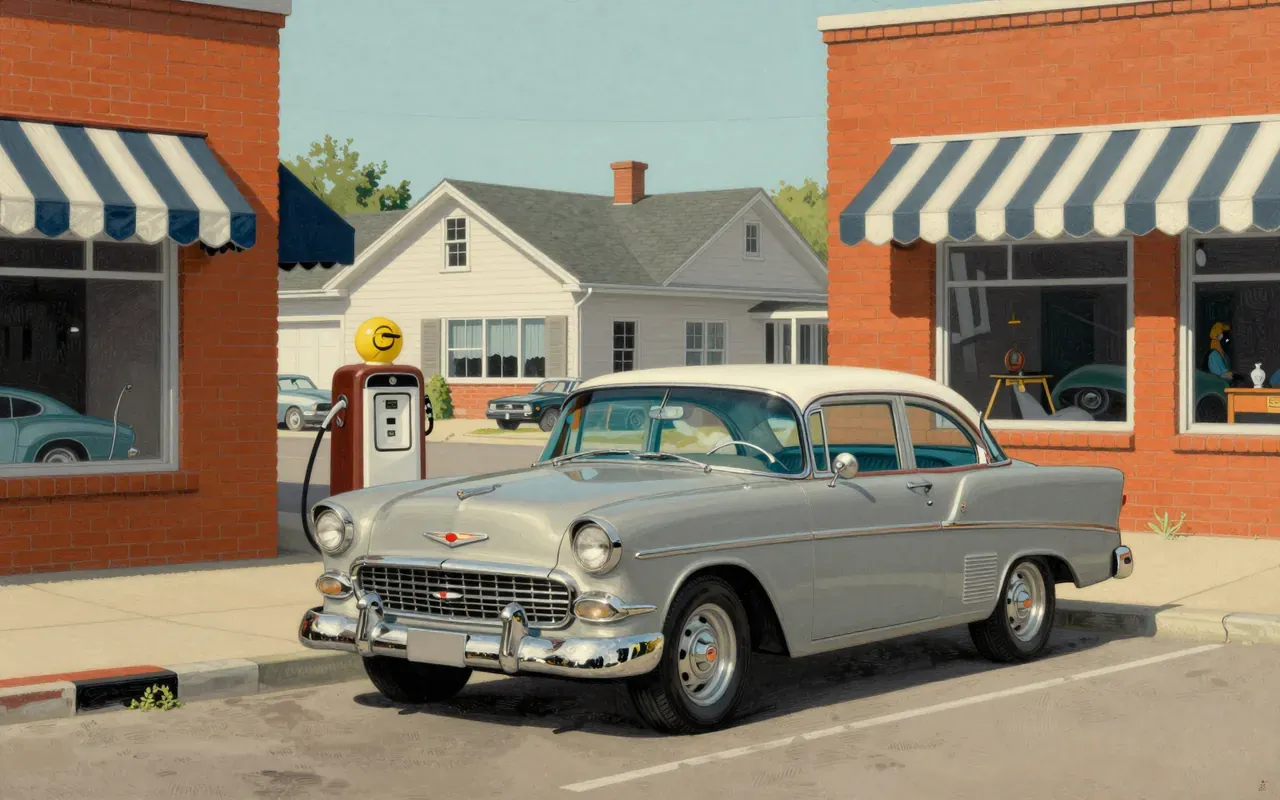
The 1955 Chevrolet Bel Air is a full-size car. It began as a two-door hardtop designation in 1950. It is named after the Bel Air neighbourhood in Los Angeles. From 1953, it became a premium trim level across body styles. By 1975, it had become a budget fleet sedan in the US. Canadian production continued through 1981. First-year production was 76,662 units.

10:24

Chevrolet Camaro (first generation)

Henry Haga · 1967

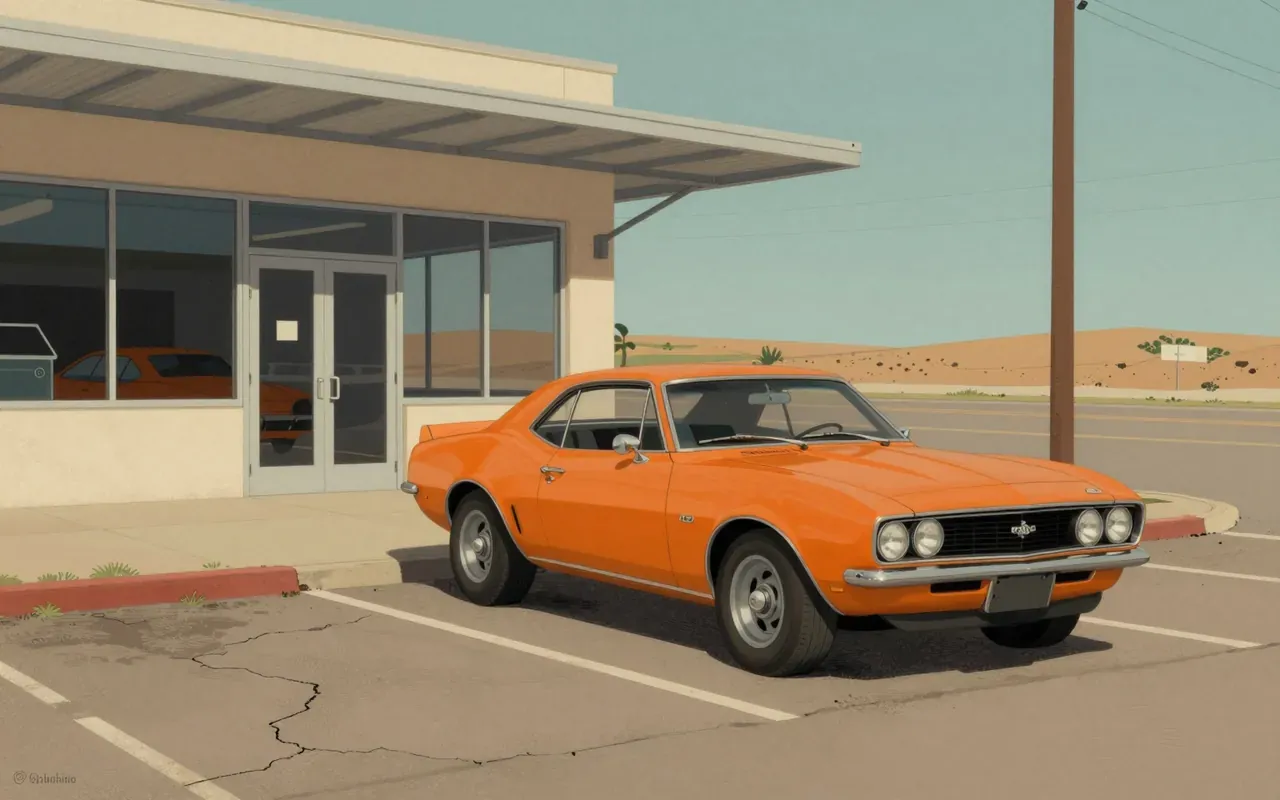
The first-generation Chevrolet Camaro is a 1967–1969 American pony car built on a new rear-wheel-drive GM F-body platform. It shares that platform with the Pontiac Firebird. Its standard engine is a 230 cu in straight-6 producing 140 hp and 220 lb⋅ft torque, paired to a 3-speed manual. Most units were assembled in Norwood, Ohio and Van Nuys, California — with local assembly also in the Philippines, Belgium, Switzerland, Venezuela, and Peru.

9:11

Chevrolet Corvette (C4)

Jerry Palmer · 1984

The C4 redefined the Corvette as a structurally coherent, driver-focused machine—not through power, but through chassis discipline. Its legacy rests on endurance records, not lap times. Its sole 1983 survivor is a museum artifact, not a driver’s car. It is the first Corvette that feels engineered, not assembled.

10:28

Chevrolet Corvette (C5)

John Cafaro · 1997

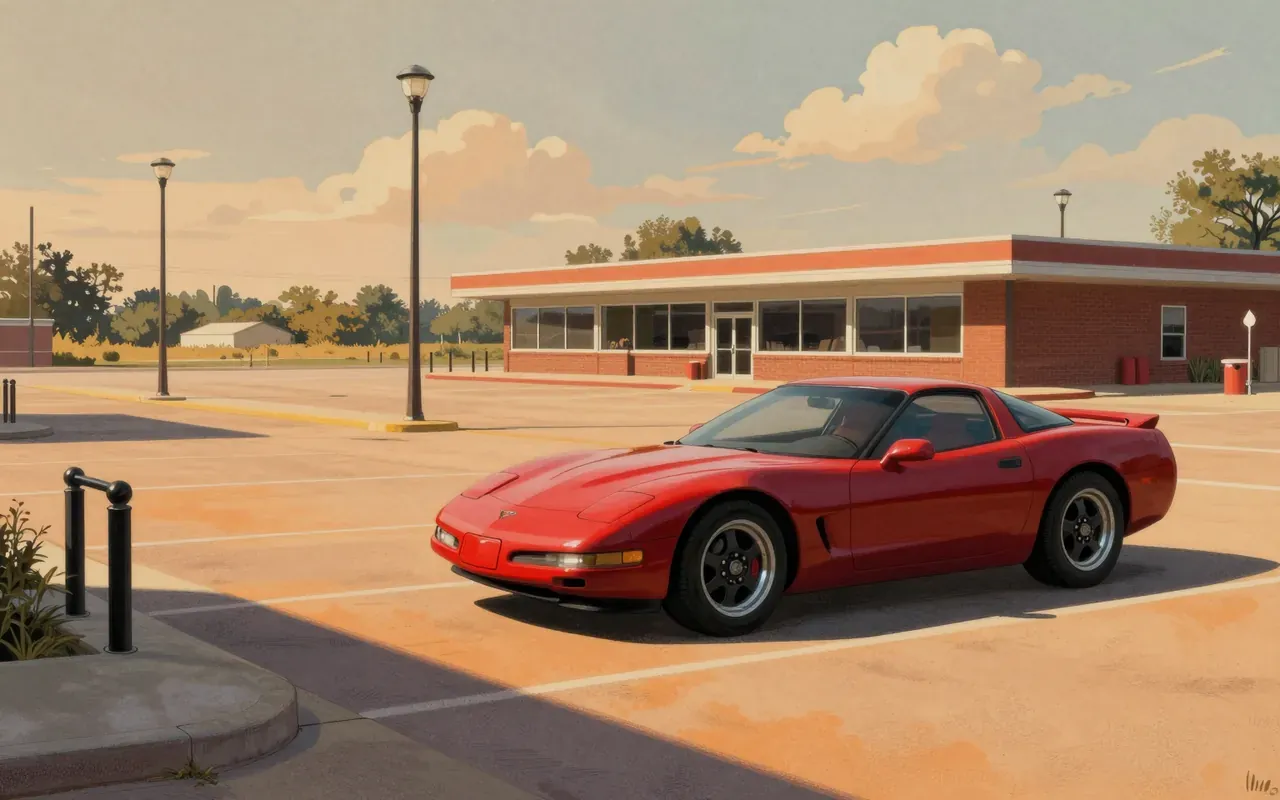
The Chevrolet Corvette (C5) is the fifth-generation Corvette sports car, produced from 1997 to 2004. It introduced a hydroformed box frame, rear-mounted transaxle, and the all-aluminium LS1 engine — the first GM vehicle with third-generation LS engines. It was the last Corvette with pop-up headlights. The Z06 variant launched in 2001. The C5-R racing variant won the 24 Hours of Daytona and 24 Hours of Le Mans in the GTS/GT1 class.

8:47

Citroën C4 Cactus

Mark Lloyd · 2014

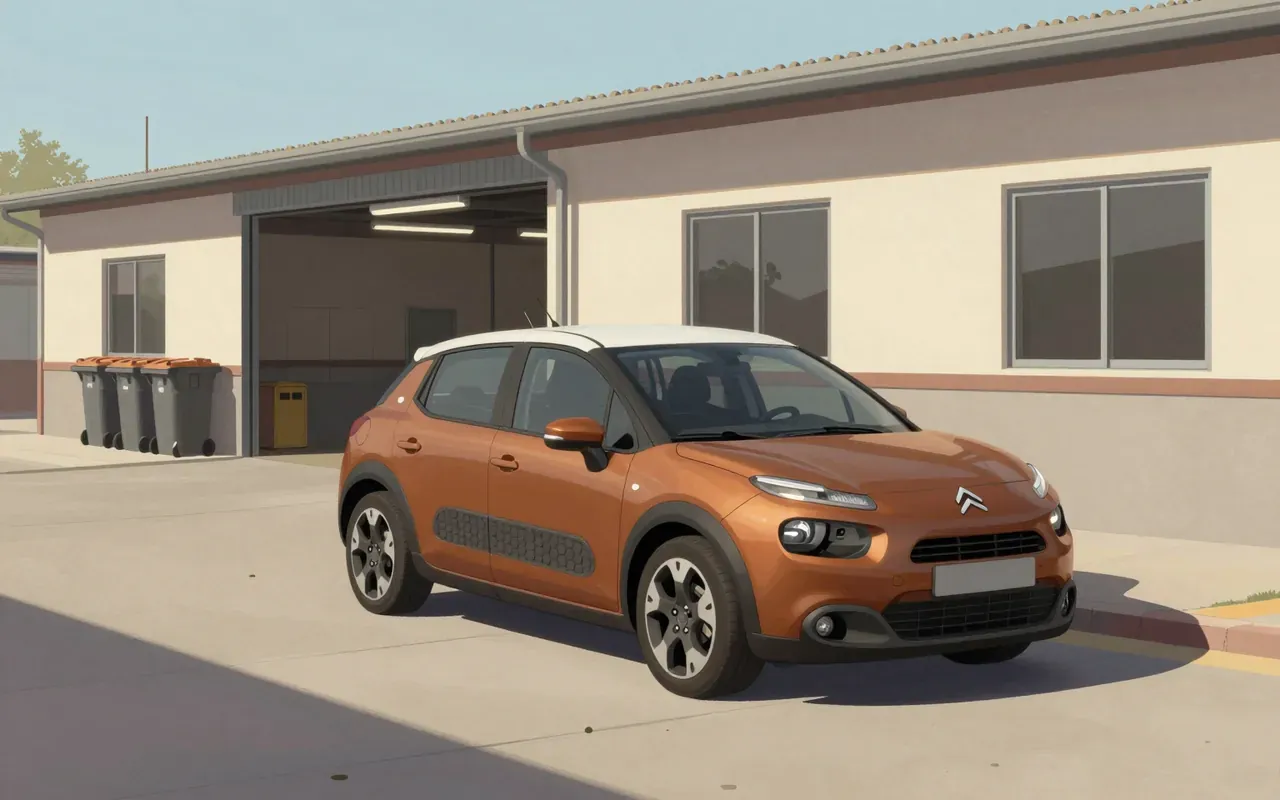
The Citroën C4 Cactus is a subcompact crossover SUV built in Spain from 2014 to 2020. Its AirBump panels solve real parking damage. It launched at Geneva 2014 after a Frankfurt 2013 concept. It offers five-door practicality with 1.2 L petrol or 1.6 L diesel engines. An estate version was cancelled. It is not off-road, not electric, not performance-oriented — but it is unmistakably itself.

10:23

Citroën C6

Jean-Pierre Ploué · 2005

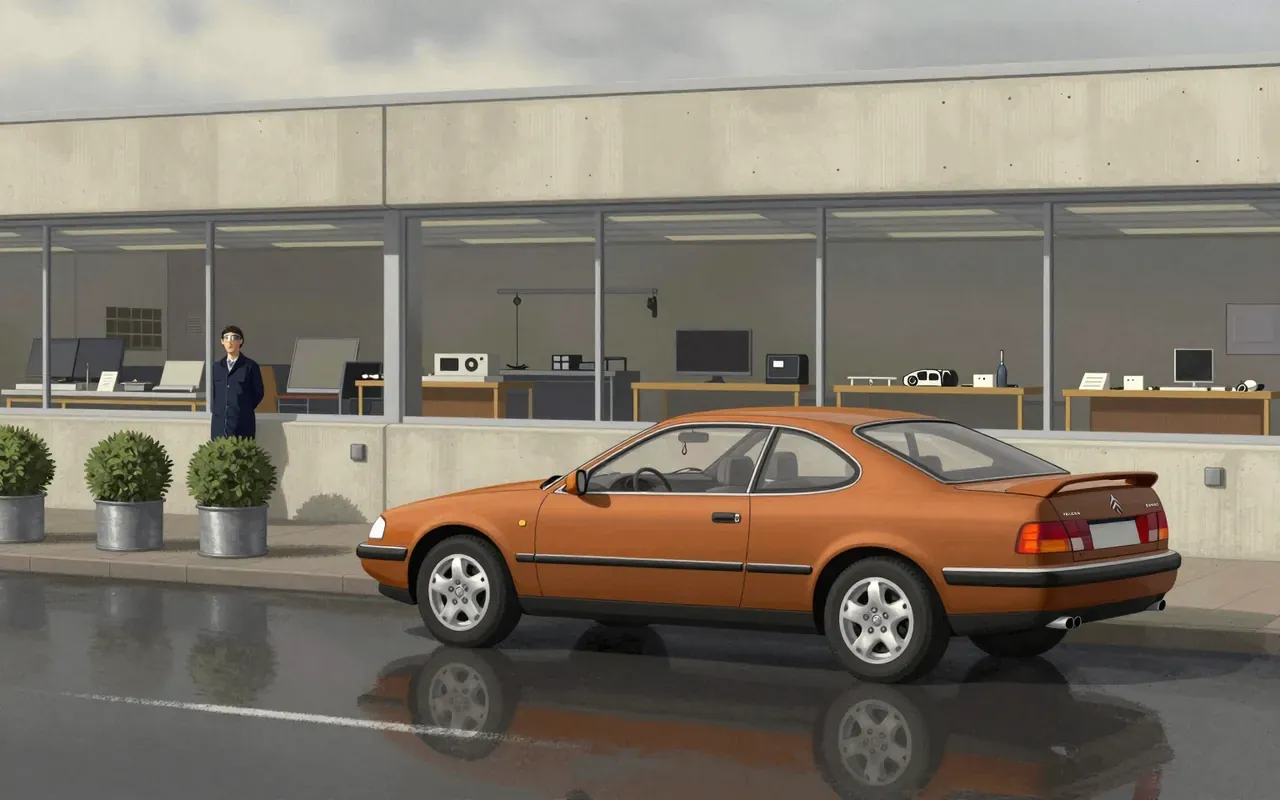
The Citroën C6 is an executive saloon launched in November 2005. It was designed by Jean-Pierre Ploué’s team to replace the XM, six years after the XM ceased production in June 2000. It draws directly from the C6 Lignage concept shown at Geneva in spring 1999.

8:21

Citroën Méhari

Jean-Louis Barrault · 1968

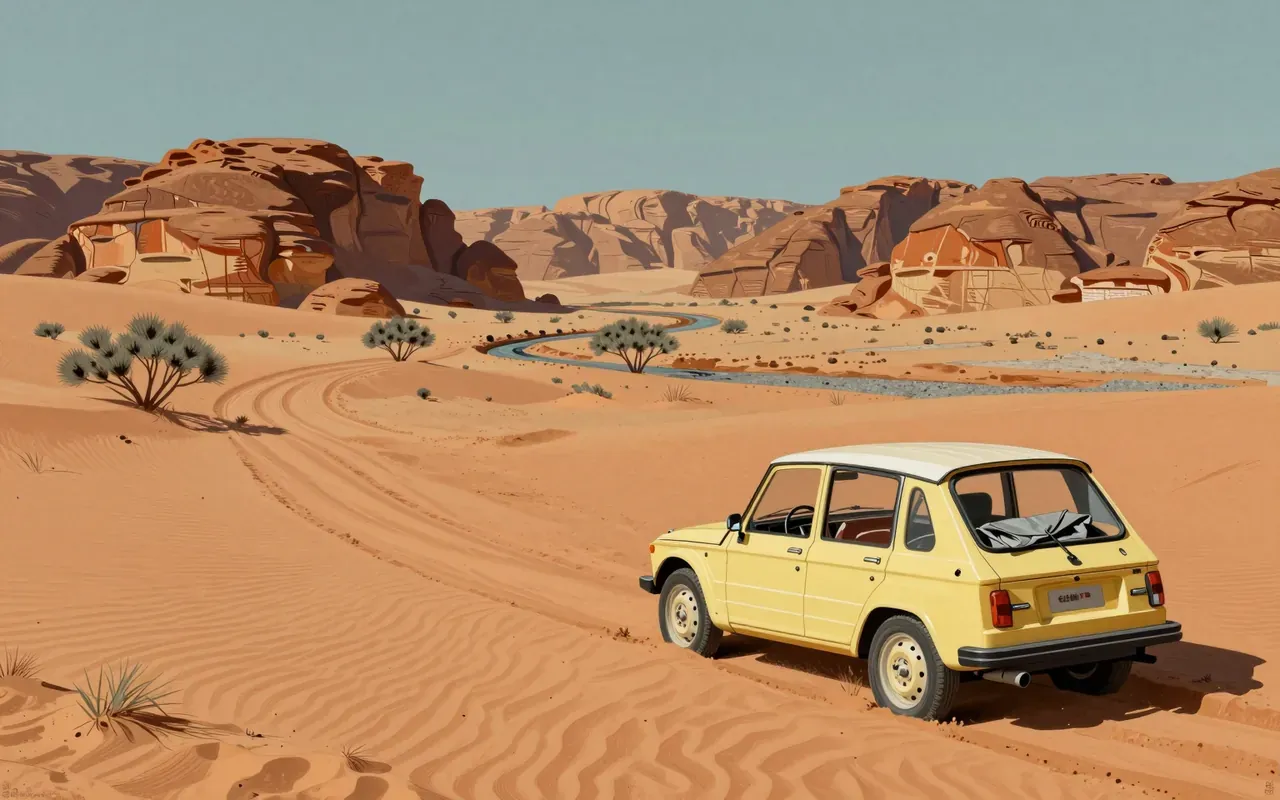
The Citroën Méhari is a lightweight recreational and utility vehicle made by Citroën from 1968 to 1988. It was designed by Roland de la Poype. It used the Dyane 6 chassis and a 602 cc flat twin engine. It was named after a fast-running dromedary camel.

10:12

Cord 810/812

Gordon Buehrig · 1936

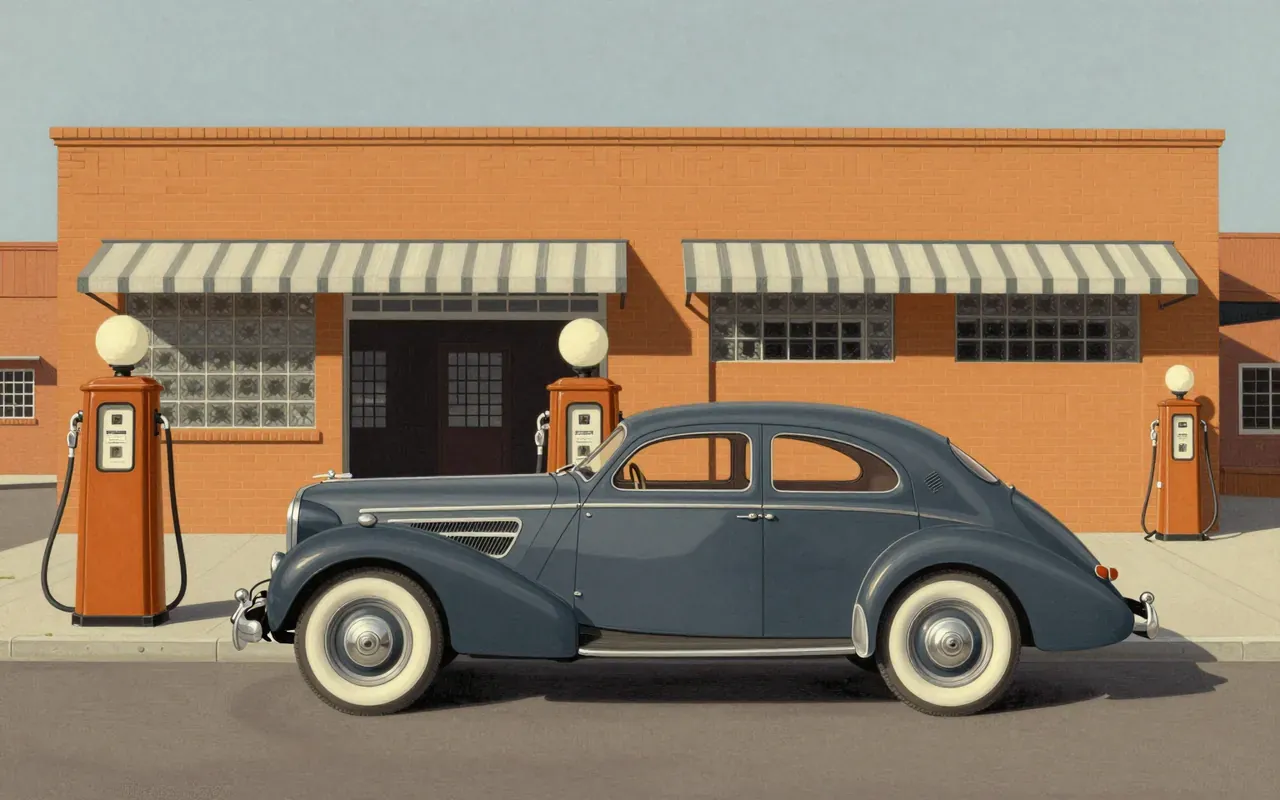
The Cord 810/812 is a 1936–1937 American luxury automobile designed by Gordon M. Buehrig for Cord Automobile, a division of Auburn Automobile Company. It pioneered front-wheel drive with independent front suspension in the US. It introduced hidden headlights and replaced the radiator grille with horizontal louvres — earning the 'coffin nose' nickname. Its semi-automatic transmission sat ahead of the engine, eliminating the driveshaft and transmission tunnel. It omitted running boards. Total production was 2,972 units. The Cord 812 was recognised for its originality by the Museum of Modern Art in 1951.

9:14

Czinger 21C

Dave O'Connell · 2021

The Czinger 21C is a 3D-printed, tandem-seat, rear-wheel-drive hybrid sports car with a central V8 and front electric motors. Eighty units will be built, beginning in 2021. It rethinks structural integration — fusing brake and suspension functions — but sacrifices cabin space, all-wheel capability, and service maturity.

9:24

DeLorean DMC-12

Giorgetto Giugiaro · 1981

The DMC DeLorean is a rear-engine, two-seat sports car designed by Giorgetto Giugiaro and produced by the DeLorean Motor Company from 1981 to 1983. It features gull-wing doors, unpainted brushed stainless-steel body panels, and a 2.85 L PRV V6 engine shared with Peugeot, Renault, and Volvo. Approximately 9,000 units were built before the company’s bankruptcy. Though criticized for modest performance and build quality, it gained iconic status through the Back to the Future films.

10:06

Dodge Challenger (1970)

Carl Cameron · 1970

The 1970 Dodge Challenger is a front-engine, rear-wheel-drive E-platform pony car. It launched in autumn 1969 for the 1970 model year. It shares its platform and body styles — hardtop and convertible — with the Plymouth Barracuda. It is longer than the Barracuda but not mechanically distinct. It is the first of three generations bearing the Challenger name — the second being a rebadged Mitsubishi compact (1978–1983), the third a full-size muscle car (2008–2023). Production of the third generation ended December 22, 2023.

11:20

Facel Vega Facel II

Jean Daninos · 1962

The Facel Vega Facel II is a French grand touring car produced from 1962 to 1964. It was Facel Vega’s final attempt to build a luxury GT in the French tradition. Jean Daninos considered it the best car the company ever made and described it as 'totally elegant'. Facel S.A. marketed it as 'The Fastest 4-seater Coupé in the World'. Sports Car Graphic called it a 'luxurious brute'. Bernard Cahier observed that its Chrysler engine made wheel-spin easy at light throttle. It used a Chrysler 6.3 L 'Typhoon' engine producing 355 hp with automatic transmission or 390 hp with manual transmission. With automatic transmission, it exceeded 217 km/h. Only 180 units were built before the company collapsed.

9:13

Ferrari 250 GT California Spyder

Pininfarina · 1957

The Ferrari 250 GT California Spyder is a front-engine, rear-wheel-drive convertible sports car designed by Sergio Scaglietti and produced by Carrozzeria Scaglietti from 1957 to 1963 in approximately 100 units. It is a convertible version of the contemporary Berlinetta. It is powered by the traditional Ferrari V12 engine. It is presented by the brand as Ferrari 250 Gran Turismo Spyder California or simply Ferrari 250 California. It was designed by Pininfarina as part of its exclusive design partnership with Ferrari beginning in 1951. It gained considerable recognition following its appearance in the 1986 film Ferris Bueller's Day Off.

10:24

Ferrari 275

Pininfarina · 1964

The Ferrari 275 is a front-engined V12 grand tourer designed by Pininfarina and produced from 1964 to 1968. It introduced the transaxle and independent rear suspension to Ferrari road cars. The GTB and GTS were two-seat coupé and spider variants. The GTB/4 and GTS/4 NART Spyder closed the series. The GTB Competizione Speciale was intended to succeed the 250 GTO in GT racing. Francesco Salomone led Pininfarina’s studio during its design.

8:38

Ferrari 288 GTO

Leonardo Fioravanti · 1984

The Ferrari 288 GTO is a homologation-special berlinetta, developed from the 308 GTB between 1984 and 1987 in Maranello. Its name stands for Gran Turismo Omologata. It was built to satisfy FIA Group B requirements.

9:54

Ferrari 308 GTB/GTS

Leonardo Fioravanti · 1975

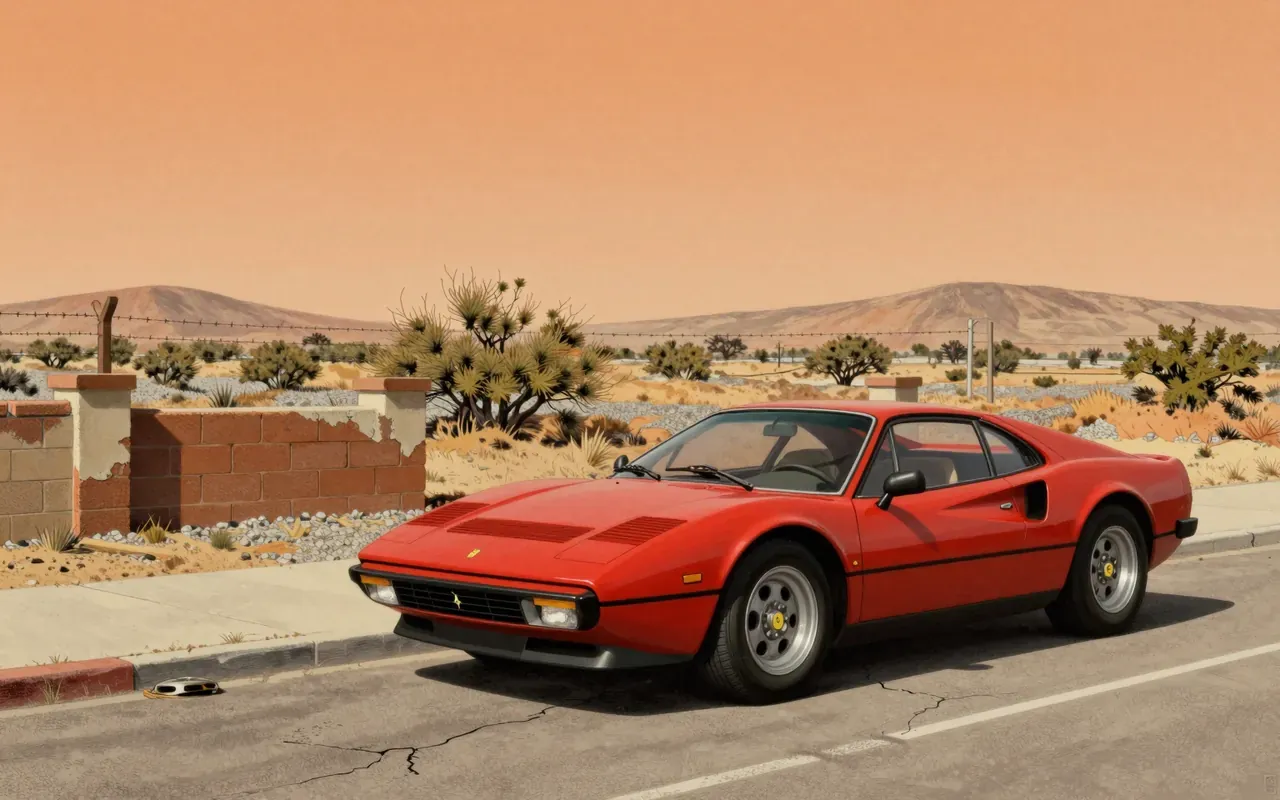
The Ferrari 308 GTB/GTS is a V8 mid-engined two-seater sports car designed by Leonardo Fioravanti at Pininfarina and produced by Ferrari from 1975 to 1985. It features a tube-frame chassis with a separate body, a transversely mounted flat-plane crankshaft 90-degree V8 engine with dual overhead camshafts per bank, a 5-speed dog-leg manual gearbox, limited-slip differential, all-independent double-wishbone suspension with anti-roll bars, four-wheel vented disc brakes, and unassisted rack-and-pinion steering. Early GTB models used GRP bodies (1975–1977), later switching to steel; all GTS models were steel-bodied. The model evolved through carburetted, fuel-injected (GTBi/GTSi), and quattrovalvole (four-valve) variants, with distinct power outputs and technical updates. Rally versions were developed by Michelotto for Group 4 and Group B competition, including the purpose-built GT/M. The car gained iconic status via its role in Magnum, P.I., and was named number five on Sports Car International’s Top Sports Cars of the 1970s list in 2004.

9:36

Ferrari 360

Goran Popović · 1999

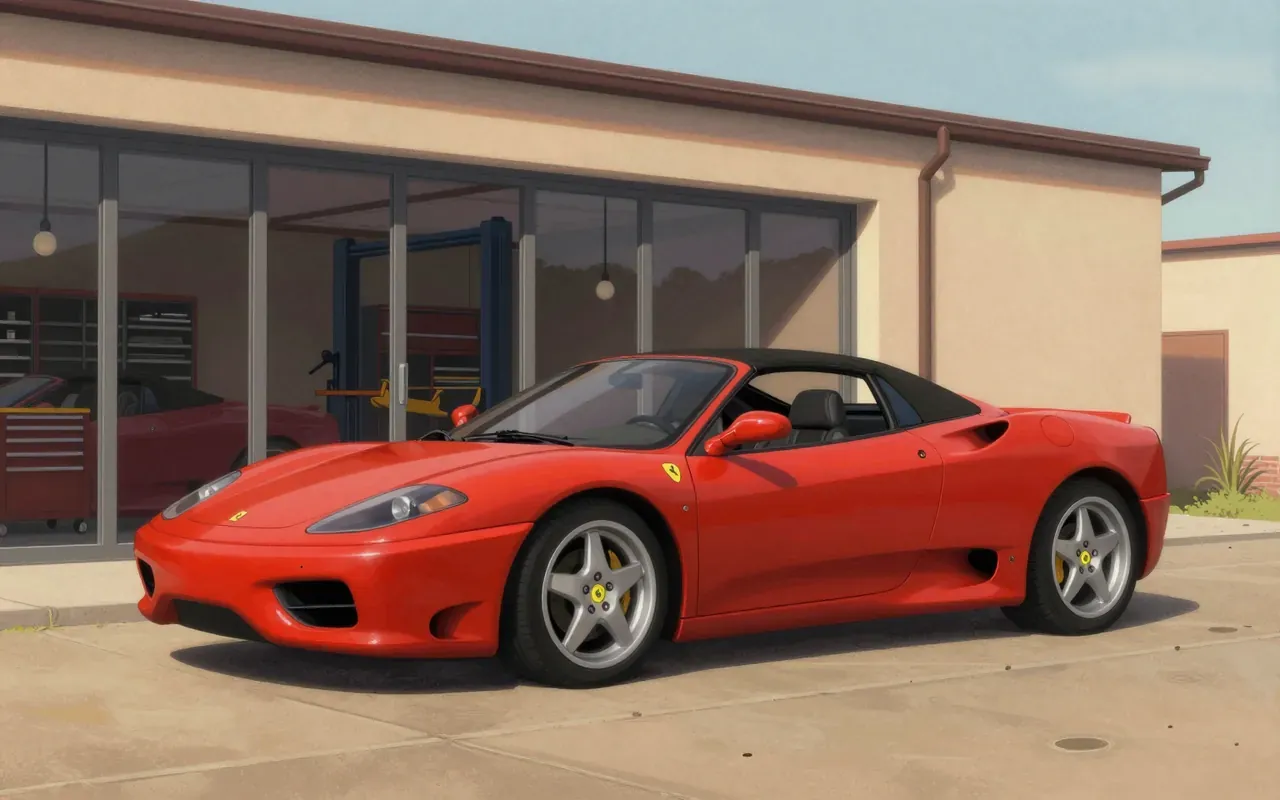
The Ferrari 360 redefined Ferrari’s mid-engined formula with an all-aluminium space-frame and Pininfarina’s curvilinear language — trading the F355’s emotional sharpness for structural precision and visual calm.

9:44

Ferrari 458

Pininfarina · 2009

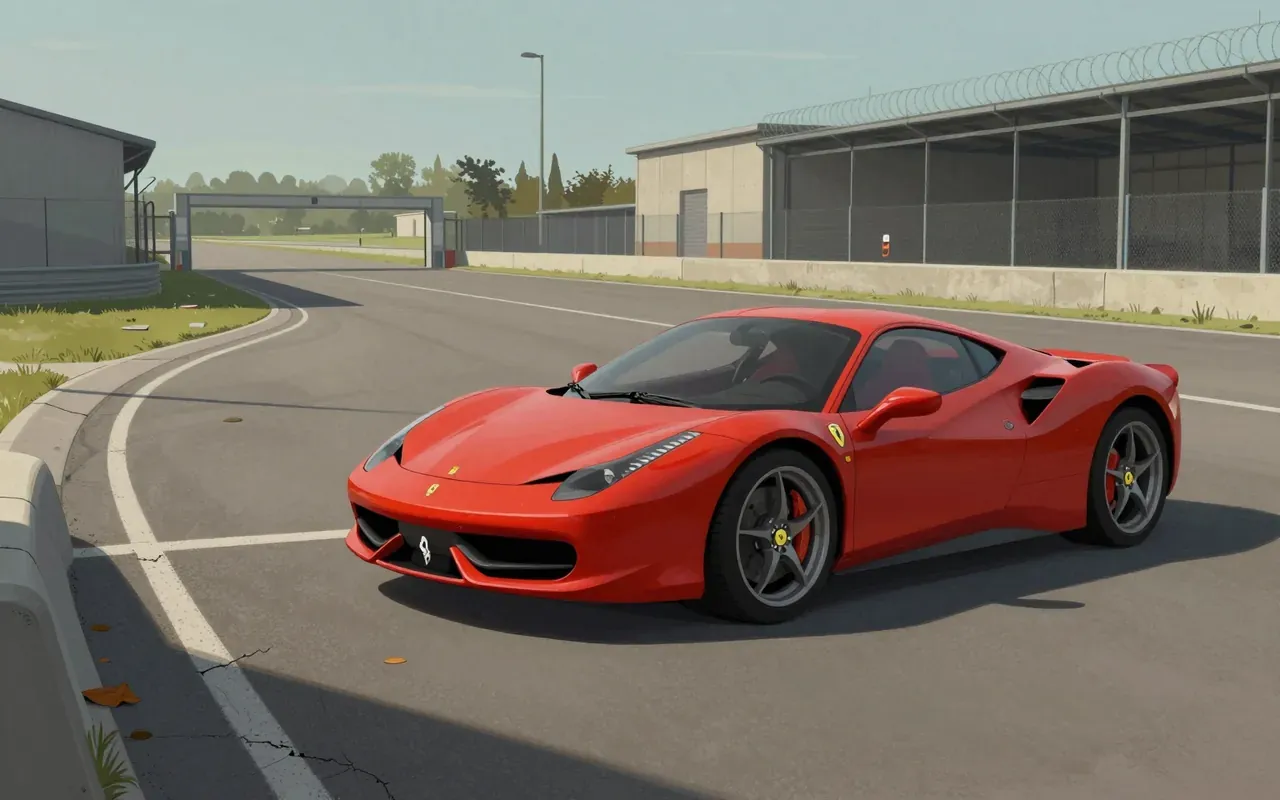
The Ferrari 458 Italia is a mid-engine sports car. It launched in 2009 as a clean-sheet replacement for the F430. It uses a 4.5 L V8 with direct fuel injection — the first such setup in a Ferrari mid-engine road car — and a 7-speed dual-clutch automatic transmission. No manual option exists. Magneti Marelli developed its body computer system. Pininfarina designed it under Donato Coco, with Carlo Palazzani as lead designer.

8:56

Ferrari 550

Lorenzo Ramaciotti · 1996

The Ferrari 550 Maranello is a front-engine, rear-wheel drive V12 grand tourer designed by Pininfarina under Lorenzo Ramaciotti’s supervision, produced from 1996 to 2001 (3,083 units), and succeeded by the 575M Maranello in 2002; it features a 5,474 cc naturally aspirated 65° V12 engine and was offered in coupé and limited-run Barchetta roadster forms.

10:01

Ferrari Daytona SP3

Flavio Manzoni · 2021

The Ferrari Daytona SP3 is a mid-engine, naturally aspirated V12 road car launched in 2021 as part of Ferrari’s Icona series. It draws directly from the 1967-winning 330 P4. It uses a 6.5 L F140 HC V12. It shares its chassis with the LaFerrari Aperta. It was produced in 599 units from 2022, all pre-sold at $2.25 million each. It is Ferrari’s final non-hybrid, mid-mounted V12 road car.

8:30

Ferrari F50

Lorenzo Ramaciotti · 1995

The Ferrari F50 is a 1995–1997 limited-run targa-top supercar. Its 4.7 L V12 came from Formula One. Its shape grew from the 1989 Mythos concept and borrowed F1 front-end cues. It uses a rear mid-engine, rear-wheel-drive layout. Only 349 were built.

8:25

Ferrari Modulo

Paolo Martin · 1970

The Ferrari Modulo is a static concept car built by Pininfarina on a de-powered Ferrari 512 S chassis. It debuted black at Geneva 1970. Its wedge shape, sliding canopy and exposed V12 defined a new visual language — one that influenced 1970s car design more than any production model.

9:10

Ferrari Roma

Flavio Manzoni · 2019

The Ferrari Roma is a front mid-engine, rear-wheel-drive grand touring coupé with a twin turbocharged V8 and 2+2 seating. It succeeds the Portofino and sits below the F8. Named after Rome, it launched online on 13 November 2019 and was unveiled in Rome the next day. Flavio Manzoni led its design, which won five major international design awards — including Most Beautiful Supercar of the Year in Paris.

9:11

Fiat Multipla

Roberto Giolito · 1998

The Fiat Multipla is a six-seater compact MPV designed by Roberto Giolito and launched by Fiat in November 1998. It is based on the Bravo/Brava but shorter and wider, reusing the name of the 1950s Fiat 600 Multipla.

11:26

Ford XY Falcon GT

Ford · 1971

The Ford XY Falcon GT is a 1970–1971 Australian sports sedan built by Ford Australia on the Falcon XY platform. Its GTHO Phase III variant — 300 units built May–November 1971 — won the 1971 Bathurst 500 outright. It used a 351 Cleveland V8 rated at 224 kW (300 bhp) at 5400 rpm. Total production was 1,557 units. A limited number were exported to South Africa with Fairmont GT badging.

9:14

Ford Mustang (first generation)

Joe Oros · 1964

The first-generation Ford Mustang is a compact, front-engine, rear-wheel-drive saloon designed under Joe Oros and launched by Ford in March 1964. It originated as a two-seat, mid-mounted engine roadster prototype, then remodeled into a four-seat car.

10:42

Boss 429 Mustang

Larry Shinoda · 1969

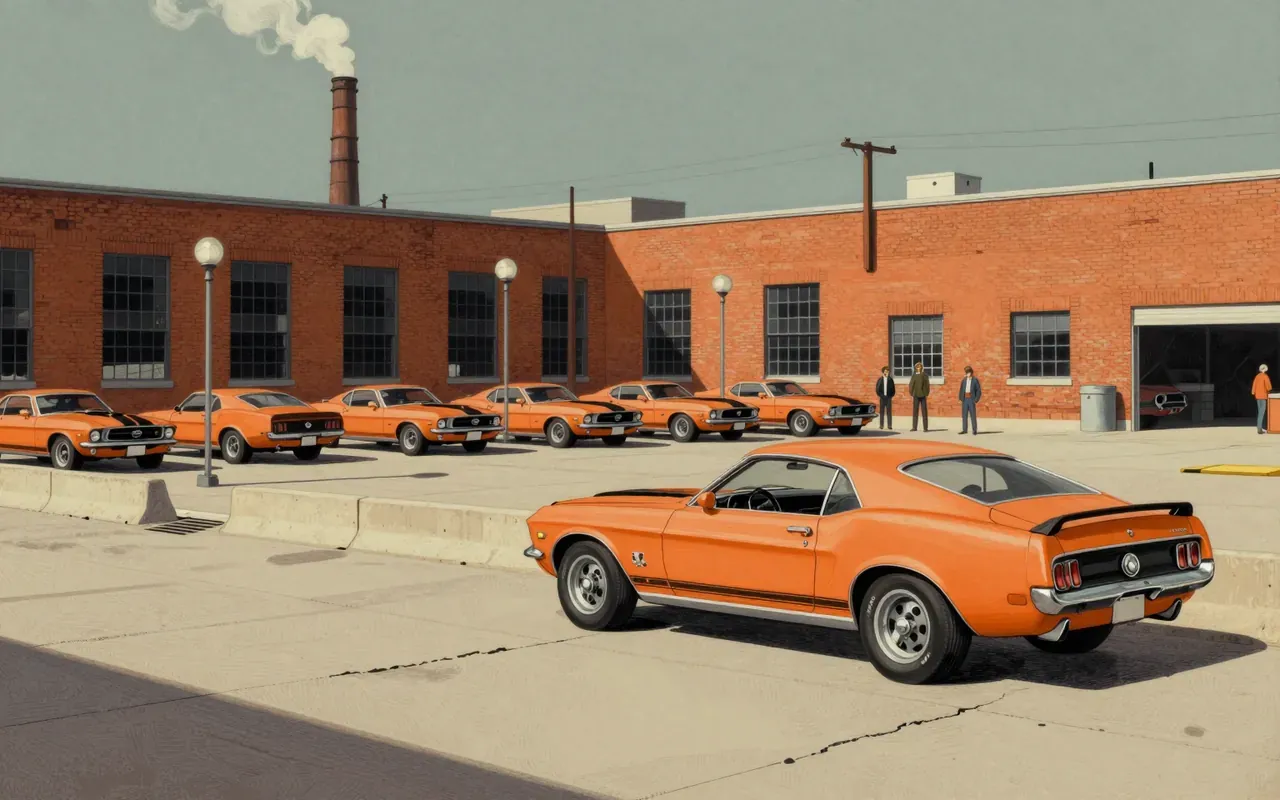
The Boss 429 Mustang is a 1969–1970 homologation special built solely to qualify Ford’s semi-hemispherical 429 cu in V8 for NASCAR. Its engine was too wide for the Mustang’s engine bay—requiring Kar Kraft to widen the front end. Priced at nearly $5,000 and limited to 1,359 units, it sacrificed usability, cost, and serviceability for one purpose: counting toward NASCAR’s 500-car rule. Larry Shinoda, who named the Boss line as a homage to Bunkie Knudsen, did not design this car—but its existence follows directly from the logic he established with the Boss 302.

11:39

Ford Shelby GR-1

George Saridakis · 2005

The Ford Shelby GR-1 is a Ford-built concept car. It appeared first as clay at Pebble Beach 2004. It ran as a prototype at Detroit 2005. Its shape recalls the Shelby Daytona. Its chassis comes from the 2004 Shelby Cobra Concept. Its V10 engine shares components with the Ford GT. It makes 605 hp and 501 lb⋅ft. Superformance later built a V8 version in 2019 because no production V10 was available.

8:46

Ford Thunderbird (first generation)

George Walker team · 1955

The first-generation Ford Thunderbird (1955–1957) is a two-seat convertible — Ford’s first since 1938 — developed in response to the 1953 Motorama Corvette display. Dubbed 'a personal car of distinction', it prioritised driver comfort over speed and established the personal luxury car segment in the US. Built on existing Ford components with body-on-frame construction, it sold 16,155 units in 1955 — vastly outpacing the Corvette. Its design inspired the German Auto Union 1000 Sp. It remained the only two-seat Thunderbird until 2002.

10:22

Genesis G80

Luc Donckerwolke · 2016

The Genesis G80 is the 2016 rebrand of the Hyundai Genesis DH. It launched Genesis Motor as a standalone luxury division. It uses existing architecture, powertrains, and production in Ulsan. Its significance lies in corporate positioning—not mechanical departure.

11:04

Genesis G90

Peter Schreyer · 2015

The Genesis G90 is Genesis’ first flagship sedan — a full-size, four-door replacement for the Hyundai Equus. It launched in December 2015 and went on sale globally in late 2016. Development spanned four years with ~1,200 researchers. The second generation arrived in 2021 with new powertrain and chassis technology. Peter Schreyer’s design legacy is well documented at Audi and Kia — but the sources make no connection to the G90.

10:38

Honda S2000

Daisuke Sawai · 1999

The Honda S2000 is a front-mid engine, rear-wheel-drive open-top sports car manufactured by Honda from 1999 to 2009. It launched on April 15, 1999, to mark Honda’s 50th anniversary. Its name honours the 1960s S-series roadsters and its two-litre engine. It holds the record for highest specific power output of any mass-production naturally aspirated car until 2010. It was tested on race tracks and mountain roads. Development followed classic Honda engineering values, not marketing input.

9:37

Honda S500

Honda · 1963

The Honda S500 is Honda’s first passenger automobile and first production sports car. Launched in October 1963, it followed the T360 truck by four months. It used a 531 cc DOHC straight-4 engine producing 44 hp at 8000 rpm, a four-speed manual transmission, and four-wheel independent suspension with chain-driven rear wheels. It exceeded kei car regulations in dimensions and displacement. 1,363 units were built between October 1963 and September 1964. It was priced at $1,275 in 1963.

15:04

Hyundai Tiburon

Hyundai · 1996

The Hyundai Tiburon is a front-wheel-drive sports coupe produced by Hyundai from 1996 to 2008. It launched as the RD generation and continued as the GK generation. It carried different names across markets — Tiburon, Coupé, Turbulence, Tuscani — all describing the same body and layout.

9:21

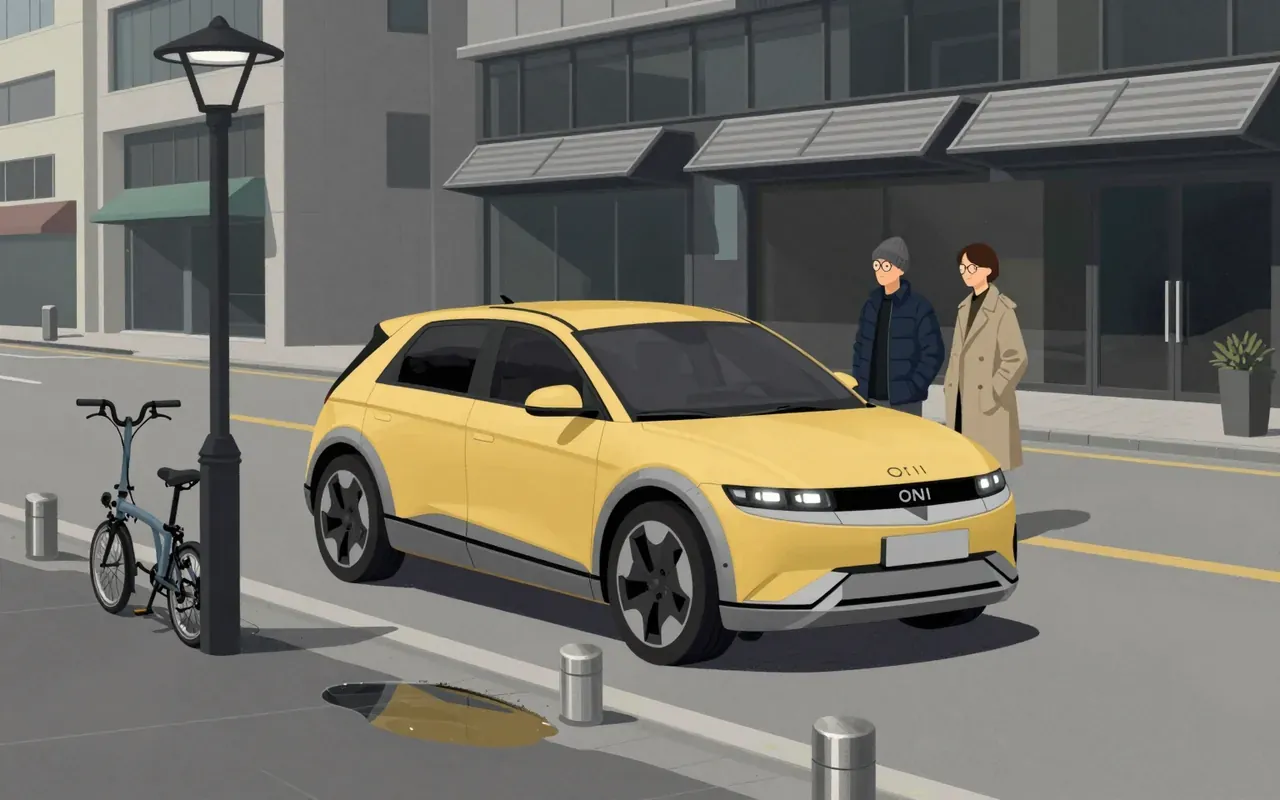
Hyundai Ioniq 5

SangYup Lee · 2021

The Hyundai Ioniq 5 is Hyundai’s first production vehicle on the E-GMP platform and the inaugural model of its Ioniq sub-brand. Launched globally on 23 February 2021, it is a battery electric compact crossover SUV with a clamshell bonnet, Parametric Pixel lighting, and a fully flat interior floor. Its design draws from the original Hyundai Pony. No verified source attributes its design to SangYup Lee — his confirmed work includes the Ioniq 7 concept (2021) and N Vision 74 concept (2022).

9:07

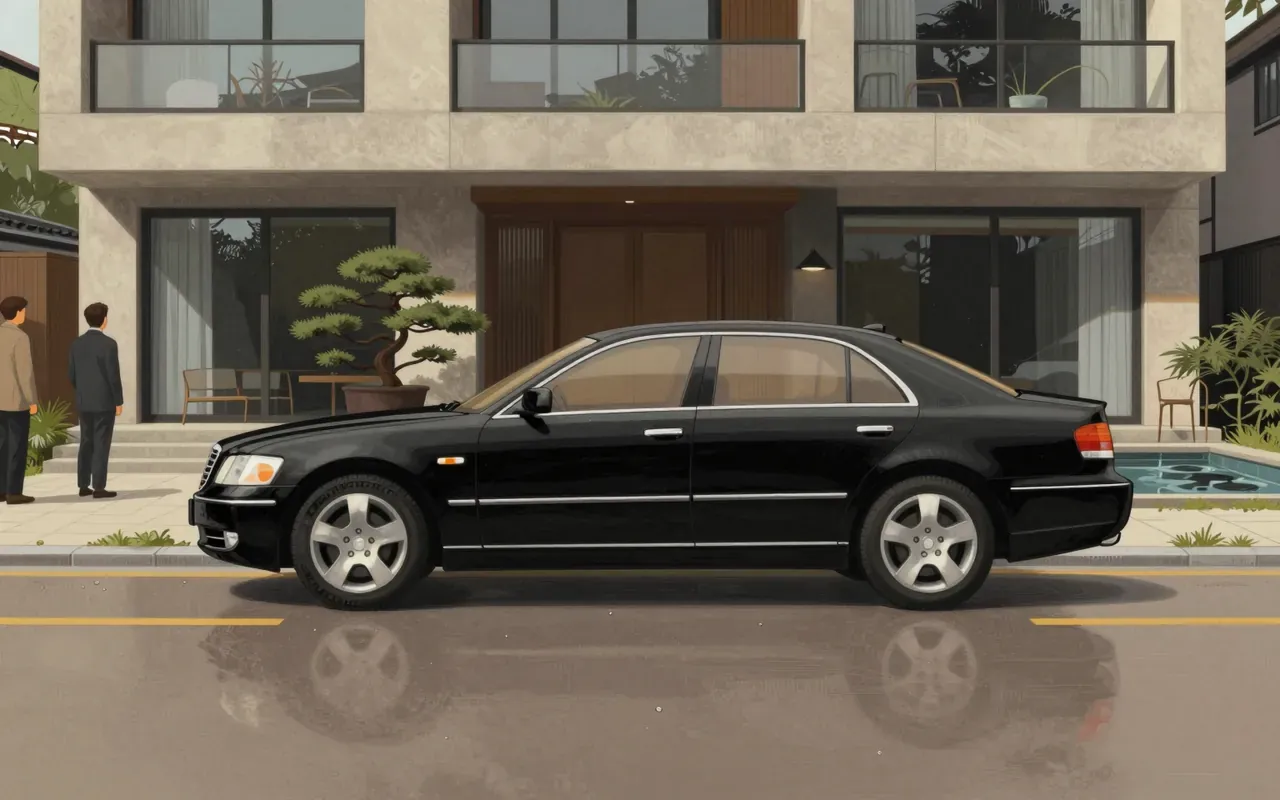
Italdesign Aztec

Giorgetto Giugiaro · 1988

The Italdesign Aztec is a 1988 concept car built to mark Italdesign’s 20th anniversary. It features driver-passenger separation enforced by physical barriers and electronic communication. Its speedster body uses removable gull-wing visor sections. A turbocharged Audi engine and Lancia Delta HF Integrale–derived four-wheel-drive system power it. Compact srl licensed it for Japan; Carrozzeria Savio built 18 units. It was never a production car — it was a demonstration of interface-first automotive thinking.

10:58

Kia EV6

Karim Habib · 2021

The Kia EV6 is Kia’s first dedicated battery electric vehicle. It launched in 2021 on the Electric Global Modular Platform (E-GMP). It is a compact crossover SUV. It won the 2022 European Car of the Year award. It introduced Kia’s new EV naming series. It was developed under codename CV. First photographs appeared 15 March 2021. Full release followed on 2 August 2021.

8:42

LaFerrari

Flavio Manzoni · 2013

LaFerrari is Ferrari’s first hybrid road car and definitive V12 flagship. It is a limited-production mid-engine sports car developed under Flavio Manzoni. Its design follows the 2011 Manta concept. It draws on FXX prototype testing and Millechili Project research. Only 499 units were built between 2013 and 2016.

9:35

Lamborghini 350 GT

Franco Scaglione · 1964

The Lamborghini 350 GT is Lamborghini’s first production car. It is a grand tourer built between 1964 and 1966. It was based on the 350 GTV prototype. It has a 3.5 litre V12 engine. Its body is a 2-door coupé by Carrozzeria Touring. Lamborghini built 120 units.

10:25

Lamborghini Huracán

Filippo Perini · 2014

The Lamborghini Huracán is a mid-engine, two-seater sports car made by Lamborghini from 2014 to 2024. Its name is inspired by a Spanish fighting bull. It retains the 5.2-litre naturally aspirated Audi/Lamborghini V10 engine of the facelifted Gallardo. To ensure its balance and performance, the car is mid-engined. The engine has both direct fuel injection and multi-point fuel injection. It combines the benefits of both systems; it is the first time this combination has been used in a V10 engine. The drag coefficient of Cd=0.39 was undisclosed until 2021. With a kerb weight of 1,553 kg (3,424 lb), the Huracán LP 610-4 has a power-to-weight ratio of 2.55 kg (5.62 lb) per horsepower.

9:15

Lamborghini Miura

Marcello Gandini · 1966

The Lamborghini Miura is the first high-performance production road car with a rear mid-engine, rear-wheel-drive layout. Conceived secretly by engineers in 1965, it debuted at the 1966 Geneva Motor Show. Marcello Gandini designed it in three months. It held the title of world’s fastest production car at launch. It remained Lamborghini’s flagship until 1973.

9:23

Lamborghini Revuelto

Mitja Borkert · 2023

The Lamborghini Revuelto is Lamborghini’s first plug-in hybrid sports car. It replaces the Aventador. It uses a mid-engine layout, a 6.5-litre V12, three electric motors, Y-shaped daytime running lights, active aerodynamics, and a carbon-fibre monocoque. Production began in July 2023. First deliveries were in Q4 2023.

10:20

Lamborghini Urus

Mitja Borkert · 2018

The Lamborghini Urus is a high-performance luxury SUV. It is Lamborghini’s first SUV under Volkswagen ownership and its second ever, after the LM002. Introduced in December 2017 as a 2018 model, it is built on the Volkswagen Group MLB Evo platform and shares components with the Audi Q7, Bentley Bentayga, Porsche Cayenne, and Volkswagen Touareg. Its name derives from urus, the aurochs. The production model uses a modified 4.0-litre twin-turbo V8 — not the concept’s 5.2-litre V10 — and features a front-engine, all-wheel-drive layout. With a top speed of 312 km/h, the Urus SE is the fastest production SUV in the world. It is Lamborghini’s best-selling model, reaching 20,000 units by 2022.

9:35

Lancia Aurelia B20 GT

Ghia · 1951

The B20 GT is the coupé of the Lancia Aurelia, which Lancia built from 1950 to 1958 over six series. It arrived in 1951 on a shorter wheelbase, with a Ghia-designed body built by Pinin Farina and a 1,991 cc V6 making 75 hp. Over six series it gained a larger engine, a de Dion rear axle and a sturdier transaxle, and the sixth-series coupés were the most touring-oriented of the B20 line.

9:11

Lancia Montecarlo

Paolo Martin · 1975

The Lancia Montecarlo is a two-seater sports car manufactured and marketed by Lancia in Italy from 1975 to 1981. Designed by Paolo Martin at Pininfarina, it features a mid-engine, rear-wheel-drive layout and was developed from the Fiat X1/8 project. Both series were offered in Coupé and Spider bodystyles. Total production reached 7,798 units between 1974 and 1982, including 220 competition models (Lancia 037).

9:21

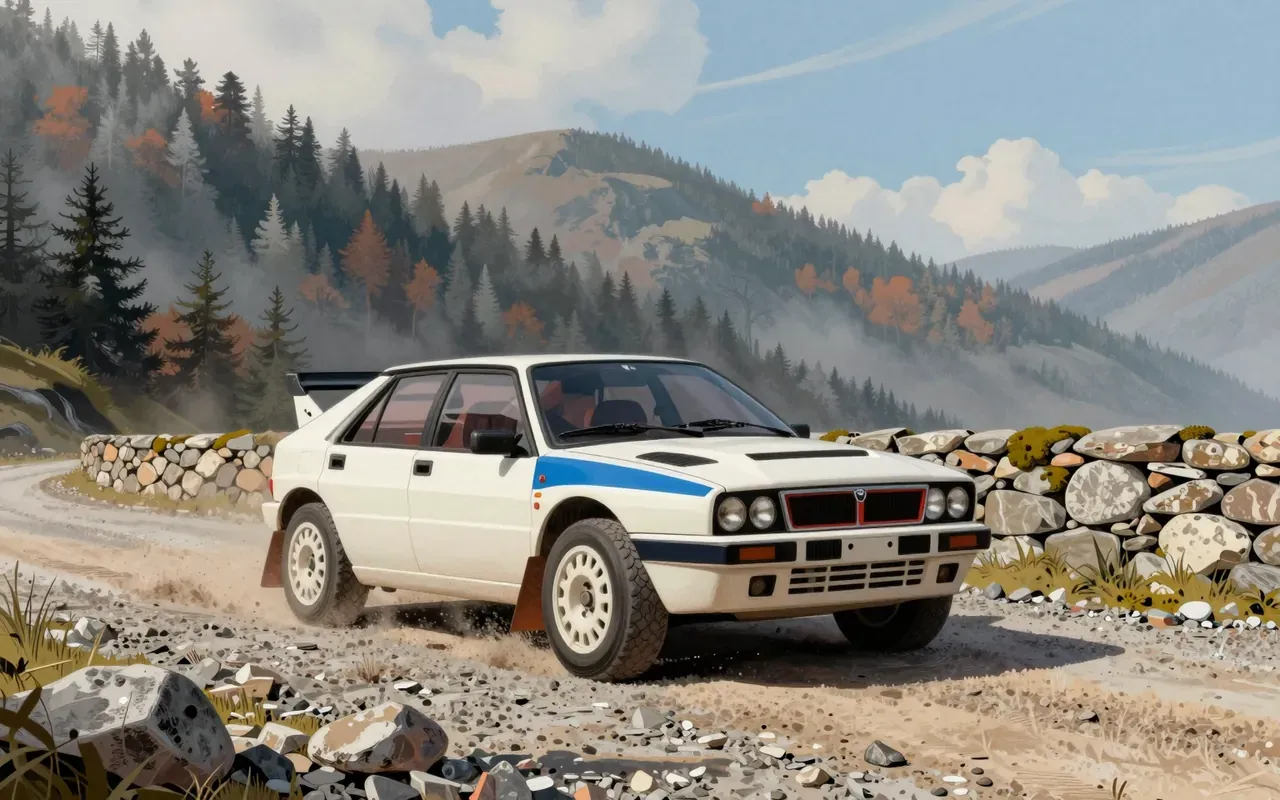
Lancia Delta HF

Giorgetto Giugiaro · 1985

The Lancia Delta HF is a Group A rally car built by Lancia for Martini Lancia to compete in the World Rally Championship from 1987 to 1993. Based on the Lancia Delta road car and replacing the Delta S4, it featured a front-mounted two-litre turbocharged engine and four-wheel-drive. It evolved through four versions and achieved extraordinary success: 46 WRC victories and six consecutive manufacturers’ titles (1987–1992), the most in WRC history.

10:03

Lancia Megagamma

Giorgetto Giugiaro · 1978

The Lancia Megagamma is a 1978 Italdesign concept MPV commissioned by Fiat. It originated in a 1976 taxi study with the Museum of Modern Art. It debuted at the 1978 Turin Motor Show.

9:05

Lancia Ypsilon

Lancia Centro Stile · 2024

The Lancia Ypsilon is a supermini car. It launched in 1995 as a larger, more expensive replacement for the Y10. It is now in its fourth generation. As of 2024, it is Lancia’s only model.

9:26

Lotus Europa

Ron Hickman · 1966

The Lotus Europa (1966) is a two-seater mid-engine sports coupe designed by Ron Hickman at Lotus. It used a lightweight steel backbone chassis and fibreglass body. It was intended as a volume-produced road car—unusual for its time—applying Grand Prix layout principles to affordable performance. Production ran from 1966 to 1975 across five types, totalling 9,230 units.

9:12

Lotus Evija

Russell Carr · 2019

The Lotus Evija is a limited-production, all-electric, all-wheel-drive sports car — Lotus Cars’ first EV — unveiled in July 2019. It is built by the British automaker Lotus Cars, owned by the Chinese company Geely. Production is capped at 130 units. Its base price is US$2.3 million, before options and taxes. Four wheel-mounted motors deliver 1,500 kW total power. A 93 kWh battery supplies energy. It achieves 0–100 km/h in under 3 seconds and a top speed of 349 km/h. A prototype underwent high-speed testing in November 2019. A video was released on 21 November 2019 ahead of its debut later that day at the Guangzhou Auto Show. Lotus planned thousands of miles of further road testing on European circuits and at its Hethel track. The name Evija derives from 'Eve' and means 'alive' or 'living' in Biblical Hebrew.

8:32

Lotus Exige

Russell Carr · 2000

The Lotus Exige is a British sports car produced from 2000 to 2021. It began as a hardtop coupé derivative of the Elise roadster. Its name means 'demand' or 'require' in French. The original 2000 model used a naturally aspirated 1.8 L Rover K-Series inline-four. Series 2 (2004) switched to a naturally aspirated 1.8 L Toyota/Yamaha 2ZZ-GE. Series 3 (2012) adopted a supercharged 3.5 L V6 from the Evora S. All generations featured mid-engine, rear-wheel-drive layout, non-removable hardtop, kamm-tail rear bodywork, and a pylon-mounted rear wing.

8:53

Maserati MC20

Maserati Centro Stile · 2020

The MC20 is Maserati’s first in-house sports car since the Bora. It is not a revival. It is a declaration: no more borrowed engines, no more compromised layouts, no more waiting for permission to be a manufacturer. It launched in Modena in 2020 with a bespoke V6, then expanded into open-top, track, racing, and (briefly) electric forms—before being renamed MCPura in 2025.

8:34

McLaren 12C

Frank Stephenson · 2011

The McLaren 12C is a British sports car produced by McLaren Automotive from 2011 to 2014. It marked McLaren’s return to production car sales after 1998. Development began in 2005. Series manufacturing started in February 2011 in Woking, Surrey. Over 3,400 units were built. Frank Stephenson served as Design Director and oversaw its design. It was succeeded by the 650S, with which it shares most components.

9:17

Mercedes-Benz CLK LM

AMG · 1998

The Mercedes-Benz CLK LM is a 1998 Group GT1 racing car built by Mercedes-Benz and AMG to win the FIA GT Championship. It uses a naturally aspirated M119 V8 with a flat-plane crankshaft, replacing the CLK GTR’s V12. Two road-legal CLK LM Straßenversion chassis were built for homologation — one destroyed in crash testing. It won every 1998 FIA GT race but retired from the non-championship 1998 24 Hours of Le Mans. Five chassis were built in total: three race, two road-legal. Mercedes ended its GT1 programme after 1998 when the FIA removed the GT1 class.

9:33

Mercedes-Benz 190 SL

Karl Wilfert · 1955

The Mercedes-Benz 190 SL is a two-door luxury roadster produced from May 1955 to February 1963. It was internally designated W121 (BII). It was first shown in prototype at the 1954 New York Auto Show. It was available with an optional removable hardtop. It was a more affordable alternative to the 300 SL. Both cars had double wishbones in front and swing axles at the rear. Instead of the 300 SL's tubular spaceframe, the 190 SL used a shortened unitary floorpan modified from the W121 saloon. It was powered by a Type M121 BII 1.9 L straight-four SOHC engine.

11:53

Mercedes-Benz 300 SL

Friedrich Geiger · 1954

The Mercedes-Benz 300 SL (W198) is a two-seat sports car produced from 1954 to 1957 as a gullwing coupé and from 1957 to 1963 as a roadster. Developed from the 1952 W194 racing car, it introduced mechanical direct gasoline fuel injection to production vehicles, achieved 260 km/h — the highest speed of any production car at the time — and featured groundbreaking gullwing doors and a lightweight tubular-frame construction. Its ‘L’ stands for ‘leicht’, meaning light, reflecting its racing-bred minimalism. Max Hoffman proposed the car to Mercedes-Benz after the 1952 racing successes, and Fritz Konecke approved an order for 1,000 units ahead of its February 1954 debut at the New York Auto Show.

8:20

Mercedes-Benz C111

Bruno Sacco · 1969

The C111 is a concept car built by Daimler-Benz in 1969. Bruno Sacco designed it. It was never intended for sale. Sixteen were built across four generations between 1969 and 1979.

9:39

Mercedes-Benz CLK GTR

Gerhard Leiska · 1997

The CLK GTR is a 1997 Mercedes-Benz and AMG GT1 homologation special built for the FIA GT Championship. It uses a Lola Composites carbon-fibre monocoque and a modified M120 V12 engine. Road-car production was secondary to racing eligibility. Twenty-eight units were built between 1997 and 1999.

9:10

Mercedes-Benz EQS

Robert Lešnik · 2021

The Mercedes-Benz EQS is a full-size luxury battery-electric liftback, launched in September 2021 in Germany and Q4 2021 in the US. It is the first model built on Mercedes-Benz’s MEA electric-dedicated platform. Its 0.20 drag coefficient was the lowest in production at launch. It uses one or two Valeo Siemens water-cooled permanent magnet synchronous motors, sending torque to the wheels via a single-speed reduction gearbox.

8:41

Mercedes-Benz W116

Friedrich Geiger · 1972

The W116 is the first official S-Class: a flagship luxury sedan built on a larger, separate platform, with independent suspension and four-wheel disc brakes. Designed by Friedrich Geiger and finalised in December 1969, it launched in 1972 and introduced Mercedes-Benz’s enduring corporate styling theme. It pioneered safety features including crumple zones and optional four-wheel anti-lock brakes. It won European Car of the Year in 1974. It established the S-Class as a benchmark for engineering integrity, not just opulence.

9:06

Mercedes-Benz W123

Bruno Sacco · 1976

The Mercedes-Benz W123 is the best-selling Mercedes-Benz ever. Bruno Sacco made significant contributions to its design. It is a German executive car produced from November 1975 to January 1986. It sold 2.7 million units. It earned a strong reputation for build quality and reliability — especially among German taxi operators, many of whom drove it beyond 500,000 km with minimal mechanical issues. Early demand outstripped supply, leading to long waiting periods and even a black market for immediate delivery. It was offered in saloon, coupé, limousine and estate body styles — all factory-built — with the estate marking Mercedes-Benz’s first such offering.

9:24

Mitsubishi 3000GT

Masaru Suzuki · 1990

The Mitsubishi 3000GT is a front-engine, all-wheel/front-wheel drive grand touring/sports car built in Nagoya, Japan, from 1990 to 2000. It uses a transverse-mounted 3-litre, 24-valve V6 and shares mechanical underpinnings with the Sigma/Diamante. It was manufactured in a three-door hatchback coupé body style. Approximately 86,151 units were produced.

11:08

Nissan Fairlady Z (S30)

Yoshihiko Matsuo · 1969

The Nissan Fairlady Z (S30) is the first Z car. Designed under Yoshihiko Matsuo. Introduced in late 1969. Front-engine, rear-wheel drive. Four-wheel independent suspension. Overhead camshaft straight-six. Sold in Japan as the Fairlady Z. Exported as the Datsun 240Z, 260Z, and 280Z. Produced until 1978.

8:24

Opel Manta

George Gallion · 1970

The Opel Manta A is a rear-wheel-drive German coupé launched in September 1970. Built by Opel on the Ascona A platform, it offered a clean two-door, three-box silhouette and competed directly with the Ford Capri. It was never sold in the UK under Vauxhall until the Manta B. Its name comes from the manta ray. 498,553 were built before 1975.

12:15

Opel Monza

George Gallion · 1978

The Opel Monza is an executive fastback coupe. It was built from 1977 to 1986. It replaced the Commodore Coupé. It shared its layout with the Senator A1. It used only overhead camshaft six-cylinder engines. The 3.0-litre version made it Opel’s fastest car at the time. It had no direct replacement. 43,812 were built.

9:40

Peugeot 403

Pininfarina · 1955

The Peugeot 403 is a mid-size saloon launched by Peugeot in April 1955 and styled by Pininfarina. It used a front-engine, rear-wheel drive layout and a 4-speed manual transmission. Its 1468 cc pushrod straight-four engine produced 58 hp, later increased to 65 hp. It featured ponton, three-box styling and a metal sunroof on most models. Over 1.2 million were built — the first Peugeot to exceed one million sales. The collaboration with Pininfarina marked the start of a fifty-year design partnership. A diesel estate debuted in autumn 1958.

9:18

Peugeot 9X8

Matthias Hossann · 2022

The Peugeot 9X8 is a Le Mans Hypercar-class sports prototype developed by Peugeot for the FIA World Endurance Championship. It marks their return to top-tier endurance racing after 11 years. It features a hybrid powertrain combining a twin-turbo 2.6-litre V6 engine with a front-axle electric motor. It was initially notable for its wingless aerodynamic design exploiting Hypercar regulation freedoms—though this concept was later revised with a rear wing and asymmetric tyre widths to improve competitiveness. The car debuted at the 2022 6 Hours of Monza and achieved its first podium in 2023 at Monza, followed by further podiums in 2024 and 2025.

9:26

Peugeot RCZ

Boris Reinmöller · 2010

The Peugeot RCZ is a French-designed sports coupé assembled in Austria from 2009 to 2015. It has a front-engine, front-wheel-drive layout and a 2+2 seating configuration. Its double-bubble roof draws direct inspiration from Zagato. It evolved from the 308 RCZ concept shown at the 2007 Frankfurt Auto Show and entered production after strong critical acclaim. It was formally introduced at the 2009 Frankfurt Motor Show and launched into production late that year.

8:57

Porsche 550

Wilhelm Hild · 1953

The Porsche 550 is a mid-engine racing sports car built by Porsche from 1953 to 1956. Only 90 were made. It used an air-cooled 1.5 L flat-four engine with double overhead camshafts. It won consistently in its class across major races. Each unit was customised for racing.

10:16

Porsche 904 Carrera GTS

Ferdinand Alexander Porsche · 1964

The Porsche 904 is a homologation-mandated, mid-engined GT sportscar built in Germany from 1963 to 1965. It was the first Porsche with a ladder chassis and bonded fibreglass body. Ferdinand Alexander Porsche designed it under extreme time pressure — and called it his favourite, most original work.

10:37

Porsche 906

Ferdinand Piëch · 1966

The Porsche 906 is a Group 4 Sports Car introduced in January 1966. Ferdinand Piëch headed Porsche’s development department during its creation. It weighed 580 kg. Its wind-tunnel-tested body reached 280 km/h at Le Mans. Sixty-five units were built to achieve homologation in May 1966. It used a modified 901 flat-six from the 911R. It featured gull-wing doors and a plexiglas engine cover.

9:10

Porsche 911 (964)

Benjamin Dimson · 1989

The Porsche 911 (964) is the 1989–1994 generation designed by Benjamin Dimson through January 1986. It introduced all-wheel drive and Tiptronic as options. It was 85% new versus the Carrera 3.2. It brought back the removable Targa roof—the last until the 2011 991. It offered Carrera 2 and Carrera 4 in coupé, targa, and cabriolet forms. Its flush bumpers and fog lamps improved aerodynamics.

8:41

Porsche 911 (993)

Tony Hatter · 1994

The Porsche 911 (993) is the fourth-generation 911, produced from 1994 to 1998. It is the final air-cooled 911. Tony Hatter designed its exterior. Porsche built it from the ground up, with only 20% parts shared with the 964. Its Weissach axle redefined rear-engine handling. It launched in multiple variants—including rear- and all-wheel drive coupés, cabriolets, Targas, Turbos, GT2s, RS, and Turbo S models.

9:02

Porsche Carrera GT

Harm Lagaay · 2003

The Porsche Carrera GT is a mid-engine, rear-wheel-drive sports car manufactured by Porsche from 2003 to 2006. Its development traces back to the 911 GT1 and LMP1-98 racing cars. A concept version with a 5.5 L V10 debuted at the 2000 Paris Motor Show. Revenue from the Cayenne helped Porsche decide to produce a road-legal version in Leipzig. Production began in 2004 and ended on 6 May 2006 after 1,270 units were built. The production model uses a 5.7 L V10 engine producing 450 kW and accelerates from 0–60 mph in 3.5 seconds.

12:05

Porsche Cayenne

Harm Lagaay · 2002

The Porsche Cayenne (2002) is Porsche’s first four-door production car and first V8-powered model since 1995. It is an E-segment luxury crossover SUV. It shares its platform, body frame, doors, and electronics with the Volkswagen Touareg and Audi Q7. It marked Porsche’s return to off-road vehicles after its 1950s tractors.

9:22

Renault 4

Robert Barthaud · 1961

The Renault 4 is an economy car built by Renault from 1961 to 1994. It is the world’s first mass-produced hatchback. It is Renault’s first front-wheel drive family car with longitudinal engine placement.

9:28

Renault DeZir

Laurens van den Acker · 2010

The Renault DeZir is a 2010 electric concept coupe unveiled at the Paris Motor Show. It has two seats, butterfly doors on the driver’s side and suicide doors on the passenger’s side, and a red leather interior. It uses a mid-mounted electric motor driving the rear wheels via automatic transmission. Renault claims 0–60 mph in 5 seconds, a top speed of 112 mph, and a range of 99 miles. It served as the design basis for the petrol-powered Renault Sport R.S. 01 race car. It was Laurens van den Acker’s foundational design statement for Renault’s new direction. The same team that developed it also revamped the Renault Clio IV. It is categorised among Renault’s concept vehicles.

8:38

Renault Fiftie

Benoit Jacob · 1996

The Renault Fiftie is a 1996 concept car, designed by Benoît Jacob under Patrick le Quément, to mark the 4CV’s 50th anniversary. It used the Renault Sport Spider’s aluminium frame and D7F 1.2L engine, placed mid-ship. Its body was carbon fibre. Front styling referenced the 4CV’s 'mustache bars' and added apostrophe-shaped headlights. The targa roof had four removable panels that stowed beneath the rear window. Interior materials included cotton, linen and rattan; a picnic basket sat in the boot. Renault did not develop it further.

10:29

Rivian R1T

Jeff Hammoud · 2021

The Rivian R1T is a battery-electric, mid-size luxury pickup truck produced by the American company Rivian. It launched in 2021 with four independent electric motors—one per wheel—and a 0–60 mph time of 3.0 seconds. Its first production unit was built in Illinois on 28 September 2021. It was offered at launch with 105 kWh, 135 kWh, and 180 kWh battery options. Dual-motor and software-enhanced variants arrived later—in March and April 2022 and 2023 respectively.

9:29

Rolls-Royce Phantom V

John Blatchley · 1959

The Phantom V is a large four-door limousine produced from 1959 to 1968. It shares its V8 engine and Hydramatic automatic gearbox with the Silver Cloud II. Rolls-Royce built the chassis and drivetrains; Park Ward, Mulliner Park Ward and James Young supplied most bodies. Its 6,230 cc V8 has twin SU carburettors. It has massive drum brakes and a 3,683 mm wheelbase. Power-assisted steering was standard. A low final drive ratio enabled walking-speed procession use. From 1963, it used the Silver Cloud III’s more powerful engine and quad-headlamp front wings.

10:21

Shelby Daytona

Peter Brock · 1964

The Shelby Daytona is a closed-cockpit racing coupé derived from the Cobra roadster. Six were built between 1964 and 1965 to beat Ferrari’s 250 GTO in FIA GT-class racing. It won the 1965 International Championship for GT Manufacturers — the first American constructor to win an FIA World Championship title. Its aerodynamic body solved high-speed drag issues inherent in open-cockpit Cobras. It was not built for road use. It changed how GT racers approached bodywork — proving that focused evolution, not clean-sheet design, could deliver world-title success.

9:00

Škoda 110 R

Škoda Design · 1970

The Škoda 110R is a rear-engined, rear-wheel drive coupé built by AZNP in Kvasiny from 1970 to 1980. It succeeded the 1000 MBX/1100 MBX. 56,902 units were made.

11:26

Smart Fortwo

Johann Tomforde · 1998

The Smart Fortwo is a two-seater city car made by Smart, a division of Mercedes-Benz Group, from 1998 to 2024. It used a rear-engine, rear-wheel-drive layout and mono-box body across all three generations. It was manufactured in coupé and cabrio forms at Smartville in Hambach, France. It sold over two million units globally across 46 countries. Its defining features include compact length (2.5–2.69 m), the Tridion steel safety cell, interchangeable plastic panels, and offset seating.

11:08

Tata Nano

Girish Wagh team · 2008

The Tata Nano was a city car made by Tata Motors in India between 2008 and 2018. It used a rear-engine, rear-wheel-drive layout. It launched at ₹100,000 for scooter and motorcycle drivers. It had no rear cargo opening in its original saloon form. A five-door hatchback arrived in 2015. Sales peaked at 74,527 units in FY 2011–2012 and fell to 7,591 in FY 2016–2017. Production stopped in May 2018.

10:37

Tesla Roadster (first generation)

Lotus · 2006

The first-generation Tesla Roadster is a battery-electric sports car built by Tesla Motors from 2008 to 2012, based on the Lotus Elise chassis but sharing only ~6–7% of its components. It was the first highway-legal, serial-production all-electric car using lithium-ion battery cells and the first with over 200 miles (320 km) of range per charge. EPA-rated range is 244 miles (393 km); acceleration is 0–60 mph in 3.7–3.9 s; top speed is 125 mph (201 km/h); efficiency is 120 mpg gasoline equivalent (28 kW·h/100 mi), with 88% average motor efficiency. Approximately 2,450 units were sold globally across over 30 countries before production ended in January 2012.

8:19

Toyota Century

Kenya Nakamura · 1967

The Toyota Century is not a luxury car designed for global appeal. It is a domestic instrument — engineered for quiet authority, rear-seat sovereignty, and continuity. Its 1967 debut marked a deliberate departure from export logic. Its design solves for discretion, not dynamism. Its powertrain — a V8 — was one of only three post-war Japanese-built sedans so equipped. Its users are institutions, not individuals. Its branding omits Toyota’s oval entirely. Its value lies in what it refuses.

10:01

Trabant 601

Werner Lang · 1964

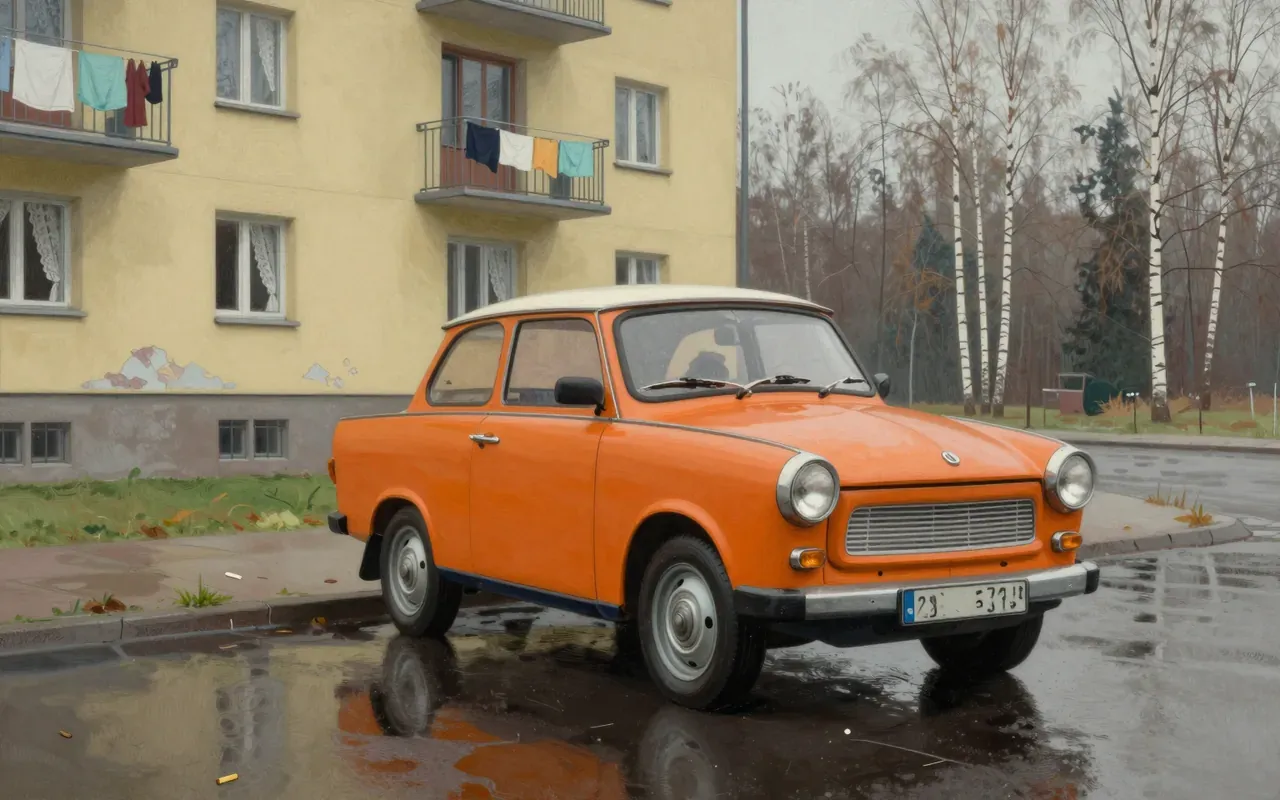
The Trabant 601 is a front-wheel-drive saloon built by VEB Sachsenring in Zwickau from 1964 to 1990. It used a transverse two-stroke engine and Duroplast body panels. It delivered on its promise of affordability and repairability — but offered no meaningful development over its 26-year run.

10:12

TVR Cerbera

Damian McTaggart · 1996

The TVR Cerbera is a British-built coupé manufactured by TVR from 1996 to 2006. It debuted at the 1993 London Motor Show as the third model under Peter Wheeler’s leadership, following the Griffith and Chimaera. It is a hard-top with a 2+2 seating layout, described as both a sports car and a grand touring car. It was TVR’s first model powered by an in-house engine—the AJP8 V8—ending historical reliance on purchased engines from Rover, Ford and Triumph. Its name derives from Cerberus, the three-headed beast of Greek legend guarding Hades’ entrance.

9:08

TVR Griffith

Peter Wheeler · 1991

The TVR Griffith (1990–2002) is a lightweight, fiberglass-bodied, 2-door, 2-seat sports car with a V8 engine, designed and built by TVR. It used a 4.0 L Rover V8 engine, optionally upgraded to 4.3 L. A new generation presented in 2017 never entered production.

9:56

Venturi 400

Gérard Godfroy · 1994

The Venturi 400 GT is a French-built, mid-1990s supercar designed around a race-proven V6 biturbo engine. Only about 15 were made for the road. Its styling deliberately echoes the Ferrari F40. It is rare, uncompromising, and unapologetically track-focused.

9:26

Volkswagen ID.3

Klaus Zyciora · 2019

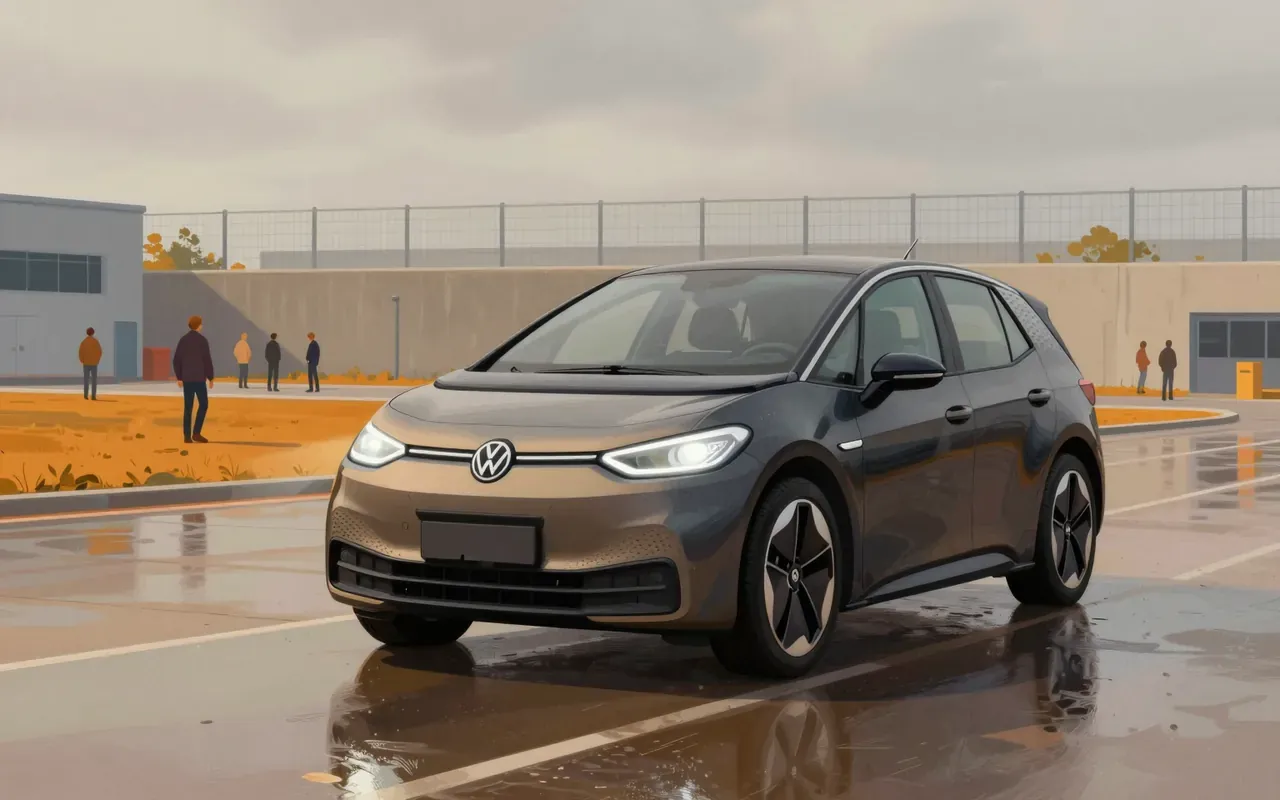
The Volkswagen ID.3 is a battery electric small family car. It launched in 2019 as the first production vehicle on Volkswagen Group’s MEB platform. It set the template for scale, software integration, and factory conversion — but missed its own software delivery targets.

9:36

Volkswagen Phaeton

Hartmut Warkuß · 2002

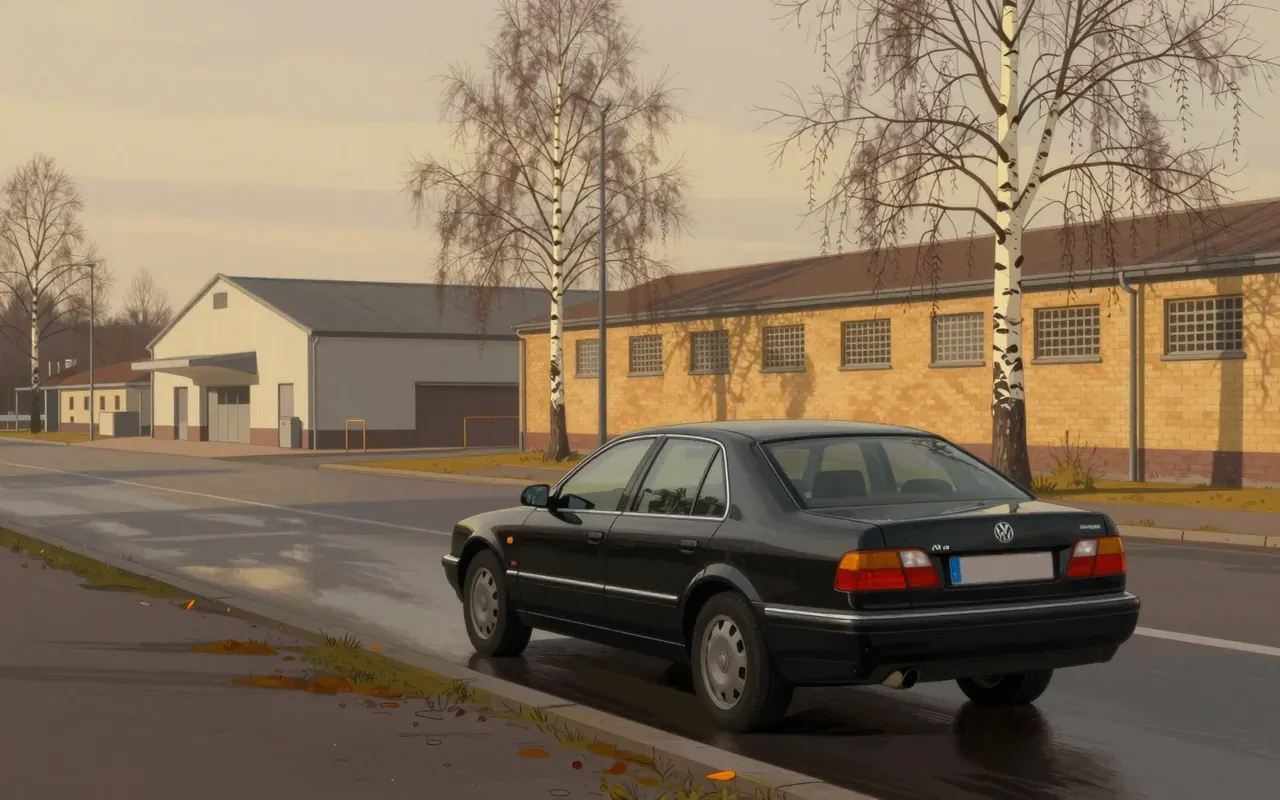
The Volkswagen Phaeton was a full-size saloon and Volkswagen’s ‘premium class’ vehicle. Introduced at the 2002 Geneva Motor Show, it was conceived by Ferdinand Piëch to surpass Mercedes-Benz and BMW in comfort and engineering excellence—not performance. It used a bespoke all-steel D1 platform shared with Bentleys, diverging from Audi’s aluminium A8. It featured radar adaptive cruise control, the first V10 TDI in a production sedan, and hand assembly at Dresden’s Transparent Factory. Sales in North America ended in 2006; global sales ended in 2016 after 84,253 units. Production ceased in March 2016.

8:58

Volvo 480

John de Vries · 1986

The Volvo 480 was Volvo’s first front-wheel drive car and the only one with pop-up headlights. Produced in Born, Netherlands, from 1986 to 1995, it was a three-door, four-seat hatchback coupé marketed in Europe. Its form fused liftback and estate cues. It was intended for the US as a 'sports wagon', but that plan was scrapped. It established Volvo’s move into compact, front-drive architecture — without sacrificing structural integrity or electronic innovation.

11:11

Volvo C30

Simon Lamarre · 2006

The Volvo C30 is a front-engine, front-wheel-drive premium compact hatchback produced from 2006 to 2013. It evolved from the SCC safety concept shown in 2001. It shares the Ford C1/Volvo P1 platform with the S40, V50 and C70. Volvo marketed it as both a premium hatchback and a sports coupe. Its rear styling and frameless glass rear hatch recall the P1800 ES and 480.

8:46

Wartburg 353

Hans Fleischer · 1966

The Wartburg 353 is a medium-sized family car from East German manufacturer AWE, launched in 1966 and built until 1988. Over a million units were produced. It uses a 1-litre, 3-cylinder two-stroke engine, front-wheel drive, and a transmission with a freewheel.

12:56

Yugo 45

Giorgetto Giugiaro · 1980

The Yugo is a subcompact hatchback manufactured by Zastava Automobiles from 1980 to 2008. It is a shortened variant of the Fiat 128. It was built in Kragujevac, Serbia, then part of Yugoslavia.

9:15

Aston Martin Bulldog

William Towns · 1979

A one-off 1979 concept built to show off Newport Pagnell—and chase a title it never claimed.

10:10

Chrysler Turbine Car

Elwood Engel · 1950

The Chrysler Turbine Car was an experimental two-door hardtop coupe designed by Elwood Engel and built by Chrysler with bodywork by Carrozzeria Ghia. It used the A-831 turbine engine, was produced in 55 units between 1963 and 1964, and featured power brakes, power steering, and a TorqueFlite transmission. All were finished in 'turbine bronze' paint.

9:37

Ford RS200

Ghia · 1984

The Ford RS200 is a purpose-built homologation special: mid-engined, all-wheel drive, plastic-fiberglass body by Ghia, built by Reliant in Shenstone to meet FIA Group B’s 200-unit rule. It exists only to enable a rally car—not as a design statement, luxury product, or road-going evolution.

10:10

Honda CR-X

Honda · 1983

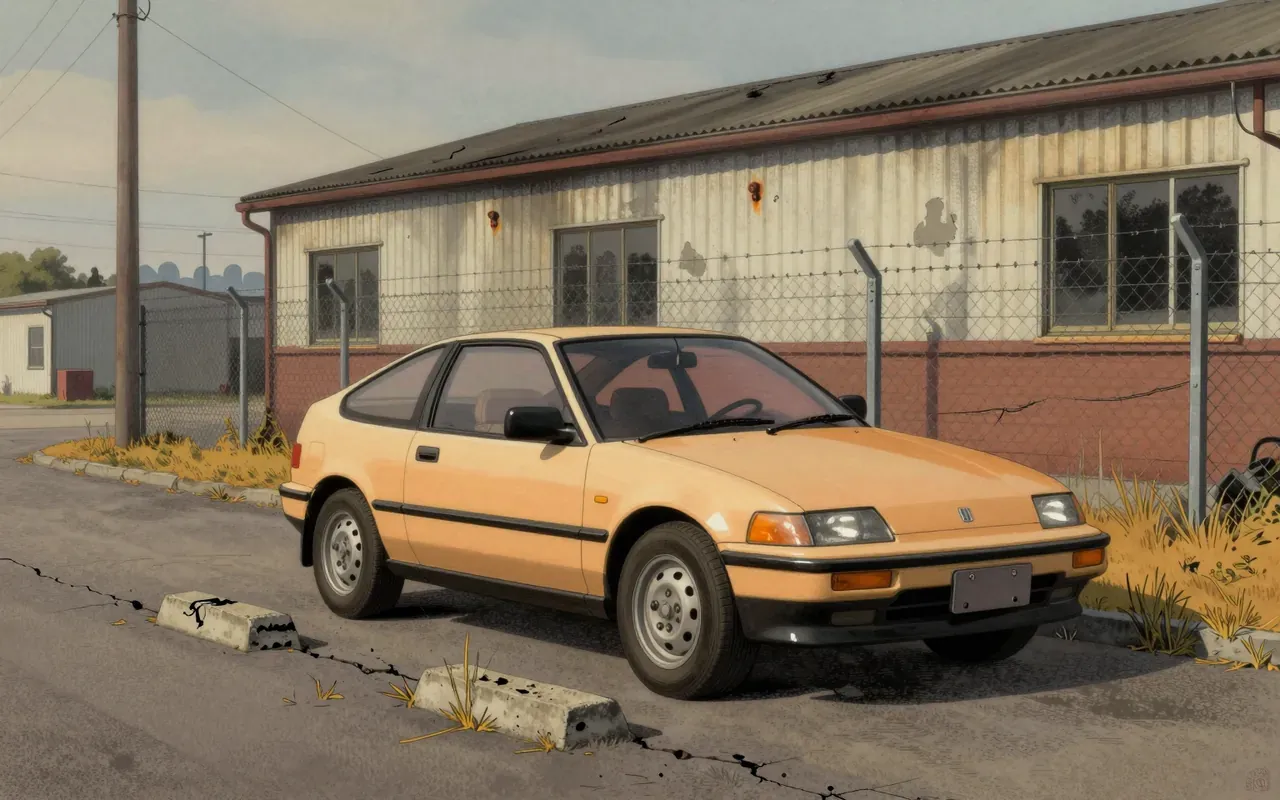
The Honda CR-X (1983) redefined what a compact front-wheel-drive car could do — not by adding power or luxury, but by removing mass and complication. It was never a sports car in form or intent. It was a Civic sharpened for feedback, visibility, and agility. Its global variations — two-seat in North America, 2+2 elsewhere — show Honda’s willingness to tailor packaging without fragmenting engineering. It changed expectations for economy cars: they could be fun to drive, not just efficient to own.

9:57

Koenigsegg CC8S

Christian von Koenigsegg · 2002

The CC8S is the first production car from Koenigsegg Automotive. It is a mid-engine, rear-wheel-drive targa top sports car built from 2002 to 2004 in six units. It introduced the dihedral synchro-helix doors and front-trunk roof stowage. It won the Guinness World Record for Most Powerful Production Engine and design awards from Red Dot and Utmärkt Svensk Form. It was developed from the CC prototype after eight years of research and development beginning in 1994. Chassis, suspension, brakes and other components were designed in-house. The pre-production car debuted at the 2000 Paris Auto Show. Its unique features include the front-trunk roof storage (unlike the Ferrari F50), the dihedral synchro-helix doors, and a central free-flowing exhaust based on the 'Rocket Cat Principle'. Christian von Koenigsegg and David Crafoord co-created the design concept.

9:14

Mitsubishi Galant VR-4

Mitsubishi · 1987

The Galant VR-4 is Mitsubishi’s first high-performance all-wheel-drive sedan, developed for Group A rallying and launched in 1987. It introduced the Dynamic Four AWC system — a full-time four-wheel drive setup with viscous coupling, plus four-wheel steering and four-wheel ABS. It was sold globally to meet homologation requirements, including 2,000 units in the US in 1991 and 1,000 in 1992. Later generations added liftback (Eterna ZR-4) and station wagon (Legnum) variants. The eighth generation was initially JDM-only but gained overseas cult status via grey imports. In 2000, Ralliart officially imported 200 units to the UK. Production ended in 2002 due to revised Japanese emissions standards.

7:56

Mitsubishi Lancer Evolution

Mitsubishi · 1999

The Mitsubishi Lancer Evolution is a rally-bred sports sedan built on the Lancer platform. Ten generations were produced from 1992 to 2016. All used a two-litre intercooled turbo inline-four engine and all-wheel drive. It launched in Japan only, then reached the UK and Europe around 1997 via Ralliart dealers—starting with the Evolution IV.

10:11

Nissan 180SX

Nissan · 1989

The Nissan 180SX is a Japanese-market fastback built from 1988 to 1998 on the S13 platform. It featured pop-up headlights and a liftgate. It launched in March 1989 and was sold exclusively through Nissan Prince Stores alongside the Skyline and Silvia. It used the CA18DET turbo engine initially, then upgraded to the SR20DET in 1991 and added the SR20DE in 1996.

10:59

Plymouth Superbird

Chrysler Engineering · 1970

The Plymouth Superbird is a 1970-only, NASCAR-focused, aerodynamically enhanced variant of the Plymouth Road Runner, developed as Plymouth's response to the 1969 Dodge Charger Daytona and designed to lure Richard Petty back from Ford; it featured a distinctive nosecone, high rear wing, and 'beep, beep' horn, with three engine options — most notably the rare 426 Hemi — and was built in limited numbers (around 1,935 units) to meet NASCAR homologation rules.

10:45

Proton Saga

Mitsubishi · 1985

The Proton Saga is a foundational Malaysian car—not a technical benchmark, but a political and industrial one.

9:26

Renault Clio V6 RS

Renault Sport · 2001

The Renault Clio V6 RS is a radical departure from the hot hatch formula: mid-engined, rear-wheel drive, hand-built, and deliberately impractical. It exists as a mechanical argument—against front-drive orthodoxy, against shared-platform economics, against the idea that a ‘hatch’ must behave like one. Its legacy is not volume or versatility, but velocity of idea.

8:58

Saleen S7

Phil Frank · 2000

The Saleen S7 is an American hand-built, high-performance sports car. It debuted on August 19, 2000, at the Monterey Historic Races. It was the first fully proprietary car produced by Saleen. Phil Frank contributed the body and interior CAD design and development. Its all-aluminium engine is a bored-and-stroked derivative of Ford's 351 Windsor small block with Cleveland-style canted valve heads. It is not based on the FE big-block. It produces 550 hp (410 kW) at 6,400 rpm.

9:26

Volkswagen W12

Giorgetto Giugiaro · 1997

The Volkswagen W12 was a series of five mid-engined concept cars developed by Volkswagen Passenger Cars between 1997 and 2001 in collaboration with Italdesign and Giorgetto Giugiaro, featuring a 5.6 L W12 engine and designed to showcase Volkswagen Group's supercar and high-performance engine capabilities; variants included the W12 Syncro Coupé (AWD), W12 Roadster (RWD), and W12 Nardò Coupé/Record Car (high-speed variant), with the latter setting a 24-hour endurance speed record at the Nardò Ring in 2002.

11:37

AC Cobra

AC Cars · 1962

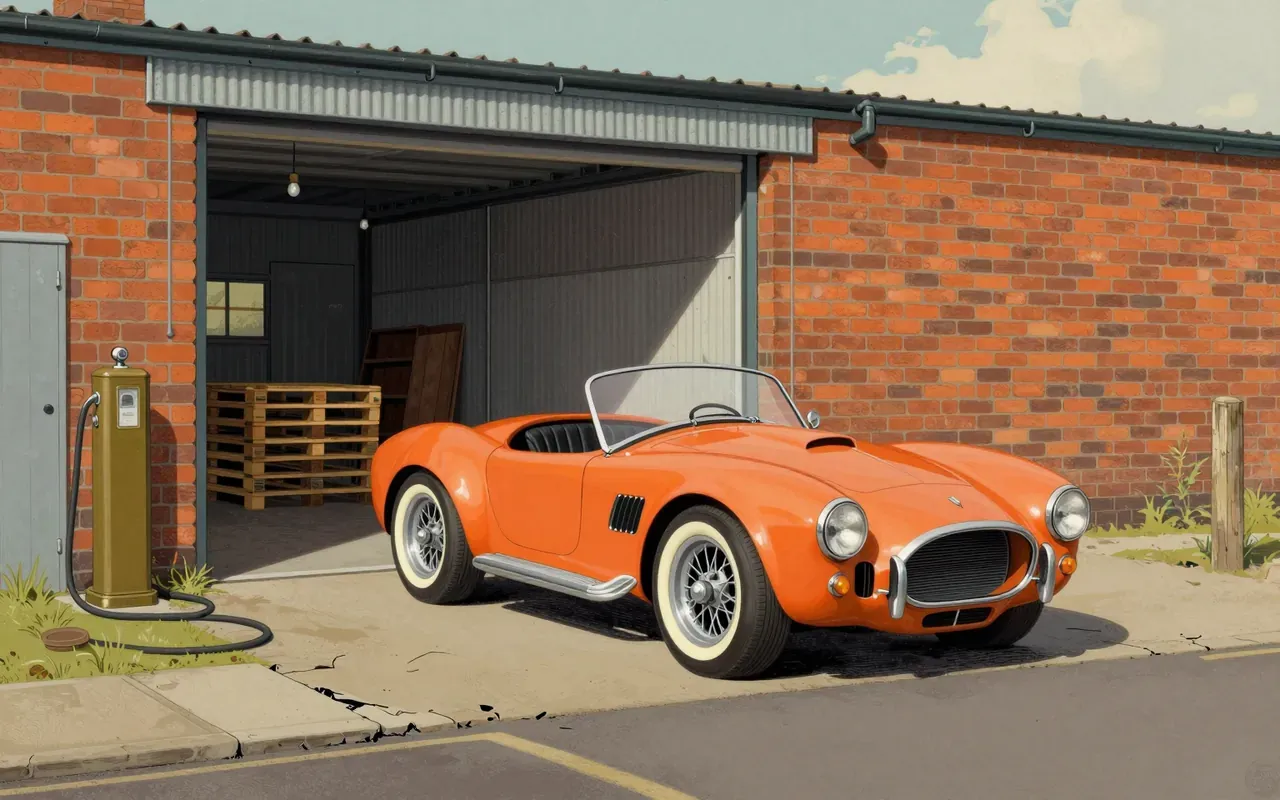
The AC Cobra is a British-built sports roadster developed from the AC Ace, modified to accept Ford V8 engines, produced from 1962 to 1967 in the UK and US, with evolving chassis and suspension designs across Mk I–III iterations, and powered by various displacements of Ford V8 engines — notably the 4.3 L, 4.7 L, and 7.0 L variants.

10:57

Alfa Romeo 156

Walter de Silva · 1997

The Alfa Romeo 156 is a compact executive car introduced at the 1997 Frankfurt Motor Show to replace the 155. Designed by Walter de Silva, it won the 1998 European Car of the Year award. It was produced from 1996 to 2007 in saloon, Sportwagon, and Crosswagon bodystyles. Assembly occurred in Pomigliano d'Arco, Italy and Rayong, Thailand. 673,435 units were built.

11:01

Alfa Romeo 33 Stradale

Franco Scaglione · 1967

The Alfa Romeo 33 Stradale is a mid-engine sports car derived from the Tipo 33 racing prototype, designed by Franco Scaglione and built by Carrozzeria Marazzi. Eighteen units were produced between 1967 and 1969. It featured a 2.0 L V8 engine and was the fastest commercially available car for the standing kilometer upon its introduction.

9:33

Alfa Romeo 4C

Marco Tencone · 2013

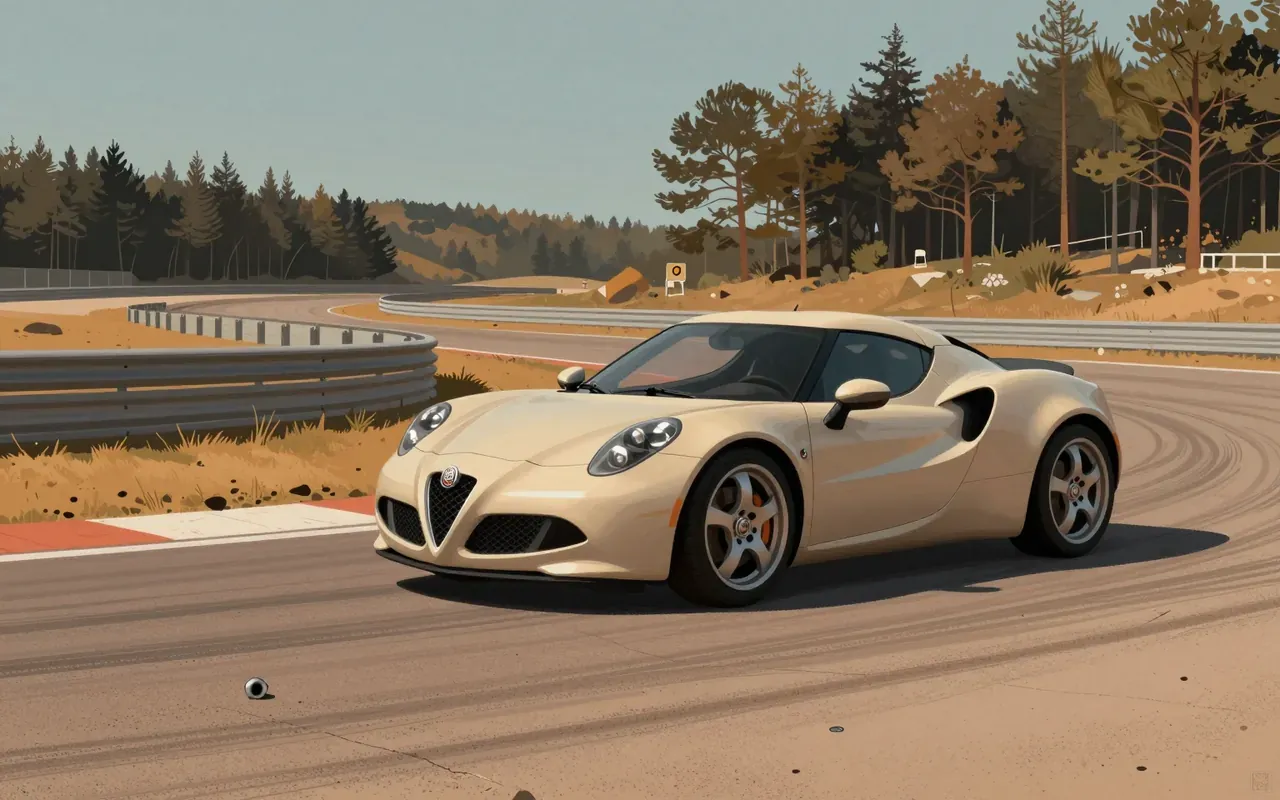
The Alfa Romeo 4C is a focused, uncompromising expression of mid-engined sports car logic—light, stiff, direct. It sacrifices isolation and utility to sharpen the connection between driver and road. Its design solves for feedback, not comfort.

9:27

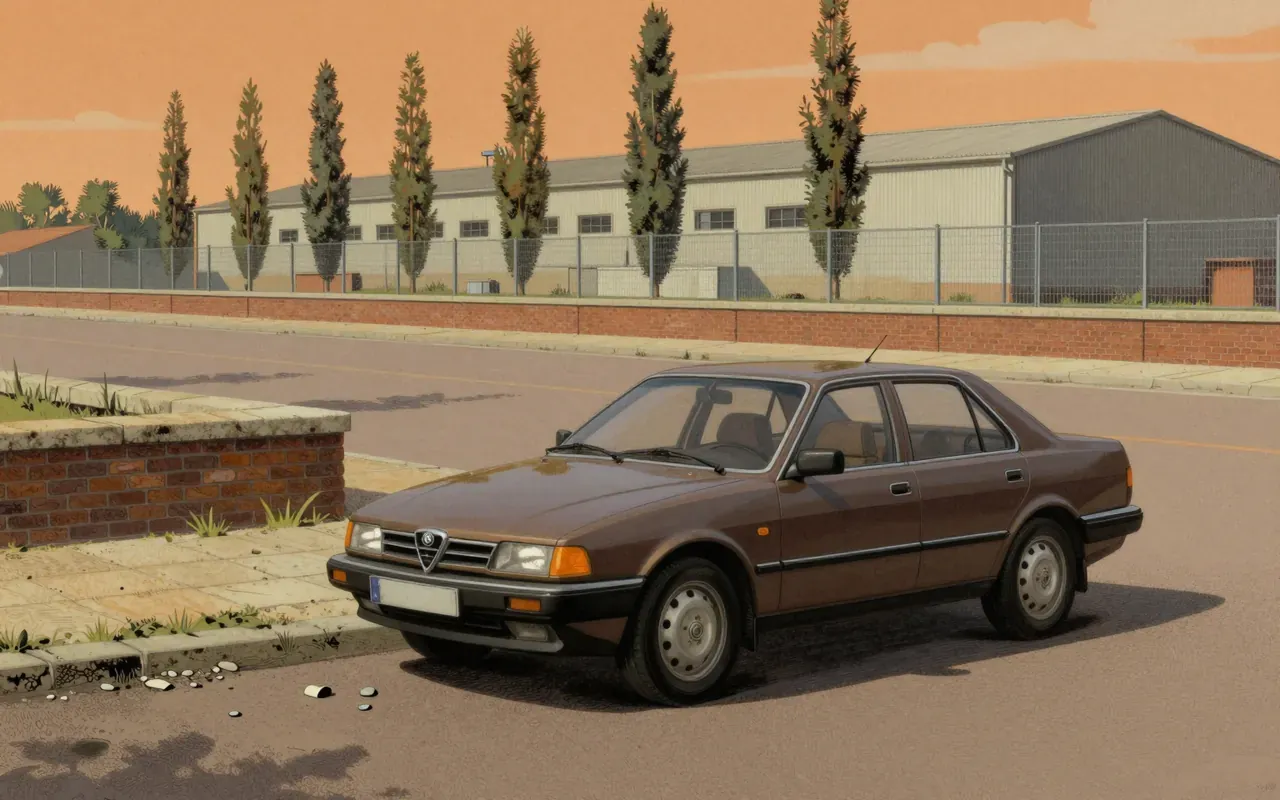
Alfa Romeo 75

Ermanno Cressoni · 1985

The Alfa Romeo 75 is a compact executive saloon produced between 1985 and 1992. Designed by Ermanno Cressoni, it features a striking wedge shape and a transaxle layout that achieves near-perfect front-to-rear balance. Its suspension combines torsion bars at the front with a de Dion tube at the rear, and rear brake discs are located centrally near the gearbox-differential group. A prototype estate was shown in 1986 but never entered production.

9:59

Alfa Romeo 8C Competizione

Wolfgang Egger · 2007

The Alfa Romeo 8C Competizione is a limited-production sports car developed by Alfa Romeo between 2007 and 2010. It was first shown as a concept at the 2003 Frankfurt Motor Show. Its name refers to its eight-cylinder engine and Alfa Romeo's racing pedigree. Maserati engineers created the production version using components from both Maserati and Ferrari. Development proceeded in parallel with the GranTurismo, and production coincided with the global crisis. Over 1,400 orders were received, but only 500 coupés and 329 spiders were delivered. It was designed by Wolfgang Egger and Daniele Gaglione at Centro Stile Alfa Romeo, echoing styling from Alfa Romeo automobiles of the 1950s and 1960s.

11:34

Alfa Romeo Giulia (2015)

Marco Tencone · 2015

The Alfa Romeo Giulia (2015) is a compact executive saloon. It marks Alfa Romeo’s return to the saloon segment after 2011 and to longitudinal rear-wheel drive after 1992. It uses a front-engine, rear-wheel-drive layout targeting 50/50 weight distribution. Unveiled 24 June 2015, it entered production on 19 April 2016 at FCA Italy’s Cassino Plant. It is the first model in Alfa Romeo’s €5 billion relaunch plan.

9:36

Alfa Romeo Spider

Pininfarina · 1955

The Alfa Romeo Spider (1955) was the first vehicle Pininfarina produced in large numbers. Designed and assembled by Pininfarina in Grugliasco, it was a front-engined, rear-drive roadster that launched in 1958 with 1,025 units and scaled to over 4,000 in 1959. It remained in production across four series until April 1993. Its success cemented Pininfarina’s role as Alfa Romeo’s long-term Spider partner—and proved coachbuilding could be industrial.

10:00

Alfa Romeo Montreal

Marcello Gandini · 1970

The Alfa Romeo Montreal is a Gandini-designed 2+2 coupe that began as a 1967 concept at Expo 67 in Montreal and entered production from 1970 to 1977. Its 2,593 cc 90° V8 engine was bespoke, dry-sump, cross-plane, and SPICA-injected—producing around 200 PS—but shared its chassis and suspension with the Giulia GTV. It embodies Gandini’s priority on vehicle architecture over styling, and its 3,917-unit production run reflects its status as a limited-series production car, not a prototype or coachbuilt one.

10:45

Alfa Romeo SZ

Robert Opron · 1989

The Alfa Romeo SZ is a high-performance limited-production sports car built from 1989 to 1991 by a partnership between Centro Stile Zagato, Centro Stile Alfa Romeo and Centro Stile Fiat.

8:48

AMC AMX

Dick Teague · 1968

The AMC AMX is a two-seat GT-style muscle car produced by American Motors Corporation from 1968 through 1970. It was one of only two American-built two-seaters and competed directly with the Chevrolet Corvette at a significantly lower price. Based on the Javelin but with a shorter wheelbase and no rear seat, it was styled as a coupe with fixed rear quarter windows. It featured AMC V8 engines in 290, 343, or 390 cubic inch displacements. After three model years, the two-seat version was discontinued, though the AMX name continued on high-performance Javelin models. Its name originated from the 'American Motors experimental' designation used on 1966 concept vehicles.

11:58

AMC Pacer

Dick Teague · 1975

The AMC Pacer is a design document in motion: a cab-forward, wide-small compact that prioritised interior volume and visibility over mechanical convention or market realism. It succeeded as a statement of spatial logic—not as a viable economy car.

10:24

Aston Martin DB4

Touring · 1958

The DB4 is a grand tourer designed by Carrozzeria Touring, built at Newport Pagnell, and powered by a Tadek Marek–designed 3.7 L DOHC straight-6. It features servo-assisted disc brakes, independent front suspension with rack-and-pinion steering, and a live rear axle with Watt's linkage. Its design influenced later models including the DB4 GT Zagato and Lagonda Rapide. Technically distinct from both predecessor and successor, it was produced from 1958 to 1963.

9:43

Aston Martin DB5

Touring · 1963

The DB5 is a tightly specified British grand tourer, designed by Touring, built by Aston Martin, and defined by disciplined evolution — not revolution.

10:03

Aston Martin DB6

Touring · 1965

The DB6 is a functional evolution — not a revolution — in Aston Martin’s grand touring line. Its Kammback tail and lengthened wheelbase directly address aerodynamic lift identified in wind tunnel testing. It retains the live-axle layout, rejecting the more complex de Dion prototype to prioritise production readiness. It is recognisable, stable, and rooted in continuity — not novelty.

10:44

Aston Martin DB7

Ian Callum · 1994

The DB7 is a grand tourer designed by Ian Callum and Keith Helfet. It was produced by Aston Martin from September 1994 to December 2004. It was offered in coupé and convertible bodystyles. More than 7,000 were built. It was made mostly with resources from Jaguar Cars and had the financial backing of the Ford Motor Company. Ian Callum received the Jim Clark Memorial Award in 1995 for his styling work on the DB7.

9:05

Aston Martin DB9

Henrik Fisker · 2004

The DB9 is a two-door grand tourer designed by Ian Callum and Henrik Fisker. It was built in Gaydon, Warwickshire. Production ran from 2004 (coupé) to 2016, with the Volante convertible added in 2005. It uses aluminium and composites on a vertical/horizontal platform, with a front mid-engine, rear-wheel drive layout. It features a 5.9 L V12 engine. Henrik Fisker led its production design, drawing on Aston Martin’s heritage while enabling scalable manufacturing.

10:38

Aston Martin DBS

William Towns · 1967

The Aston Martin DBS is a grand tourer produced from 1967 to 1972. It was designed by William Towns as a modern-looking successor to the DB6, following the collapse of Touring of Milan’s design effort. It shares the DB6’s 4.0 L engine and mechanical base but adopts a larger four-seat layout and a deliberately contemporary fastback silhouette with a squared front grille. It was the final model developed under David Brown’s ownership.

9:46

Aston Martin Lagonda

William Towns · 1976

The 1976 Aston Martin Lagonda Series 2 is a full-size luxury four-door saloon designed from the ground up by William Towns. It introduced the first digital instrument panel in a production car — an LED array whose development cost four times the car’s total budget. Later Series 3 used cathode-ray tubes, worsening reliability. Only 645 units were built across all generations. Its wedge shape defined 1970s automotive avant-garde. Its electronics were a warning, not a promise.

10:51

Aston Martin Vanquish

Ian Callum · 2001

The 2001 Aston Martin Vanquish is Ian Callum’s definitive statement on Aston Martin’s early-2000s direction: a V12 coupé evolved without deviation from his 1998 Project Vantage concept, styled with DB4 GT Zagato aggression, and built as the last all-new car at Newport Pagnell.

10:46

Audi RS 2 Avant

Audi · 1994

The Audi RS 2 Avant is Audi's first RS model and first high-performance Avant — a limited-edition, jointly developed Audi-Porsche estate car built on the B4 platform from March 1994 to July 1995. It features a modified 2,226 cc inline-five turbocharged petrol engine producing 315 PS and 410 N⋅m, paired with a six-speed manual transmission and quattro permanent all-wheel drive. Assembly occurred at Porsche’s Rossle-Bau plant. Approximately 2891 units were built, including only 180 right-hand-drive examples.

9:36

Audi TT

Freeman Thomas · 1998

Audi TT (1998) — Freeman Thomas co-design. Front-engine, transverse, FWD or quattro. Coupé and roadster. Built on VW Group A-platforms. Named after Isle of Man TT.

8:50

Autozam AZ-1

Toshiko Hirai · 1992

The Autozam AZ-1 is a tightly packaged, rear mid-engine kei sports car built by Mazda between October 1992 and October 1994. It uses a Suzuki-sourced 657 cc turbocharged engine and features gullwing doors. Its design prioritises driver engagement and compact agility over practicality or comfort.

13:32

Bentley Continental R

John Heffernan · 1991

The Bentley Continental R is a luxury coupé built from 1991 to 2003 on the Rolls-Royce SZ platform, featuring a unique non-Rolls-Royce body, a 6.75 L turbocharged V8 engine, front-engine RWD layout, Cd=0.37 aerodynamics, roof-cut door frames, and a subtle rear spoiler. It was the fastest, most expensive, and most powerful Bentley of its day—and the most expensive production car in the world at launch.

10:54

BMW 507

Albrecht von Goertz · 1956

The BMW 507 is a hand-formed aluminium luxury grand touring convertible designed by Albrecht von Goertz, developed from a shortened BMW 503 frame, powered by a 3.2 L V8 engine and mated to a four-speed manual transmission, produced from 1956 to 1959 in only 252 units due to high costs.

9:06

BMW 3 Series (E21)

Paul Bracq · 1975

The E21 is the first-generation BMW 3 Series. Paul Bracq designed it. It launched in June 1975. It ended production in December 1983. It replaced the 02 Series. It was built exclusively as a two-door sedan or coupé. It did not offer a Touring variant. Six-cylinder models used quad round headlights. Initial engines were carburetted four-cylinders (1.6 L, 1.8 L, 2.0 L). Fuel injection debuted on the 320i in late 1975. The 323i introduced fuel-injected six-cylinders in 1978.

10:11

BMW i8

Benoit Jacob · 2014

The BMW i8 is a plug-in hybrid sports car designed by Benoit Jacob and marketed under the BMW i sub-brand. It was unveiled at the 2013 Frankfurt Motor Show and released in Germany in June 2014. U.S. deliveries began in August 2014. A roadster variant launched in May 2018. Production ended in June 2020. The 2015 i8 accelerated from 0 to 100 km/h in 4.4 seconds. It had a 7.1-kWh lithium-ion battery pack and an all-electric range of 37 km under the New European Driving Cycle. The plug-in hybrid system comprised a three-cylinder, 1.5-litre BMW TwinPower Turbo gasoline engine.

9:03

BMW M1

Giorgetto Giugiaro · 1974

The BMW M1 is a mid-engined, rear-wheel-drive coupé designed by Giorgetto Giugiaro in 1977. Hand-built from 1978 to 1981 as a homologation special, it was the first car developed solely by BMW M and the first mass-produced mid-engine BMW. Its fibreglass body reflects Giugiaro’s angular 'folded paper' design language. Only 453 units were produced.

10:15

BMW Z8

Henrik Fisker · 1999

The BMW Z8 is a roadster designed by Henrik Fisker, produced from 1999 to 2003. It evolved from the Z07 concept shown at the October 1997 Tokyo Motor Show. Its design honours the 1956–1959 BMW 507. It uses a 4.9 L S62 V8 engine mounted behind the front axle for 50/50 weight distribution. The body and chassis are all-aluminium. It was hand-finished in Munich after spaceframe production in Dingolfing. A total of 5,703 units were built.

8:21

Borgward Isabella

Carl Borgward · 1954

The Borgward Isabella is a 1954–1962 two-door saloon built in Bremen. It uses a 1493 cc four-cylinder engine, front-engine rear-wheel-drive layout, monocoque construction, and swing axle rear suspension. It was originally planned as the Hansa 1500 but renamed Isabella due to internal and media preference. Though smaller and less powerful than its predecessor, it became Borgward’s largest commercial success—11,150 units were built in its first year, and 202,862 total by end of production. Its launch price was DM 7,265—higher than Opel Rekord and Ford Taunus, but lower than Mercedes-Benz 180. A launch road test recorded 130 km/h top speed and 8.4 L/100 km fuel consumption. Testers praised its wide cabin, large windows, effective brakes, cigarette lighter, and clock. Carl Borgward participated in detail in its design. It embodied American-type styling and chrome decoration with European compact dimensions.

10:24

Bugatti Type 35

Ettore Bugatti · 1924

The Bugatti Type 35 is the first holistically conceived, race-ready car sold as a complete system. It pioneered cast alloy wheels and won over 1,000 races between 1924 and 1930. Its design prioritised integration over adaptation—and succeeded globally, with factory and privateer teams alike.

11:19

Bugatti Veyron

Jozef Kabaň · 2005

The Bugatti Veyron is a mid-engine, all-wheel-drive sports car with an 8.0 L quad-turbocharged W16 engine, designed by Jozef Kabaň (exterior) and Hartmut Warkuß (chief designer), produced from 2005 to 2015 in a total of 450 units. It features a seven-speed dual-clutch direct-shift automatic transmission built by Ricardo and permanent all-wheel drive using the Haldex Traction system. Multiple variants — standard, Super Sport, Grand Sport, and Grand Sport Vitesse — achieved verified top speeds up to 431.072 km/h.

9:46

Buick Riviera

Ned Nickles · 1963

The 1963 Buick Riviera is the origin point of GM’s personal luxury car strategy. It is not a sports car. It is not a sedan. It is a two-door hardtop built on a new platform, named for a coastline, engineered for quiet authority.

9:26

Buick Wildcat

Buick Design · 1963

The Buick Wildcat is a full-size car produced from 1963 to 1970. It was positioned between the LeSabre and the larger C-body Electra. It offered two-door hardtop, convertible, and four-door hardtop sedan body styles. It replaced the 1962 Invicta subseries and was itself replaced by the Centurion in 1971.

11:37

Chevrolet Corvette (C1)

Harley Earl · 1953

The C1 Corvette is the foundational American sports car: a rushed, hand-built, fibreglass roadster born from Harley Earl’s desire to answer European competition. It established Chevrolet’s two-seat lineage after 15 years’ silence. Its front-engine, rear-wheel-drive layout and solid rear axle reflect its derivation from full-size Chevrolets—not racing pedigree. It prioritises presence over precision. It is historically indispensable but dynamically unrefined.

9:47

Chevrolet Corvette (C3)

David Holls · 1968

The C3 is a stylistic pivot built on mechanical continuity. Its shape is decisive. Its engineering is inherited.

9:38

Chevrolet Impala

Harley Earl team · 1959

The 1958 Chevrolet Impala is a full-size car, launched as a top-tier Bel Air variant without Bel Air badging, distinguished by symmetrical triple taillights, named after the African antelope, and developed from a 1956 GM Motorama concept car. It rides on GM’s shared 'A' body platform. Harley Earl personally reviewed the foundational styling sketch. Production spanned discontinuous periods: 1958–1985, 1994–1996, and 2000–2020.

9:32

Citroën BX

Marcello Gandini · 1982

The Citroën BX is a large family car designed by Marcello Gandini and produced by Citroën from 1982 to 1994. It was built as a hatchback and estate, with 2,315,739 units made. It is French, midsize, and categorised among Gandini’s practical mass-production designs.

10:44

Citroën CX

Robert Opron · 1974

The CX is the last complete expression of Citroën’s pre-merger philosophy: hydropneumatic suspension, front-wheel drive, fastback form, and aerodynamic discipline. It succeeded the DS without imitating it. It won European Car of the Year in 1975. It was Robert Opron’s final and favourite design. It marked the end of the 'big Citroën' era that began in 1934.

9:12

Citroën GS

Robert Opron · 1970

The Citroën GS is a small family car designed by Robert Opron, launched in 1970 after winning Citroën’s 1967 internal Project G competition. It was built as a fastback four-door saloon and five-door estate until 1979. A revised version, the GSA, was produced from late 1979 until 1986 in five-door hatchback or estate body styles. Combined production reached approximately 2.5 million units. It has a front-engine, front-wheel-drive layout and seating for five passengers. Noted for its aerodynamic body shape with a drag coefficient of 0.318, fully independent hydro-pneumatic brakes and self-levelling suspension, and air-cooled flat-four engine, the GS was styled by Robert Opron, with a low nose, a two-box silhouette, semi-enclosed rear wheels and a sharply vertical Kamm-tail. In 1967, having abandoned the ambitious Projet F begun by Bertoni and taken over by Opron, Citroën initiated a competition for a new mid-range model that pitted Opron and the Bureau d'Études against Giorgetto Giugiaro and Italdesign. Both teams submitted designs for front wheel drive three- and five-door cars powered by flat-four engines. Opron's proposal carried the day, and his Project G eventually became the GS released in 1970. Some have claimed that Opron based the GS' shape on the Pininfarina Austin 1800 Aerodinamica Berline of 1967. Others assert that, while it may have been influenced by the Italo-English concept car, Opron's design was an independent work, and point out that Citroën has never acknowledged any link.

11:18

Citroën SM

Robert Opron · 1970

The Citroën SM is a high-performance coupé produced by Citroën from 1970 to 1975, featuring a 2.7 L V6 engine and front-engine, front-wheel-drive layout. It was developed as a Gran Tourer using Maserati's engine technology and Citroën's suspension, debuted at the 1970 Geneva Motor Show, and sold initially in France in September 1970. All factory-produced units were left-hand-drive, and its design was constrained by French puissance fiscale taxation.

10:57

Citroën Traction Avant

Flaminio Bertoni · 1934

The Citroën Traction Avant redefined what a production car could be — not through novelty, but through integration. Its welded unitary body, front-wheel drive, and four-wheel independent suspension formed a coherent system. It did not chase speed or luxury. It solved for lightness, space, and real-world composure. Its influence is structural, not stylistic.

10:06

Citroën XM

Bertone · 1989

The Citroën XM is a pivotal failure: technically audacious, commercially inert, and stylistically isolated. It advanced hydropneumatic suspension into the electronic age — but lost the emotional and mechanical connection that made Citroën’s earlier flagships endure.

10:21

Cizeta-Moroder V16T

Marcello Gandini · 1991

The Cizeta-Moroder V16T is a self-contained argument in sheet metal and alloy: that a car’s reason for being can be singular, uncompromising, and entirely divorced from utility.

9:26

Dacia 1300

Renault · 1969

The Dacia 1300 is a Romanian-built, Renault 12–based medium-sized family car launched in 1969 under a state-directed initiative to reduce import dependence; it was required to be inexpensive, family-sized, and equipped with ≤1.3 L engine; Renault 12 was chosen over rivals for technical and political reasons; body styles included sedan, estate, and pickup truck; the name '1300' denotes engine displacement.

10:04

De Tomaso Mangusta

Giorgetto Giugiaro · 1967

De Tomaso Mangusta (1967) — a Giugiaro-designed mid-engined sports car built on a modified P70 steel backbone chassis, with Ford V8 power and a distinctive gull-wing bonnet. 401 units produced. Suffered from handling instability, cramped cabin, and low ground clearance.

9:45

De Tomaso Pantera

Tom Tjaarda · 1971

The De Tomaso Pantera is a mid-engine, rear-wheel-drive sports car designed by Tom Tjaarda at Ghia in 1970 and built by Italian manufacturer De Tomaso from 1971 to 1992. Its steel monocoque chassis was the brand’s first use of that construction. Over 7,000 units were produced—the most of any De Tomaso—with more than three quarters sold through Lincoln-Mercury dealers in the US between 1972 and 1975.

9:52

De Tomaso Vallelunga

Fissore · 1964

The De Tomaso Vallelunga is a foundational mid-engine sports car. Its aluminium Fissore body, Ford Kent engine and Volkswagen transaxle formed a lightweight, race-derived package—built in just fifteen examples before production shifted to Ghia. It is historically significant but physically sparse: no performance data, no driver testimonials, no surviving service history. Its value lies entirely in its architecture and provenance—not its execution.

10:29

Dodge Charger Daytona

Chrysler Engineering · 1969

The 1969 Dodge Charger Daytona is a purpose-built NASCAR racer derived from the Charger R/T. It introduced radical aerodynamics — nose cone and rear wing — to achieve stability at 200 mph. It won six races and changed how American manufacturers approached superspeedway competition. It is not a grand tourer, not a collector’s lounge piece, and not a design exercise — it is a documented response to a specific racing problem.

10:16

Duesenberg Model J

Gordon Buehrig · 1928

The Duesenberg Model J is a luxury automobile made by Duesenberg, debuting in 1928 and offered for ten years. Gordon Buehrig, aged 25 and chief body designer for Duesenberg, designed it. Its 420 cu in straight-eight engine produced 265 horsepower in normally aspirated form, surpassing all larger-engined rivals. It achieved 116 mph top speed and 89 mph in second gear — making it both the fastest and most expensive American automobile on the market. It was intended to compete with the most luxurious and powerful cars in the world, launching the year before the 1929 stock market crash. Duesenberg Motors Company went bankrupt in 1937. Only the chassis and engine were factory-made; bodies were custom-built by third-party coachbuilders. Of 481 Model Js produced, about 378 survive.

10:18

Ferrari 250 GTO

Giotto Bizzarrini · 1962

The Ferrari 250 GTO is a front-engine, RWD grand tourer built between 1962 and 1964. Giotto Bizzarrini led its development from 1960 to improve aerodynamics over the 250 GT SWB. It used wind tunnel testing at Pisa University, a hand-welded oval tube frame, all-aluminium bodywork by Scaglietti, and a dry-sumped Tipo 168/62 Comp. 3.0 L V12. Only 36 were built after Ferrari counted earlier 250 GT SWB units toward FIA Group 3 homologation. It features a belly pan and underbody spoiler formed by the fuel tank cover.

11:06

Ferrari 456

Pietro Camardella · 1992

The Ferrari 456 is a front-engine grand tourer produced by Ferrari from 1992 to 2003. Designed by Pietro Camardella at Pininfarina and introduced in October 1993, it succeeded the 412 as Ferrari’s V12-powered four-seater. Its design drew heavy inspiration from the 365 GTB Daytona. It was offered in GT (six-speed manual) and GTA (four-speed automatic, from 1996) trims. The automatic transmission was Ferrari’s second and last conventional hydraulic automatic with torque converter. Its 5.5 L 65° V12 engine was derived from the Dino V6 — not the 60° V12s used in the 412 and Daytona.

8:29

Ferrari Enzo

Ken Okuyama · 2002

The Ferrari Enzo is a mid-engine sports car developed by Ferrari in 2002, named after Enzo Ferrari, and designed by Ken Okuyama while at Pininfarina. It uses a naturally aspirated 65° V12 engine, rear mid-engine/rear-wheel-drive layout, and an automated manual F1 gearbox. Production spanned 2002–2004 with 498 units built. It was developed using Formula One technology including a carbon-fibre body, automated-shift manual transmission, ceramic composite disc brakes, and active aerodynamics. Its F140 B V12 engine was the first of a new generation for Ferrari. It was announced at the 2002 Paris Motor Show with a limited production run of 399 units, later increased to 498. Ken Okuyama designed and supervised its design at Pininfarina before becoming Creative Director there in 2004. In 2022, he was arrested for speeding in an Enzo at 88 km/h over the limit.

9:07

Ferrari F40

Pietro Camardella · 1987

The Ferrari F40 is a mid-engine, rear-wheel drive sports car designed by Pietro Camardella under Pininfarina, powered by a 2.9 L twin-turbocharged and intercooled V8, produced from 1987 to 1993 in 1,311–1,315 units, all originally in Rosso Corsa and left-hand drive, and that it was Ferrari's final forced induction engine until 2014.

10:25

Ferrari Testarossa

Pininfarina · 1984

The Testarossa is a Pininfarina-designed, two-door coupé introduced in 1984 as the successor to the Berlinetta Boxer. It features a 4.9 L flat-12 engine and rear mid-engine/RWD layout. Production ran from 1984 to 1991, followed by the 512 TR and F512 M until 1996. Nearly 10,000 Testarossa-series cars were produced. It was developed to resolve thermal and packaging issues of the 512 BBi and is distinguished by its side strakes, twin rear radiators, and aerodynamic efficiency. Designers included Diego Ottina, Guido Campoli, Ian Cameron, and Emanuele Nicosia. It is a cultural icon of the 1980s, popularised by Miami Vice and Out Run.

9:44

Fiat 124 Sport Spider

Tom Tjaarda · 1966

The Fiat 124 Sport Spider is a convertible sports car designed by Pininfarina and styled by Tom Tjaarda. It debuted at the November 1966 Turin Auto Show. It used monocoque construction and a front-engine/rear-wheel-drive layout. Fiat marketed it from 1966 to 1982. Pininfarina continued production under its own name until 1985.

10:02

Fiat 500

Dante Giacosa · 1957

The Fiat 500 (1957) is a foundational microcar — not a scaled-down sedan, but a rethinking of mobility for postwar Italian cities. Designed by Dante Giacosa, it prioritises dimension, weight, and layout over comfort or power. Its 479 cc air-cooled twin, unsynchronised gearbox, suicide doors, and sub-500 kg mass make it physically immediate and spatially precise. It won the 1959 Compasso d’Oro for ‘courageous renunciation’ — a verdict confirmed by 181,036 units built before 1960. It is essential study for anyone interested in how constraints shape intelligent machines.

10:28

Fiat 500e

FCA Centro Stile · 2012

The Fiat 500e is an electric city car that redefines the 500 lineage without abandoning its visual language. It trades engine noise for immediacy, space for charm, and range for urban precision.

11:14

Fiat 600

Dante Giacosa · 1955

The Fiat 600 is a foundational rear-engined microcar that redefined packaging and suspension logic for mass-market mobility.

11:44

Fiat Barchetta

Andreas Zapatinas · 1995

The Fiat Barchetta is a roadster — not a convertible, not a sports car in the modern sense, but a barchetta: open, light, and purpose-built for the act of driving. Designed by Andreas Zapatinas and Alessandro Cavazza, it uses a shortened Mark 1 Fiat Punto chassis and a 1,747 cc DOHC four-cylinder engine producing 131 PS at 6,300 rpm. Built from 1995 to 2005, it delivers immediacy over isolation, simplicity over sophistication.

9:55

Fiat Coupé

Chris Bangle · 1993

The Fiat Coupé is a front-wheel drive two-door, four-seater designed by Chris Bangle at Centro Stile Fiat and built by Fiat between 1993 and 2000. Production ended with 72,762 units. It launched with 2.0 L 16V four-cylinder engines, added 1.8 L and five-cylinder 2.0 L variants in 1996, and received updates including a Variable Inlet System in 1998. Special editions included the 1998 Limited Edition with body kit and titanium grey details, and a 2000 1.8 L European edition marketed as elegant and affordable. Its design prioritised silhouette over packaging. It did not solve front-wheel drive compromises. It changed expectations of what a mainstream coupé could look like—and how long it could endure without reinvention.

8:03

Fiat Panda

Giorgetto Giugiaro · 1980

The Fiat Panda (1980) is a two-box, three-door hatchback designed by Giorgetto Giugiaro and Aldo Mantovani. It was conceived as a utilitarian 'container' matching the Fiat 126's weight and cost, using monocoque construction, a flat floor, and high roof for upright seating. Its interior features a seven-position adjustable rear seat — inspired by a folding lounge chair — enabling multiple configurations including a flat bed or V-shaped load support. The cargo area accommodates two 50-litre wine demijohns with all passengers aboard. Giugiaro described it as 'like a pair of jeans': simple, practical, unadorned. It won the Compasso d'Oro industrial design award in 1980.

9:29

Fiat Uno

Giorgetto Giugiaro · 1983

The Fiat Uno is a supermini designed by Giorgetto Giugiaro, launched in January 1983 to replace the Fiat 127. It was produced over a single generation with a 1989 facelift, offered in three- and five-door hatchback body styles, and built from 1983 to 1995 in Europe and until 1 January 2014 in Brazil. With over 8,800,000 units built, it ranks as the eighth most produced automobile platform in history. Its tall, square body featured a Kamm tail and achieved a drag coefficient of 0.34. It used front-engine, front-wheel-drive layout with MacPherson strut front and twist-beam rear suspension.

9:26

Fiat X1/9

Marcello Gandini · 1972

The Fiat X1/9 is a pragmatic mid-engined sports car — engineered, not styled. Its innovation lies in relocation, not invention: moving the Fiat 128’s transverse drivetrain to the rear of the cabin. Gandini’s architecture-first method produced a car that met US safety rules from day one, offered usable storage and visibility, and proved mid-engine packaging could work in volume production. It is neither fast nor refined. It is consequential because it worked — and because it showed how much could be achieved without starting over.

10:43

Fisker Karma

Henrik Fisker · 2011

The Fisker Karma is a luxury plug-in range-extended electric sports sedan produced by Fisker Automotive between 2011 and 2012. It was manufactured by Valmet Automotive in Finland. The EPA rated its all-electric range at 32 mi (51 km), and its fuel economy at 52 mpg‑US equivalent in all-electric mode and 20 mpg‑US in gasoline-only mode. It was priced from US$102,000 in the U.S., and around 1,800 units were delivered in North America and Europe through December 2012. Approximately 2,450 Karmas were built before production ceased in November 2012.

10:00

Ford Bronco

Paul G. Axelrad · 1966

The 1966 Ford Bronco is Ford’s first SUV. It launched as a compact, off-road vehicle using its own chassis. It was built at Ford’s Michigan Truck Plant in Wayne, Michigan.

11:09

Ford GT40

Roy Lunn · 1964

A mid-engined, rear-wheel-drive racing car developed by Ford between 1963 and 1964 under Roy Lunn’s direction, built in Slough then Dearborn, to beat Ferrari at Le Mans.

9:43

Ford GT90

John Coletti team · 1995

The Ford GT90 is a 1995 concept car that launched Ford’s 'New Edge' design language. It uses a carbon-fibre body over an aluminium monocoque, and mounts a 5.9-litre V12 mid-ship. It shares only roof-cutting doors with the GT40. It was never intended for production or racing. As of 2025, it resides in the Hajek Motorsports Museum.

9:42

Boss 302 Mustang

Larry Shinoda · 1969

The 1969–1970 Boss 302 Mustang is a Trans-Am homologation special designed by Larry Shinoda. It used a unique thin-wall, high-nickel 302 cu in (4.9 L) H.O. V8 with solid lifters, 4-bolt main bearings, threaded freeze plugs, and canted-valve heads. It was sold only in a complete package including a four-speed manual, upgraded suspension, brakes, and aerodynamic aids. A total of 7,013 units were sold.

9:41

Ford Sierra RS Cosworth

Uwe Bahnsen team · 1986

A purpose-built Group A weapon disguised as a saloon — engineered for stability, not style.

10:01

GMC Syclone

GMC · 1991

The GMC Syclone is a 1991 high-performance compact pickup based on the GMC Sonoma. Built by GMC and Production Automotive Services (PAS), it featured a 4.3L turbocharged V6, 4L60 automatic transmission, BorgWarner 4472 AWD transfer case (35/65 torque split), Mitsubishi turbo, Garrett intercooler, and 4-wheel ABS. At launch, it was the fastest stock pickup in the world—and its acceleration outperformed the Chevrolet Corvette and Ferrari 348 ts. It established that AWD and forced induction could coexist in a production truck without sacrificing usability. It did not offer a manual, nor did it prioritise ride comfort or cabin isolation. Its legacy is mechanical audacity, not longevity or luxury.

9:46

Gordon Murray Automotive T.50

Gordon Murray · 2022

The GMA T.50 is a sports car manufactured by Gordon Murray Automotive. Designed by Gordon Murray, it is the logical successor to the McLaren F1. It went into production in 2022 at GMA’s Surrey facility. It features a 3,994 cc naturally aspirated V12 developed by Cosworth. It achieves a dry weight of 997 kg, with its V12 weighing 178 kg and its chassis 30 kg lighter than the McLaren F1’s. A distinctive feature is the 8.5 kW 40 cm aerodynamic fan integrated into the rear, powered by a 48 volt electrical motor. It incorporates the fan car concept of the Brabham BT46B.

9:45

Holden Monaro

Joe Schemansky team · 1968

The Holden Monaro is an Australian-built, front-engine, rear-wheel-drive two-door coupé produced across three generations: 1968–1971 (HK/HT/HG), 1971–1979 (HQ/HJ/HX/HZ), and 2001–2006 (VX/VY/VZ). It was also assembled in South Africa (1970–1973) and exported globally under multiple badges including Chevrolet Lumina Coupe, Vauxhall Monaro, and Pontiac GTO. The third generation was also remanufactured by HSV as high-performance variants without the Monaro nameplate.

11:31

Honda Beat

Pininfarina · 1991

The Honda Beat is a kei-class, two-seater roadster with rear mid-engine, rear-wheel-drive layout, designed by Pininfarina and produced by Honda from May 1991 to February 1996; approximately 33,600 units were built. It features a 656 cc three-cylinder engine with MTREC technology, a 5-speed manual transmission, disc brakes on all four wheels, and was marketed exclusively in Japan as 'Midship Amusement'.

8:34

Honda Civic Type R EK9

Honda · 1997

The 1997 Honda Civic Type R (EK9) is the origin point of Honda’s Type R line — a JDM-only, naturally aspirated, front-wheel-drive hot hatch built on the sixth-generation Civic platform. It introduced the core Type R principles: weight reduction, chassis stiffening, engine tuning, upgraded brakes and suspension, manual-only transmission, and red Honda badging. Produced in 16,000 units between 1997 and 1999, it used a hand-ported 1.6 L DOHC VTEC B16B engine, seam-welded monocoque, helical LSD, and Recaro seats.

8:09

Honda NSX

Masahito Nakano · 1990

The Honda NSX (1990) is a two-seater sports car manufactured by Acura. Masahito Nakano was Chief Designer of the first generation, produced from 1990 until 2006. It launched as a two-door coupé, later adding a targa top variant. It has a rear mid-engine, rear-wheel-drive layout and a transversely-mounted naturally-aspirated V6 engine.

9:38

Honda NSX (first generation)

Honda · 1992

The first-generation Honda NSX is a Japanese-built, mid-engine, two-seater sports car introduced in 1991. It was the first production car with an all-aluminium semi-monocoque, using a revolutionary extruded aluminium alloy frame and suspension components. This construction saved nearly 200 kg over steel in the body and 20 kg in the suspension. It featured an independent 4-channel ABS, electric power steering, and a suspension compliance pivot that maintained near-zero wheel alignment change. Its 3.0 L V6 engine was DOHC 24-valve and non-VTEC in early production, later upgraded to VTEC.

10:29

Hummer H1

AM General · 1992

The Hummer H1 is a full-size, four-wheel-drive utility vehicle based on the M998 Humvee, developed and built by AM General. It was produced from 1992 to 2006, rebadged as the Hummer H1 under GM's 1999 marketing agreement, and powered by multiple V8 engines — gasoline and diesel — with varying displacements and configurations. Production occurred at AM General’s Mishawaka, Indiana facility, and ended in June 2006 due to impending diesel emissions regulations. The vehicle was offered in several body styles including soft top, four-door hard top Sport Utility Truck, and Alpha Wagon.

9:45

Hyundai Genesis Coupe

Joel Piaskowski team · 2008

The Hyundai Genesis Coupe is a front-engine, rear-wheel drive sports coupe launched in Korea on October 13, 2008. It shares its platform with the Genesis luxury sedan. It arrived in US dealerships on February 26, 2009, as a 2010 model. It was discontinued in 2016. Engine options included a 2.0T turbocharged 4-cylinder and an optional 3.8 L Lambda V6. A 6-speed manual was standard; automatics were 5-speed or ZF 6-speed. Powertrain upgrades followed a 2011 facelift. The 2.0T was dropped in North America after 2014.

10:16

Hyundai N Vision 74

SangYup Lee · 2022

Hyundai N Vision 74 is a functional, road-capable concept that tests hydrogen-electric drive in a rear-wheel-drive sports layout. It is not a production preview, nor a styling manifesto — it is engineering made visible.

11:10

Hyundai Pony

Giorgetto Giugiaro · 1975

The Hyundai Pony is South Korea’s first mass-produced and exported car. It is a small rear-wheel-drive automobile produced from 1975 to 1990 in saloon, liftback, coupé utility, and estate body styles. Giorgetto Giugiaro designed both the 1974 Pony Coupé Concept — shown at Turin, uncommissioned by Hyundai — and the 1975 production Pony. The concept influenced domestic advertising and reverse engineering at Ulsan, but never entered mass production.

11:06

Iso Grifo

Giorgetto Giugiaro · 1965

The Iso Grifo is a 1965 Italian grand tourer styled by Giorgetto Giugiaro at Bertone and engineered by Giotto Bizzarrini. It uses American-sourced Chevrolet V8 engines and Borg-Warner transmissions. Production ran from 1965 to 1974, totalling 413 units. It was intended to compete with Ferrari and Maserati GTs.

9:09

Iso Rivolta IR 300

Giorgetto Giugiaro · 1962

The Iso Rivolta IR 300 is a 1962 Italian grand tourer designed for long journeys. It was Iso's first luxury car. Giorgetto Giugiaro styled it at Bertone. It used a Chevrolet 327 V8 and BorgWarner 4-speed manual. 797 units were made between 1962 and 1970.

8:54

Jaguar C-X75

Ian Callum · 2010

The Jaguar C-X75 is a 2010 concept car designed by Ian Callum. It uses four wheel-mounted electric motors and two diesel-fed micro gas turbines. It was intended to influence future Jaguar design and technology. Production was announced in 2011 for 2013–2015 but cancelled in December 2012 due to the Great Recession.

9:09

Jaguar E-Type

Malcolm Sayer · 1961

The Jaguar E-Type is a British front-engined, rear-wheel drive grand tourer introduced in March 1961 in Geneva. Designed by Malcolm Sayer as a roadster, it was based on the D-Type racing car and used a novel front-subframe-to-body-tub construction that eliminated the ladder frame. It featured independent coil-spring rear suspension, torsion-bar front suspension, and four-wheel disc brakes — inboard at the rear — all power-assisted. Its sleek appearance, advanced technologies, high performance, and competitive pricing established it as an icon. A 2+2 four-seater version was released in 1966.

10:00

Jaguar XJ

William Lyons · 1968

The 1968 Jaguar XJ6 is the last saloon designed under Sir William Lyons’ leadership. It is a full-size luxury car, front-engine, rear-wheel drive, launched as a four-door straight-six on a 2.76 m wheelbase. It uses the 4.2 litre XK engine. From 1970, it served as Jaguar’s flagship four-door model. It did not gain a long-wheelbase option or V12 engine until 1972. Lyons considered it his last and proudest achievement.

9:53

Jaguar XJS

Malcolm Sayer · 1975

The Jaguar XJS is a luxury grand tourer launched in 1975, developed by William Heynes on the XJ saloon platform, with early styling by Malcolm Sayer under project XJ27. It evolved from 1967 proposals into a V12-powered coupé, later offered as fixed-profile and full convertible.

10:21

Jaguar XJ220

Keith Helfet · 1992

A mid-engine, rear-wheel drive two-seat supercar produced by Jaguar from 1992 to 1994 in collaboration with Tom Walkinshaw Racing. Developed from a V12, 4WD concept by Jaguar employees working in their spare time — the 'Saturday Club' — to revive Jaguar’s Le Mans legacy for FIA Group B. Final production version used a 3.5 L twin-turbo V6, achieved 217 mph at Nardo (catalytic converter removed), and set a Nürburgring lap time of 7:46.36 in 1991 — faster than any prior production car. Made use of engineering from Jaguar’s then-current racing car family. Unveiled publicly at the 1988 British International Motor Show in Birmingham.

10:26

Jaguar XJR-9

Tony Southgate · 1988

The Jaguar XJR-9 is a sports-prototype race car designed by Tony Southgate and built by Tom Walkinshaw Racing (TWR) in 1988. It features a Jaguar 7.0-litre V12 engine, carbon composite body, and mid-mounted, longitudinally oriented, rear-wheel-drive layout. A Le Mans–specific variant, the XJR-9LM, used a low-drag aerodynamic package. It won the 24 Hours of Le Mans and the 24 Hours of Daytona in 1988, and took six victories in the 1988 World Sports Prototype Championship.

10:59

Jaguar XK120

William Lyons · 1948

The XK120 is a pivotal machine—not because it was perfect, but because it was decisive. It launched a new engine. It forced production. It claimed speed before the world had recovered enough to question it. Its value lies in its clarity of purpose and its consequences.

13:18

Jeep Cherokee (XJ)

Dick Teague · 1984

The Jeep Cherokee (XJ) is a foundational off-road vehicle designed by Dick Teague and launched by AMC in 1983. It introduced unibody construction to American 4x4s, marketed itself as a Sportwagon, and reshaped consumer expectations — becoming the template for the modern SUV.

12:17

Kia Stinger

Gregory Guillaume · 2017

The Kia Stinger is a mid-size liftback/fastback built from 2017 to 2023. It evolved from the 2011 GT Concept in Frankfurt and the 2014 GT4 Stinger in Detroit. Design was led by Peter Schreyer and Gregory Guillaume at Kia’s Frankfurt studio. It uses a shortened version of the Hyundai Genesis' front-engine, rear-wheel-drive platform with additional steel reinforcement. The sole transmission is an 8-speed automatic with five driving modes plus paddle-shifters. GT variants are equipped with Brembo brakes and Michelin tires. For the European and Korean markets, the Stinger is offered with a base 2.2-liter CRDi diesel I4. Kia claims that the Stinger accelerates from zero to 100 km/h (62 mph) in 7.7, 6 and 4.9 seconds for the 2.2-liter diesel, 2.0-liter gasoline and 3.3-liter gasoline respectively.

9:10

Koenigsegg Agera

Christian von Koenigsegg · 2010

The Koenigsegg Agera is a Swedish mid-engine sports car produced by Koenigsegg Automotive AB. It succeeded the CCX/CCXR and was named Hypercar of the Year in 2010. Its Agera RS variant became the world's fastest production car in 2017. Production ceased in July 2018 and it was succeeded by the Jesko in 2019. It uses an in-house developed 5.0-litre V8 engine with twin-turbochargers and a specially developed CIMA 7-speed dual-clutch transmission with paddle shifters.

9:48

Koenigsegg Jesko

Christian von Koenigsegg · 2019

The Koenigsegg Jesko is a limited-production mid-engine sports car made by Koenigsegg Automotive AB. It succeeded the Agera and was named after Christian von Koenigsegg’s father. It debuted at the 2019 Geneva Motor Show and sold out before the show ended. It features a redeveloped 5.1 L twin-turbocharged V8 engine with a flat-plane crankshaft, increased redline, and dual-fuel capability. The car has three variants — Absolut, Attack, and Sadair's Spear — differing in aerodynamics, suspension, and purpose. Production is capped at 125 units, built between 2019 and 2023.

9:02

Lamborghini Aventador

Filippo Perini · 2011

The Lamborghini Aventador is a mid-engine, two-seater sports car designed by Filippo Perini and launched at the 2011 Geneva Motor Show. It uses a 6.5 L V12 engine and was named after a Spanish fighting bull from 1993. It succeeded the Murciélago and was replaced by the Revuelto in 2023.

10:40

Lamborghini Countach

Marcello Gandini · 1974

The Countach is a rear mid-engine, rear-wheel-drive sports car developed by Lamborghini as a successor to the Miura, with Marcello Gandini of Bertone as lead designer. It debuted as the LP500 concept at the 1971 Geneva Motor Show and entered production in 1974. Its design pioneered the 'Italian Wedge' style, building on Gandini's earlier work like the Lancia Stratos Zero and Alfa Romeo Carabo. The car retained the Miura’s layout but introduced major innovations including scissor doors, a full tubular spaceframe chassis, and progressive aerodynamic refinements over its 16-year production run ending in 1990, with 1,983 units built.

9:46

Lamborghini Diablo

Marcello Gandini · 1990

The Lamborghini Diablo is a longitudinal, mid-engined V12 sports car built from 1990 to 2001. It was Lamborghini’s first production car over 200 mph, first AWD model (VT, 1993), and first open-top V12 (roadster, 1995). Marcello Gandini created the original design proposal. Its 5.7 L V12 produced 492 PS and 580 N⋅m, achieving 325 km/h and 0–100 km/h in 4.5 seconds. It prioritises top-speed capability over agility, refinement or usability.

9:48

Lamborghini Espada

Marcello Gandini · 1968

The Lamborghini Espada is a Gandini-designed, Bertone-bodied, front-engine, rear-wheel-drive grand touring coupé built between 1968 and 1978. It replaced the 400 GT 2+2 and shared mechanical underpinnings with the Islero. Three series were produced: S1 (1968–1970), S2 (1970–1972), and S3 (1972–1978). Gandini drew inspiration from the Marzal and Pirana show cars and prioritised vehicle architecture, construction, assembly, and mechanisms over styling.

8:51

Lamborghini Gallardo

Luc Donckerwolke · 2003

The Lamborghini Gallardo is a V10-powered sports car designed by Luc Donckerwolke and built by Lamborghini from 2003 to 2013. It was developed under Volkswagen Group ownership, based on the 1995 Calà concept. Named after a famous breed of fighting bull, it served as Lamborghini’s entry-level and best-selling model, with 14,022 units built. It preceded the Huracán and ended production on 25 November 2013.

9:28

Lamborghini LM002

Lamborghini · 1986

The LM002 is Lamborghini’s first production off-road vehicle. It followed two failed rear-engined military prototypes — the Cheetah (1977) and LM001 — both rejected for poor handling. It moved the Countach’s V12 to the front, adopted a new ladder-frame chassis, and entered production from 1986 to 1993 in 301 units. Named 'LM' for 'Lamborghini Militaire', it broke Lamborghini’s bull-naming tradition. It was introduced under the Mimran brothers’ ownership and discontinued after Chrysler’s 1987 acquisition.

9:34

Lamborghini Murciélago

Luc Donckerwolke · 2001

The Lamborghini Murciélago is a mid-engine, all-wheel drive sports car produced from 2001 to 2010. Designed by Luc Donckerwolke, it was Lamborghini’s first new design in eleven years—and its first under Audi ownership. The first-generation model used a 6.2 L naturally aspirated V12 engine. A total of 4,099 units were built.

9:22

Lancia Rally 037

Pininfarina · 1982

The Lancia Rally 037 is a mid-engine, rear-wheel-drive rally car built by Lancia in the early 1980s for FIA Group B competition. It won the 1983 World Rally Championship Manufacturers' title and remains the last rear-wheel-drive car to do so. To meet homologation rules, 200 road-going examples — later confirmed as 207 units — were built between 1982 and 1984. Its engine is a longitudinally mounted 2.0-litre (later 2.1-litre) supercharged straight-four, developed by Abarth. The car debuted in 1982 and was succeeded by the Delta S4 in 1985.

10:04

Lancia Delta S4

Abarth · 1985

The Lancia Delta S4 is a Group B rally car built by Lancia in 1985 and 1986. Abarth helped engineer its twincharged engine. It replaced the 037. It used a tubular space frame chassis.

8:29

Lancia Flaminia

Pininfarina · 1957

A 1957–1970 Italian luxury car, Lancia’s flagship successor to the Aurelia. Built in saloon, coupé, and cabriolet forms — with the two open-top variants exclusively coachbuilt by firms including Pininfarina.

10:57

Lancia Stratos

Marcello Gandini · 1973

The Lancia Stratos is a rear mid-engined rally car designed by Marcello Gandini for Lancia and Bertone. It debuted as a fluorescent red prototype at the 1971 Turin Motor Show with a crescent-shaped wrap-around windshield and a mid-mounted Dino Ferrari V6. Its final production form, the Stratos HF Stradale, featured a 2.4 L V6 and was built from 1973 to 1975 in 492 units. It won the World Rally Championship in 1974, 1975 and 1976.

8:52

Lancia Stratos Zero

Marcello Gandini · 1950

The Lancia Stratos Zero is a 1970 Bertone-Lancia concept car designed by Marcello Gandini, built on a crashed Lancia Fulvia HF1600 rally chassis, featuring a radical low-slung fiberglass body, digital instrumentation, and a mid-rear-mounted 1.6 L V4 engine.

11:26

Land Rover Defender

Land Rover · 1990

The Defender is a British off-road vehicle lineage developed in the 1980s from the original Land Rover series launched in April 1948. It was initially sold as the Land Rover One Ten (1983), Land Rover Ninety (1984), and Land Rover One Two Seven (1985), before being renamed Defender 90/110/130 in 1990 following the Discovery's introduction. It features four-wheel drive, a steel ladder chassis, aluminium alloy bodywork, coil springs front and rear, and permanent four-wheel drive enabled by a centre differential in the transfer case. It gained a worldwide reputation for ruggedness and versatility.

9:18

Range Rover Evoque

Gerry McGovern · 2011

The Range Rover Evoque redefined compact luxury SUVs by delivering the LRX concept almost unchanged—prioritising form, brand continuity, and packaging over hybrid tech or expanded utility.

9:12

Lincoln Continental

Elwood Engel · 1961

The 1961 Lincoln Continental is a four-door saloon styled by Elwood Engel. It originated as a rejected 1961 Ford Thunderbird proposal in 1958. Ford executives redirected it into a four-door, four-seat Lincoln. Its success convinced Ford President Robert S. McNamara to retain the Lincoln brand after considering its termination. Engel focused specifically on Lincoln vehicles during his time at Ford.

10:06

Lincoln Futura

Bill Schmidt · 1955

The Lincoln Futura is a 1955 concept car designed by Bill Schmidt and John Najjar, built by Ghia in Turin, Italy, at a cost of $250,000 (equivalent to $3,000,000 in 2025). Its styling was original by 1950s standards, featuring a double clear-plastic canopy, exaggerated hooded headlight pods, and very large, outward-canted tailfins. The car had a complete powertrain and was fully operable, in contrast to many show cars. Its official public debut was on January 8, 1955, at the Chicago Auto Show; it had been shown to the press at the city's Congress Hotel on January 5. While being displayed elsewhere in the U.S. that spring, the Futura was seen by the country's television audience on Today ("The Today Show") on March 3, 1955. The idea for the Futura came from designer Bill Schmidt, who got the idea while he was diving, after an encounter with a shark.
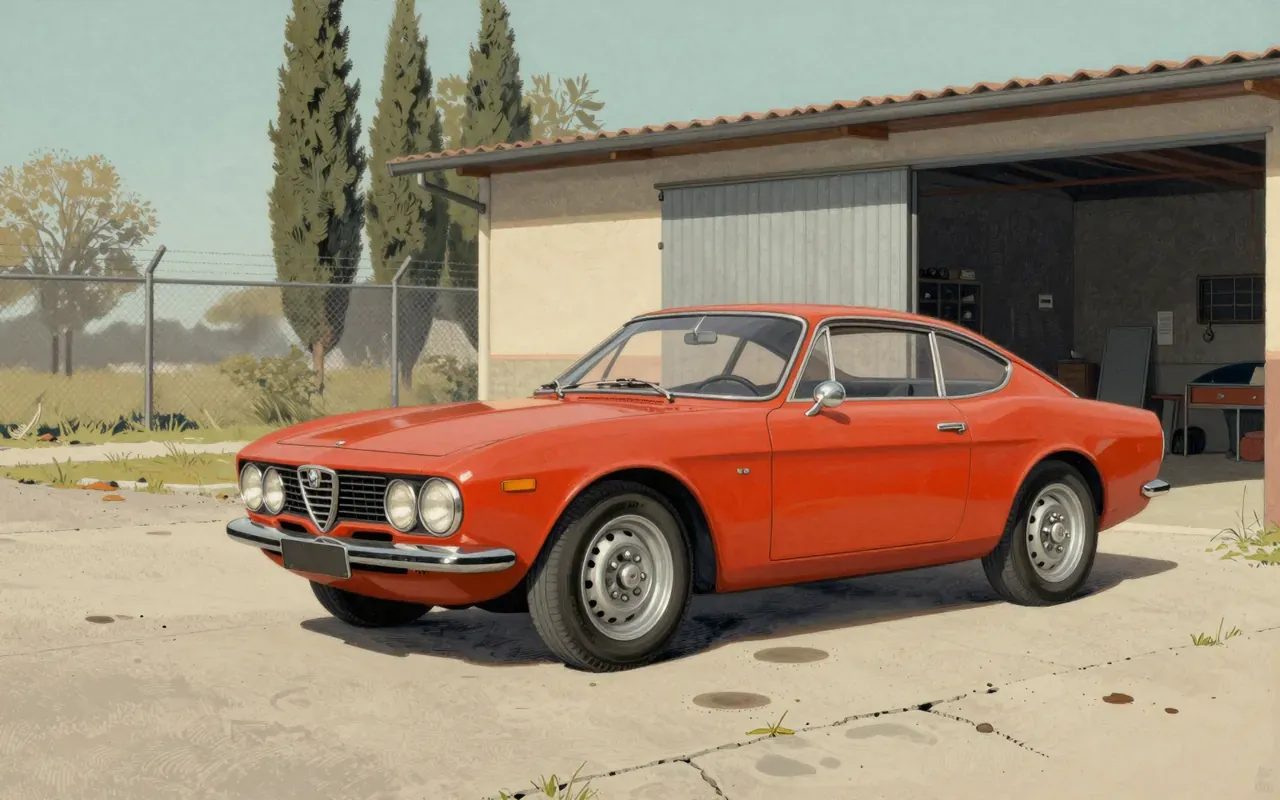
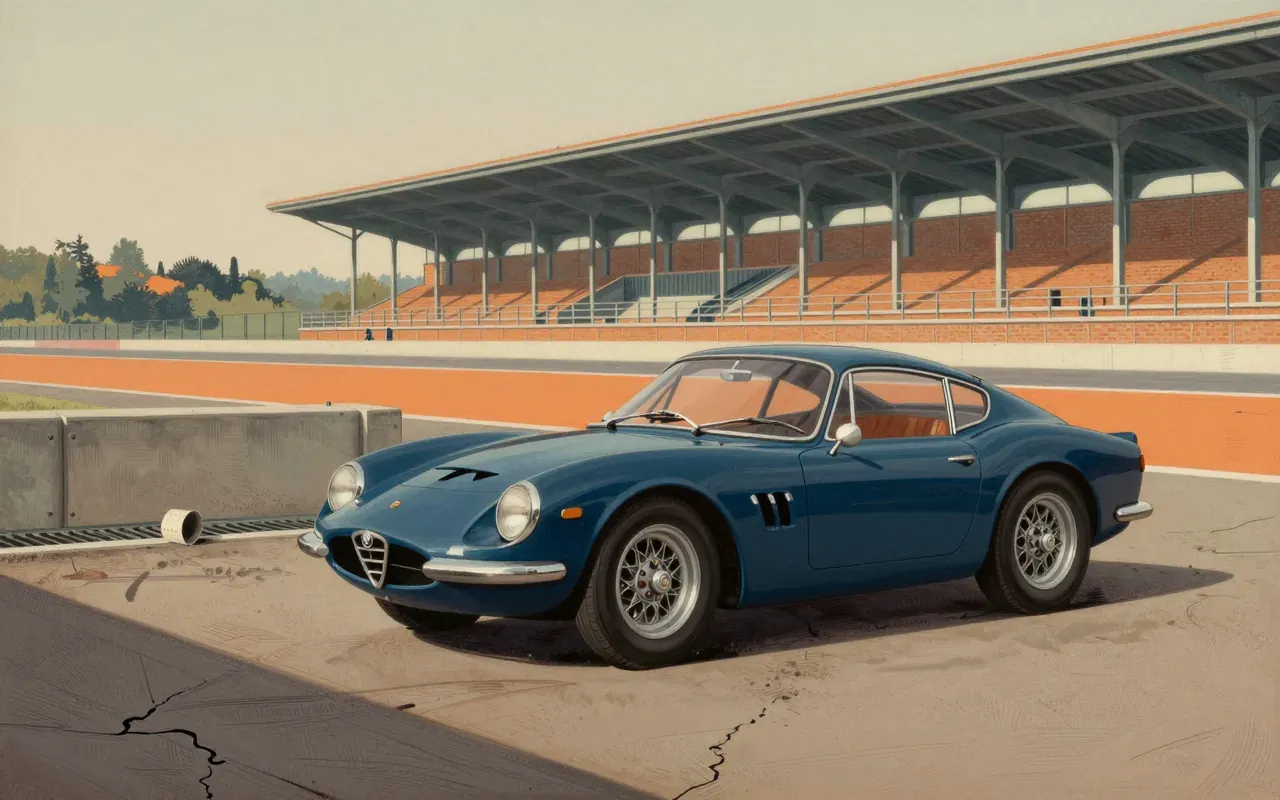
9:49

Lotus Carlton

Lotus · 1990

The Lotus Carlton is a high-performance sports saloon developed by Lotus from the Vauxhall Carlton/Opel Omega A, designated Type 104. Its engine was enlarged to 3.6 L and fitted with twin Garrett T25 turbochargers; it uses a ZF 6-speed manual transmission driving the rear wheels via a limited-slip differential. Exterior upgrades include a rear spoiler, bonnet cooling vents, Lotus badges, a body kit, and widened wheel arches. Rear suspension was modified with a new arm and revised bushings, and self-leveling suspension and Servotronic power steering were borrowed from the Opel Senator. It was sold only as a saloon, with a front-engine, rear-wheel-drive layout, and 950 units were produced between 1990 and 1992.

10:52

Lotus Elan

Ron Hickman · 1962

The 1962 Lotus Elan is a rear-wheel-drive roadster designed by Ron Hickman. It uses a steel backbone chassis and fibreglass body. It weighs ~1,500 lb. It has a DOHC 1,558 cc engine, four-wheel disc brakes, rack and pinion steering, and 4-wheel independent suspension. It was Lotus’ first commercial success. It influenced the Mazda MX-5 and Toyota 2000GT.

8:08

Lotus Elise

Julian Thomson · 1996

The 1996 Lotus Elise redefined sports-car priorities by making mass the primary engineering target. Its bonded aluminium chassis and fibreglass body achieved 725 kg — enabling sharp responses and direct feedback without high power. Designed by Julian Thomson and Richard Rackham, it launched in September 1996 and remained in production until 2021.

9:05

Lotus Elite

Peter Kirwan-Taylor · 1957

The Lotus Elite Type 14 redefined what a production car’s structure could be — but exposed the gap between material ambition and mechanical reality.

9:11

Lotus Esprit

Giorgetto Giugiaro · 1976

The Lotus Esprit S1 is a 1976 Giorgetto Giugiaro design for Lotus Cars. It is a rear mid-engine, rear-wheel-drive coupé built on a steel backbone chassis. It emerged from Project M70 as a successor to the Europa. Its 'folded paper' aesthetic was among the first of its kind in production. Its chassis later carried the DeLorean. Its design prioritises structural clarity and geometric rigour over comfort or concealment.

9:46

Lotus Seven

Colin Chapman · 1957

The Lotus Seven is a British-built, open-wheel, two-seat, open-top sports car designed by Colin Chapman to embody performance through low weight and simplicity. It was produced from 1957 to 1973, originally by Lotus Cars (Lotus Engineering), and featured a front-engine, rear-wheel-drive layout with a tubular spaceframe and lightweight aluminium/fibreglass bodywork. The Series 1 used a 1,172 cc Ford Sidevalve straight-four engine and was used both on road and in club racing. Over 2,500 original Lotuses were sold. After 1973, Caterham acquired the rights and continued production as the Caterham 7. The design inspired widespread imitation in the kit car market.
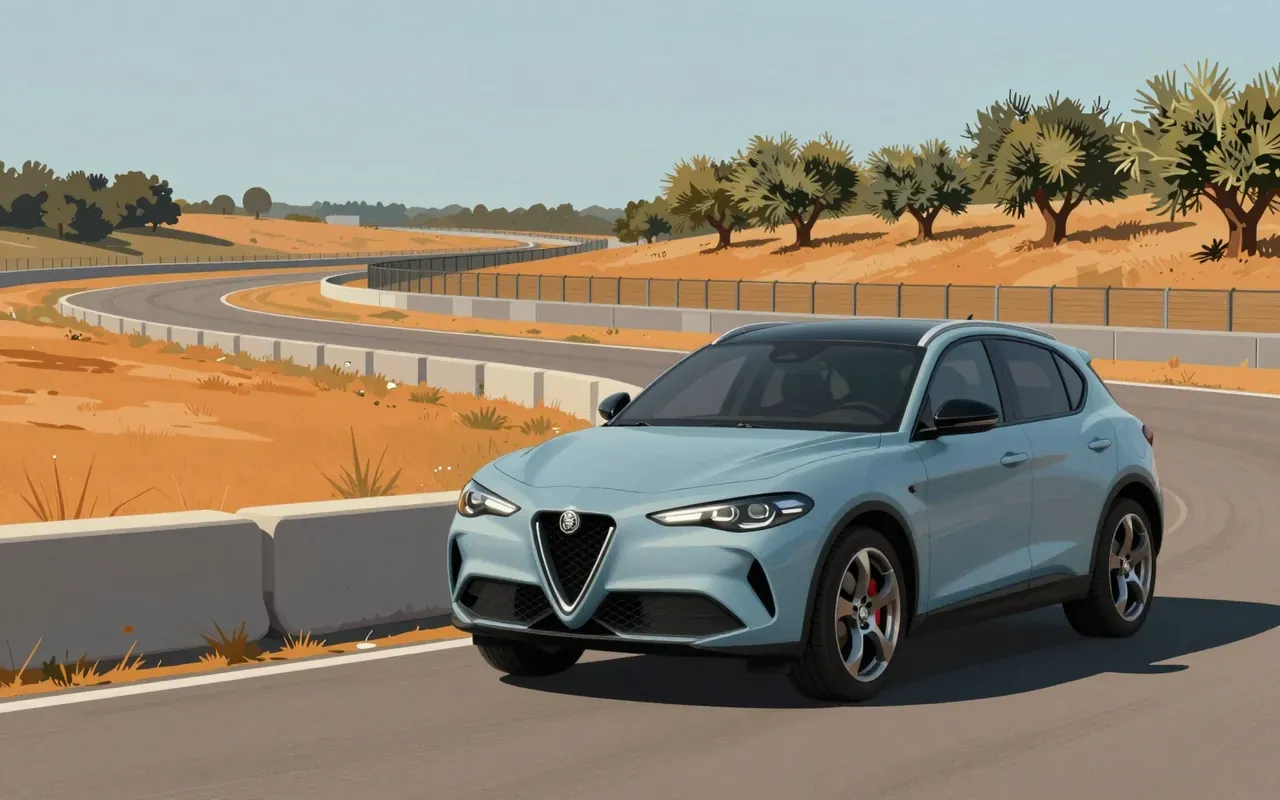
8:30

Mahindra Thar

Mahindra · 2010

The Mahindra Thar is a compact SUV launched in India on October 4, 2010. It replaces the MM540 and Major. It is named after the Thar Desert. Its design traces directly to the Jeep CJ series, which Mahindra had built under licence since the 1940s.

9:25

Maserati 3500 GT

Touring · 1957

The Maserati 3500 GT was Maserati's first successful Gran Turismo and series production vehicle, developed 1956–57 and launched in late 1957. Its bodywork was designed by Carrozzeria Touring following an introduction by Franco Cornacchia; Touring's 2+2, superleggera 'Dama Bianca' prototype was selected for series production after being shown alongside an Allemano prototype at the March 1957 Geneva Salon. It featured a front-mounted 3.5 L straight-six engine and rear-wheel drive, and 2,226 units were built between 1957 and 1964.

13:54

Maserati 5000 GT

Touring · 1959

The Maserati 5000 GT is a rare, bespoke grand tourer commissioned by the Shah of Persia and built by Maserati in collaboration with Carrozzeria Touring, featuring a modified 4.9 L V8 engine derived from the 450S and mounted in a strengthened 3500 GT chassis. It was produced from 1959 to 1966, with 34 units made, primarily as two-seat coupés.

9:24

Maserati Biturbo

Pierangelo Andreani · 1981

The Maserati Biturbo is a foundational but flawed machine: a compact, turbocharged executive coupé that reshaped Maserati’s entire output for sixteen years — yet failed to deliver on durability, credibility, or track results.

9:16

Maserati Bora

Giorgetto Giugiaro · 1971

The Maserati Bora is a pivotal machine: the first mid-engined street car and first with four-wheel independent suspension from Maserati. Designed by Giorgetto Giugiaro at Italdesign in the late 1960s, it launched in 1971 under Citroën ownership and ended production in 1978 after De Tomaso’s acquisition. Its 0.30 drag coefficient and ‘gentle bends’ reflect a transitional moment in automotive design—between organic curves and hard-edged modernism. Named after the Bora wind of Trieste, it redefined what a Maserati grand tourer could be: technically current, aerodynamically advanced, and architecturally coherent.

9:56

Maserati Ghibli

Giorgetto Giugiaro · 1967

The 1967 Maserati Ghibli AM115 is Giugiaro’s final full expression of arched, flowing form — a front-engine, RWD, 2+2 fastback coupé defined by its shark nose, steel body, and 4.7 L V8. It launched as a 2-seater concept at Turin in 1966. Production ran 1967–1973. Variants followed in 1969: Spyder and SS. Total output: 1,295 units. It predates Giugiaro’s angular shift — the Bora arrived in 1971.

8:55

Maserati Khamsin

Marcello Gandini · 1974

The Maserati Khamsin is a Gandini-designed, Bertone-built grand tourer produced by Maserati between 1974 and 1982. It debuted as a concept at the 1972 Turin Auto Show, entered production after being shown at the 1973 Paris Motor Show, and was developed under Citroën ownership as a front-engined alternative to the mid-engined Bora.

9:48

Maserati MC12

Frank Stephenson · 2004

The Maserati MC12 is a homologation special built to return Maserati to FIA GT racing. Designed by Frank Stephenson on the Ferrari Enzo’s chassis, it is longer, wider, taller, and more aerodynamically efficient. Its mid-rear V12 layout prioritises balance over packaging. Only 62 were built: 50 road cars and 12 racers. It is uncompromising, specific, and historically consequential — but not versatile.

10:34

Matra Djet

René Bonnet · 1962

The Matra Djet is the world's first rear mid-engined production road car. It began as the René Bonnet Djet in June 1962. It used a 1,108 cc Renault 8 engine mounted mid-ship. Its fiberglass body was bonded to a steel chassis. Production ran from 1962 to 1967 across both makers. Total units: 1,689.

8:44

Matra Murena

Antonis Volanis · 1980

The Matra Murena is a mid-engined, rear-wheel-drive hatchback sports car produced from 1980 to 1983. It inherited the Bagheera's layout but introduced a new galvanised steel chassis—the first production car to do so—and used fibreglass-epoxy for its twelve major body panels. It featured three separate seats in one row and a 5-speed manual transaxle. Total production was 10,680 units.

11:12

Mazda 787B

Nigel Stroud · 1991

The Mazda 787B is a Group C sports prototype that won the 1991 24 Hours of Le Mans using a Wankel rotary engine — the only non-reciprocating engine car to do so as of 2026. Built between 1990 and 1991, five units were made: two 787s and three 787Bs. It prioritised reliability and fuel efficiency over outright speed, outlasting faster rivals. It marked the end of rotary power in top-tier endurance racing. It was the first Le Mans win by a Japanese manufacturer — unmatched until Toyota in 2018.

11:00

Mazda MX-5

Tom Matano · 1989

The 1989 Mazda MX-5 is a lightweight, two-seat, unibody sports car co-designed by Tom Matano and C. Mark Jordan. It launched at the Chicago Auto Show and was built at Mazda’s Hiroshima plant. Its design follows the Jinba ittai philosophy and draws direct inspiration from 1950s–60s British and Italian roadsters — especially the Lotus Elan. With a curb weight under 1,100 kg, it prioritises balance, responsiveness, and driver engagement over power or luxury. The first generation sold 228,961 units between 1989 and 1997.

10:08

Mazda RX-3

Mazda · 1971

The RX-3 is what the world outside Japan called the Mazda Savanna, the rotary version of the Grand Familia. It came as a coupé, sedan and station wagon, started on the 10A rotary and moved to the larger 12A. It was the most popular of the rotary cars Mazda built before the RX-7, and it raced successfully in Japan, Australia, New Zealand and North America.

10:49

McLaren F1

Gordon Murray · 1992

The McLaren F1 is the first road-going car manufactured by McLaren. Gordon Murray conceived it as 'the ultimate road-going sportscar'. It used a full carbon-fibre monocoque, a central driving position, and a bespoke BMW V12. It won Le Mans outright in 1995 in LM specification. Only 106 were built between 1992 and 1998.

9:27

McLaren F1 GTR

Gordon Murray · 1995

The McLaren F1 GTR is the racing variant of the McLaren F1 sports car, first produced in 1995 for grand touring style racing, such as the BPR Global GT Series, FIA GT Championship, JGTC, and British GT Championship. It was powered by the naturally aspirated BMW S70/2 V12 engine. It is most famous for its overall victory at the 1995 24 Hours of Le Mans where it won against faster purpose-built prototypes in very wet conditions. The F1 GTR raced internationally until 2005 when the final race chassis was retired. Bodywork modification saw the addition of various cooling ducts, most noticeably a large one in the center of the nose and two placed in the location of the storage lockers on the side of the car. A large adjustable fixed wing was added to the rear of the car. Even the 1995 versions of F1 GTR generated enough downforce to run along the ceiling at 100 mph. The interior was stripped of all luxuries and given a full racing cage. Carbon brakes replaced the stock units.

10:54

McLaren P1

Frank Stephenson · 2013

The McLaren P1 is a mid-engined, rear-wheel-drive hybrid supercar styled by Frank Stephenson. It is the second model in McLaren’s Ultimate Series and a spiritual successor to the F1. Production ran from 2013 to 2015, limited to 375 units. Its design draws partial inspiration from a sailfish. It shares the F1’s carbon fibre monocoque and mid-engine layout. It debuted at the 2013 Geneva Motor Show after a concept reveal at the 2012 Paris Motor Show. It is one of the first high-performance sports cars to incorporate hybrid technology.

9:59

Mercedes-AMG One

Gorden Wagener team · 2022

The Mercedes-AMG One is a production reality — not a show car — built to prove F1 hybrid technology can function on public roads. Its layout, powertrain and aerodynamics are derived directly from contemporary Formula One. It sacrifices usability for fidelity. It is not a supercar for driving. It is a rolling validation of a racing specification.

9:44

Mercedes-Benz W201

Bruno Sacco · 1982

The W201 redefined what a compact luxury sedan could be—not by shrinking the S-Class, but by building a new class with structural integrity, scalable safety tech, and unambiguous engineering intent.

8:35

Mercedes-Benz G-Class

Mercedes-Benz · 1979

The G-Class is a body-on-frame, four-wheel drive luxury SUV originally developed as a military off-roader. It features boxy styling dictated by its ladder chassis and three fully locking differentials — a hardware configuration retained across 46–47 years of production. It remains one of Daimler’s longest-produced vehicles, with the second-generation W463 launched in 2018 and a smaller 'little G' announced in 2023. It was sold as the Puch G in some markets until 2000.

10:28

Mercedes-Benz SLS AMG

Mark Fetherston · 2010

The SLS AMG is a decisive, uncompromising statement: AMG’s first self-contained supercar, lighter and faster on track than the SLR McLaren, powered by the most potent naturally aspirated V8 in series production at launch.

9:23

Mercedes-Benz W113

Paul Bracq · 1963

The Mercedes-Benz W113 is a two-seat luxury roadster/coupé introduced in 1963. It replaced the 300 SL and 190 SL. It was marketed as the 230 SL, 250 SL and 280 SL. Paul Bracq and Béla Barényi co-designed its patented concave hardtop — the source of the 'Pagoda' nickname. All models used a fuel-injected inline-six engine. Aluminium was used on the bonnet, boot lid, door skins and tonneau cover to reduce weight. 48,912 units were produced, with 19,440 sold in the US.

10:26

Mercedes-Benz W126

Bruno Sacco · 1979

The W126 is the second-generation S-Class, designed under Bruno Sacco at Daimler-Benz AG. It launched in 1979, added the C126 coupé in 1981, and ran until 1991 — the longest and highest-volume S-Class generation. It introduced ABS as standard, early airbags, hydropneumatic suspension, and distinct chassis coding. Its aerodynamic refinement (Cd 0.36 saloon, 0.34 coupé) served durability and presence over agility. It anchors Sacco’s S-Class trilogy — W126, W140, W220.

10:23

Mitsubishi Starion

Mitsubishi · 1982

The Mitsubishi Starion (1982–1989) is a Japanese rear-wheel-drive fastback coupé with a front-mounted turbocharged straight-four engine. Sold globally under multiple names—including Colt Starion in the UK and Conquest in North America—it pioneered electronic fuel injection in turbocharged Japanese performance cars. Offered in narrowbody and widebody forms, it split into non-intercooled narrow and intercooled wide variants after 1985.5. It prioritised drivetrain integration and regulatory compliance over raw output or chassis novelty.

8:54

Nissan Be-1

Naoki Sakai · 1987

The Nissan Be-1 is a tightly edited response to urban life in late-1980s Japan. It is not fast. It is not spacious. It is not branded. It is precise, deliberate, and self-contained. It exists because Naoki Sakai solved a specific problem: how to make a small car feel like an object of intention—not utility.

10:09

Nissan Pao

Naoki Sakai · 1989

The Nissan Pao is a deliberately small, retro-styled hatchback built in Japan between 1989 and 1991. It belongs to Nissan’s Pike Factory series, conceived as a fashion object rather than a transport tool. Its design references specific European city cars—Mini, 2CV, Fiat 500, Austin A40—with functional reinterpretations of their details. It sold out in three months despite no Nissan branding and limited production of 31,352 units. It trades utility and dynamics for coherence, charm, and cultural timing.

10:51

Nissan R390 GT1

Ian Callum · 1997

The Nissan R390 GT1 is a Le Mans GT1 race car designed in 1998 by Ian Callum at TWR Design, built jointly by Nismo and TWR in Atsugi, Japan. One road car was built for homologation; eight race cars followed.

9:35

NSU Ro 80

Claus Luthe · 1967

The NSU Ro 80 is a four-door, front-engine executive sedan manufactured and marketed by the West German firm NSU from 1967 until 1977. It was developed as a mid-sized front-wheel drive sedan to serve Germany’s growing middle class. Claus Luthe designed its clean wedge shape and large glasshouse. It achieved a drag coefficient of 0.35 at design freeze and 0.34 in final production — without modifying the outer body after wind tunnel testing. It featured inboard front brakes, four-wheel ATE Dunlop disc brakes, fully independent suspension (MacPherson struts front, semi-trailing arms rear), and power-assisted ZF rack and pinion steering. Its twin-rotor Wankel engine delivered 84 kW (113 bhp) from 995 cc but suffered early unreliability and poor fuel economy. It won Car of the Year in 1968. Total production was 37,204 units.

10:21

Oldsmobile Toronado

David North · 1966

The Oldsmobile Toronado is a personal luxury car produced from 1966 to 1992. It was the first U.S.-built front-wheel drive automobile since 1937. It originated as a 1962 design painting by David North and evolved from a non-production compact concept into a full-size personal luxury coupe built on GM’s E platform. Its defining engineering feature was the Unitized Power Package (UPP), integrating a large V8 and transaxle into a compact front-wheel drive layout. The first-generation model used a 425 cu in (7 L) Super Rocket V8.

10:50

Opel GT

Erhard Schnell · 1968

The Opel GT is a front-engine, rear-drive two-seat sports car. Its first generation (1968–1973) began as a 1965 styling exercise shown in Paris and Frankfurt. It used Kadett B mechanicals and Brissonneau & Lotz bodywork. Erhard Schnell styled it as a fastback.
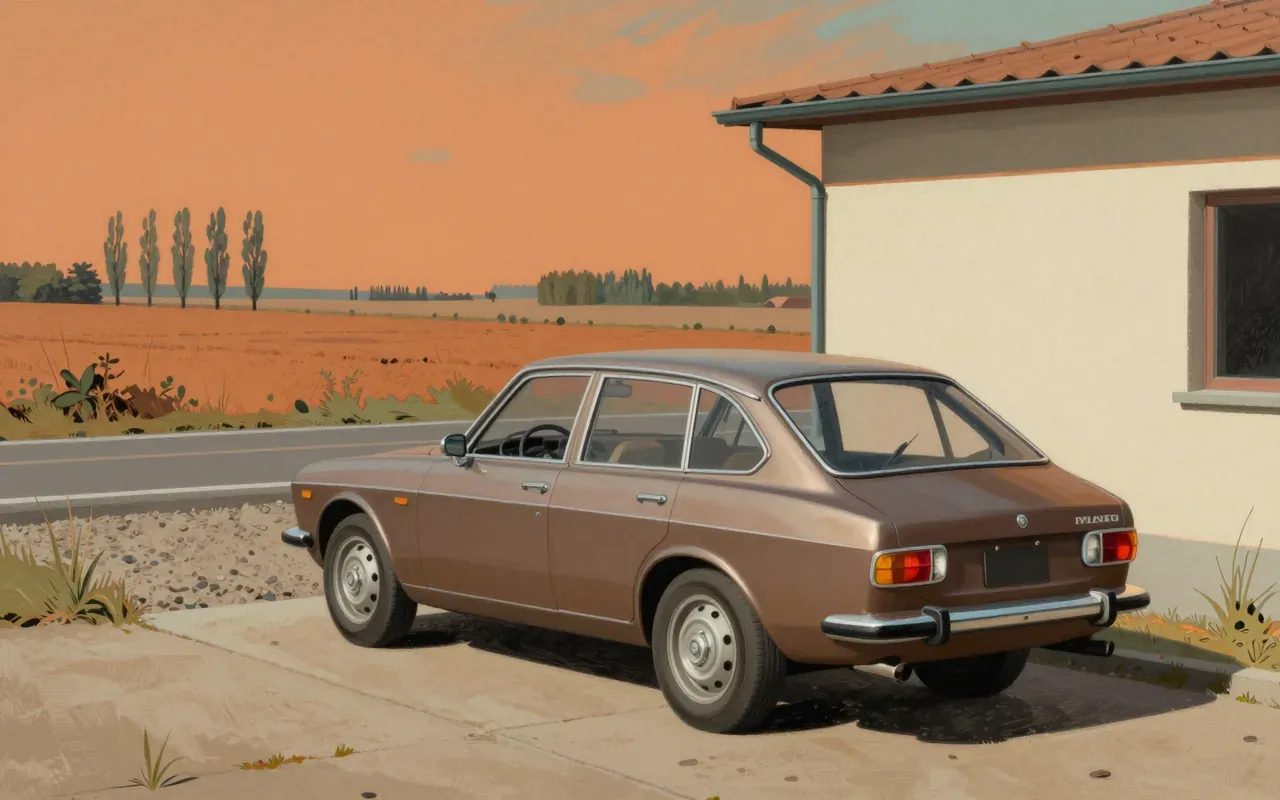
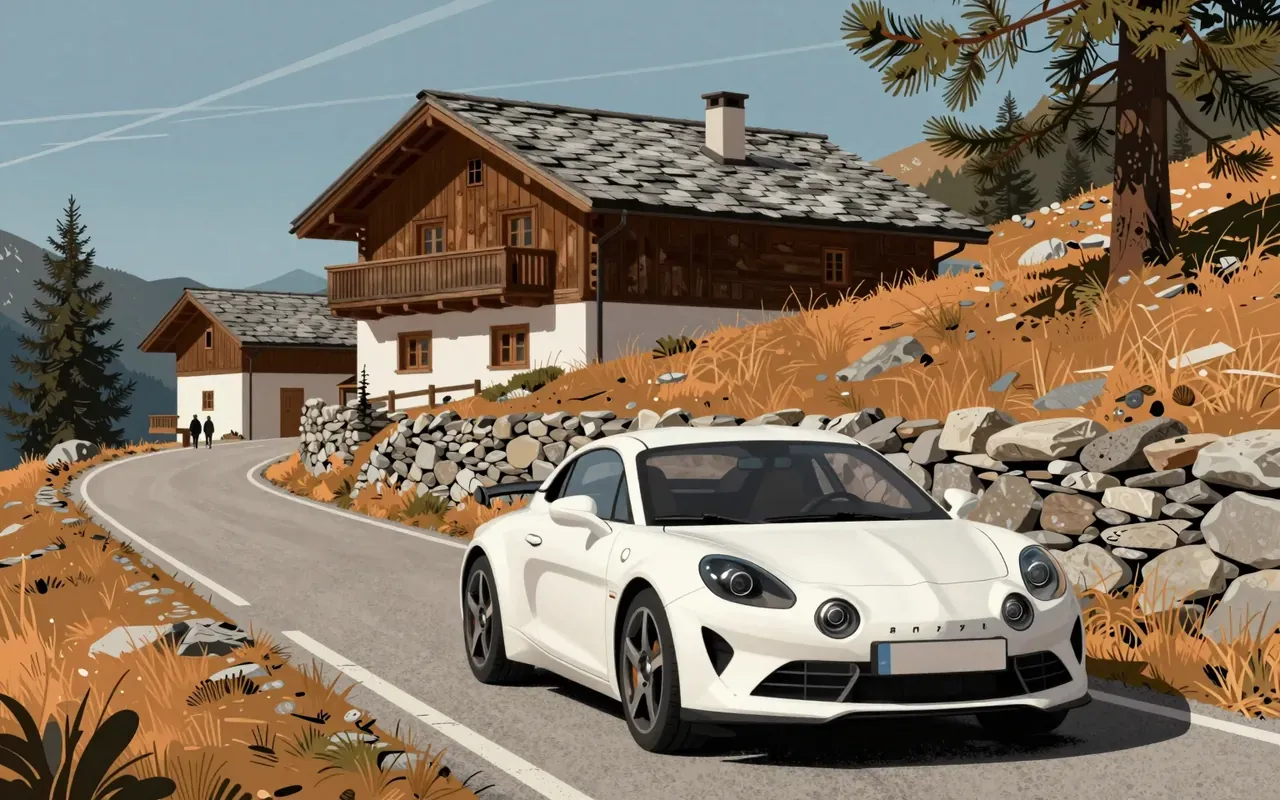
9:02

Opel Kadett C

Opel Design · 1973

The Opel Kadett C is a small family car produced by Opel from 1973 to 1979. It is the fourth-generation Kadett and Opel’s version of General Motors’ T-Car platform. It was the last small Opel to feature rear-wheel drive. Most customers opted for the two-door 'Limousine' saloon. A four-door variant was produced mostly for export. The Limousine accounted for just under 63% of production. Eleven percent were three-door estate-bodied Kadett Caravans. Slightly under 10% were two-door coupés. The Kadett City, a three-door hatchback, was added in May 1975 to compete on price with the Ford Fiesta.

10:35

Pagani Huayra

Horacio Pagani · 2011

The Pagani Huayra is a mid-engine sports car produced by Italian sports car manufacturer Pagani from 2011 to 2015. It was limited to 100 units. It uses a 6.0 L twin-turbocharged V12 engine. It is named after Wayra Tata, the Quechua wind god. It was named 'The Hypercar of the Year 2012' by Top Gear. It sold out on 11 February 2015. It has a top speed of about 383 km/h and accelerates from 0 to 97 km/h in 2.8 seconds.

9:40

Perodua Kancil

Daihatsu · 1994

The Perodua Kancil is a microcar defined by its origin, not its invention.

9:52

Peugeot 203

Peugeot · 1948

The Peugeot 203 is a foundational post-war saloon. Its monocoque structure, coil-sprung chassis and rack-and-pinion steering set new internal benchmarks. It carried Peugeot alone for six years. It sold nearly 700,000 units. It offered three body variants on two wheelbases. It used one engine, one drivetrain, one brake system. It was rational, not revolutionary.

9:12

Peugeot 404

Pininfarina · 1960

The Peugeot 404 is a large family car produced by Peugeot from 1960 to 1975. Styled by Pininfarina, it launched as a saloon, estate, and pickup. A convertible arrived in 1962; a coupé in 1963. It used a 1.6 litre petrol engine (Solex carburetor or Kugelfischer fuel injection) or a 1.9 litre diesel. A 3-speed ZF automatic was optional. It gained fame as a taxicab and earned a reputation for durability and value. Its bodyshell closely resembles that of the 1959 Austin Westminster.

9:12

Peugeot 405

Pininfarina · 1987

The Peugeot 405 is a large family car designed by Peugeot and styled by Pininfarina, produced from 1987 to 1997 in Europe and under license in Iran until 2020. It shares its floorpan with the Citroën BX but lacks hydropneumatic suspension except on 4x4 variants. It was voted European Car of the Year for 1988 by the largest number of votes in the history of the contest. About 2.5 million vehicles have been sold worldwide, both in left and right drive versions, as a saloon and estate. In early 2020, the 33-year production run of the Peugeot 405 was counted as the 'twentieth most long-lived single generation car in history'. Its appearance is similar to the Alfa Romeo 164, launched the same year and also styled by Pininfarina.

10:24

Peugeot 504

Pininfarina · 1968

The Peugeot 504 is a durable, mechanically coherent saloon built for longevity over novelty. Its design solves for resilience — not agility, comfort or style.

10:47

Peugeot Quasar

Gérard Welter · 1950

The Peugeot Quasar is a 1984 in-house concept built on the 205 T16’s chassis and engine. It features scissor doors and an exposed engine bay. Its interior draws from science fiction. It never entered production. It now resides at the Peugeot Adventure Museum.

10:01

Plymouth Barracuda

Elwood Engel team · 1964

The 1964 Plymouth Barracuda is a fastback rebody of the Valiant, built on the Chrysler A-body. Its innovation was optical, not mechanical: the largest rear window ever fitted to a standard production car. It offered no new powertrain or chassis architecture at launch — only a new silhouette grafted onto an existing car. It beat the Mustang to market by two weeks, but did not define the pony car category on its own terms. It is significant as a case study in low-risk styling iteration, not as a driver’s machine or engineering departure.

11:12

Plymouth Road Runner

Plymouth · 1968

The Plymouth Road Runner is a 1968 US muscle car introduced by Chrysler under its Plymouth brand. It was based on the Belvedere, Plymouth’s basic mid-size model, and built on the Chrysler B platform. It launched as a 2-door pillared coupe, later adding a hardtop. It used licensed cartoon branding and a distinctive horn. Its performance and sales declined in the 1970s due to fuel economy and emissions regulation. By 1976, it was a non-performance trim package on the compact Volaré.

10:16

Polestar 1

Thomas Ingenlath · 2017

The Polestar 1 is a 2-door plug-in hybrid sports car developed by Polestar as its first independent model. Based on Volvo’s 2013 Concept Coupé and built on Volvo’s SPA platform, it features a twincharged 2.0 L I4 petrol engine driving the front wheels and two electric motors driving the rear wheels. Production was limited to 1,500 units from 2019 to 2022 in Chengdu, China, exclusively for left-hand drive markets.

10:16

Pontiac GTO

John DeLorean · 1964

The 1964 Pontiac GTO is a front-engine, rear-drive, two-door, four-passenger automobile. It began as an optional package on the LeMans. It exploited a GM policy loophole to install a larger engine. It popularised the muscle car segment. It marked the start of Pontiac’s identity as GM’s performance division. It was named after the Ferrari 250 GTO.

10:49

Porsche 356

Erwin Komenda · 1948

The Porsche 356 is Porsche’s first production automobile: a rear-engine, rear-wheel drive, air-cooled flat-four sports car, designed by Erwin Komenda, produced from 1948 to 1965 in coupé and cabriolet body styles, with approximately 76,000 units built.

10:20

Porsche 914

Heinrich Klie · 1969

The Porsche 914 was a mid-engined targa-topped roadster co-developed by Volkswagen and Porsche between 1969 and 1976. It used either a 1.7 L flat-four or 2.0 L flat-six engine, both mounted midship. Over 118,000 914/4 units were sold worldwide, while only 3,351 914/6 models were built before discontinuation in 1972. It won Motor Trend's Import Car of the Year for 1970 and served as Formula One's first safety car at the 1973 Canadian Grand Prix.

10:07

Porsche 917

Hans Mezger · 1969

The Porsche 917 is a sports prototype race car developed by Porsche’s 1960s Race Design office under Hans Mezger’s leadership to exploit 5-litre sports car regulations. Its spaceframe chassis weighs 42 kg and is permanently pressurised with gas to detect cracks. Power comes from a new 4.5-litre air-cooled flat-12 engine designed by Mezger. It gave Porsche its first overall wins at the 24 Hours of Le Mans in 1970 and 1971, and was chiefly responsible for Porsche winning the International Championship for Makes in both years. It was initially unwieldy but improved through continuous development. Porsche later adapted it for Can-Am racing, culminating in the twin-turbocharged 917/30.

10:00

Porsche 924

Harm Lagaay · 1976

The Porsche 924 is a two-door, 2+2 coupé produced by Porsche in Neckarsulm, Germany, from 1976 until 1988. It was the first production road-going Porsche to use water cooling and a front-engine, rear-wheel-drive layout, and the first Porsche to be offered with a conventional fully automatic transmission. It began as a joint venture with Volkswagen and its overall styling was created by Dutch designer Harm Lagaay. A turbocharged version was introduced in 1978.

10:03

Porsche 928

Wolfgang Möbius · 1977

The Porsche 928 is a grand touring car produced by Porsche AG from 1977 to 1995. It is a 2+2 coupé with a rear hatchback, featuring a front-mounted, water-cooled V8 engine driving the rear wheels. It was Porsche's first production car with a V8 engine and its first fully in-house design for a production vehicle. The 928 aimed to blend sports car performance and handling with luxury car comfort and spaciousness, and was conceived as a grand touring car with a conventional engine. It won the European Car of the Year award in 1978.

8:15

Porsche 944

Anatole Lapine · 1982

The Porsche 944 is a front-engine, rear-wheel drive two-door sports car developed from the 924 under Anatole Lapine’s leadership. It used water-cooled, all-alloy inline-four engines ranging from 2.5 L to 3.0 L across its 1982–1991 production run. Over 163,000 units were built — the highest volume for any Porsche sports car up to that point. It was offered as a coupé or cabriolet. The nameplate ended after 1991, replaced by the 968 for 1992.

9:30

Porsche 956

Norbert Singer · 1982

The Porsche 956 is a Group C sports-prototype racing car designed by Norbert Singer and built by Porsche in 1982 to comply with new FIA Group C regulations. It replaced the 936. It features Porsche’s first aluminium monocoque chassis and first ground-effect aerodynamics. It uses a 2.65 L turbocharged Flat-6 engine derived from the 936/81. Twenty-eight units were built between 1982 and 1984, including the 956B variant introduced in 1984. It won seven Le Mans titles and contributed to three Manufacturers’ and two Teams’ World Championships between 1982 and 1986.

10:32

Porsche Taycan

Mitja Borkert · 2019

The Taycan redefines Porsche’s electric identity—not by chasing range alone, but by engineering for responsiveness, thermal resilience, and driver feedback. It is not a stopgap. It is the first proof that Porsche’s steering, weight distribution, and longitudinal control could translate to battery power without mimicry.
8:41

Renault 5

Michel Boué · 1972

The Renault 5 is a foundational supermini: compact, practical, and relentlessly focused on interior usability. Its longitudinal front-wheel-drive layout and torsion bar suspension prioritise simplicity and space over handling sophistication. Michel Boué designed it outside his regular duties — and died before seeing its 15-year dominance as France’s best-selling car. It changed expectations of what a small car could carry, how it could be serviced, and who it could serve.

10:08

Renault Avantime

Patrick Le Quément · 2001

The Renault Avantime is a 2001 one-box grand tourer marketed by Renault and designed and manufactured by Matra. Patrick Le Quément led its design. It combines estate space with four-place pillarless coupé qualities. It features an aluminium structure, aluminium panels for the greenhouse, and a full sunroof of strengthened heat-reflecting glass. As a one-box design without B-pillars, it blends MPV, estate, or shooting brake elements with 2+2 coupé style and convertible elements. Renault self-described it as a grand tourer.

10:32

Renault Espace

Fergus Pollock · 1984

The Renault Espace is a long-running series launched in 1984, evolving from a pioneering MPV—first built by Matra—through successive generations to a modern SUV. Its design origins trace to British designer Fergus Pollock in the 1970s, later developed by Matra and adopted by Renault. Early generations featured innovative construction (fibreglass body on galvanised steel spaceframe), longitudinal engine layout, and flat-floor interiors. Later generations shifted to transverse engines, Renault-led development, and increasingly crossover styling—culminating in the sixth-generation SUV launched in 2023.

10:12

Renault Twingo

Patrick Le Quément · 1992

The Renault Twingo (1992) is a two-door, front-engine city car designed under Patrick Le Quément’s leadership to reverse Renault’s declining sales through bold, autonomous design. Its defining feature—the smile-shaped front end—was a deliberate assertion of styling priority over mechanical packaging. It delivered visibility, compactness, and instant recognition, but sacrificed rear access, cargo space, and dynamic refinement. It marked the moment Renault’s design department gained executive authority—and proved that a city car could be defined first by how it looked, not how it was engineered.

10:54

Renault Vel Satis

Patrick Le Quément · 2001

The Renault Vel Satis is an executive hatchback manufactured by Renault from 2001 to 2009. It was launched at the 2001 Geneva Motor Show to replace the Safrane. Designed by Patrick Le Quément’s team, it formed part of Renault’s effort to develop an independent formal language. It is noted for its height — 13 cm higher than the Safrane — which benefits interior space. It was Renault’s flagship model and the company’s first car offered with adaptive cruise control. It was the second car ever to receive a five-star Euro NCAP safety rating. Approximately 62,000 units were manufactured over eight years. The name Vel Satis is a portmanteau of Velocity and Satisfaction. It shared its platform with the Laguna II and Espace IV and was manufactured in Sandouville, France.

9:37

Rolls-Royce Silver Cloud

John Blatchley · 1955

The Silver Cloud is Rolls-Royce’s decisive post-war statement: a large, rigid, body-on-frame saloon that abandoned pre-war cues and shared its architecture with Bentley for the first time. It prioritises presence, coachbuilding flexibility, and dimensional authority over agility or innovation.

9:33

Saab 900

Björn Envall · 1978

The Saab 900 is a Swedish automobile produced from 1978 to 1998. It was introduced on 12 May 1978 for the 1979 model year. The Saab 900 has a longitudinally mounted, 45-degree canted, inline four-cylinder engine. The Saab 900 was produced in two- and four-door sedan, and three- and five-door hatchback configurations and, from 1986, as a cabriolet. The Saab 900 CC (Combi Coupé) body was developed from the Saab 99 model. The Saab 900's double wishbone suspension design provided excellent handling and road feel. The Saab 900's rear suspension comprised a typical beam axle design, stabilized with a Panhard rod. The Saab 900 has a deeply curved windshield, improving driver visibility.

9:49

Saab 9000

Giorgetto Giugiaro · 1984

The Saab 9000 is a formally resolved, transversely engineered executive car that delivered space, visibility, and quiet competence — at the cost of driving drama and mechanical distinctiveness.

10:34

Škoda Favorit

Bertone · 1987

The Škoda Favorit is a front-engine, front-wheel-drive supermini hatchback introduced by Škoda Auto in 1987 after protracted development involving disputes with Nuccio Bertone; it succeeded the rear-engined Estelle and marked Škoda’s shift toward modern European design norms, with later estate and pickup variants, and notable motorsport success despite its modest specification.

9:45

SSC Ultimate Aero

Jerod Shelby · 2006

The SSC Ultimate Aero is a mid-engined sports car built by SSC North America from 2004 to 2013. It held the Guinness World Records production car speed record from 2007 until 2010. Jerod Shelby stated the early design philosophy was to make it a driver's car where throttle input could influence steering. The Aero features butterfly doors similar to those on the McLaren F1 and Ferrari Enzo. Carbon fibre and titanium are used throughout the car.

11:37

Studebaker Avanti

Raymond Loewy team · 1962

The Studebaker Avanti is a personal luxury coupe manufactured by Studebaker Corporation between June 1962 and December 1963. Designed by Raymond Loewy's team under Sherwood Egbert's direction, it was built as a halo car and marketed as America's only four-passenger high-performance personal car. It featured a radical fiberglass body mounted on a modified Studebaker Lark chassis and powered by a modified 289 Hawk V8 engine. It introduced front disc brakes — the first American production model to offer them — and a bottom-breather air intake. Called the fastest production car in the world upon introduction, it broke 29 world speed records at the Bonneville Salt Flats. Only 1,200 units were built in 1962 despite a goal of 20,000. Production ended in December 1963, though licensed derivatives continued until 2006.

10:25

Subaru SVX

Giorgetto Giugiaro · 1991

The Subaru Alcyone SVX is a 1991 two-door, front-engine coupé styled by Giorgetto Giugiaro. It was Subaru’s first luxury/performance vehicle. It featured an aircraft-inspired 'window-within-a-window' side-glass configuration. It used only the 3.3-litre flat-six EG33 engine and an automatic transmission. All-wheel drive was offered via ACT-4 or VTD systems — or front-wheel drive in some markets. Production ran from 1991 to 1996.

9:06

Suzuki Cappuccino

Suzuki · 1991

The Suzuki Cappuccino is a 1991–1998 Japanese two-seater roadster designed to meet Kei car regulations. It features a turbocharged 657 cc DOHC inline-three engine, front mid-engine layout, rear-wheel drive, and adaptable roof configurations (closed coupé, T-top, targa, full convertible). Its dimensions—3,295 mm long and 1,395 mm wide—comply with Kei limits. Front-rear weight distribution is 50/50% with both seats occupied.

12:25

Tata Indica

I.DE.A Institute · 1998

The Tata Indica (1998) is a B-segment five-door compact hatchback, India’s first diesel hatchback and Tata’s first passenger hatchback. Styled by I.DE.A Institute, it used an indigenous 1.4-L petrol/diesel inline-four engine. Early buyers reported discrepancies between promised and delivered horsepower and mileage. Production ran from 1998 to 2018.

9:30

Tatra 603

František Kardaus · 1956

The Tatra 603 is a large rear-engined luxury saloon produced by Tatra from 1956 to 1975. It continues the streamlined sedan lineage begun with the Tatra 77. In Socialist Czechoslovakia, only high-ranking party officials and factory heads were driven in 603s; the car was also exported to allied countries. Three successive versions—the T603, 2-603, and unofficial -3—were manufactured, distinguished by headlamp arrangements and progressive updates including disc brakes and contactless thyristor ignition. Its V8 overhead valve hemi engine was air-cooled and derived from earlier Tatra models. A total of 20,422 units were built, mostly by hand.

9:45

Tesla Cybertruck

Franz von Holzhausen · 2019

The Tesla Cybertruck is a battery-electric full-size pickup truck designed by Franz von Holzhausen and unveiled as a prototype in November 2019. Its flat, unpainted stainless steel body panels form sharp angles reminiscent of low-polygon computer models. During its 2019 unveiling, Elon Musk struck its side with a sledgehammer—and it dented. It entered limited production at Gigafactory Texas in 2023, with customer deliveries beginning in November 2023. As of 2026, two variants are available: a tri-motor AWD 'Cyberbeast' and a dual-motor AWD model.

10:46

Tesla Model 3

Franz von Holzhausen · 2017

The Tesla Model 3 is a battery electric mid-size sedan with a fastback body style introduced in 2017. Franz von Holzhausen led its design. It was marketed as a more affordable, mass-market family car relative to earlier Tesla models. It became the world’s top-selling plug-in electric car from 2018–2020 and the first electric car to reach 1 million global sales in June 2021. It features a five-passenger capacity, front and rear trunks, EPA-rated range of 215 miles for the Standard Range version, sports-car acceleration, and a drag coefficient of Cd=0.225 (later improved to 0.219). A major design refresh — codenamed 'Project Highland' — was introduced in late 2023/early 2024, bringing revised styling, improved range, new hardware (including HW4), and structural changes. The car was designed under Franz von Holzhausen and described as targeting the Audi A4/BMW 3 Series/Mercedes-Benz C-Class segment.

10:49

Tesla Model S

Franz von Holzhausen · 2012

The Tesla Model S (2012) is a battery-electric, four-door full-size sedan — Tesla’s second vehicle — designed by Franz von Holzhausen and produced from 2012 to 2026. It established electric propulsion as viable for mainstream saloons, winning Motor Trend Car of the Year in 2013.

11:12

Mini

Alec Issigonis · 1959

The Mini is a two-door, four-seat saloon designed by Sir Alec Issigonis for BMC in response to the 1956 Suez Crisis fuel shortage. Its front-wheel-drive, transverse-engine layout with sump gearbox and 10-inch wheels maximised interior space, delivering 80% of the floorpan to passengers and luggage. It used Alex Moulton’s rubber cone suspension — a time-driven compromise that sharpened road feedback. It influenced Honda N360, Nissan Cherry, and Fiat 127. It was voted second-most influential car of the 20th century in 1999. It remained in production from 1959 to 2000, selling 5.3 million units — the best-selling British car in history.

9:47

Toyota 2000GT

Satoru Nozaki · 1967

The Toyota 2000GT is a landmark Japanese sports car: a limited-production, front mid-engine, rear-wheel-drive fastback coupé developed by Toyota with Yamaha, launched in 1965 and built from 1967 to 1970. It featured a 2.0 L straight-6 engine, re-engineered by Yamaha for performance, and was hailed internationally as a world-class GT—shifting global perception of Japanese automotive capability. Its legacy includes racing success, cultural prominence (notably in You Only Live Twice), and status as the first seriously collectible Japanese car.

9:50

Toyota Celica

Toyota Design · 1970

The Toyota Celica (1970) is a rear-wheel-drive coupe built on the Toyota Carina’s platform. It uses four-cylinder R-series engines in early North American models. Toyota coined 'liftback' in 1973 for its fastback hatchback. It was exclusive to Japan’s Toyota Corolla Store chain. Drive layout switched to front-wheel drive in August 1985.

9:44

Toyota GR Yaris

Toyota Gazoo Racing · 2020

The GR Yaris is a rally-homologated, three-door hatchback built by hand at Toyota’s GR Factory in Motomachi since September 2020. It uses a bespoke 1.6L turbo three-cylinder engine and was produced in volumes exceeding WRC requirements. It is sold globally except in North America.

9:37

Toyota Sports 800

Shozo Sato · 1965

Toyota Sports 800 (1965) — A lightweight, targa-top roadster built around an air-cooled 800 cc boxer engine. Designed for agility and aerodynamic efficiency, not speed or comfort. Sold exclusively in Japan via Toyota Publica Stores. Production: 1965–1969. Units built: ~3,131.

11:12

Tucker 48

Alex Tremulis · 1948

The Tucker 48 is a saloon defined by unmet promise and tangible innovation. It established safety and driver-centred layout as non-negotiables—before Detroit accepted them. It failed to deliver its own engine or prove its systems in volume. Its legacy is procedural, not mechanical.

11:36

Volkswagen Beetle

Ferdinand Porsche · 1938

The Volkswagen Beetle is the Volkswagen Type 1. It was conceived in the early 1930s under Adolf Hitler’s directive for a 'people’s car' to serve Germany’s Reichsautobahn. Ferdinand Porsche’s team developed it from 1934, building two prototypes in 1935. Production began in 1938 but was delayed until 1945 by World War II.

8:57

Volkswagen Corrado

Herbert Schäfer · 1988

The Corrado is a front-wheel-drive sport compact coupé designed by Herbert Schäfer and built by Karmann in Osnabrück from 1988 to 1995. It uses the Volkswagen Group A2 platform—the same as the Golf Mk2—with flush-mounted windows and an active rear spoiler that deploys above 100 km/h. It seats four in a 2+2 layout and is a three-door liftback. 97,521 units were produced.

8:30

Volkswagen Golf Mk2

Herbert Schäfer · 1983

The Volkswagen Golf Mk2 is the second-generation hatchback successor to the Mk1, launched in Europe in September 1983, Britain in March 1984, and the US as a 1985 model. It was Volkswagen’s highest-volume seller from 1983, with German production ending in late 1992 and approximately 6.3 million units built. It was offered as a 3- and 5-door hatchback, with inline-four petrol and diesel engines ranging from 1.05 L to 1.8 L.

9:33

Volkswagen Karmann Ghia

Luigi Segre · 1955

The Karmann Ghia is a stylistic intervention on Volkswagen’s existing platforms — not an engineering evolution. Its value lies in how cleanly it reimagined utilitarian packaging as elegant form. It succeeded commercially because it offered visual distinction without demanding mechanical compromise. It is worth knowing about as a case study in automotive branding before branding existed.

9:30

Volkswagen New Beetle

J Mays · 1997

The New Beetle is a compact, front-engine, front-wheel-drive car introduced in 1998, inspired by the exterior design of the original Beetle. It was assembled in VW's Puebla factory in Mexico. It received a facelift in 2005 and remained in production until 2011. The New Beetle carries many design similarities with the original VW Beetle: separate fenders, vestigial running boards, sloping headlamps, and large round taillights, as well as a high rounded roofline. Unlike the original Beetle, the New Beetle has its engine in the front driving the front wheels, with luggage storage in the rear. The New Beetle achieved five stars in the 2011 Euro NCAP tests. The Insurance Institute for Highway Safety (IIHS) gave the New Beetle a Good overall score in their frontal crash test. However, the IIHS rated the Beetle Poor in their side impact test.

9:10

Volkswagen Type 2

Ben Pon concept · 1950

The Volkswagen Type 2 is a forward-control light commercial vehicle introduced in 1950. It was Volkswagen's second mass-production light motor vehicle series, inspired by Dutch importer Ben Pon. Pon conceived the design after seeing a Type 1-based Plattenwagen in Wolfsburg in 1946 and sketched it on 23 April 1947, specifying a 690 kg payload and front-placed driver. Production began in 1950, delayed only because the factory was at capacity building the Type 1. For its first 40 years, all variants used a forward-control layout with a rear-mounted flat-four engine and shared the Beetle’s wheelbase.

9:45

Volvo 262C

Jan Wilsgaard · 1977

The Volvo 262C is a luxury coupé made by Volvo from 1977 (as a 1978 model) until 1981. Designed in-house by Jan Wilsgaard. Built by Bertone in Turin, Italy. Based on the 264 six-cylinder saloon.

10:08

Volvo P1800

Pelle Petterson · 1961

The Volvo P1800 is a 2+2, front-engine, rear-drive touring car introduced in 1961. Styled by Pelle Petterson under Pietro Frua, it was marketed as a touring car—not a sports car—despite later being called one. It sold 47,492 units between 1961 and 1973, offered first as a coupé and later as a shooting brake. Its mechanicals came from the Amazon/122 series. Volvo denied Petterson’s authorship until 2009. An 1800S owned by Irv Gordon reached 3.25 million miles. The project began in 1957 to replace the failed P1900 and target US and European markets.

9:28

Alfa Romeo Alfetta

Alfa Romeo Centro Stile · 1972

The Alfetta is a front-engine saloon and fastback coupé produced from 1972 to 1987. It used a rear transaxle and De Dion tube rear suspension to improve weight distribution and handling. Coupé models featured a central tachometer. All models left the factory with Pirelli Cinturato 165HR14 tyres.

9:02

Alfa Romeo BAT

Franco Scaglione · 1953

The BAT series is a focused, documented exercise in aerodynamic research—not styling, not engineering for power, not market readiness. It is a rare case where form follows one measurable physical constraint, iterated across three years, with no deviation from that brief.

10:49

Alfa Romeo Giulia

Giuseppe Scarnati · 1965

The Alfa Romeo Giulia Type 105 redefined what a four-door saloon could do—without electronics, without weight, without apology.

9:56

Audi Quattro

Martin Smith · 1980

The Audi Quattro (1980) is a front-engine, four-wheel-drive coupé developed by Jörg Bensinger. First shown at the 1980 Geneva Motor Show. It was both a road car and the first rally car to use four-wheel drive under newly permitted competition rules. Its name comes from the Italian word for 'four'. Production ran until 1991. The original model is known as the Ur-Quattro.

9:02

Bizzarrini Strada

Giorgetto Giugiaro · 1965

The Bizzarrini Strada is a mechanically focused, front mid-engine sports car from 1964–1968. It uses a rearward-placed Chevrolet V8 to optimise weight distribution and handling. Its aluminium body was styled by Bertone, under Giorgetto Giugiaro’s influence. It exists in coupé, roadster, and Corsa forms. Its performance figures are verified: sub-7-second 0–100 km/h, 280 km/h top speed.

9:03

Bugatti EB 110

Giampaolo Benedini · 1992

The Bugatti EB 110 is a mid-engine, all-wheel-drive supercar with a carbon fibre monocoque and active aerodynamics. It was produced from 1991 to 1995. Its name commemorates Ettore Bugatti’s 110th birthday. 139 units were built. It uses a 3.5 L quad-turbocharged V12 engine.

9:54

Cadillac Eldorado

Harley Earl · 1953

The 1953 Cadillac Eldorado is a foundational expression of postwar American automotive hierarchy: a limited-run, top-priced convertible defined by bespoke bodywork and Harley Earl’s tailfin language. It establishes no new powertrain or chassis architecture — but it does cement styling as a primary tool of luxury positioning.

10:06

Chevrolet Corvette (C2)

Bill Mitchell · 1963

The Chevrolet Corvette (C2) redefined what a mass-market American sports car could be—not through engineering leaps, but through disciplined, wind-tunnel-informed packaging and a bold, structural fastback form.

1:20

Ferrari 365 GTB/4 Daytona

Leonardo Fioravanti · 1968

The Ferrari 365 GTB/4, commonly called Daytona, is a two-seat grand tourer introduced at the 1968 Paris Motor Show. Its front-mounted V12 drove the rear wheels.

1:15

Ferrari 512 BB

Leonardo Fioravanti · 1976

The Ferrari 512 BB replaced the 365 GT4 BB in 1976. It belongs to the Berlinetta Boxer family, but this carburetted model should be distinguished from the later fuel-injected 512 BBi.

9:25

Ford GT

Camilo Pardo · 2005

The Ford GT (2005) is a mid-engine two-seater designed by Camilo Pardo as a modern homage to the GT40, launched for Ford’s centenary. It recalls the GT40’s Le Mans legacy but shares no structural lineage. It is bigger, wider, and 4 in (100 mm) taller than the original — a deliberate recalibration, not a replication.

9:45

Ford Model A (1927–1932)

Edsel Ford · 1927

The Ford Model A (1927–1932) was Ford’s deliberate departure from the Model T. Edsel Ford led its body design with József Galamb. It introduced four-wheel mechanical brakes, a sliding-gear transmission, laminated windshields, and a water-cooled L-head inline-four. It sold 4,858,644 units between October 1927 and March 1932. It marked the end of the Model T’s dominance and the beginning of Ford’s driver-oriented era.

9:20

Ford Model T

Childe Harold Wills · 1908

The Ford Model T is the foundational mass-market automobile—engineered for repairability, built for scale, and priced for the middle class. Its innovations were procedural (assembly line) and mechanical (planetary transmission, detachable cylinder head), not aesthetic or performance-led.

10:36

Honda S800

Honda · 1966

The Honda S800 is a 1965 sports car built to prove Honda could engineer a high-revving, lightweight, chain-driven automobile capable of 100 mph. It replaced the S600 as Honda’s image car. It was available as a roadster or coupe. Early units used chain drive and independent rear suspension. Just 994 chain-drive examples were built. Its 791 cc straight-4 produced 70 hp at 8,000 rpm and revved to 10,000 rpm.

8:52

Jaguar XK (X100)

Geoff Lawson · 1996

The XK (X100) is a disciplined, unflashy grand tourer that delivers cohesion over innovation. It shares architecture, not ambition, with the DB7. Its strength is execution—not invention.

9:17

Lamborghini Estoque

Filippo Perini · 2005

The Estoque is a speculative, non-production sedan that tested whether Lamborghini could stretch its brand into four-door territory without abandoning its core engine layout or visual aggression.

10:24

Lexus LS400

Kunihiro Uchida · 1989

The LS 400 was the first model Lexus ever made. It grew out of the F1 project, started in 1983 with no set budget and no existing Toyota parts, and it cost over US$1 billion to develop. It debuted in January 1989 with a new V8, a quiet cabin and a low drag figure, and it was largely responsible for the successful launch of the Lexus marque.

9:33

Maserati Boomerang

Giorgetto Giugiaro · 1950

The Maserati Boomerang is a 1972 concept car designed by Giorgetto Giugiaro and produced by Italdesign. It debuted at the 1971 Turin Motor Show as a non-functional Epowood model, then reappeared at the 1972 Geneva Auto Show on a Maserati Bora chassis. It uses a 4.7L V8 engine producing 310 hp and 460 N⋅m, driving the rear wheels through a 5-speed manual. Its interior features a rotating steering wheel around stationary gauges. Though registered as a road car, it was intended solely as a one-off show car.

10:21

Mazda RX-7

Akio Uchiyama · 1985

The Mazda RX-7 is a Japanese sports car made by Mazda from 1978 to 2002. It uses a front mid-engine, rear-wheel-drive layout and a compact, lightweight Wankel rotary engine. The first generation is a two-seater coupé with a rear hatchback. Later generations added 2+2 and convertible options, but the core two-seater coupé remained. More than 800,000 were built, including 471,018 first-generation units.

10:20

Morgan +4

Morgan · 1950

The Morgan +4 is a sports car built across three discontinuous series (1950–1969, 1985–2000, 2005–2020), each using different 2-litre four-cylinder engines — Standard Vanguard, Triumph, Fiat Twin Cam, and Ford (Mazda) Duratec — on variations of the same ash-frame, front-engine, rear-wheel-drive layout. It is longer and more powerful than the 4/4, but shares its mechanical honesty and lack of structural modernity. It establishes Morgan’s ability to persist without standardisation. It falls short as a coherent technical proposition — no shared chassis, no unified development path, no safety or thermal upgrades across eras.

8:35

Nissan GT-R

Shiro Nakamura · 2007

The Nissan GT-R (R35) is a Japanese sports car and grand tourer produced from 2007 to 2025. It features a front-mid mounted 3.8 L V6 engine and all-wheel drive, built on the PM platform — a derivative of the FM platform — and was developed over seven years as part of the Nissan Revival Plan to deliver world-beating performance.

10:38

Peugeot 205

Gérard Welter · 1983

The Peugeot 205 is a supermini developed from Projet M24 and launched on 25 February 1983. It replaced the Peugeot 104 and Talbot Samba. Its styling is an in-house design by Gérard Welter — not Pininfarina, who only styled the Cabriolet. It used MacPherson struts at the front and trailing arms with torsion bars at the rear. The rear suspension was designed to minimise intrusion into the boot, giving a wide flat loadspace while providing excellent ride and handling. It won What Car?'s Car of the Year for 1984 and was declared 'car of the decade' by CAR Magazine in 1990. It is often credited as the car that turned Peugeot's fortunes around.

9:51

Pontiac Firebird

Jack Humbert · 1967

The 1967 Pontiac Firebird is a study in corporate constraint made visible. Its design solves for brand continuity—not performance. Its existence answers a veto, not a demand.

9:12

Porsche 911

Ferdinand Alexander Porsche · 1964

The Porsche 911 is a rear-engine sports car introduced in September 1964. Ferdinand Alexander Porsche designed its exterior. Reutter built the body from his drawings. It debuted as the 901 at the 1963 Frankfurt Motor Show. Peugeot forced the name change to 911. All 911s have a rear-mounted flat-six and usually 2+2 seating. Original models used air-cooled engines and torsion bar suspension. The 911 won the Targa Florio, Daytona, Le Mans, and four World Championships for Makes — all with 911-derived models.

9:39

Porsche 918 Spyder

Michael Mauer · 2013

The Porsche 918 Spyder is a limited-production, mid-engine, plug-in-hybrid sports car manufactured by Porsche. It is powered by a mid-mounted naturally aspirated 4.6 L V8 engine and two electric motors. It has a 6.8 kWh lithium-ion battery pack providing 12 mi (19 km) all-electric range per EPA testing. Production began on 18 September 2013 and ended in June 2015. It was first shown as a concept at the 80th Geneva Motor Show in March 2010. The production version was unveiled at the September 2013 Frankfurt Motor Show. It was the second plug-in hybrid car manufactured by Porsche. It has been subject to half a dozen recalls for issues including front and rear control arms breaking and seat belts.

9:22

Renault 5 Turbo

Marc Deschamps · 1980

The Renault 5 Turbo is a homologation special that reimagines the Renault 5 supermini as a mid-engined rally car. Built from 1980 to 1984, it features a rear mid-engine, rear-wheel-drive layout, a 1,397 cc turbocharged Cléon-Fonte inline-four, and 4,987 total units produced. Though badged as a Renault 5, its mechanicals are radically different. It was launched at the Brussels Motor Show in January 1980 and sold in street-legal form to meet homologation requirements.

9:18

Sauber C9

Leo Ress · 1987

The Sauber C9 is a 1987 Group C prototype. It replaced the C8. It was a development of the C8, retaining its aluminium monocoque but making it stiffer. Six chassis were built. Early engines were prepared by Heini Mader as a cover for Mercedes’ involvement. Later engines came from Untertürkheim under Hermann Hiereth. The engine was semi-stressed and ran a dry sump. Weight reduction came from a new crankshaft, KKK turbochargers, and a liner-less block.

10:06

Toyota AE86 Corolla Levin

Toyota · 1986

The AE86 is a small, front-engine/rear-wheel-drive compact car derived from the fifth-generation Corolla (E80) range. It was the final Corolla model produced with rear-wheel drive. Its light weight, affordability, modifiability, and balanced front-engine/rear-drive layout made it distinctive amid an industry shift away from RWD. It featured a high-revving (7800 rpm) twin-cam engine in some markets, optionally elsewhere. It achieved early and enduring international prominence in drifting due to its inherent qualities. It was central to the manga and anime series Initial D (1995–2013) as the protagonist's drift and tofu delivery car. In 2015, Road & Track described it as 'a cult icon, inextricably interwoven with the earliest days of drifting.' It inspired the Toyota 86 (2012–present), a 2+2 sports car co-developed with Subaru.

9:29

Toyota Supra

Toyota Design · 1978

The 1978 Toyota Supra is a purpose-built response to dealer demand: a longer, six-cylinder Celica liftback engineered to match the Datsun 280Z. It is neither radical nor revolutionary—just a calibrated evolution of existing parts, packaging, and powertrain. Its value lies in continuity, not disruption.

9:54

Toyota 86

Tetsuya Tada · 2012

The Toyota 86 is a driver’s car defined by restraint: low weight, natural aspiration, precise weight distribution, and mechanical transparency. It trades speed for fidelity — and in doing so, redefined what an entry-level sports car could be.

8:56

Volkswagen Golf Mk1

Giorgetto Giugiaro · 1974

The Volkswagen Golf Mk1 is the first generation of Volkswagen’s small family car. It succeeded the Beetle. It was styled by Giorgetto Giugiaro’s Italdesign and debuted in Europe in May 1974.