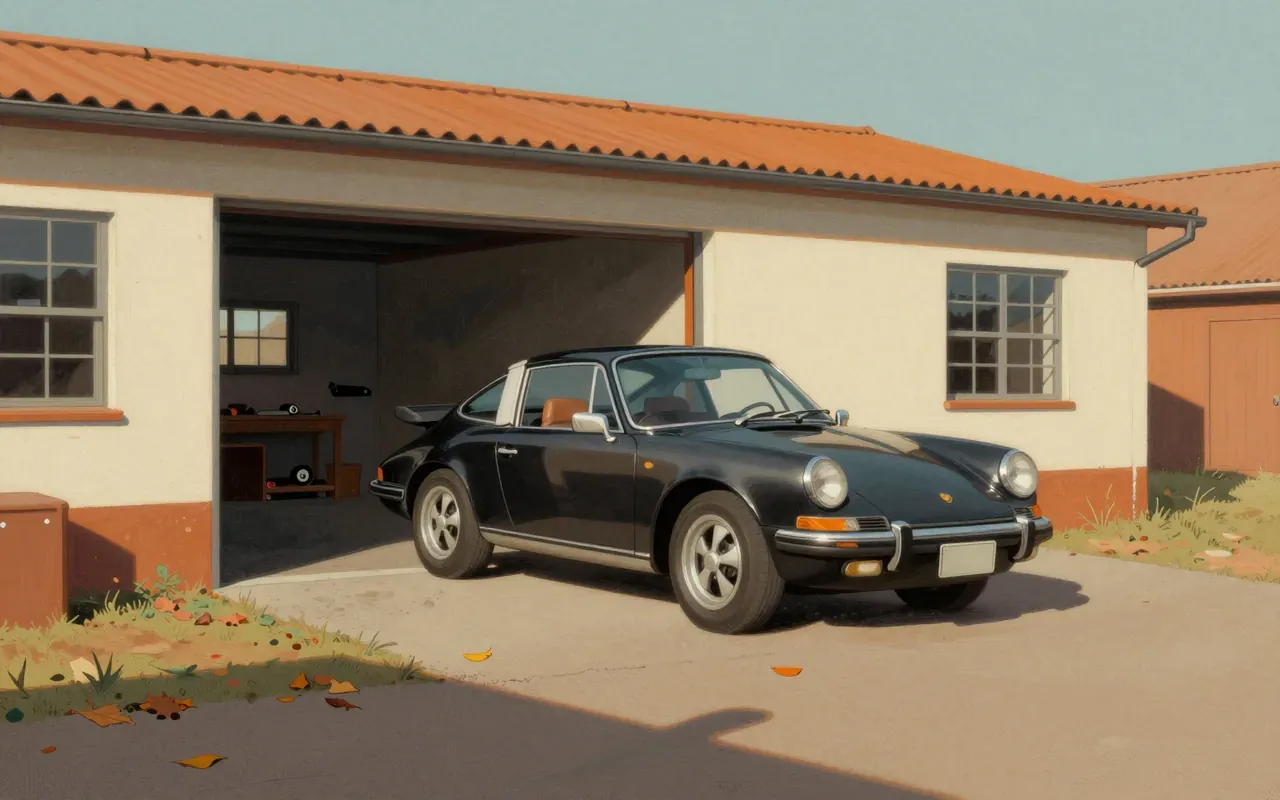
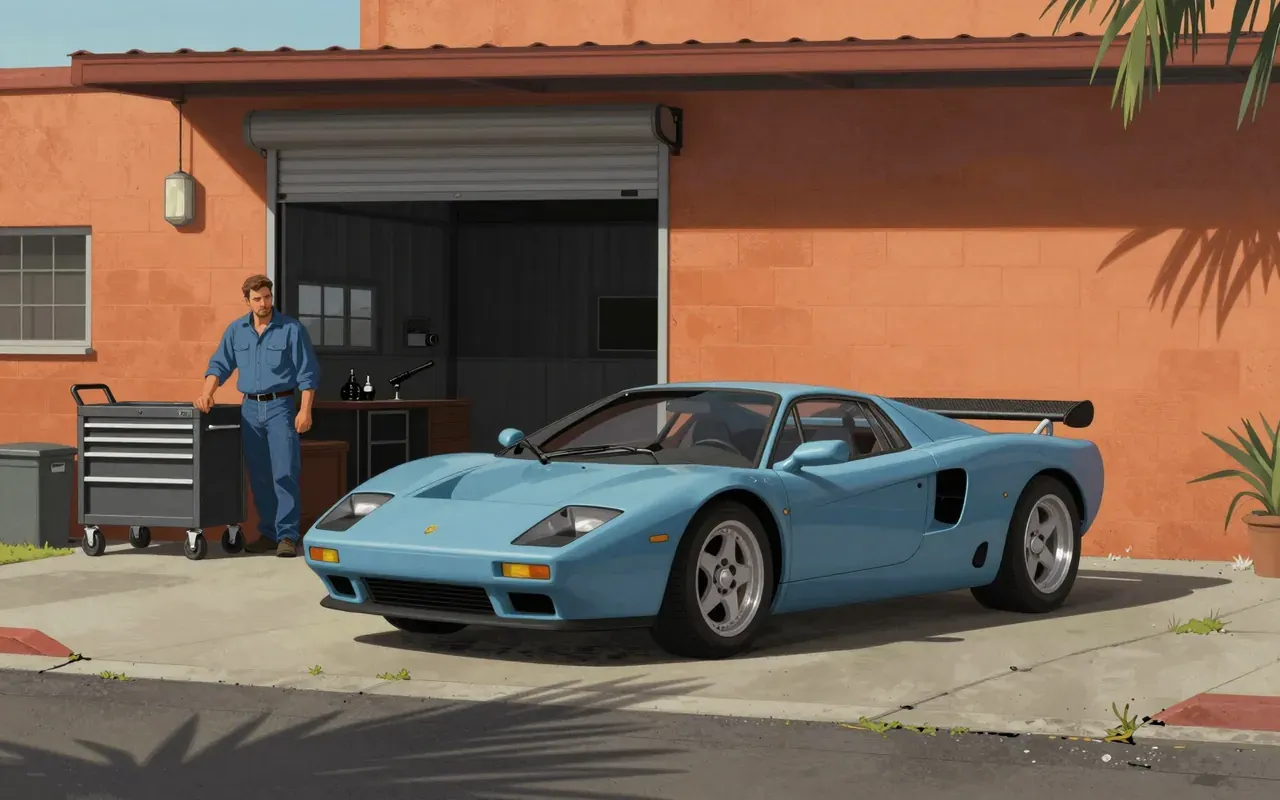
The first mass-market mid-engined roadster wasn’t a Porsche triumph—it was a VW-Porsche truce.
The Porsche 914 was a mid-engined targa-topped roadster co-developed by Volkswagen and Porsche between 1969 and 1976. It used either a 1.7 L flat-four or 2.0 L flat-six engine, both mounted midship. Over 118,000 914/4 units were sold worldwide, while only 3,351 914/6 models were built before discontinuation in 1972. It won Motor Trend's Import Car of the Year for 1970 and served as Formula One's first safety car at the 1973 Canadian Grand Prix.
It was never just a Porsche—it was a joint venture with Volkswagen, sold only as a targa roadster.
2:08
Engine Amidships
Mid-engine layout shaped its weight distribution, visibility, and cabin proportions—not its steering feel or chassis response.
3:25
Award-Winning Access
Motor Trend named it Import Car of the Year in 1970—before the 914/6 was discontinued and before the 914/4 outsold the 911.
4:38
Two Cars, One Name
Only 3,351 914/6 models were built; over 118,000 914/4 units were sold worldwide.
5:43
Track-Tested Utility
It served as Formula One’s first safety car at the 1973 Canadian Grand Prix—proving utility beyond the showroom.
6:48
A Defined Run
Production ended in 1976—six years after the 914/6 was dropped and seven years after launch.
Worth your time?
Yes. Drive the whole thing.
3.5/ 5
What works
packaging of a lightweight, accessible, mid-engined roadster
visibility, simplicity, and a low-slung driving position
functional and integrated targa top
What does not
deliver driver engagement comparable to contemporaries built around driver-centric dynamics
offer structural rigidity or steering precision comparable to contemporaries built around driver-centric dynamics
Drive it if
someone who values clean architecture, collaborative engineering, and historical pivot points over lineage or driver reward
someone who wants to understand how collaboration reshaped sports-car priorities in the late 1960s
Skip it if
someone seeking a Porsche-branded analogue to the 911
The written brief1 min read
What the car is and where it came from
A mid-engined sports car jointly developed by Volkswagen and Porsche. Sold exclusively as a targa-topped two-seat roadster from 1969 to 1976.
How it works, in terms someone would actually use
It is a targa-topped two-seat roadster with a mid-engine layout. The engine sits amidships, ahead of a modified version of the 1969 911’s ‘901’ gearbox. Power goes to the rear wheels.
What it gets right
It gets right the packaging of a lightweight, accessible, mid-engined roadster. It delivers visibility, simplicity, and a low-slung driving position. Its targa top is functional and integrated—not an afterthought.
What it does not
It does not deliver the feedback or balance expected of a pure Porsche driving machine. It does not offer structural rigidity or steering precision comparable to contemporaries built around driver-centric dynamics.
What it changed
It made mid-engined layout mainstream for affordable European sports cars. It redefined Porsche’s market reach—outselling the 911 by a wide margin—and proved targa could be a production default, not a compromise.
Who it is for, and who it is not
It is for someone who values clean architecture, collaborative engineering, and historical pivot points over lineage or driver reward. It is not for someone seeking a Porsche-branded analogue to the 911.
Is it worth your time
Yes—if you want to understand how collaboration reshaped sports-car priorities in the late 1960s. No—if you expect driver engagement or mechanical distinction from the 914/6 alone.
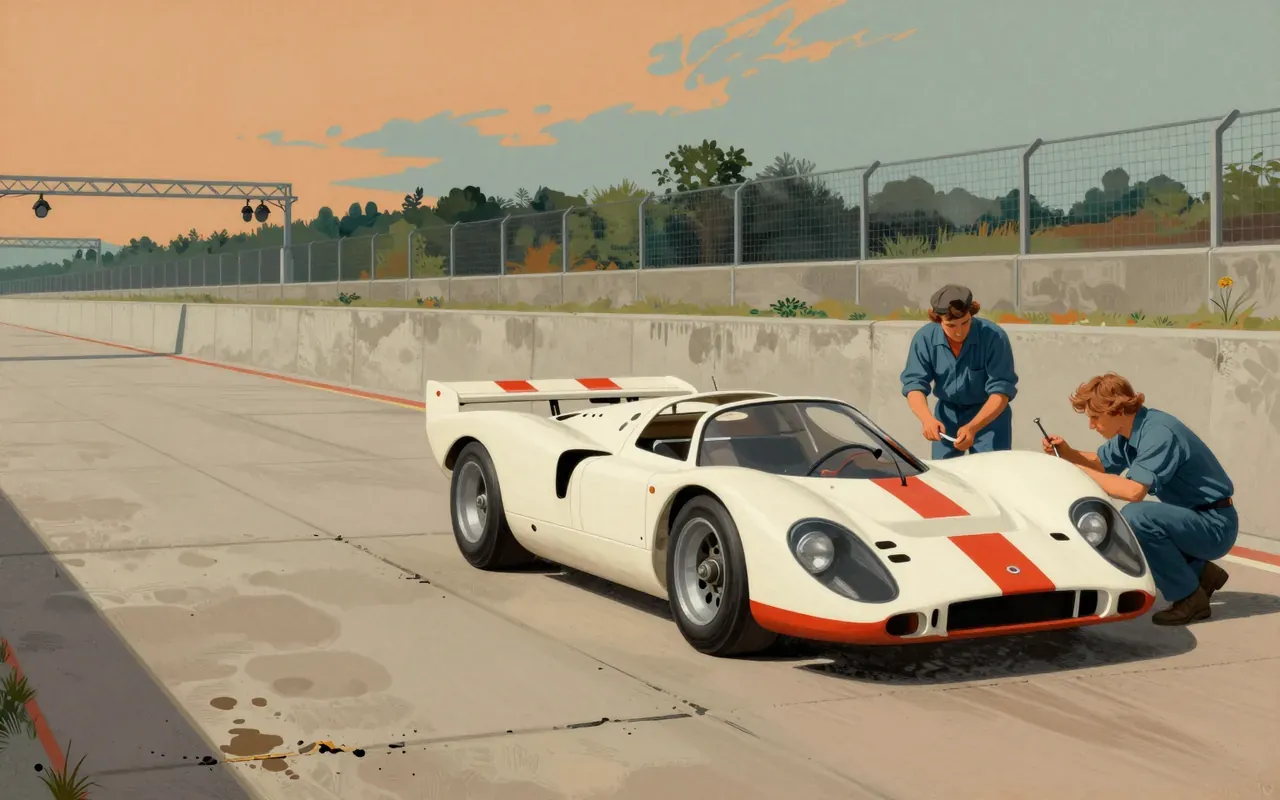
A regulation-exploiting prototype that began unstable, then rewrote Porsche’s racing legacy — not through elegance, but through pressure-tested steel and air-cooled audacity.