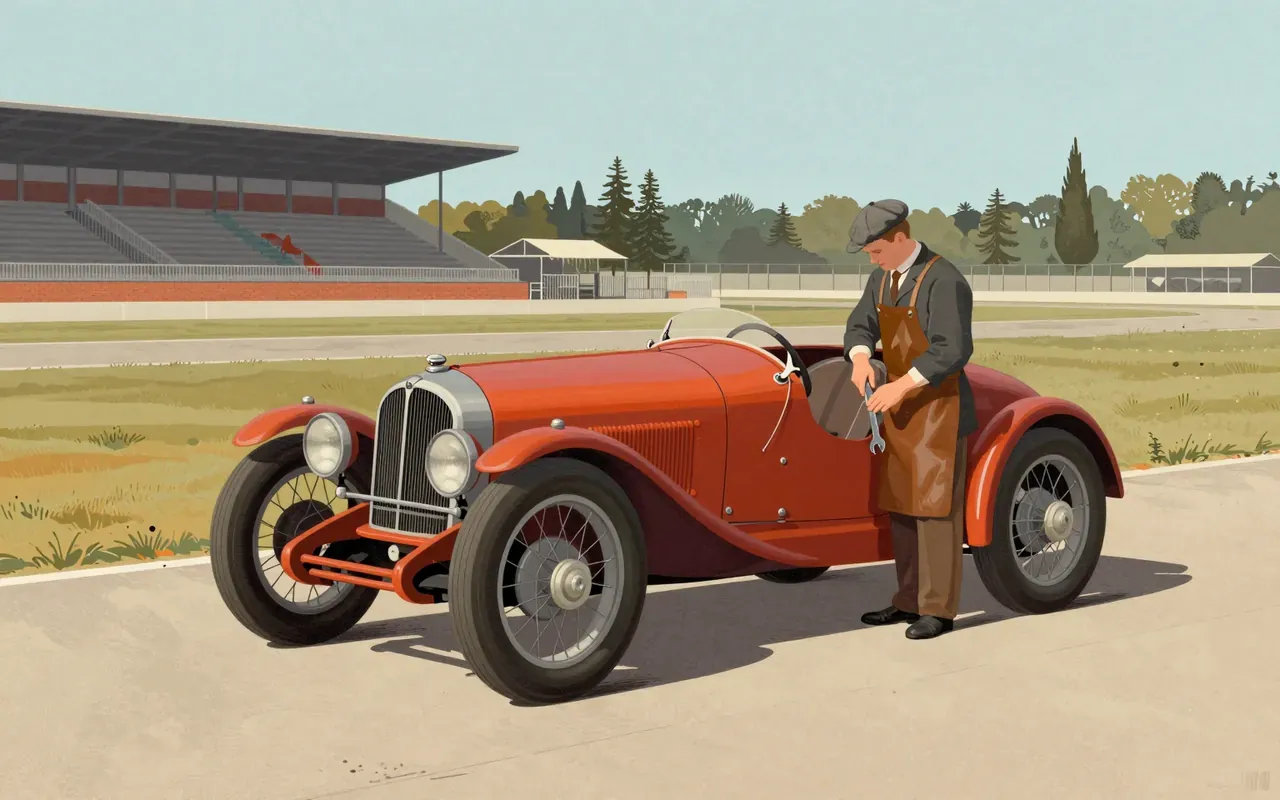
A regulation-exploiting prototype that began unstable, then rewrote Porsche’s racing legacy — not through elegance, but through pressure-tested steel and air-cooled audacity.
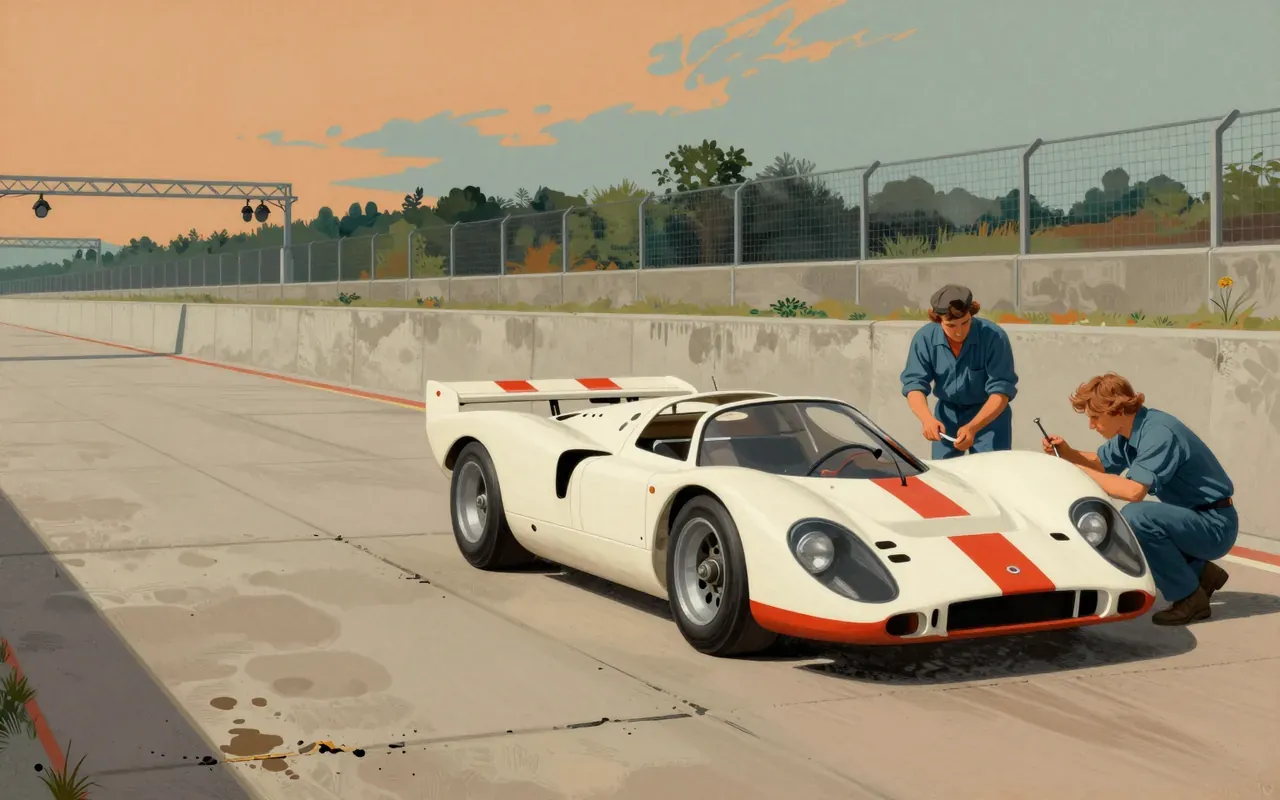
The Porsche 917 is a sports prototype race car developed by Porsche’s 1960s Race Design office under Hans Mezger’s leadership to exploit 5-litre sports car regulations. Its spaceframe chassis weighs 42 kg and is permanently pressurised with gas to detect cracks. Power comes from a new 4.5-litre air-cooled flat-12 engine designed by Mezger. It gave Porsche its first overall wins at the 24 Hours of Le Mans in 1970 and 1971, and was chiefly responsible for Porsche winning the International Championship for Makes in both years. It was initially unwieldy but improved through continuous development. Porsche later adapted it for Can-Am racing, culminating in the twin-turbocharged 917/30.
It was built to win under 5-litre sports car rules — nothing more, nothing less.
2:51
Lightness With Consequence
Its 42 kg spaceframe was pressurised to catch weld failures; its 4.5-litre flat-12 was air-cooled and all-new.
4:27
Le Mans, Then Legacy
It gave Porsche its first Le Mans overall wins — in 1970 and again in 1971.
6:22
From Endurance to Turbo
Its Can-Am evolution — the twin-turbo 917/30 — proved the platform could scale beyond endurance into raw, forced-induction dominance.
Worth your time?
Yes. Drive the whole thing.
4.5/ 5
What works
integration of extreme lightness and structural integrity via pressurised spaceframe
strategic use of air-cooled flat-12 layout to meet displacement rules
enabling Porsche's first Le Mans overall wins in 1970 and 1971
enabling Porsche's International Championship for Makes wins in 1970 and 1971
What does not
deliver usable road manners
intended for public roads
predictable handling at launch
Drive it if
engineers
historians of motorsport regulation
designers studying constraint-driven innovation
Skip it if
drivers seeking feedback
drivers seeking comfort
drivers seeking predictability
The written brief1 min read
What the car is and where it came from
The Porsche 917 is a 1969 sports prototype race car developed by Porsche’s 1960s Race Design office under Hans Mezger’s leadership. Its chassis was designed by Helmuth Bott; its engine by Mezger. It was conceived to exploit 5-litre sports car regulations.
How it works, in terms someone would actually use
It is a sports prototype race car built to exploit 5-litre sports car regulations. Its spaceframe chassis weighs 42 kg and is permanently pressurised with gas to detect cracks. Power comes from a new 4.5-litre air-cooled flat-12 engine designed by Hans Mezger.
What it gets right
It gets right the integration of extreme lightness and structural integrity via a pressurised spaceframe. It gets right the strategic use of a new air-cooled flat-12 layout to meet displacement rules while enabling future turbocharged evolution.
What it does not
It does not deliver usable road manners. It was never intended for public roads. It was unwieldy on track at launch and required continuous development to become competitive.
What it changed
It changed Porsche’s racing identity: delivering its first overall Le Mans wins in 1970 and 1971, and enabling Porsche to win the International Championship for Makes in both years.
Who it is for, and who it is not
It is for engineers, historians of motorsport regulation, and designers studying how constraints drive innovation. It is not for drivers seeking feedback, comfort or predictability.
Is it worth your time
Yes — if you care about how engineering ambition meets regulation, and how a machine evolved from instability to dominance through relentless iteration.