automotivebriefs
10:08in productionCh. 1 · Replacing the P3/ 10:08 · ceiling 15 min
Racing · Endurance

Ferrari 330 P4

Ferrari's 1967 mid-engined V12 endurance car, built to replace the 330 P3; only four P4-engined cars were ever made.

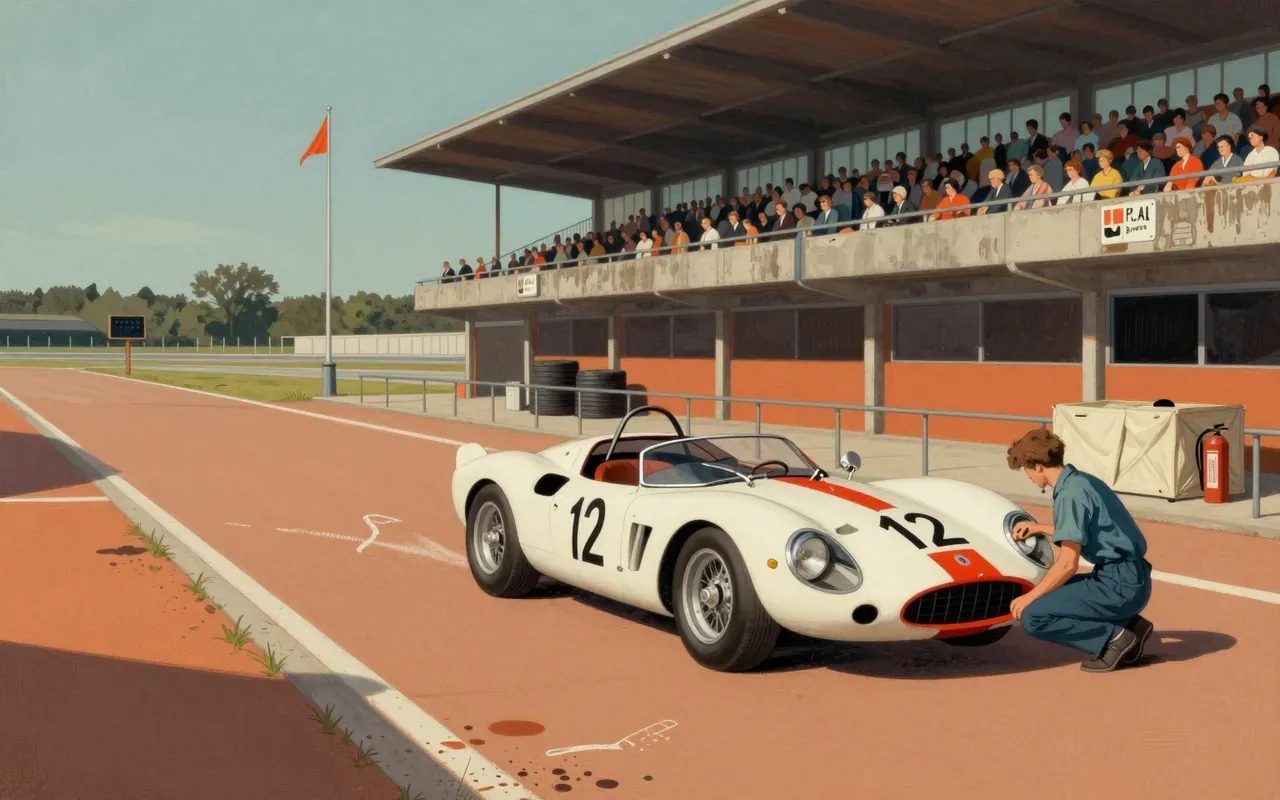
The 330 P4 was a mid-engined V12 endurance car that replaced the 330 P3 in 1967. It kept the P3's fuel injection, added a three-valve cylinder head and produced up to 450 hp. Only four P4-engined cars were made, and it won Monza in 1967.

Chapters & takeaways4
  1. 1:07
    Replacing the P3

    The 330 P4 of 1967 was a mid-engined V12 endurance car intended to replace the previous year's 330 P3.

  2. 2:50
    Heads and Injection

    Its three-valve cylinder head was modelled on those of Italian Grand Prix-winning Formula One cars, with the P3's fuel injection, for up to 450 hp.

  3. 4:42
    Monza and Daytona

    The P4 won the 1967 Monza 1000 km, and two P4s and a 412 P finished one-two-three at the 1967 24 Hours of Daytona.

  4. 5:50
    Four Cars, Scattered Fates

    Three new cars and one upgraded P3 chassis; one was scrapped, and others were converted to Can-Am cars.

Worth your time?

Yes. Drive the whole thing.

4/ 5
What works
  • a three-valve head modelled on Ferrari's Formula One engines
  • fuel injection carried over from the P3
  • results at Monza and Daytona in 1967
What does not
  • exist in numbers, with only four P4-engined cars built
  • stay eligible, since the 1968 championship rules ruled out its engine size
Drive it if
  • readers of Ferrari's 1960s endurance racing
Skip it if
  • anyone after a car with a clean, documented chassis history
The written brief2 min read

What the car is and where it came from

The 330 P4 belongs to the Ferrari P series, V12 rear mid-engined two-seat prototypes built mainly for the factory team. Made in 1967, it was a mid-engined V12 endurance car intended to replace the 330 P3 of the previous year. 1967 was a banner year for Ferrari.

How it works, in terms someone would actually use

The P4 is a mid-engined, V12 endurance car. Its three-valve cylinder head was modelled on those of Italian Grand Prix-winning Formula One cars. To that was added the same fuel injection system as the P3, for an output of up to 450 hp.

What it gets right

The results. The P3 had won the 1000 km of Monza in 1966, and the P4 won the same race in 1967. At the 1967 24 Hours of Daytona two P4s and one 412 P crossed the line together, in first (0846), second (0856) and third (0844), a photo finish to answer Ford’s photograph of its GT40 Mk. II cars at Le Mans in 1966.

What it does not

It does not exist in numbers. Only four P4-engined cars were ever made: three new 330 P4s and one upgraded P3 chassis (0846). It also ran out of road. The 412 P and P4 were not eligible for the 1968 International Championship of Makes, because their engines were too large for the new 3 litre Group 6 category, and too few had been built for the 5 litre Group 4 category, which needed at least 50 units. Ferrari did not contest the championship for a year in protest.

What it changed

It carried the P3’s fuel injection into a car with a three-valve, Formula One-style head, and it won at Monza and Daytona in 1967. Its size and its numbers also put it outside the 1968 rules: the 412 P and P4 were too big and too few.

Who it is for, and who it is not

It is for readers who follow Ferrari’s endurance racing in the 1960s. It is not for anyone wanting a clean chassis history. The car numbered 0846 was scrapped because of earlier accident damage and fire damage at Le Mans in 1967, and written off Ferrari’s books. Cars 0858 and 0860 were converted to 350 Can-Am cars and later given P4 bodies. Car 0856 was sold to a new owner in 2020.

Is it worth your time

Yes, briefly, for the Daytona finish alone. It is a short-lived car that won in its year and then lost its place to a rule change.
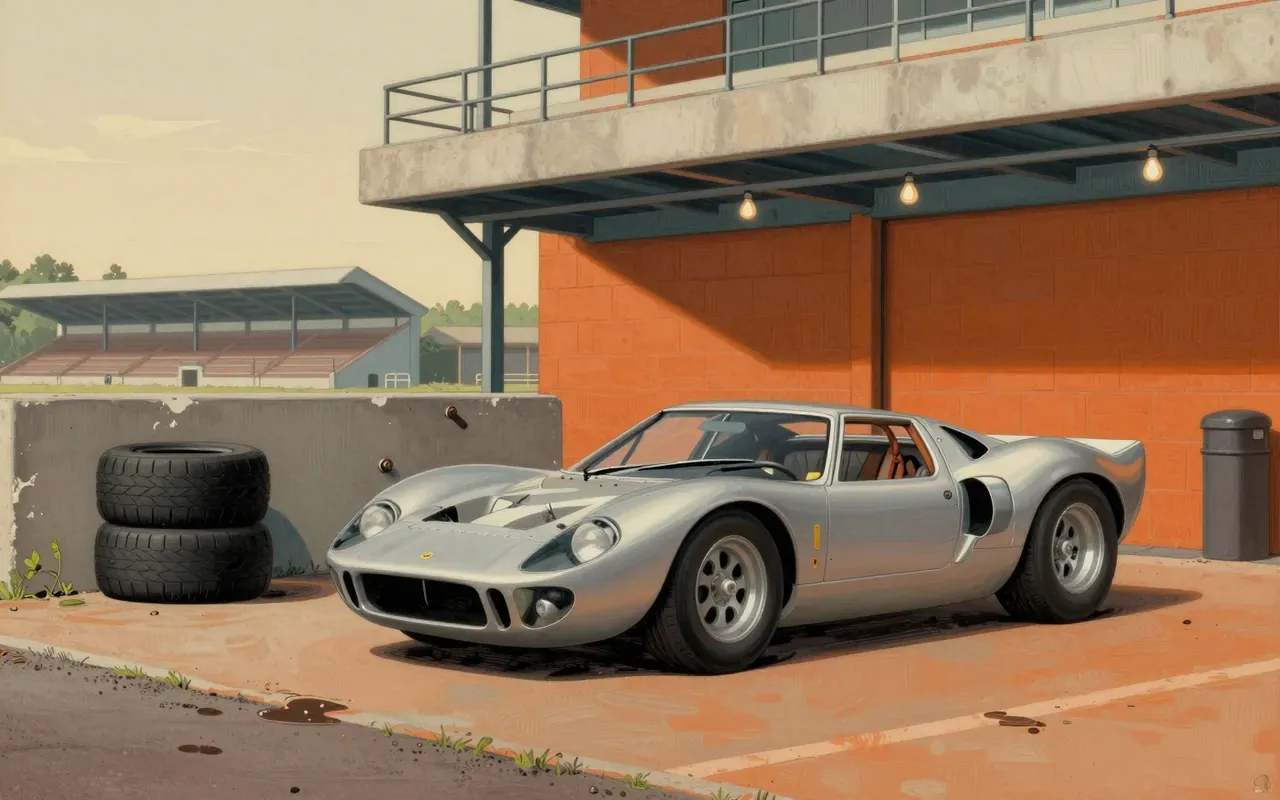
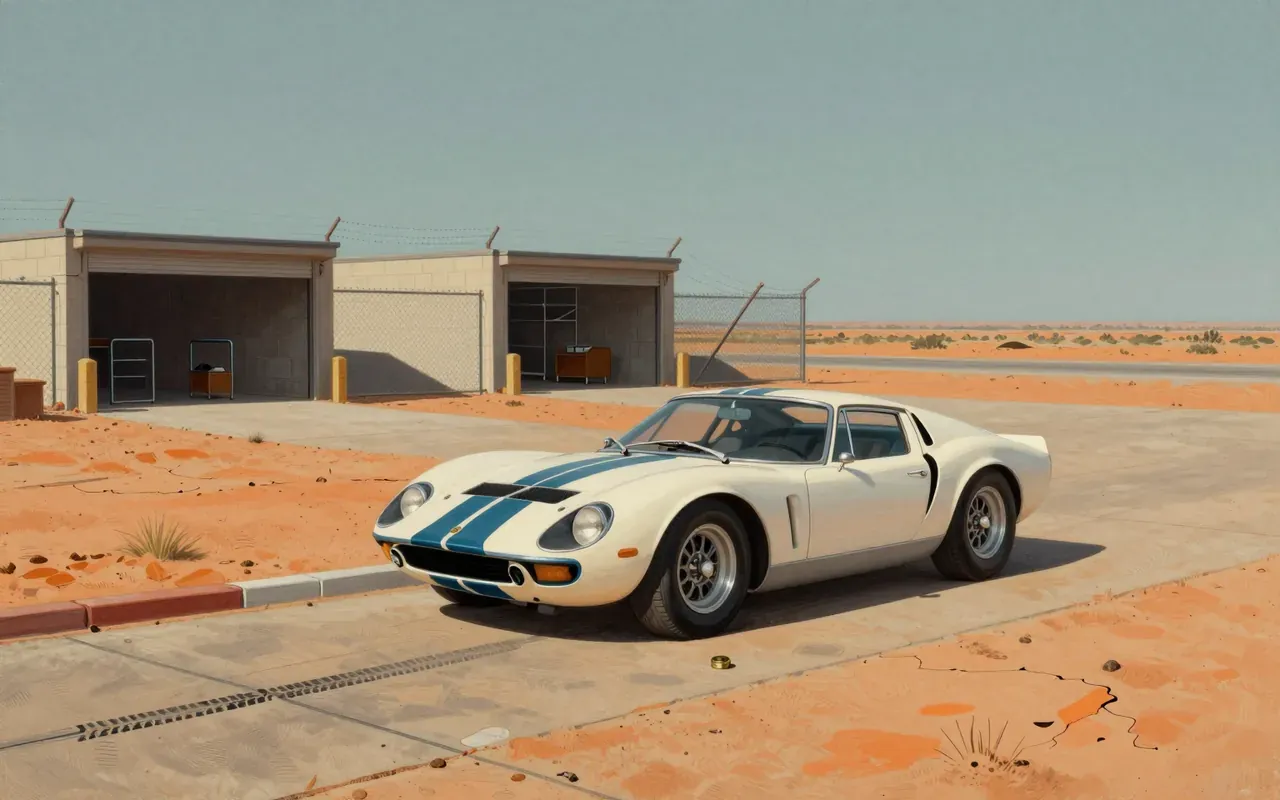
Same garage · Racing4 of 37
11:09
Ford GT40Roy Lunn · 1964A mid-engined, rear-wheel-drive racing car developed by Ford between 1963 and 1964 under Roy Lunn’s direction, built in Slough then Dearborn, to beat Ferrari at Le Mans.
10:21
Shelby DaytonaPeter Brock · 1964The Shelby Daytona is a closed-cockpit racing coupé derived from the Cobra roadster. Six were built between 1964 and 1965 to beat Ferrari’s 250 GTO in FIA GT-class racing. It won the 1965 International Championship for GT Manufacturers — the first American constructor to win an FIA World Championship title. Its aerodynamic body solved high-speed drag issues inherent in open-cockpit Cobras. It was not built for road use. It changed how GT racers approached bodywork — proving that focused evolution, not clean-sheet design, could deliver world-title success.
10:07
Porsche 917Hans Mezger · 1969The Porsche 917 is a sports prototype race car developed by Porsche’s 1960s Race Design office under Hans Mezger’s leadership to exploit 5-litre sports car regulations. Its spaceframe chassis weighs 42 kg and is permanently pressurised with gas to detect cracks. Power comes from a new 4.5-litre air-cooled flat-12 engine designed by Mezger. It gave Porsche its first overall wins at the 24 Hours of Le Mans in 1970 and 1971, and was chiefly responsible for Porsche winning the International Championship for Makes in both years. It was initially unwieldy but improved through continuous development. Porsche later adapted it for Can-Am racing, culminating in the twin-turbocharged 917/30.
10:37
Porsche 906Ferdinand Piëch · 1966The Porsche 906 is a Group 4 Sports Car introduced in January 1966. Ferdinand Piëch headed Porsche’s development department during its creation. It weighed 580 kg. Its wind-tunnel-tested body reached 280 km/h at Le Mans. Sixty-five units were built to achieve homologation in May 1966. It used a modified 901 flat-six from the 911R. It featured gull-wing doors and a plexiglas engine cover.
Up next in Automotive

Ford Escort RS1600

Ford · 1970 · 9:35

The Mark I Escort fitted with a 1,601 cc Cosworth BDA 16-valve engine, a strengthened shell and sports suspension, built by Ford for rallying.

9:35