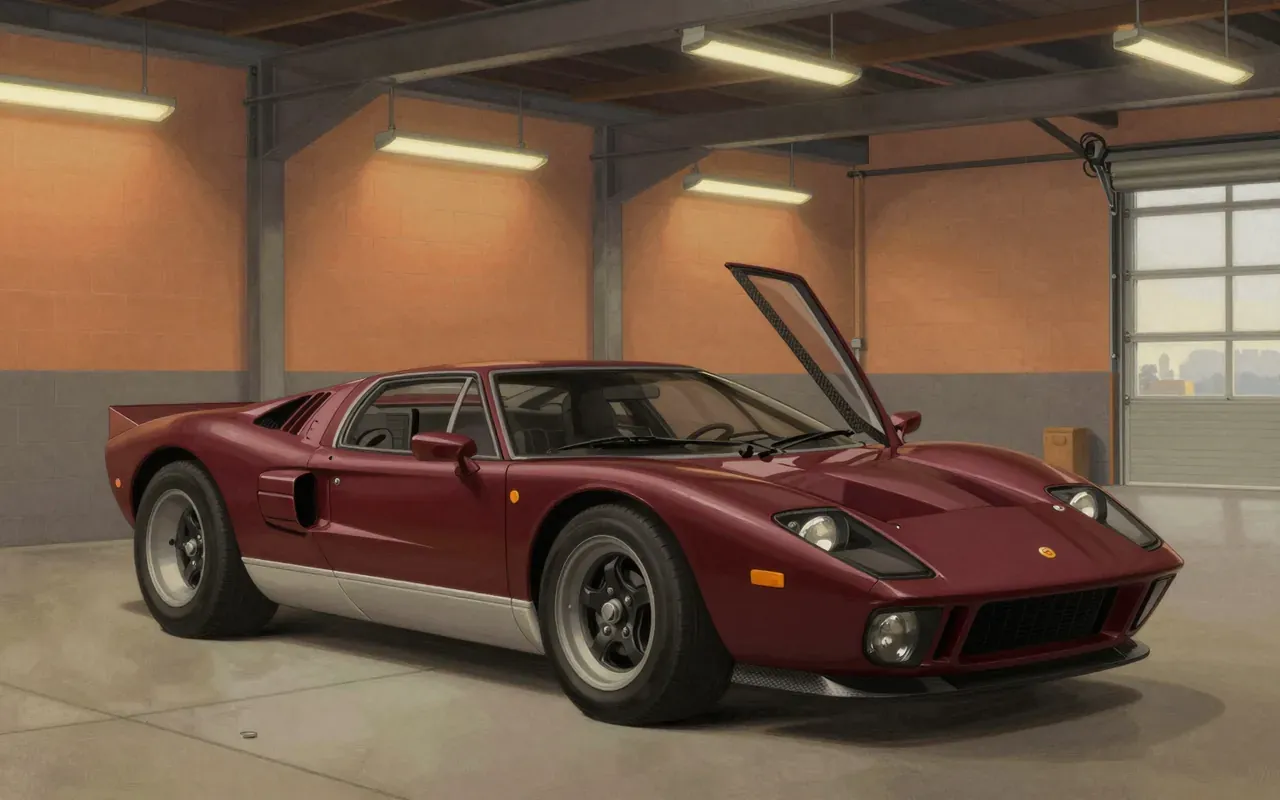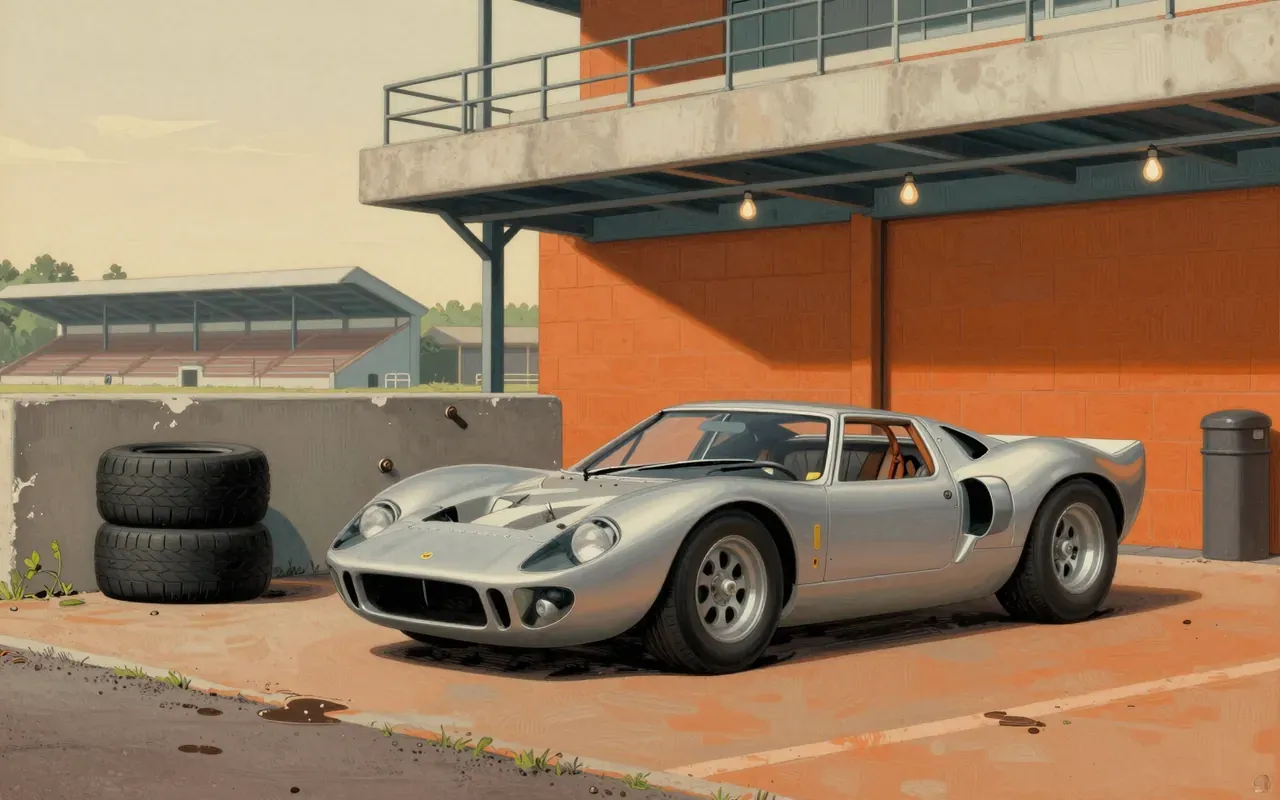
What the car is and where it came from
A mid-engined, rear-wheel-drive racing car developed by Ford between 1963 and 1964 under Roy Lunn’s direction, built in Slough then Dearborn, to beat Ferrari at Le Mans.
How it works, in terms someone would actually use
It places the driver behind a mid-mounted American V8, with rear-wheel drive and a racing chassis built for Le Mans endurance. The layout forces a low, tight cockpit—40 inches tall at the windscreen—to cut drag and fit under regulations.
What it gets right
It gets right the balance of rigidity, weight distribution, and aerodynamic efficiency needed for sustained 24-hour speeds. Its Lola Mk6 origins gave it a proven chassis base; its Ford V8 gave it brute, tunable power.
What it does not
It does not prioritise driver comfort, road usability, or mechanical refinement. It has no luggage space, no sound insulation, and no concession to daily driving. It was never intended to be driven anywhere but a circuit.
What it changed
It proved that a mass-production automaker could design, build, and win with a purpose-built mid-engined racer—ending Ferrari’s Le Mans dominance and forcing FIA rule changes on homologation volume and engine placement.
Who it is for, and who it is not
It is for engineers, historians of motorsport, and students of industrial project management. It is not for collectors seeking elegance, drivers seeking usability, or enthusiasts who value originality over outcome.
Is it worth your time
Yes—if you care how a corporate mandate reshaped racing engineering. It is not a car to admire from afar. It is a machine built to win a specific race, by a specific team, against a specific rival.