automotivebriefs
9:12in productionCh. 1 · Born from a brief/ 9:12 · ceiling 15 min
Sports cars

Porsche 911

A rear-engine sports car that refused to evolve its layout — and won four World Championships doing it.

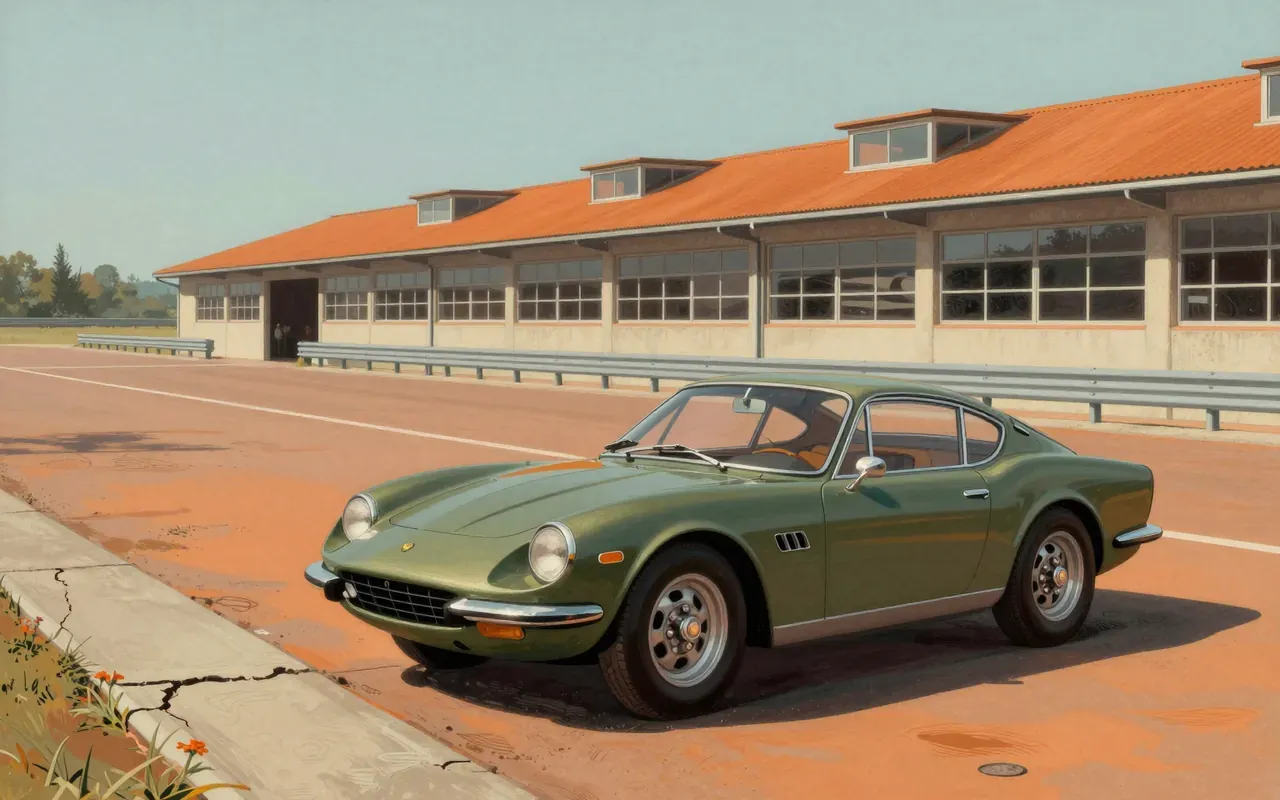
The Porsche 911 is a rear-engine sports car introduced in September 1964. Ferdinand Alexander Porsche designed its exterior. Reutter built the body from his drawings. It debuted as the 901 at the 1963 Frankfurt Motor Show. Peugeot forced the name change to 911. All 911s have a rear-mounted flat-six and usually 2+2 seating. Original models used air-cooled engines and torsion bar suspension. The 911 won the Targa Florio, Daytona, Le Mans, and four World Championships for Makes — all with 911-derived models.

Chapters & takeaways4
  1. 1:04
    Born from a brief

    Launched in September 1964, the 911 was conceived as the successor to the 356 — with more cabin space, comfort, and trunk capacity.

  2. 2:34
    Drawn, built, renamed

    Ferdinand Alexander Porsche drew the shape. Ferry Porsche approved it. Reutter built it. Peugeot forced the name change from 901 to 911.

  3. 3:50
    Layout first, everything else follows

    All 911s have a rear-mounted flat-six and usually 2+2 seating. The original cars used air-cooling and torsion bars — a deliberate, unapologetic package.

  4. 5:14
    Raced hard, won often

    It won the Targa Florio, Daytona, Le Mans, and four consecutive World Championships for Makes — all with 911-derived models.

Worth your time?

Yes. Drive the whole thing.

4.5/ 5
What works
  • holds to a core layout while incrementally updating systems
  • solves for cabin space, trunk capacity, and driver engagement simultaneously
What does not
  • abandon the rear-engine compromise
Drive it if
  • drivers who accept the rear-engine condition as a given
Skip it if
  • those who demand neutral handling or front/mid-engine balance as default
The written brief1 min read

What the car is and where it came from

The Porsche 911 is a family of rear-engine sports cars introduced in September 1964. Ferdinand Alexander Porsche designed its exterior shape; Reutter built the body from his drawings. It debuted as the 901 at the 1963 Frankfurt Motor Show, then became the 911 after Peugeot objected to the name.

How it works, in terms someone would actually use

It is a two-door, rear-engine sports car with a flat-six engine mounted behind the rear axle and usually 2+2 seating. It began with air-cooled engines and torsion bar suspension.

What it gets right

It gets right the balance between cabin space, trunk capacity, and driver engagement — solving Ferry Porsche’s brief for more room without diluting the driving experience.

What it does not

It does not abandon the rear-engine compromise. It accepts the trade-offs — weight bias, sensitivity to lift-off oversteer, packaging constraints — and works within them.

What it changed

It changed how a sports car could persist: by holding to a core layout while incrementally updating systems, proving that continuity could be a design principle, not a limitation.

Who it is for, and who it is not

It is for drivers who accept the rear-engine condition as a given — not a problem to fix, but a language to speak. It is not for those who demand neutral handling or front/mid-engine balance as default.

Is it worth your time

Yes. It established a continuous lineage of rear-engine sports cars defined by mechanical logic, racing success, and uncompromising layout — not by evolution for its own sake.

Same garage · Sports cars4 of 22
9:28
Alfa Romeo AlfettaAlfa Romeo Centro Stile · 1972The Alfetta is a front-engine saloon and fastback coupé produced from 1972 to 1987. It used a rear transaxle and De Dion tube rear suspension to improve weight distribution and handling. Coupé models featured a central tachometer. All models left the factory with Pirelli Cinturato 165HR14 tyres.
9:22
Alfa Romeo 105/115 Series CoupésGiorgetto Giugiaro · 1963The Alfa Romeo 105/115 Series Coupés are foundational Giugiaro — not as a stylistic endpoint, but as a working method: take a proven platform, impose a strong, arched silhouette, and let coachbuilders extend it. They are compact, alloy-engined, live-axle sports coupés that prioritise form coherence over mechanical innovation. Their legacy is visual, not technical.
10:50
Alfa Romeo Giulia TZZagato · 1965The Giulia TZ is a focused, lightweight racing coupé built to exploit Alfa’s existing engine and suspension in a new structural format. Its value lies in how it redefined what ‘lightweight’ meant for a front-engined RWD car in 1963—not through novelty, but through discipline.
9:02
Bizzarrini StradaGiorgetto Giugiaro · 1965The Bizzarrini Strada is a mechanically focused, front mid-engine sports car from 1964–1968. It uses a rearward-placed Chevrolet V8 to optimise weight distribution and handling. It was never designed by Giugiaro. It exists in coupé, roadster, and Corsa forms. Its performance figures are verified: sub-7-second 0–100 km/h, 280 km/h top speed.
Up next in Automotive

Porsche 918 Spyder

Michael Mauer · 2013 · 9:39

A hybrid supercar that delivers electric torque and screaming V8s—but breaks control arms.

9:39