automotivebriefs
9:02in productionCh. 1 · Not Giugiaro. Not Ferrari. Bizzarrini./ 9:02 · ceiling 15 min
Sports cars

Bizzarrini Strada

A front-mid-engine V8 GT that prioritised balance over branding—and got it right before the term existed.

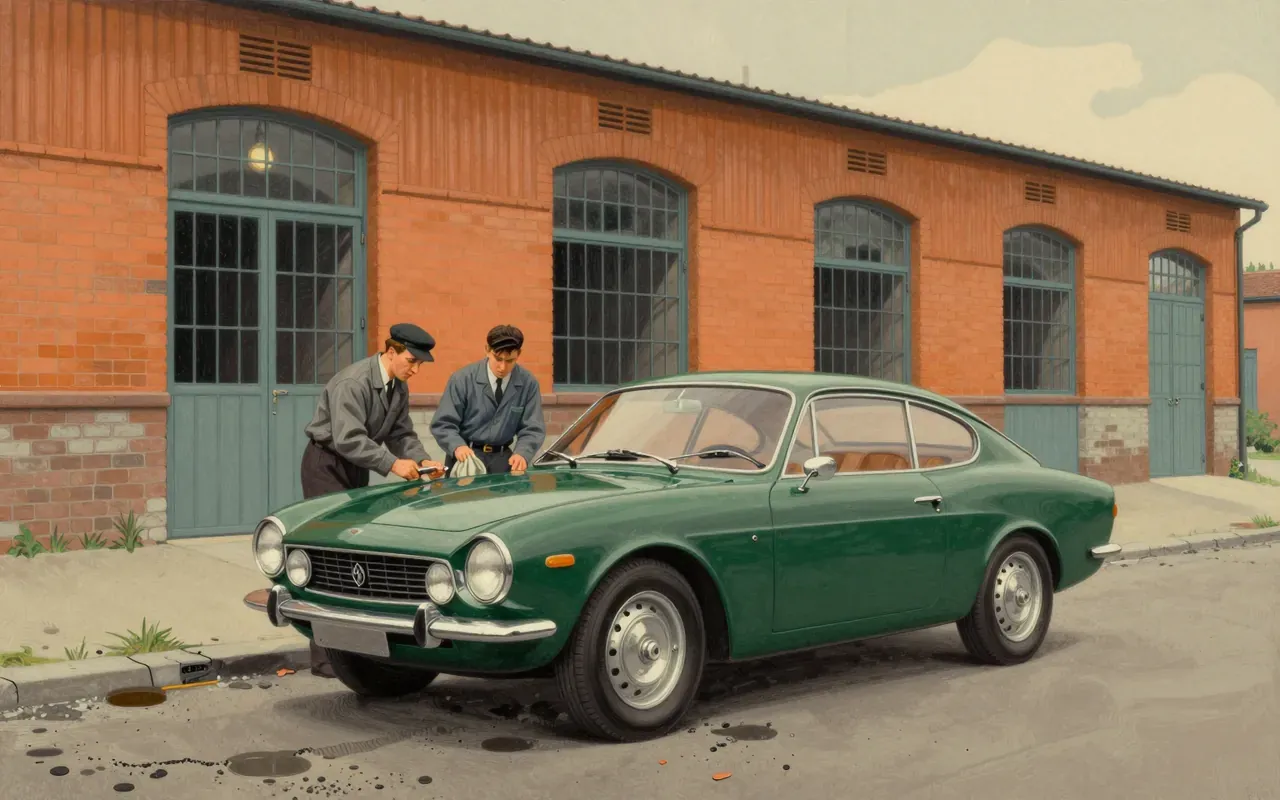
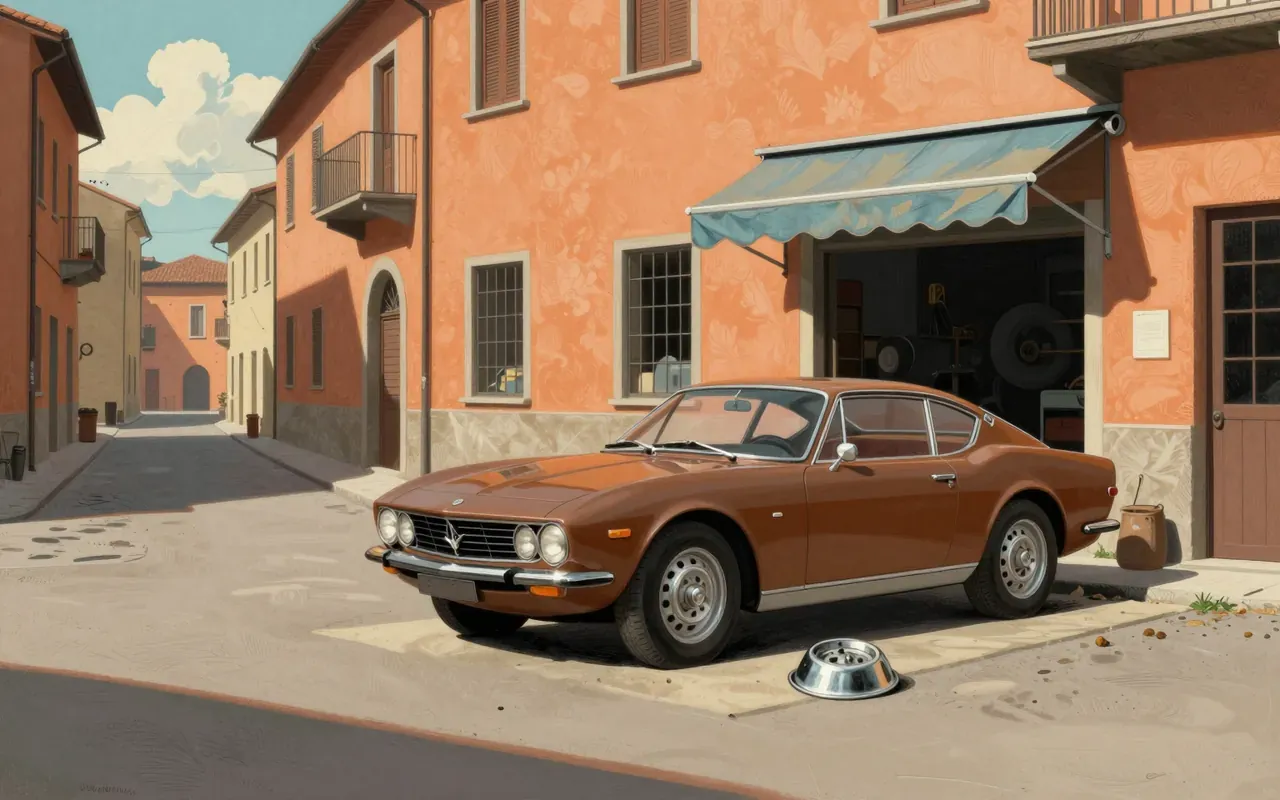
The Bizzarrini Strada is a mechanically focused, front mid-engine sports car from 1964–1968. It uses a rearward-placed Chevrolet V8 to optimise weight distribution and handling. It was never designed by Giugiaro. It exists in coupé, roadster, and Corsa forms. Its performance figures are verified: sub-7-second 0–100 km/h, 280 km/h top speed.

Chapters & takeaways4
  1. 0:59
    Not Giugiaro. Not Ferrari. Bizzarrini.

    The Strada was Bizzarrini’s own car—designed in 1963, launched in 1964, and built until 1968.

  2. 2:16
    Front mid-engine, not front-engine

    The engine sits as far back over the front axle as possible—to shift mass rearward and sharpen handling.

  3. 3:44
    Three bodies. One layout. Two speeds.

    It came as coupé, roadster, or Corsa racer—and hit 280 km/h with sub-7-second sprint times.

  4. 5:35
    American muscle, Italian placement

    It used a 5.4 L (5,358 cc) 327 Chevrolet small-block—proven, powerful, and placed for purpose.

Worth your time?

Yes. Drive the whole thing.

4/ 5
What works
  • Weight distribution as a handling lever
  • Scalable platform across road and race variants
  • Clear visual hierarchy between function and form
What does not
  • Giugiaro designed the Strada
  • The Strada is a concept or prototype
  • It used a bespoke engine
Drive it if
  • Drivers who prioritise chassis balance over comfort
  • Historians of mid-engine layout evolution
  • Collectors seeking functional purity over marque prestige
Skip it if
  • Those drawn to Giugiaro’s angular ‘folded paper’ style
  • Buyers needing practicality or modern ergonomics
  • Enthusiasts who conflate design fame with engineering intent
The written brief1 min read

What the car is and where it came from

The Bizzarrini Strada is a 1964–1968 Italian sports car designed by Giotto Bizzarrini—not Giugiaro. It was built around a modified Chevrolet V8 and sold as a coupé, roadster, or Corsa racer.

How it works, in terms someone would actually use

The Strada places its 5.4 L Chevrolet small-block engine as far back over the front axle as possible. This front mid-engine, rear-wheel-drive layout shifts mass rearward to sharpen turn-in and balance braking forces. It delivers acceleration to 100 km/h in under seven seconds and a top speed of 280 km/h.

What it gets right

It gets weight distribution right. It gets chassis purpose right: a road-legal platform that scales cleanly into Corsa-racer specification. It gets proportion right—low, taut, two-seat, with clear functional hierarchy between wheel arches, glasshouse, and tail.

What it does not

It does not offer cabin space, visibility, or refinement. It does not prioritise comfort, ease of entry, or low-speed tractability. It does not use bespoke engineering where proven components suffice.

What it changed

It proved that American V8 power could be harnessed in an Italian-designed GT without sacrificing structural logic or dynamic intent. It established the front mid-engine layout as a deliberate handling tool—not just packaging compromise.

Who it is for, and who it is not

It is for drivers who value mechanical honesty and weight-transfer clarity over polish or convenience. It is not for collectors seeking design fame, nor for those mistaking Giugiaro’s later angular language for this car’s origin.

Is it worth your time

Yes—if you care about how weight placement defines handling in a pre-aerodynamics sports car. No—if you expect driver engagement beyond mechanical feedback or need daily usability.
Same garage · Sports cars4 of 22
9:28
Alfa Romeo AlfettaAlfa Romeo Centro Stile · 1972The Alfetta is a front-engine saloon and fastback coupé produced from 1972 to 1987. It used a rear transaxle and De Dion tube rear suspension to improve weight distribution and handling. Coupé models featured a central tachometer. All models left the factory with Pirelli Cinturato 165HR14 tyres.
9:22
Alfa Romeo 105/115 Series CoupésGiorgetto Giugiaro · 1963The Alfa Romeo 105/115 Series Coupés are foundational Giugiaro — not as a stylistic endpoint, but as a working method: take a proven platform, impose a strong, arched silhouette, and let coachbuilders extend it. They are compact, alloy-engined, live-axle sports coupés that prioritise form coherence over mechanical innovation. Their legacy is visual, not technical.
10:50
Alfa Romeo Giulia TZZagato · 1965The Giulia TZ is a focused, lightweight racing coupé built to exploit Alfa’s existing engine and suspension in a new structural format. Its value lies in how it redefined what ‘lightweight’ meant for a front-engined RWD car in 1963—not through novelty, but through discipline.
9:36
BMW 02 SeriesGiovanni Michelotti · 1968The BMW 02 Series is a foundational compact executive car range produced from 1966 to 1977. Based on a shortened New Class sedan, it debuted as the 1600-2 in 1966 and evolved into the influential 2002 in 1968. Designed by Giovanni Michelotti, it established BMW’s sport-sedan identity through proportion, rear-wheel drive dynamics, and driver engagement—not raw power. Its variants included cabriolets, targas, hatchbacks (Touring), and economy models. It was lighter and more agile than its donor, less well-appointed but more responsive. It directly enabled BMW’s reputation for affordable performance—and shaped its design language for decades.
Up next in Automotive

BMW 02 Series

Giovanni Michelotti · 1968 · 9:36

Michelotti didn’t make the 2002 fast—he made it feel fast by cutting the rear deck and trusting the driver.

9:36