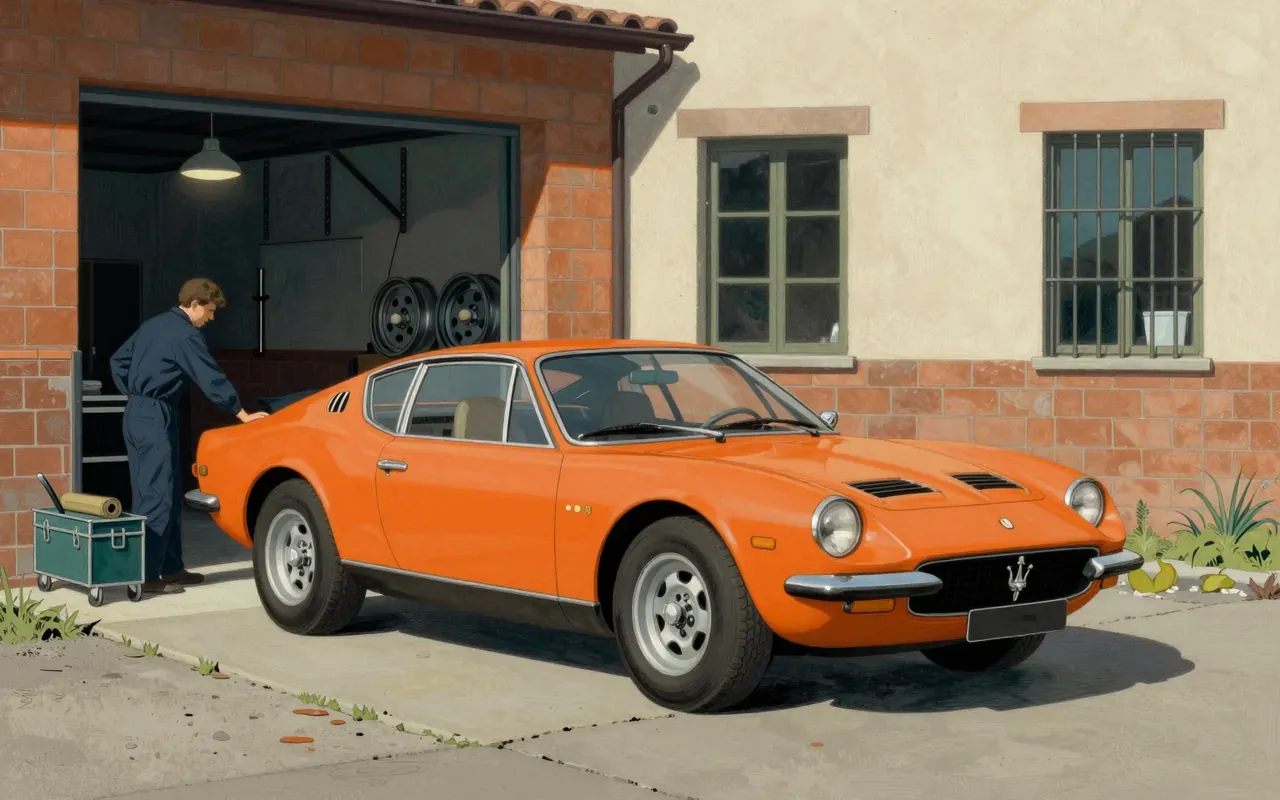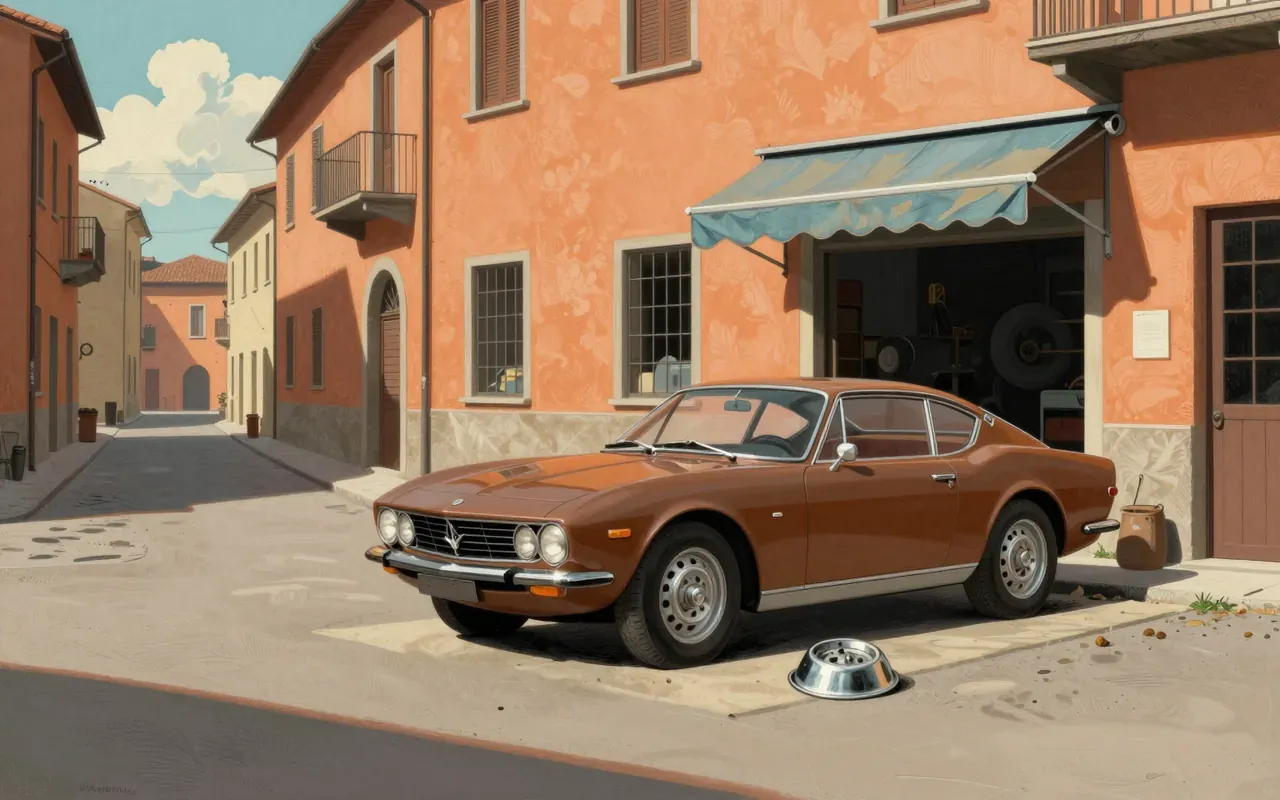
What the car is and where it came from
A 1967–1973 front-engine, RWD, 2+2 fastback coupé. Designed by Giorgetto Giugiaro in 1966 at Ghia. First shown as a 2-seater concept at the November 1966 Turin Motor Show. Built around a quad-cam, dry sump 4.7 L V8.
How it works, in terms someone would actually use
Front-engine, rear-wheel drive. A 4.7 L V8 sends power through a five-speed ZF manual or optional three-speed automatic. The steel body sits on a chassis built for grand touring — long distances, high speeds, minimal compromise on straight roads.
What it gets right
The low, shark-shaped nose. The fastback silhouette. The cohesion of arched surfaces across bonnet, roof, and tail — all executed in steel while Giugiaro was at Ghia. It delivers a singular, pre-1970s interpretation of Italian GT elegance.
What it does not
It does not offer functional rear seating. The two rear cushions lack backrests. It does not represent Giugiaro’s folded-paper era — that came later. It does not include verified performance figures, suspension specs, or weight data.
What it changed
It anchored Giugiaro’s early reputation with a production car that proved arched, flowing forms could carry Maserati’s V8 grand touring mandate — before he pivoted to angularity with the Bora in 1971.
Who it is for, and who it is not
It is for students of Giugiaro’s stylistic evolution. For collectors focused on pre-1970s Italian GTs with verifiable design authorship. It is not for drivers seeking daily usability, rear passengers, or mechanical transparency beyond its layout and engine type.
Is it worth your time
Yes — if you care about Giugiaro’s curvaceous phase as a discrete, pre-geometric moment in automotive design history. No — if you need usability, rear space, or documented driving dynamics beyond layout and intent.