automotivebriefs
9:22in productionCh. 1 · Bertone’s apprentice/ 9:22 · ceiling 15 min
Sports cars

Alfa Romeo 105/115 Series Coupés

Giugiaro’s first major car wasn’t a clean-sheet design — it was a sculpted reinterpretation of Alfa’s Giulia, and it defined an entire generation of Italian curves.

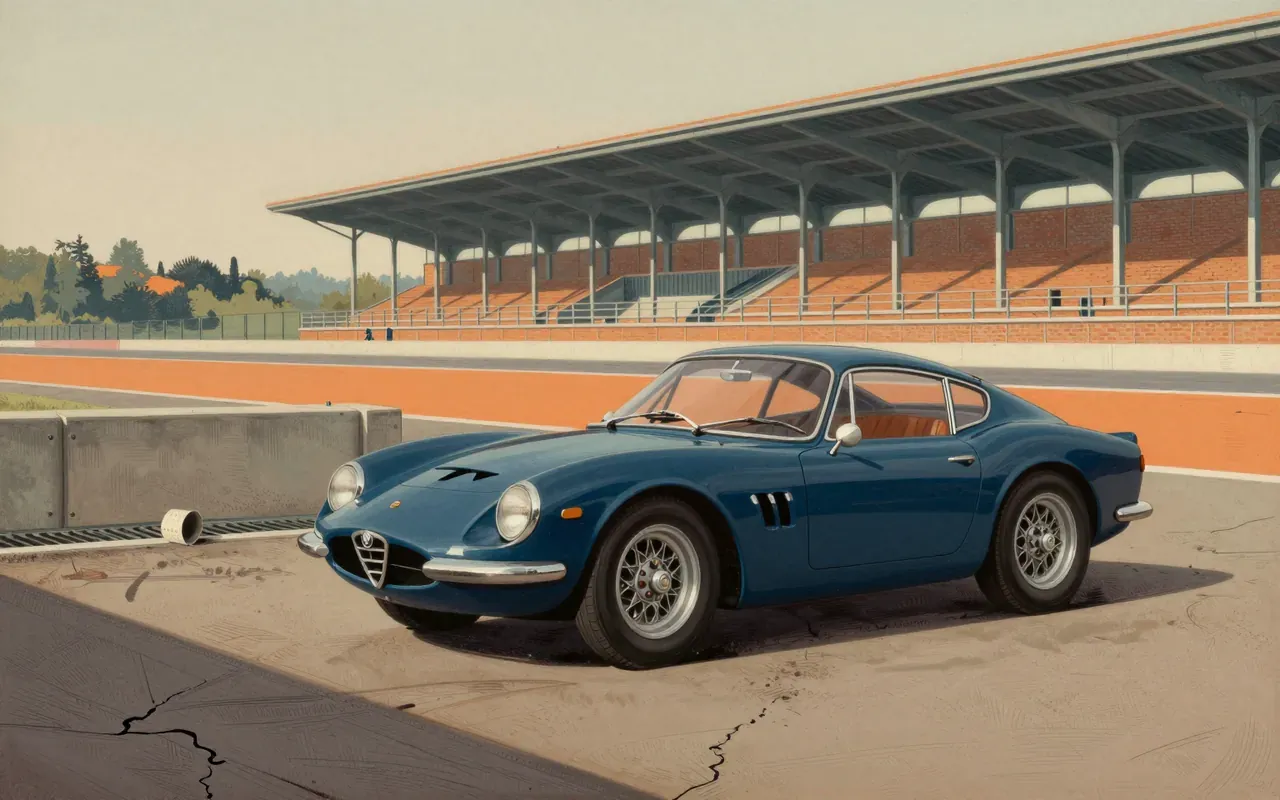
The Alfa Romeo 105/115 Series Coupés are foundational Giugiaro — not as a stylistic endpoint, but as a working method: take a proven platform, impose a strong, arched silhouette, and let coachbuilders extend it. They are compact, alloy-engined, live-axle sports coupés that prioritise form coherence over mechanical innovation. Their legacy is visual, not technical.

Chapters & takeaways5
  1. 1:04
    Bertone’s apprentice

    Giugiaro designed the body for Bertone — not Alfa — and it launched his career in production car styling.

  2. 2:27
    The curve begins here

    Its arched, flowing silhouette became Giugiaro’s calling card — repeated in the Mangusta, Grifo, and Ghibli.

  3. 3:28
    One platform, many faces

    All models used the same core mechanical architecture: Twin Cam engine, five-speed manual, four-wheel discs — with only minor market-specific exceptions.

  4. 4:44
    Rear suspension: honest and unapologetic

    A live axle at the rear limited lateral precision — but kept weight low and cost controlled.

  5. 5:53
    Two coachbuilders, one silhouette

    Touring and Zagato built distinct variants — proving Giugiaro’s shape could support radical reinterpretation.

Worth your time?

Yes. Drive the whole thing.

4/ 5
What works
  • balanced compact proportions
  • expressive surface tension
  • agility from shortened Giulia floorpan
  • responsive high-revving Twin Cam character
What does not
  • independent rear suspension
  • transverse engine layout
  • power steering
  • automatic climate control
Drive it if
  • enthusiasts who value original Giugiaro form language
  • drivers who prefer mechanical simplicity
  • collectors focused on 1960s Italian sports-car lineage
Skip it if
  • drivers who require predictable rear-end behaviour at limit
  • those needing crash-avoidance systems
  • anyone expecting daily usability beyond narrow European roads
The written brief2 min read

What the car is and where it came from

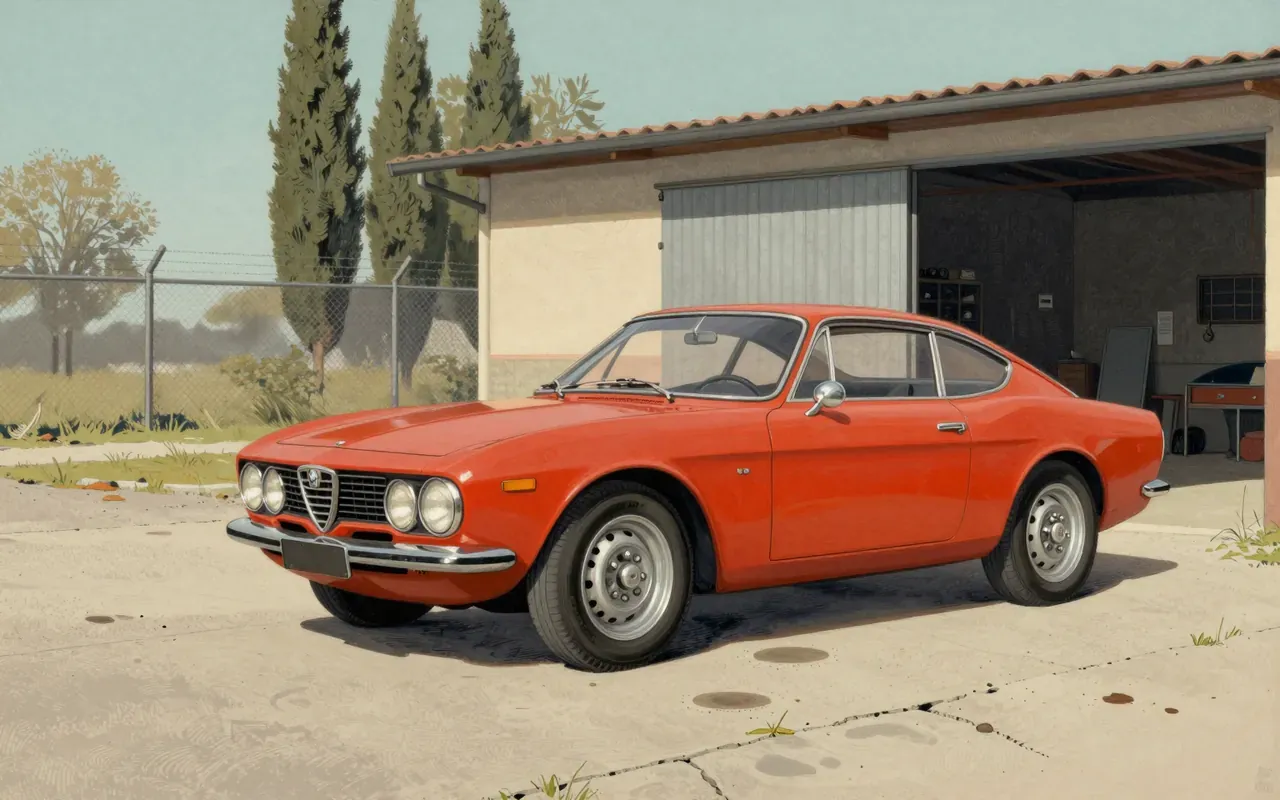
A family of Italian sports coupés produced by Alfa Romeo from 1963 to 1977. Based on a shortened Giulia saloon floorpan. Designed by Giorgetto Giugiaro for Bertone. Includes the Giulia Sprint GTC (1000-unit Touring convertible) and GT Junior Zagato (aerodynamic two-seater by Ercole Spada for Zagato).

How it works, in terms someone would actually use

It uses a four-cylinder, all-alloy Twin Cam engine (1290 cc to 1962 cc), a five-speed manual transmission, and four-wheel disc brakes. The rear suspension is a live axle with coil springs. US-market 1750 and 2000 GTVs use SPICA mechanical port fuel injection; most others use twin carburettors. A handful of South African-market 2000 GTVs had a three-speed automatic.

What it gets right

It gets the balance right between compact proportions and expressive surface tension. The shortened Giulia floorpan gives it agility without sacrificing interior usability. The Twin Cam engine delivers responsive, high-revving character across displacements.

What it does not

It does not have independent rear suspension. It does not use a transverse engine layout. It does not offer power steering or automatic climate control. It does not share its body with any non-Alfa model — all variants are Alfa-branded adaptations of Giugiaro’s Bertone design.

What it changed

It established Giugiaro’s signature arched and curving silhouette in production cars — a visual language later echoed in the De Tomaso Mangusta, Iso Grifo, and Maserati Ghibli.

Who it is for, and who it is not

It is for enthusiasts who value original Giugiaro form language, mechanical simplicity, and period-correct Alfa driving dynamics. It is not for drivers who require predictable rear-end behaviour at limit, crash-avoidance systems, or daily usability beyond narrow European roads.

Is it worth your time

Yes — if you want to understand how Giugiaro’s early arched forms shaped Italian sports-car language. No — if you expect modern handling, structural rigidity, or driver feedback beyond what a live-axle, Giulia-derived platform can deliver.

Same garage · Sports cars4 of 22
9:28
Alfa Romeo AlfettaAlfa Romeo Centro Stile · 1972The Alfetta is a front-engine saloon and fastback coupé produced from 1972 to 1987. It used a rear transaxle and De Dion tube rear suspension to improve weight distribution and handling. Coupé models featured a central tachometer. All models left the factory with Pirelli Cinturato 165HR14 tyres.
10:50
Alfa Romeo Giulia TZZagato · 1965The Giulia TZ is a focused, lightweight racing coupé built to exploit Alfa’s existing engine and suspension in a new structural format. Its value lies in how it redefined what ‘lightweight’ meant for a front-engined RWD car in 1963—not through novelty, but through discipline.
9:02
Bizzarrini StradaGiorgetto Giugiaro · 1965The Bizzarrini Strada is a mechanically focused, front mid-engine sports car from 1964–1968. It uses a rearward-placed Chevrolet V8 to optimise weight distribution and handling. It was never designed by Giugiaro. It exists in coupé, roadster, and Corsa forms. Its performance figures are verified: sub-7-second 0–100 km/h, 280 km/h top speed.
9:36
BMW 02 SeriesGiovanni Michelotti · 1968The BMW 02 Series is a foundational compact executive car range produced from 1966 to 1977. Based on a shortened New Class sedan, it debuted as the 1600-2 in 1966 and evolved into the influential 2002 in 1968. Designed by Giovanni Michelotti, it established BMW’s sport-sedan identity through proportion, rear-wheel drive dynamics, and driver engagement—not raw power. Its variants included cabriolets, targas, hatchbacks (Touring), and economy models. It was lighter and more agile than its donor, less well-appointed but more responsive. It directly enabled BMW’s reputation for affordable performance—and shaped its design language for decades.
Up next in Automotive

Alfa Romeo Giulia

Giuseppe Scarnati · 1965 · 10:49

A lightweight four-door saloon that made power-to-weight matter before anyone called it that.

10:49