automotivebriefs
9:29in productionCh. 1 · What it replaced/ 9:29 · ceiling 15 min
Road

Fiat Uno

Giugiaro’s Uno proved that a supermini could be tall, square and aerodynamic — without pretending to be anything but transport.

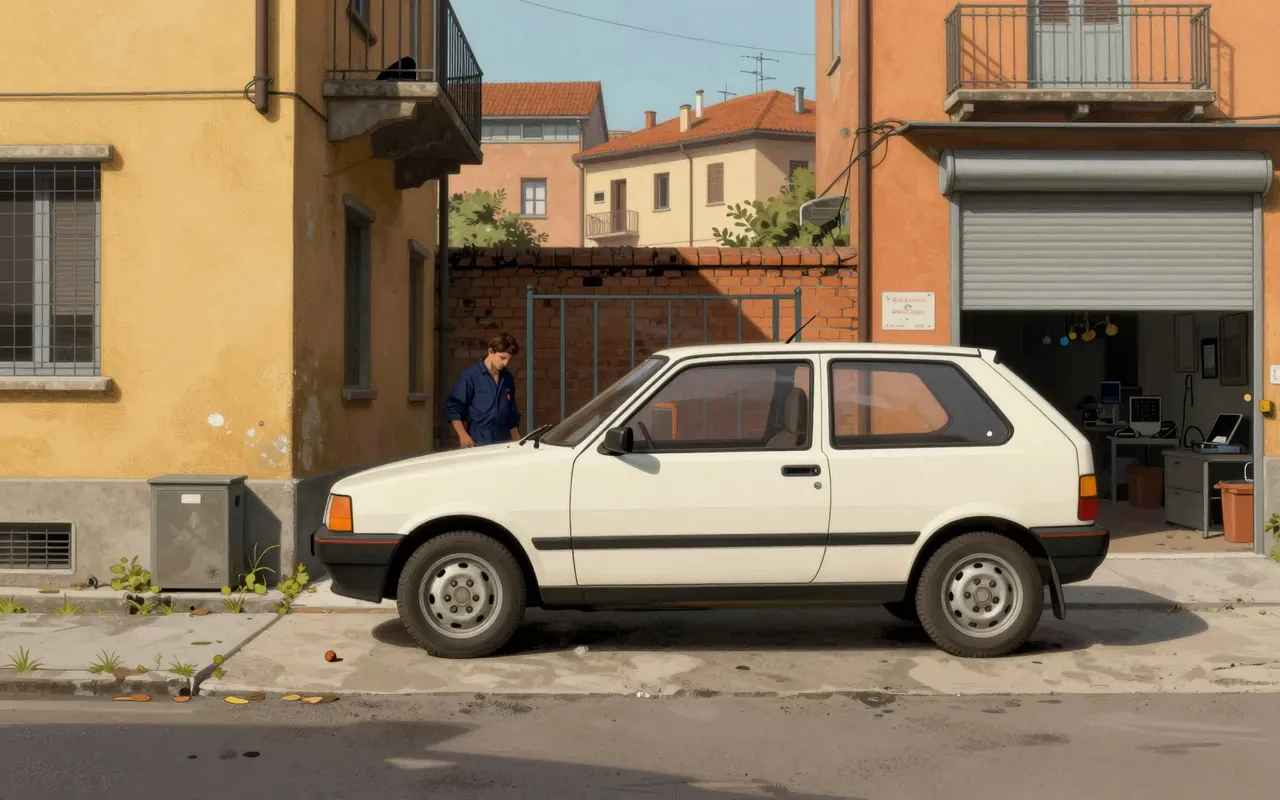
The Fiat Uno is a supermini designed by Giorgetto Giugiaro, launched in January 1983 to replace the Fiat 127. It was produced over a single generation with a 1989 facelift, offered in three- and five-door hatchback body styles, and built from 1983 to 1995 in Europe and until 1 January 2014 in Brazil. With over 8,800,000 units built, it ranks as the eighth most produced automobile platform in history. Its tall, square body featured a Kamm tail and achieved a drag coefficient of 0.34. It used front-engine, front-wheel-drive layout with MacPherson strut front and twist-beam rear suspension.

Chapters & takeaways4
  1. 0:59
    What it replaced

    Launched in January 1983 to replace the Fiat 127, the Uno is a supermini built for volume and utility.

  2. 2:13
    Who shaped it

    Giorgetto Giugiaro designed it as part of his long-standing relationship with Fiat, applying lessons from the Megagamma concept.

  3. 3:58
    How it packages space

    Its tall, square body uses a Kamm tail to achieve Cd 0.34 while offering three- and five-door hatchback practicality.

  4. 5:19
    How far it travelled

    With over 8,800,000 units built, it ranks eighth among the most produced automobile platforms in history.

Worth your time?

Yes. Drive the whole thing.

4/ 5
What works
  • interior packaging
  • aerodynamic efficiency within constraints
  • mass-market scalability
What does not
  • driver engagement
  • mechanical distinction
  • dynamic precision
Drive it if
  • urban commuters
  • budget-conscious buyers
  • space-priority users
Skip it if
  • driving enthusiasts
  • performance seekers
  • brand-status buyers
The written brief1 min read

What the car is and where it came from

A supermini designed by Giorgetto Giugiaro, launched in January 1983 to replace the Fiat 127. Built from 1983 to 1995 in Europe and until 1 January 2014 in Brazil.

How it works, in terms someone would actually use

Front-engine, front-wheel-drive layout. MacPherson strut front suspension. Twist-beam rear suspension. Three- and five-door hatchback body styles.

What it gets right

The tall, square body delivers exceptional interior space for its footprint. The Kamm tail achieves a drag coefficient of 0.34 without sacrificing practicality. It replaces the Fiat 127 with a more modern, efficient package.

What it does not

It does not offer driving engagement beyond its purpose: urban mobility and low-cost usability. It makes no claim to agility, refinement or performance.

What it changed

It redefined interior space and aerodynamic compromise in the supermini segment, using a tall, square Kamm-tail form to prioritise cabin volume over sporty silhouette.

Who it is for, and who it is not

For buyers who prioritise interior volume, fuel economy and ride comfort in a small car. Not for those seeking driver feedback, dynamic precision or mechanical distinction.

Is it worth your time

Yes — if you care about packaging efficiency, mass-market design logic, or Giugiaro’s disciplined interpretation of the supermini brief.
Same garage · Road4 of 82
8:59
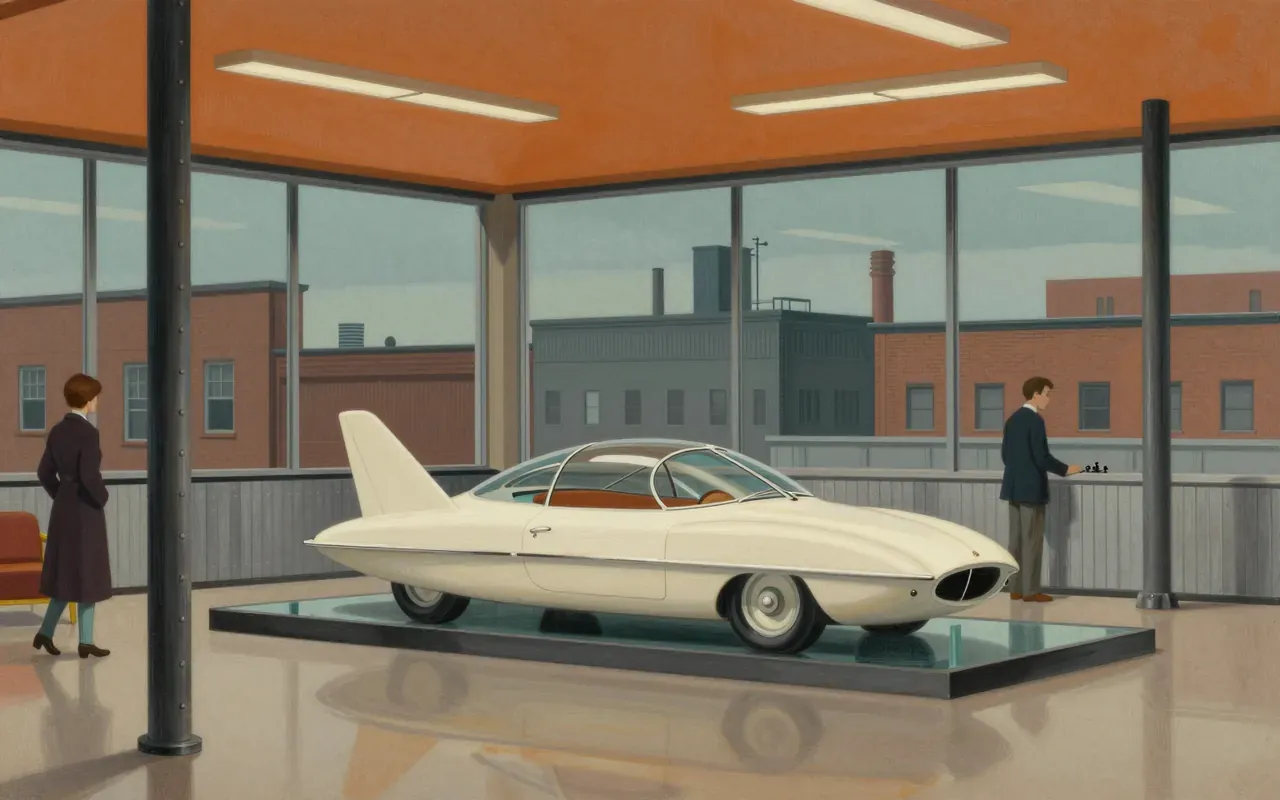
General Motors FirebirdHarley Earl · 1953The Firebird I is a 1953 GM concept car designed by Harley Earl. It was the first gas turbine-powered car tested in the United States. It features a single-seat cockpit under a bubble canopy, a bullet-shaped fiberglass fuselage, short wings, and a vertical tail fin. It was built for the 1953 Motorama show. GM never intended it for production.
9:57
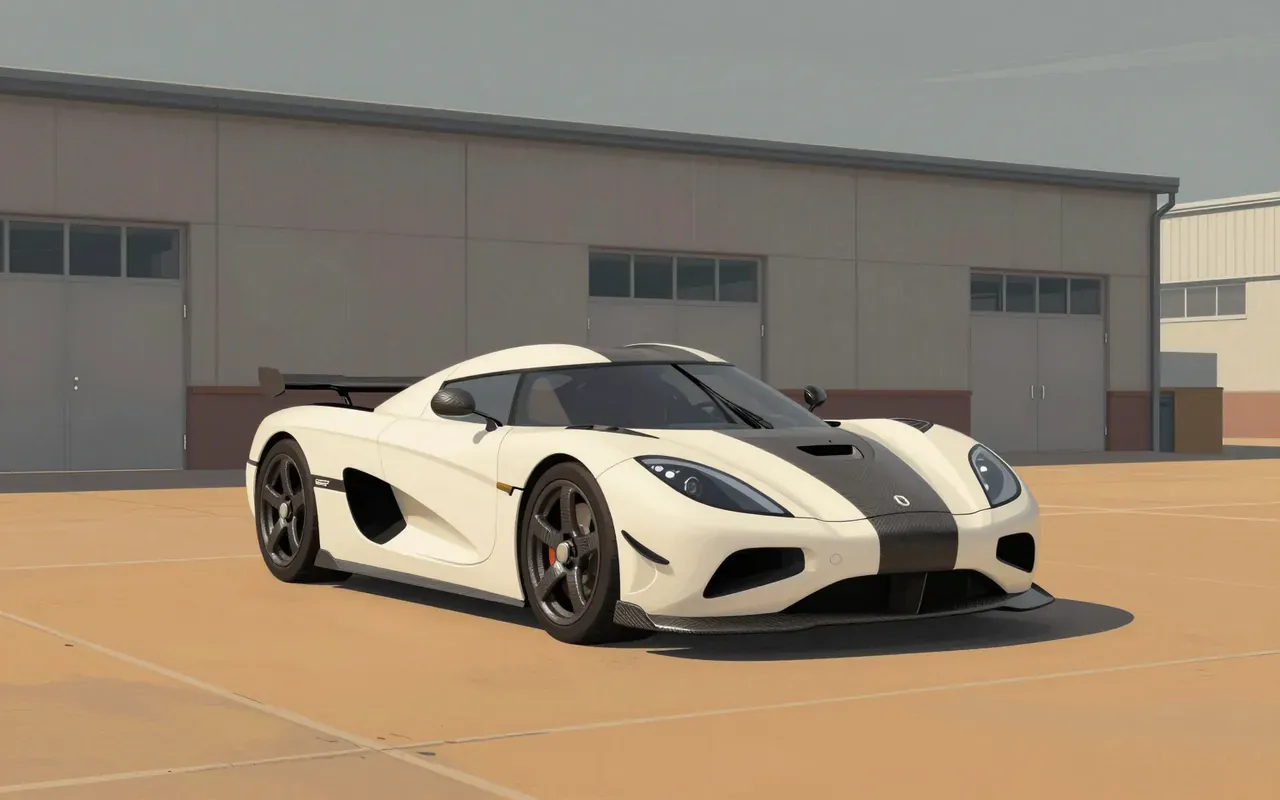
Koenigsegg CC8SChristian von Koenigsegg · 2002The CC8S is the first production car from Koenigsegg Automotive. It is a mid-engine, rear-wheel-drive targa top sports car built from 2002 to 2004 in six units. It introduced the dihedral synchro-helix doors and front-trunk roof stowage. It won the Guinness World Record for Most Powerful Production Engine and design awards from Red Dot and Utmärkt Svensk Form. It was developed from the CC prototype after eight years of research and development beginning in 1994. Chassis, suspension, brakes and other components were designed in-house. The pre-production car debuted at the 2000 Paris Auto Show. Its unique features include the front-trunk roof storage (unlike the Ferrari F50), the dihedral synchro-helix doors, and a central free-flowing exhaust based on the 'Rocket Cat Principle'. Christian von Koenigsegg and David Crafoord co-created the design concept.
10:57
Alfa Romeo 156Walter de Silva · 1997The Alfa Romeo 156 is a compact executive car introduced at the 1997 Frankfurt Motor Show to replace the 155. Designed by Walter de Silva, it won the 1998 European Car of the Year award. It was produced from 1996 to 2007 in saloon, Sportwagon, and Crosswagon bodystyles. Assembly occurred in Pomigliano d'Arco, Italy and Rayong, Thailand. 673,435 units were built.
9:33
Alfa Romeo 4CMarco Tencone · 2013The Alfa Romeo 4C is a focused, uncompromising expression of mid-engined sports car logic—light, stiff, direct. It sacrifices isolation and utility to sharpen the connection between driver and road. Its design solves for feedback, not comfort.
Up next in Automotive

Fiat X1/9

Marcello Gandini · 1972 · 9:26

A mid-engined sports car built by repackaging a front-wheel-drive drivetrain — not for drama, but for feasibility.

9:26