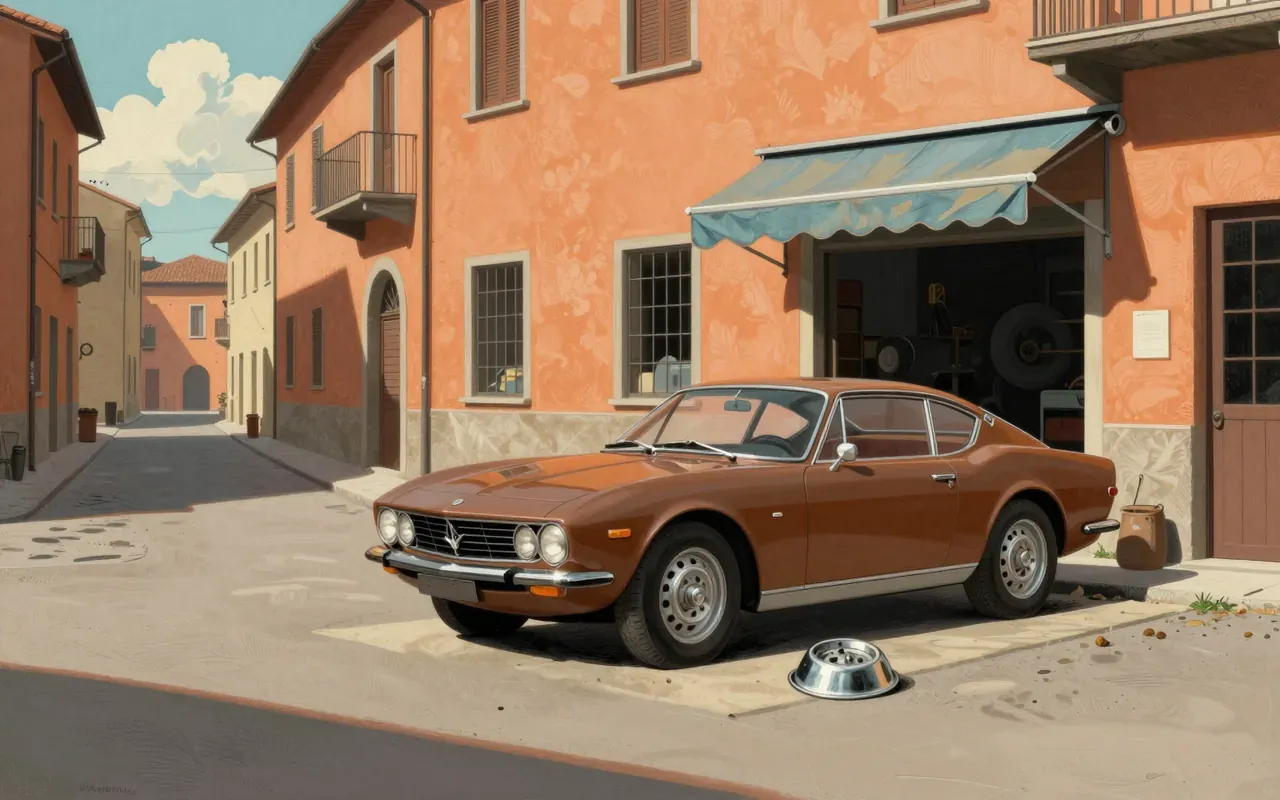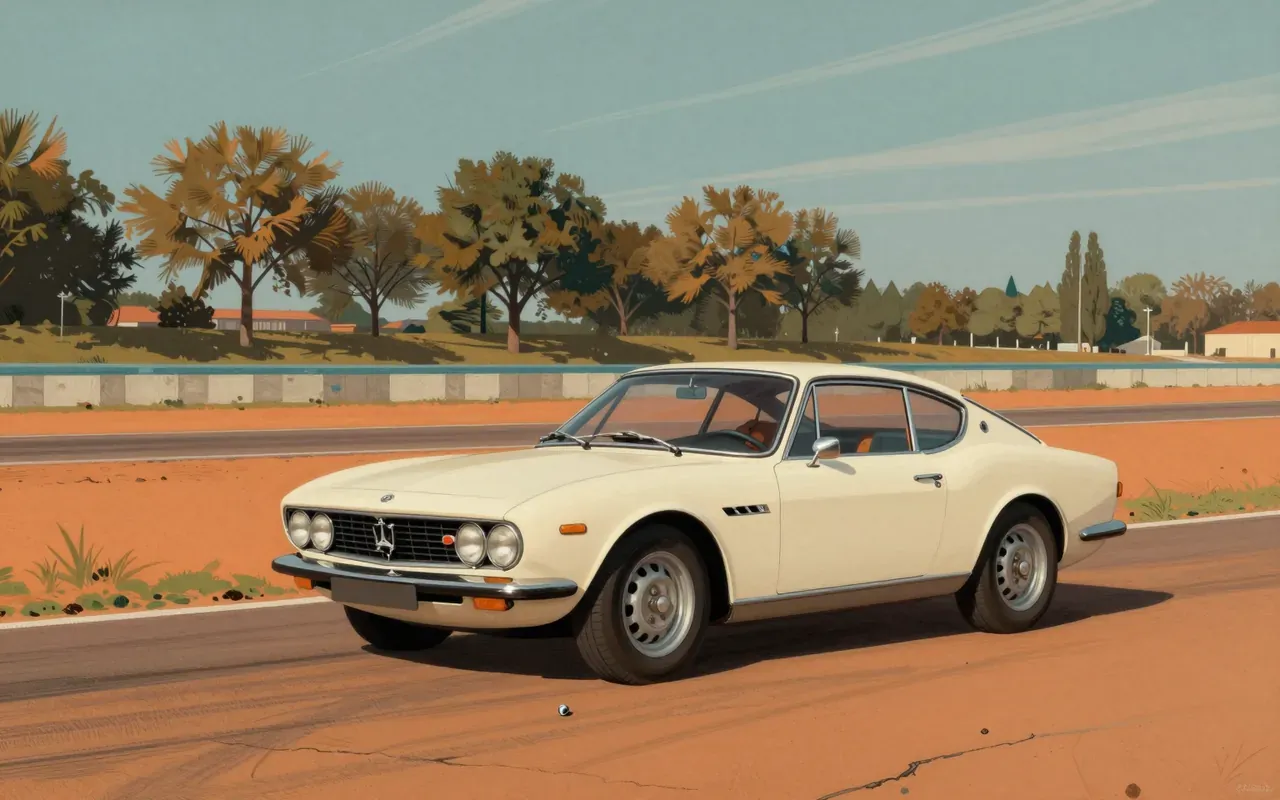
What the car is and where it came from
A two-seat, rear mid-engine, rear-wheel drive sports car and grand tourer. Designed by Giorgetto Giugiaro at Italdesign in the late 1960s. Launched in 1971 under Citroën’s ownership. Built until 1978 after De Tomaso’s acquisition.
How it works, in terms someone would actually use
The Bora places the driver ahead of a mid-mounted V8, with four-wheel independent suspension beneath a low-slung grand tourer body. Its layout separates cabin from engine noise and heat, but demands precise weight distribution to balance agility and stability.
What it gets right
It gets right the balance of presence and poise: a low drag coefficient (0.30), gentle angularity in Giugiaro’s evolving language, and a clean separation between driver, passenger, and powertrain. Its two-seat, rear-mid layout was executed without compromise.
What it does not
It does not deliver the visceral immediacy of a front-engined GT. Its cockpit is isolated from mechanical feedback. It does not offer driver engagement through steering feel or throttle response—those were secondary to refinement and aerodynamic calm.
What it changed
It ended Maserati’s reputation for fast but outdated cars. It proved a mid-engined layout could serve grand touring, not just racing—and that four-wheel independent suspension belonged in a production Maserati.
Who it is for, and who it is not
It is for someone who values architectural clarity in automotive form, and who sees the Bora as a pivot—not a peak. It is not for those seeking raw driver involvement, lightweight responsiveness, or mechanical theatre.
Is it worth your time
Yes—if you want to understand how Italian GT design pivoted from tradition to modernity in one car, and how Citroën’s engineering influence briefly reshaped Maserati’s priorities.