What the car is and where it came from
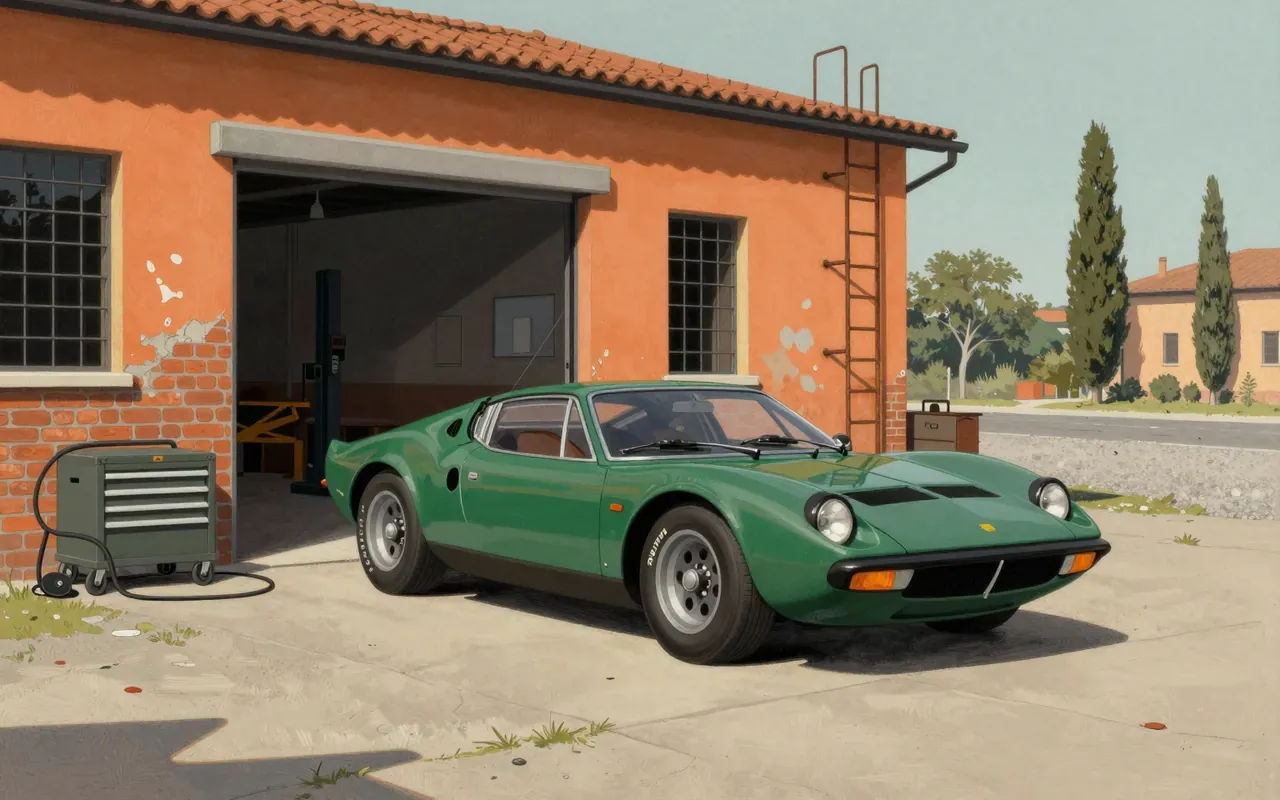
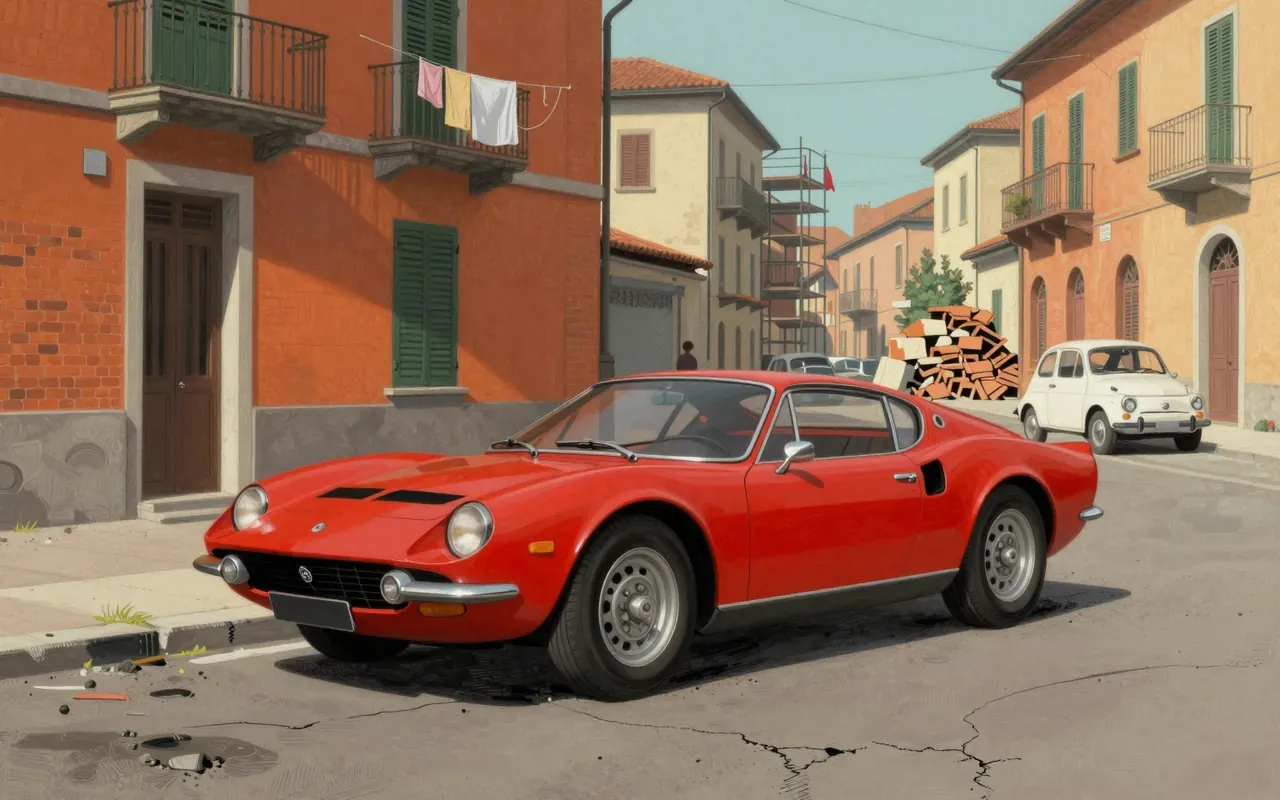
A 1967–1971 De Tomaso sports car, designed by Giorgetto Giugiaro at Ghia. It replaced the Vallelunga. Its steel backbone chassis came from the P70 project. 401 were built: ~150 for Europe, the rest for North America.
How it works, in terms someone would actually use
It is mid-engined and rear-wheel drive. The driver sits ahead of the engine, with a narrow cabin and low ground clearance. The gull-wing-style bonnet opens in two sections from the centre. Ford V8 power — first the HiPo 289, then the 302 — feeds through a manual transmission.
What it gets right
It gets the visual tension right: low-slung, wide-hipped, with a long nose and short tail. The arched body surfaces flow without interruption. The gull-wing bonnet solves engine access without sacrificing line integrity.
What it does not
It does not deliver stable high-speed handling. It does not offer cabin space or ground clearance for real-world use. It does not resolve the compromises between mid-engine packaging and driver ergonomics.
What it changed
It shifted De Tomaso from the Vallelunga’s compromised layout to a purpose-built mid-engined platform, using a modified P70 backbone chassis. Its design language — arched, curving forms — became a signature for Giugiaro across multiple brands in the late 1960s.
Who it is for, and who it is not
It is for collectors and designers studying Giugiaro’s form language. It is not for drivers seeking balance, comfort or reliability. It is not for anyone who needs usable luggage space, legroom or kerb clearance.
Is it worth your time
Yes, if you want to understand how Giugiaro’s early curves met De Tomaso’s pragmatic engineering — and where that meeting strained. It is not worth your time if you seek a resolved driving experience or daily usability.