Saved
Road · Touring cars

Maserati Khamsin

Gandini’s first Maserati wasn’t about drama — it was about hydraulics, assembly, and where the engine sat.

Worth your time?3.5/5Yes.Drive the whole thing.What works, what does not, who it is for ↓
8:55in productionCh. 1 · From Turin to Paris/ 8:55 · ceiling 15 min
4 chapters · 8:55Ceiling 15:00

The brief is written and checked. The video joins this page when it is cut.4 chapters · 2 min read · 8:55 planned

Read the brief

The Maserati Khamsin is a Gandini-designed, Bertone-built grand tourer produced by Maserati between 1974 and 1982. It debuted as a concept at the 1972 Turin Auto Show, entered production after being shown at the 1973 Paris Motor Show, and was developed under Citroën ownership as a front-engined alternative to the mid-engined Bora.

Chapters & takeaways4
  1. 1:10
    From Turin to Paris

    A concept in 1972, a production car in 1973 — the Khamsin moved fast from show stand to showroom.

  2. 2:26
    Architecture First

    Gandini treated the Khamsin as an exercise in mechanism and layout — not styling.

  3. 3:42
    Front-Engined by Design

    Citroën ownership demanded a front-engined GT — conventional for its time, but distinct from Maserati’s mid-engined experiments.

  4. 5:14
    Function in the Details

    The clear rear light section and 1977 nose slats show Gandini refining function — not just form.

1 more chapterFewer chapters
Worth your time?

Yes. Drive the whole thing.

3.5/ 5
What works
  • It gets right the integration of Citroën hydraulic systems into a grand tourer chassis.
  • It gets right the wedge-shaped fastback as a resolved evolution from the Espada, with a distinct rear light enclosure and a 1977 cooling update that added three horizontal nose slats.
What does not
  • It does not offer mid-engine layout or experimental packaging.
  • It does not depart from front-engined convention.
  • It does not retain the Espada’s rear treatment — instead using a clear rear section housing tail lights with sharp, angular contrast.
Drive it if
  • It is for someone interested in Gandini’s vehicle architecture — not just his silhouettes — and in how Citroën’s engineering influenced Italian GT design.
  • It is not for someone seeking technical performance figures, chassis details, or subjective driving impressions unsupported by the sources.
Skip it if
  • It is not for someone seeking technical performance figures, chassis details, or subjective driving impressions unsupported by the sources.
Who should drive it, and who should skipHide who it is for
The written brief2 min read

What the car is and where it came from

The Maserati Khamsin is a Gandini-designed, Bertone-built grand tourer produced by Maserati between 1974 and 1982. It debuted as a concept at the 1972 Turin Auto Show, entered production after being shown at the 1973 Paris Motor Show, and was developed under Citroën ownership as a front-engined alternative to the mid-engined Bora.

How it works, in terms someone would actually use

The Khamsin is a front-mid mounted V8 grand tourer with rear-wheel drive. Its Citroën-derived hydraulic systems operate the brakes, clutch, and steering. The driver sits behind a padded steering wheel added in the 1977 facelift, facing a restyled dashboard.

What it gets right

It gets right the integration of Citroën hydraulic systems into a grand tourer chassis. It gets right the wedge-shaped fastback as a resolved evolution from the Espada, with a distinct rear light enclosure and a 1977 cooling update that added three horizontal nose slats.

What it does not

It does not offer mid-engine layout or experimental packaging. It does not depart from front-engined convention. It does not retain the Espada’s rear treatment — instead using a clear rear section housing tail lights with sharp, angular contrast.

What it changed

It changed Maserati’s design partnership: the Khamsin was Bertone’s first work for Maserati, ending a prior absence of collaboration and establishing Gandini’s architecture-first approach within the brand’s GT lineage.

Who it is for, and who it is not

It is for someone interested in Gandini’s vehicle architecture — not just his silhouettes — and in how Citroën’s engineering influenced Italian GT design. It is not for someone seeking technical performance figures, chassis details, or subjective driving impressions unsupported by the sources.

Is it worth your time

Yes — if you want to understand how Gandini’s architectural thinking translated into a production GT under corporate ownership. No — if you expect driving dynamics data or performance metrics; none are provided in the source material.
Same garage · Road4 of 110
9:32
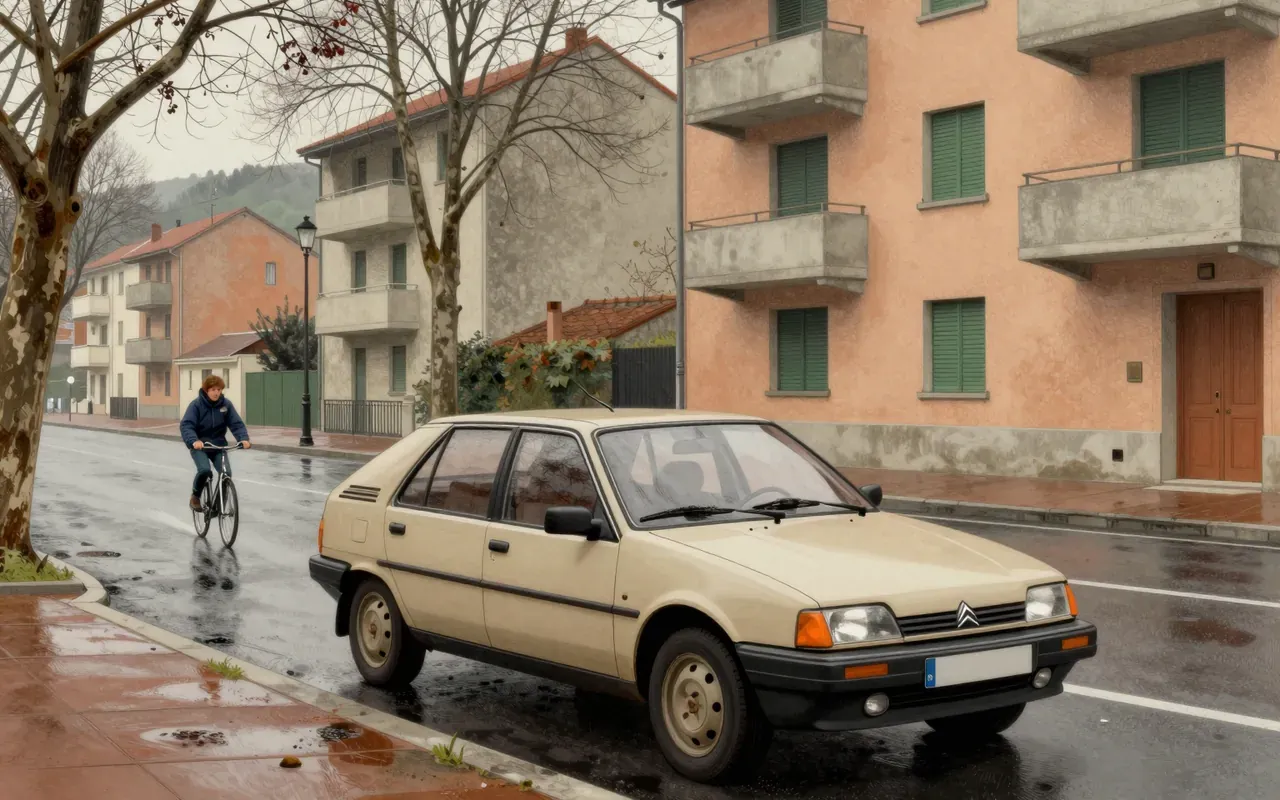
Citroën BXMarcello Gandini · 1982The Citroën BX is a large family car designed by Marcello Gandini and produced by Citroën from 1982 to 1994. It was built as a hatchback and estate, with 2,315,739 units made. It is French, midsize, and categorised among Gandini’s practical mass-production designs.
8:56
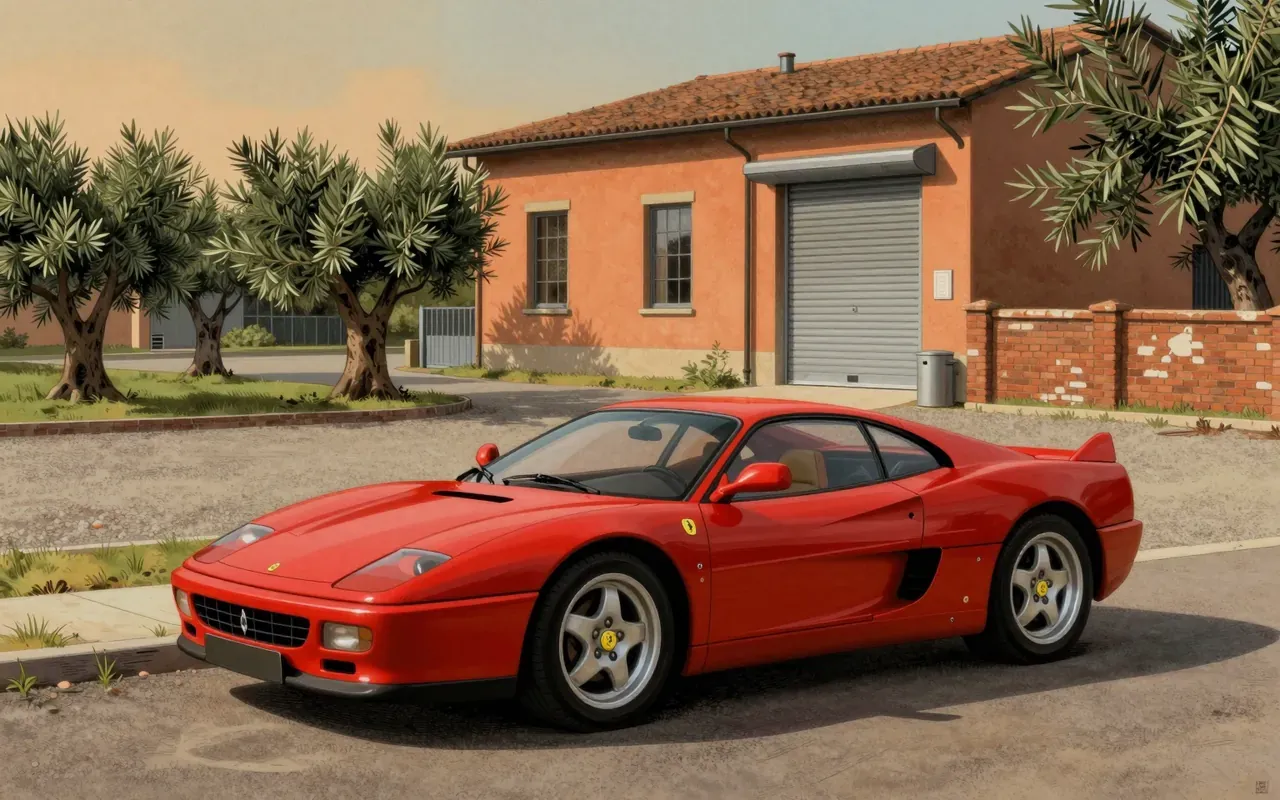
Ferrari 550Lorenzo Ramaciotti · 1996The Ferrari 550 Maranello is a front-engine, rear-wheel drive V12 grand tourer designed by Pininfarina under Lorenzo Ramaciotti’s supervision, produced from 1996 to 2001 (3,083 units), and succeeded by the 575M Maranello in 2002; it features a 5,474 cc naturally aspirated 65° V12 engine and was offered in coupé and limited-run Barchetta roadster forms.
11:34
Alfa Romeo Giulia (2015)Marco Tencone · 2015The Alfa Romeo Giulia (2015) is a compact executive saloon. It marks Alfa Romeo’s return to the saloon segment after 2011 and to longitudinal rear-wheel drive after 1992. It uses a front-engine, rear-wheel-drive layout targeting 50/50 weight distribution. Unveiled 24 June 2015, it entered production on 19 April 2016 at FCA Italy’s Cassino Plant. It is the first model in Alfa Romeo’s €5 billion relaunch plan.
10:21
Oldsmobile ToronadoDavid North · 1966The Oldsmobile Toronado is a personal luxury car produced from 1966 to 1992. It was the first U.S.-built front-wheel drive automobile since 1937. It originated as a 1962 design painting by David North and evolved from a non-production compact concept into a full-size personal luxury coupe built on GM’s E platform. Its defining engineering feature was the Unitized Power Package (UPP), integrating a large V8 and transaxle into a compact front-wheel drive layout. The first-generation model used a 425 cu in (7 L) Super Rocket V8.
Up next in Automotive

Maserati MC12

Frank Stephenson · 2004 · 9:48

A race car disguised as a road car — and the disguise is the point.

9:48