What the car is and where it came from
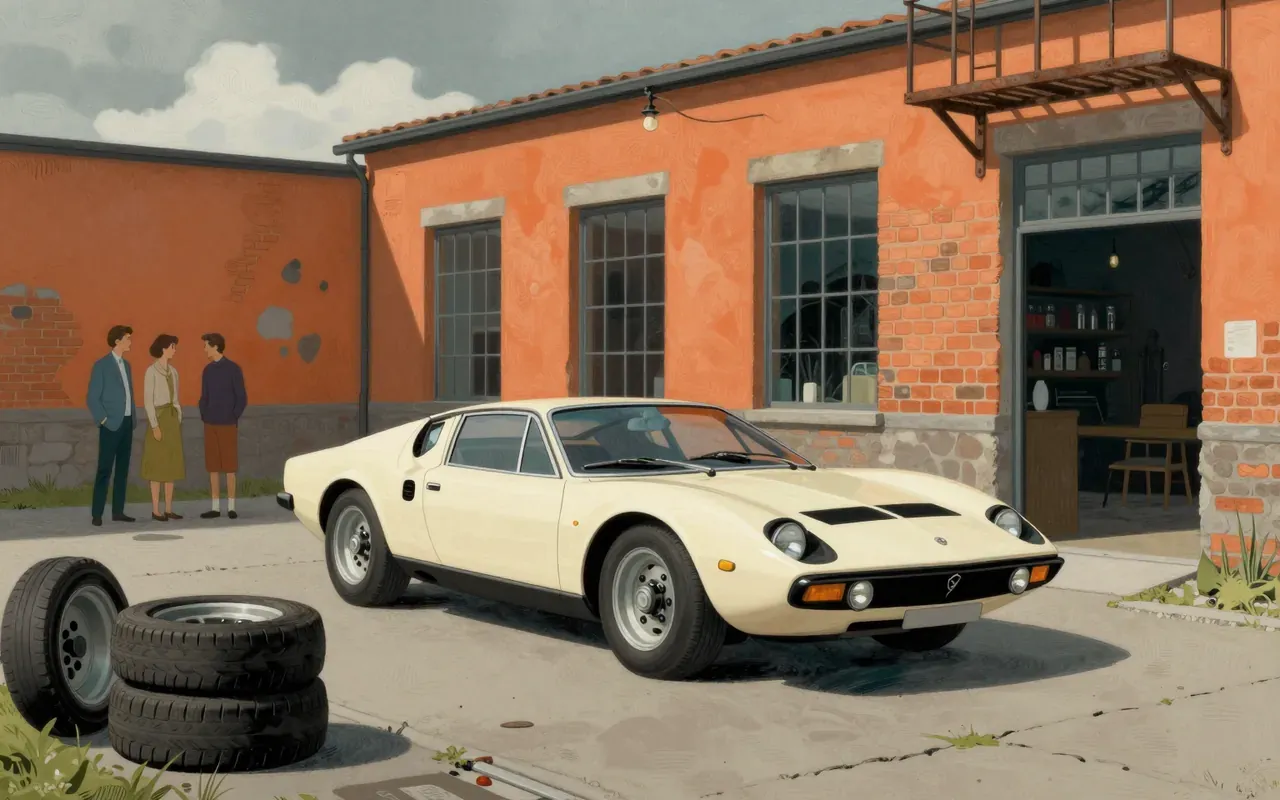
A Gandini-designed, Bertone-bodied, front-engine, rear-wheel-drive grand touring coupé. Built between 1968 and 1978. Three series: S1 (1968–1970), S2 (1970–1972), S3 (1972–1978). Replaced the 400 GT 2+2 alongside the Islero. Shares its V12 engine and mechanical underpinnings with the Islero.
How it works, in terms someone would actually use
It is a front-engine, rear-wheel-drive grand tourer. Four adults fit inside. The driver sits behind a long bonnet and looks over a low, flat nose. The cabin places occupants in a wide, low-slung space with clear sightlines forward and out. The layout prioritises usability over theatre: doors open wide, entry is straightforward, luggage fits behind the rear seats.
What it gets right
It resolves four-seat accommodation with a low roofline and wide glasshouse. The Marzal and Pirana’s show-car daring becomes usable form: clean surfaces, crisp creases, and a long wheelbase that accommodates rear passengers without sacrificing proportion. Gandini’s focus on assembly and mechanisms shows in the door apertures, window frames, and panel gaps — all engineered for buildability, not just appearance.
What it does not
It does not offer the Miura’s structural innovation. It does not isolate the driver from the road like a modern GT. It does not hide its mechanical basis: the engine, transmission and suspension are carried over, unchanged in concept, from the 400 GT 2+2 and Islero.
What it changed
It proved a V12 GT could be both practical and visually assertive without adopting mid-engine layout. It shifted Lamborghini’s definition of ‘grand touring’ from 2+2 compromise to four-seat legitimacy — while keeping the engine up front and the chassis conventional.
Who it is for, and who it is not
It is for someone who values architectural clarity over stylistic flourish. For those who study how a car’s proportions serve its function — not just how it looks. It is not for collectors chasing rarity, nor for drivers seeking visceral feedback or power-to-weight drama.
Is it worth your time
Yes — if you want to understand how Gandini translated architecture into volume, not just silhouette. No — if you expect performance drama or engineering novelty. It is worth your time as a study in resolved packaging, not as a driver’s car.