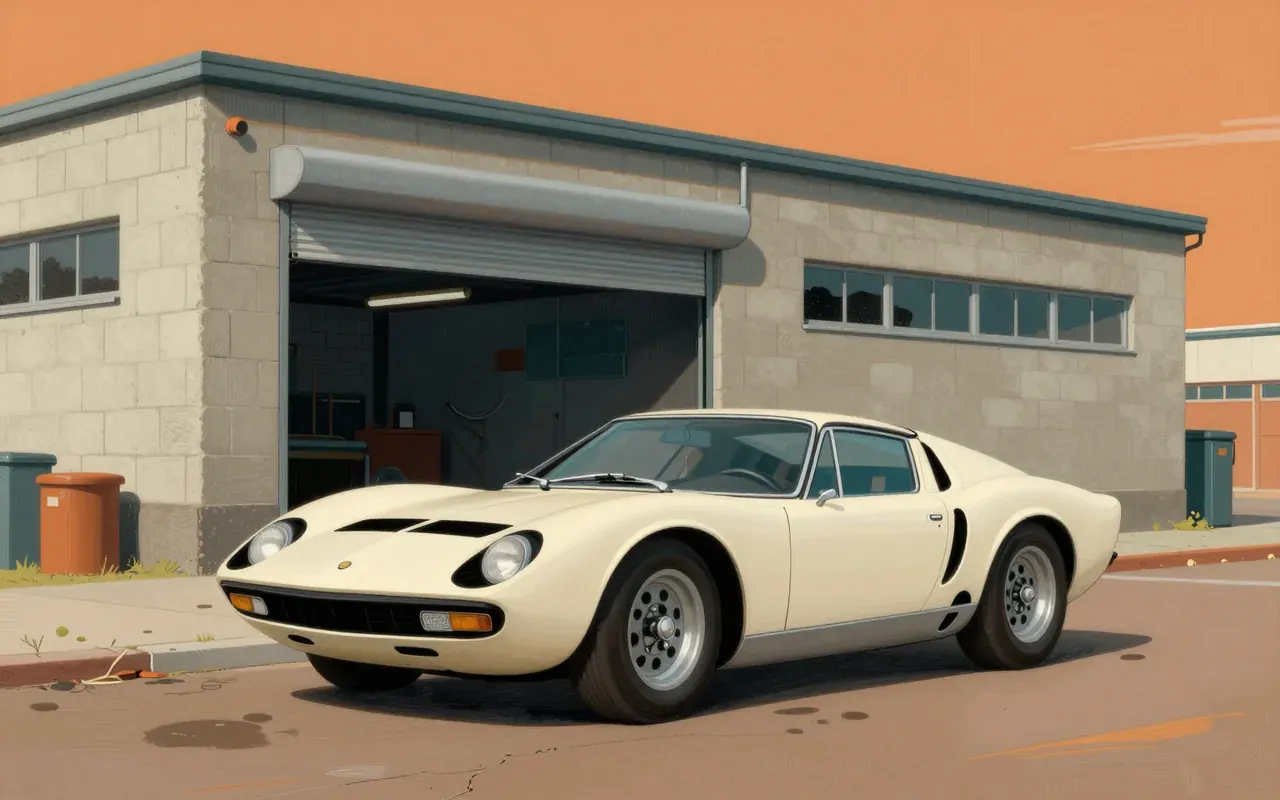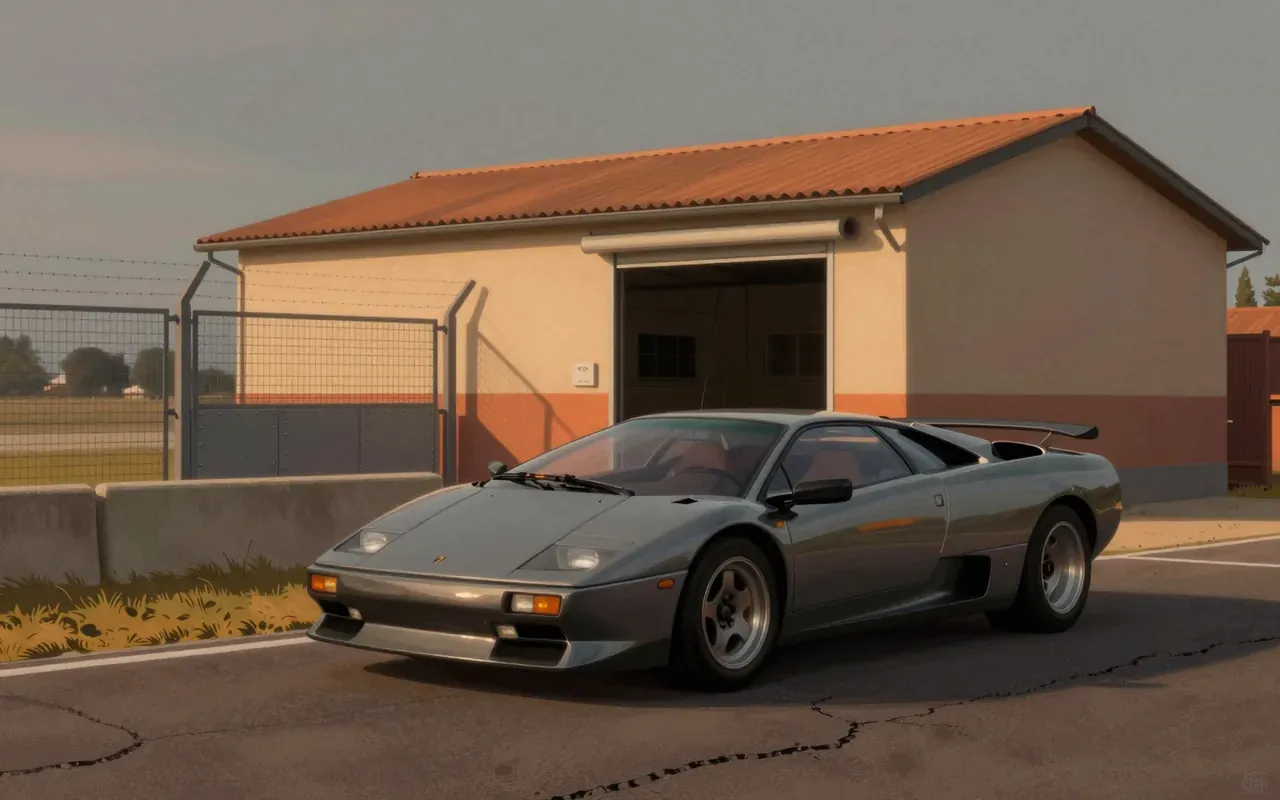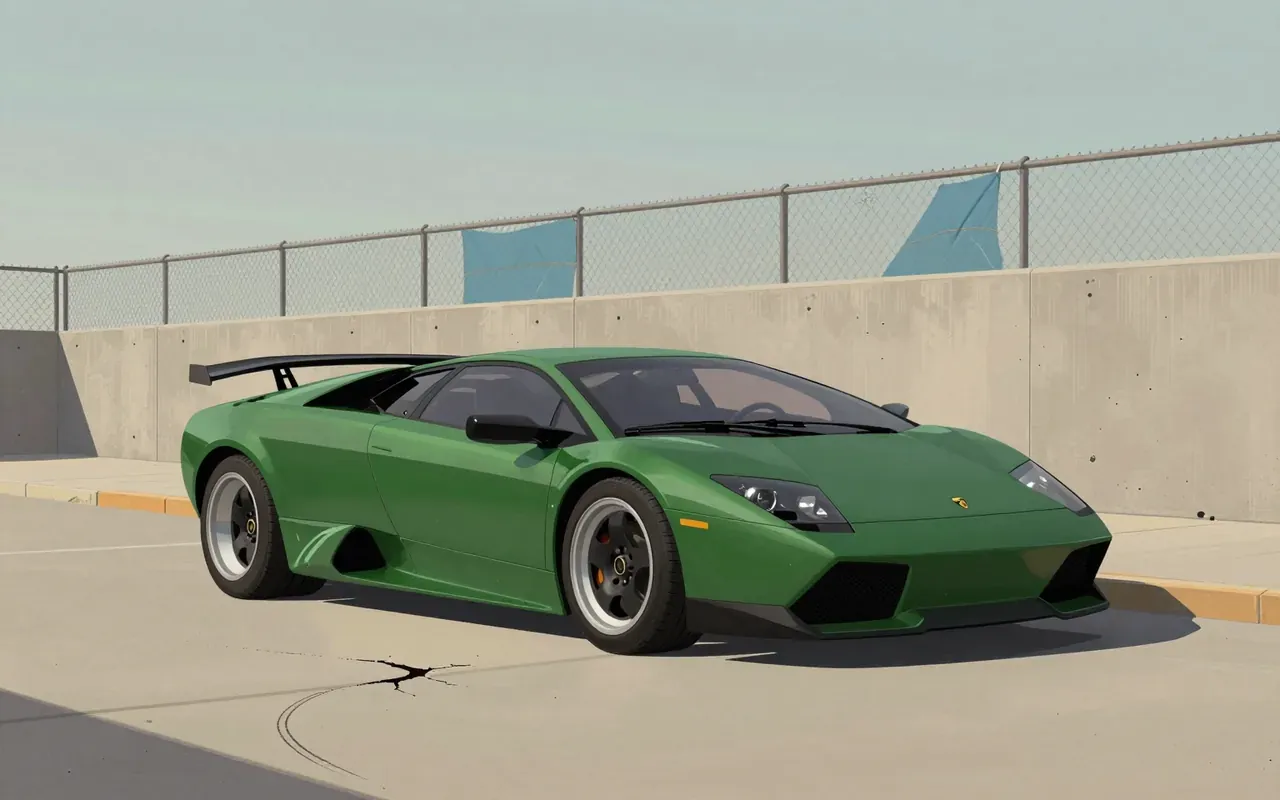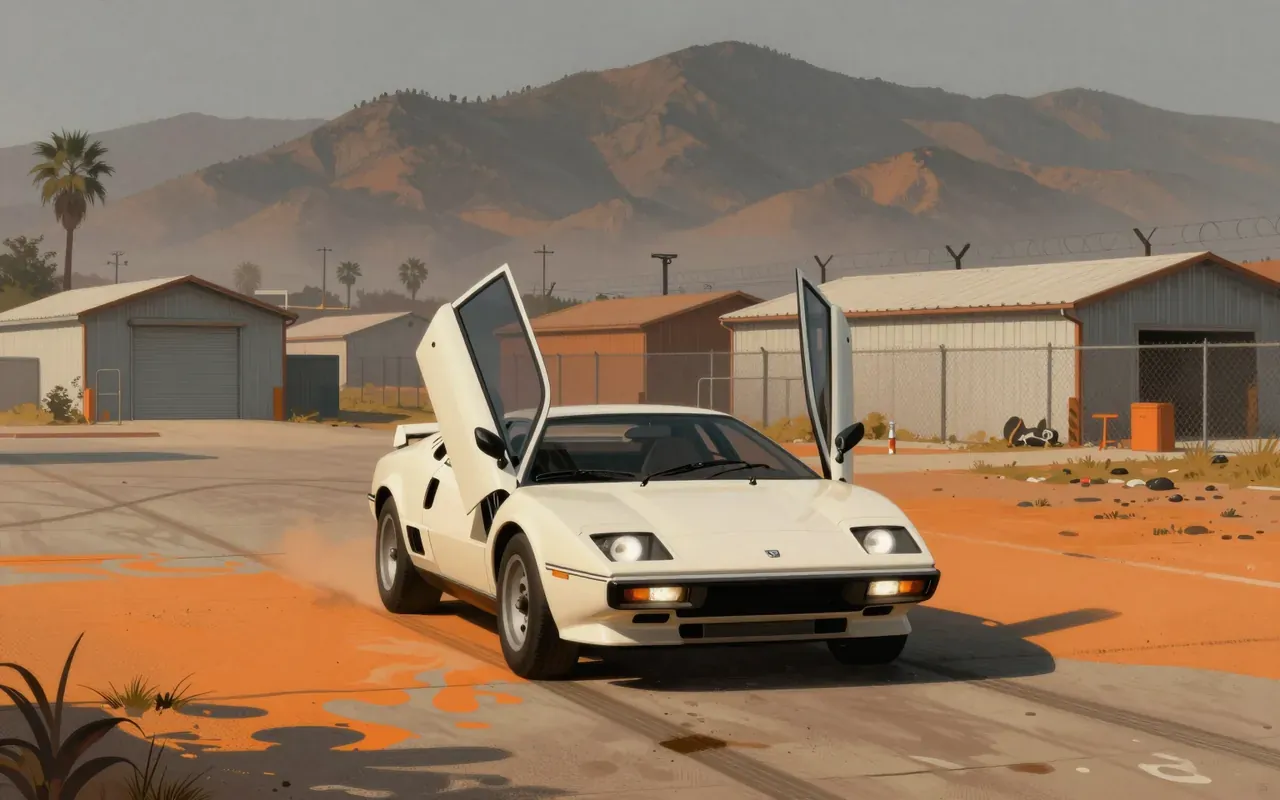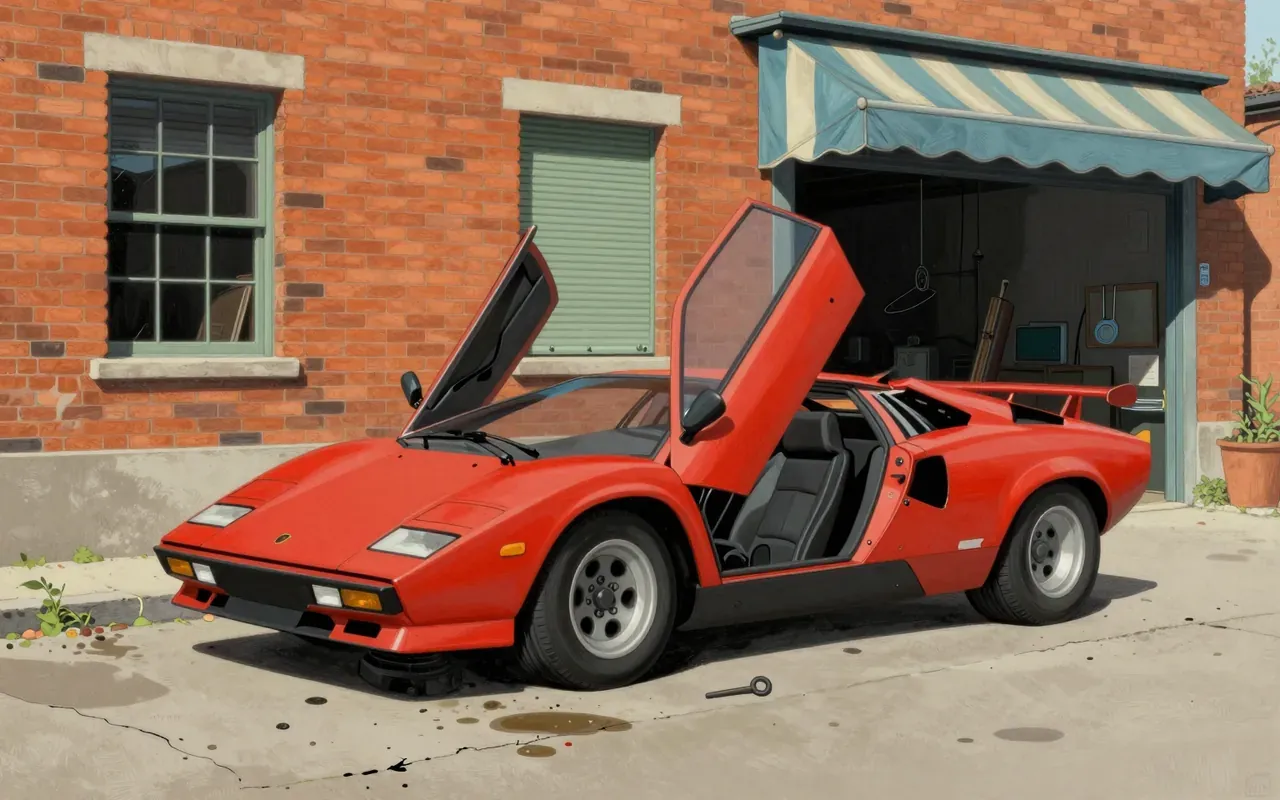
What the car is and where it came from
A rear mid-engine, rear-wheel-drive sports car developed by Lamborghini as the Miura’s successor. Marcello Gandini of Bertone designed it. It debuted as the LP500 concept at the 1971 Geneva Motor Show and entered production in 1974.
How it works, in terms someone would actually use
The Countach places the driver low and central, behind a mid-mounted engine. Its scissor doors lift vertically to clear low sills. The tubular spaceframe chassis supports wide tyres and sharp body edges that manage airflow without active aerodynamics.
What it gets right
It resolves extreme mechanical layout with uncompromising visual clarity. Every surface serves airflow, structure or access. The cabin is a driver-focused cell, not a lounge. The wedge shape delivers stability at speed without spoilers or wings.
What it does not
It does not prioritise ingress, egress, visibility, comfort or daily drivability. It does not use electronic driver aids, adjustable suspension or power steering. It does not scale to mass production methods beyond its 1,983-unit run.
What it changed
It cemented the wedge as a functional language—not just styling—but one rooted in packaging, visibility, cooling and drag reduction. It shifted expectations of what a production supercar’s silhouette could express about its purpose.
Who it is for, and who it is not
It is for those who study how vehicles communicate intent through proportion and mechanism. It is not for commuters, collectors seeking liquidity, or drivers expecting ergonomic accommodation.
Is it worth your time
Yes—if you care how architecture shapes driving. It is not a benchmark for usability, refinement or modern performance metrics. It is a fixed point in the evolution of automotive form as engineering logic.