automotivebriefs
9:46in productionCh. 1 · What it is/ 9:46 · ceiling 15 min
Supercars · Sports cars

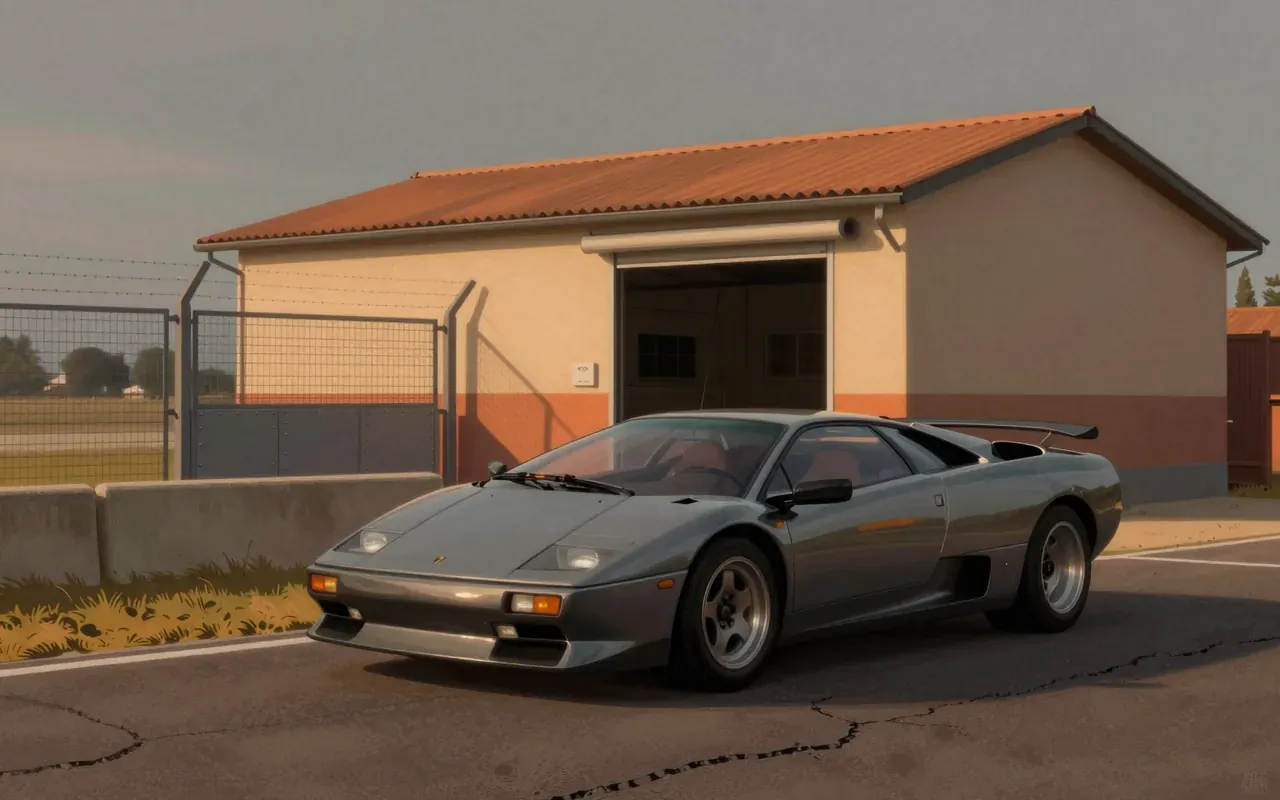
Lamborghini Diablo

The Diablo isn’t about driving — it’s about declaring war on the speedometer.

The Lamborghini Diablo is a longitudinal, mid-engined V12 sports car built from 1990 to 2001. It was Lamborghini’s first production car over 200 mph, first AWD model (VT, 1993), and first open-top V12 (roadster, 1995). Marcello Gandini created the original design proposal. Its 5.7 L V12 produced 492 PS and 580 N⋅m, achieving 325 km/h and 0–100 km/h in 4.5 seconds. It prioritises top-speed capability over agility, refinement or usability.

Chapters & takeaways4
  1. 1:03
    What it is

    A mid-engined, rear-wheel drive V12 launched on 21 January 1990 — Lamborghini’s new flagship built for one metric: top speed.

  2. 2:33
    What it does

    First Lamborghini to break 200 mph — powered by a 5.7 L V12 delivering 492 PS and 580 N⋅m, hitting 325 km/h and 0–100 km/h in 4.5 seconds.

  3. 3:54
    What it added

    The VT added all-wheel drive in 1993; the roadster arrived in 1995 — both firsts for Lamborghini.

  4. 5:30
    Who shaped it

    Marcello Gandini conceived the original design — continuing his line of radical Lamborghini sports cars from Miura to Countach.

Worth your time?

Yes. Drive the whole thing.

4/ 5
What works
  • delivers uncompromising longitudinal thrust and visual presence
  • achieves a purpose-built weight distribution for high-speed stability
  • produces a distinct acoustic signature under load via V12 placement and exhaust routing
What does not
  • compromise top-speed ambition for agility or accessibility
  • prioritise cabin ergonomics, visibility or low-speed tractability
  • offer driver engagement through feedback-rich steering or progressive chassis response
Drive it if
  • people who value absolute speed figures, mechanical audacity and Italian supercar lineage
  • drivers who prioritise longitudinal thrust and visual presence over precision handling or comfort
Skip it if
  • drivers who prioritise precision handling, comfort, visibility or ease of ownership
The written brief1 min read

What the car is and where it came from

A longitudinal, mid-engined V12 sports car launched by Lamborghini on 21 January 1990. Marcello Gandini created the original design proposal. Production ran from 1990 to 2001.

How it works, in terms someone would actually use

The Diablo is a mid-engined, rear-wheel drive sports car with a longitudinal 5.7 L V12. Its weight balance relies on that layout. The VT variant adds viscous-coupling all-wheel drive. The roadster removes the roof but retains the same engine and drivetrain architecture.

What it gets right

It delivers uncompromising longitudinal thrust and visual presence. Its mid-engine layout achieves a purpose-built weight distribution for high-speed stability. Its V12 engine placement and exhaust routing produce a distinct acoustic signature under load.

What it does not

It does not offer driver engagement through feedback-rich steering or progressive chassis response. It does not prioritise cabin ergonomics, visibility or low-speed tractability. It does not compromise its top-speed ambition for agility or accessibility.

What it changed

It reset Lamborghini’s performance ceiling: first production model over 200 mph, first AWD production car, first open-top V12. It moved the brand from Countach-era theatrics into measurable, velocity-led engineering claims.

Who it is for, and who it is not

It is for people who value absolute speed figures, mechanical audacity and Italian supercar lineage. It is not for drivers who prioritise precision handling, comfort, visibility or ease of ownership.

Is it worth your time

Yes — if you want to understand how Lamborghini defined the supercar’s physical extremes in the 1990s. It is not a benchmark for usability, refinement or daily practicality.
Same garage · Supercars4 of 61
10:20
Aston Martin V8 Vantage (1977)William Towns · 1977The Aston Martin V8 Vantage (1977) is a British grand tourer and high-performance variant of the Aston Martin V8. It was launched as 'Britain's First Supercar', citing 170 mph top speed and 0–60 mph in 5.3 seconds. Its engine shares architecture with the Lagonda but adds high-performance camshafts, increased compression, larger inlet valves, and bigger Weber carburettors. Early models produced 380 bhp. William Towns did not design it — he left Aston Martin in 1977.
9:38
Audi R8Walter de Silva · 2006The Audi R8 is a mid-engine, two-seater sports car with quattro all-wheel drive. Introduced by Audi AG in 2006, it was built exclusively by Audi Sport GmbH at Neckarsulm, Germany, using an aluminium monocoque based on the Audi Space Frame. At launch, it was the first production car with full-LED headlamps.
9:46
Pininfarina BattistaPininfarina · 2022The Pininfarina Battista is not a revival—it is a declaration. It replaces combustion with four wheel-mounted motors. It replaces tradition with a carbon monocoque built for mass reduction. It replaces volume with 150 units. It is the first Pininfarina-branded car. And it arrives not as a concept, but as a production machine built in Cambiano.
9:40
BMW 8 Series (E31)Klaus Kapitza · 1989The BMW 8 Series (E31) is a two-door grand tourer built by BMW from 1990 to 1999. It uses a front-engine, rear-wheel-drive layout. It is powered by either a V8 or V12 engine. Development began in July 1981 and concluded in 1986. It debuted at the Frankfurt Motor Show in early September 1989. BMW used CAD tools to design its all-new body. Its drag coefficient is Cd=0.29. It replaced the E24 6 Series but was not a direct successor. Total production was 30,609 units.
Up next in Automotive

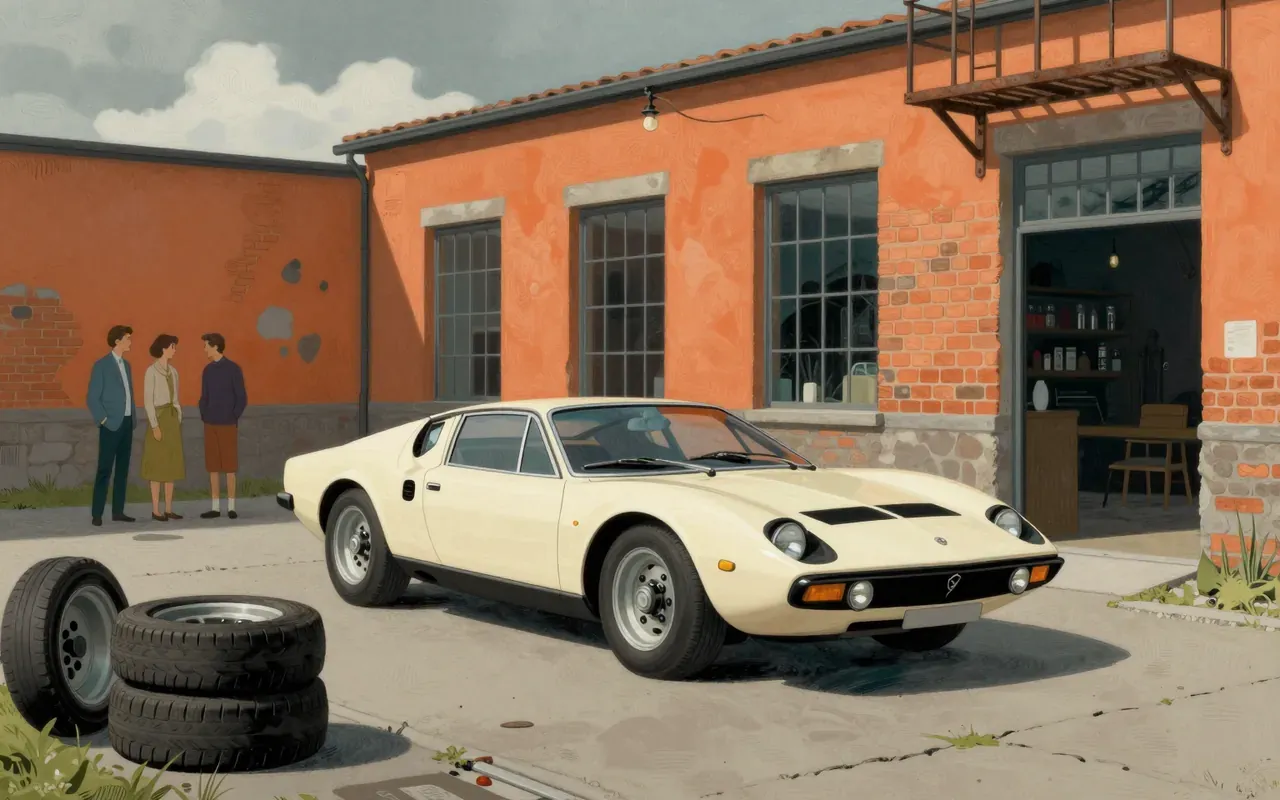
Lamborghini Espada

Marcello Gandini · 1968 · 9:48

Gandini didn’t style the Espada — he engineered its volume.

9:48