automotivebriefs
9:07in productionCh. 1 · Layout & Lineage/ 9:07 · ceiling 15 min
Supercars · Sports cars

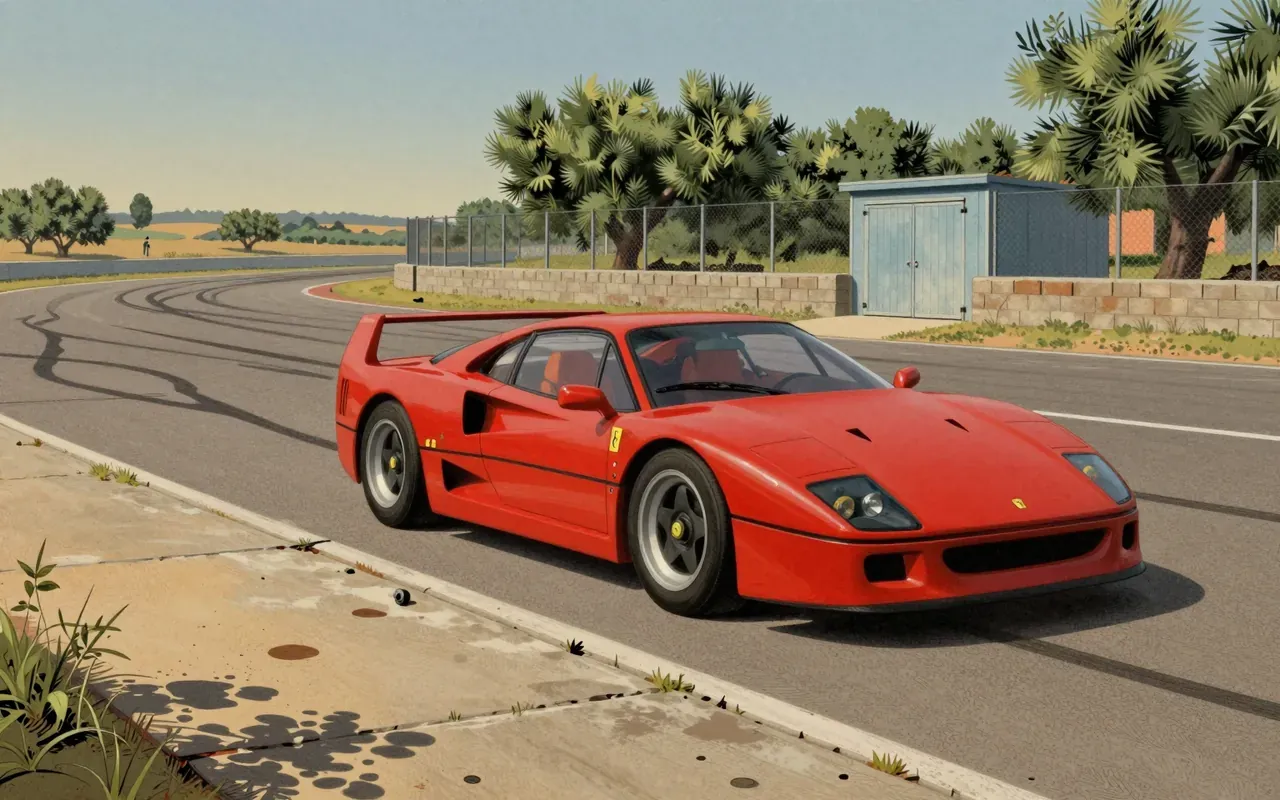
Ferrari F40

Ferrari’s last turbocharged analogue machine — and its most committed refusal to coddle.

The Ferrari F40 is a mid-engine, rear-wheel drive sports car designed by Pietro Camardella under Pininfarina, powered by a 2.9 L twin-turbocharged and intercooled V8, produced from 1987 to 1993 in 1,311–1,315 units, all originally in Rosso Corsa and left-hand drive, and that it was Ferrari's final forced induction engine until 2014.

Chapters & takeaways4
  1. 0:57
    Layout & Lineage

    A mid-engine, rear-wheel drive layout wrapped in a new Pininfarina body designed by Pietro Camardella.

  2. 2:48
    Turbo Last Stand

    Its 2.9 L twin-turbo V8 was Ferrari’s final forced induction engine until 2014.

  3. 4:05
    No Compromises, No Choices

    All road cars used Kevlar, carbon fibre, and aluminium — and all left the factory in Rosso Corsa, left-hand drive.

  4. 5:14
    Short Run, Long Shadow

    Built from 1987 to 1993, with 1,311–1,315 road-going units made.

Worth your time?

Yes. Drive the whole thing.

4.5/ 5
What works
  • mid-engine, rear-wheel drive layout
  • Kevlar, carbon fibre, and aluminium construction
  • intense aerodynamic testing
  • entirely new Pininfarina body design
What does not
  • right-hand drive
  • colour choice
  • non-turbo powertrain
  • alternative structural materials
Drive it if
  • drivers who want a fixed, unyielding interface with turbocharged mechanical force
Skip it if
  • collectors seeking rarity through specification variety
The written brief1 min read

What the car is and where it came from

The Ferrari F40 is a road-going sports car designed by Pietro Camardella under Pininfarina, engineered by Nicola Materazzi, and built from 1987 to 1993.

How it works, in terms someone would actually use

The F40 is a mid-engine, rear-wheel drive sports car. Its 2.9 L twin-turbocharged and intercooled V8 delivers power to the rear wheels only. The body uses Kevlar, carbon fibre, and aluminium panels. All road-going cars left the factory in Rosso Corsa and left-hand drive.

What it gets right

It gets right the balance of lightness and aerodynamic intent. Its entirely new Pininfarina body was shaped for intensity, not elegance. It establishes the driver as operator, not passenger.

What it does not

It does not offer right-hand drive. It does not offer colour choice. It does not offer non-turbo powertrains. It does not offer structural materials beyond Kevlar, carbon fibre, and aluminium.

What it changed

It ended Ferrari’s forced induction era for 27 years. The F40’s twin-turbo V8 was the last until the California T in 2014.

Who it is for, and who it is not

It is for drivers who want a fixed, unyielding interface with turbocharged mechanical force. It is not for collectors seeking rarity through specification variety — all units are identical in layout, drive position, and colour.

Is it worth your time

Yes — if you need proof that forced induction could be raw, mechanical, and unassisted before electronics took over. No — if you expect comfort, adjustability, or daily usability.
Same garage · Supercars4 of 61
10:20
Aston Martin V8 Vantage (1977)William Towns · 1977The Aston Martin V8 Vantage (1977) is a British grand tourer and high-performance variant of the Aston Martin V8. It was launched as 'Britain's First Supercar', citing 170 mph top speed and 0–60 mph in 5.3 seconds. Its engine shares architecture with the Lagonda but adds high-performance camshafts, increased compression, larger inlet valves, and bigger Weber carburettors. Early models produced 380 bhp. William Towns did not design it — he left Aston Martin in 1977.
9:38
Audi R8Walter de Silva · 2006The Audi R8 is a mid-engine, two-seater sports car with quattro all-wheel drive. Introduced by Audi AG in 2006, it was built exclusively by Audi Sport GmbH at Neckarsulm, Germany, using an aluminium monocoque based on the Audi Space Frame. At launch, it was the first production car with full-LED headlamps.
9:46
Pininfarina BattistaPininfarina · 2022The Pininfarina Battista is not a revival—it is a declaration. It replaces combustion with four wheel-mounted motors. It replaces tradition with a carbon monocoque built for mass reduction. It replaces volume with 150 units. It is the first Pininfarina-branded car. And it arrives not as a concept, but as a production machine built in Cambiano.
9:40
BMW 8 Series (E31)Klaus Kapitza · 1989The BMW 8 Series (E31) is a two-door grand tourer built by BMW from 1990 to 1999. It uses a front-engine, rear-wheel-drive layout. It is powered by either a V8 or V12 engine. Development began in July 1981 and concluded in 1986. It debuted at the Frankfurt Motor Show in early September 1989. BMW used CAD tools to design its all-new body. Its drag coefficient is Cd=0.29. It replaced the E24 6 Series but was not a direct successor. Total production was 30,609 units.
Up next in Automotive

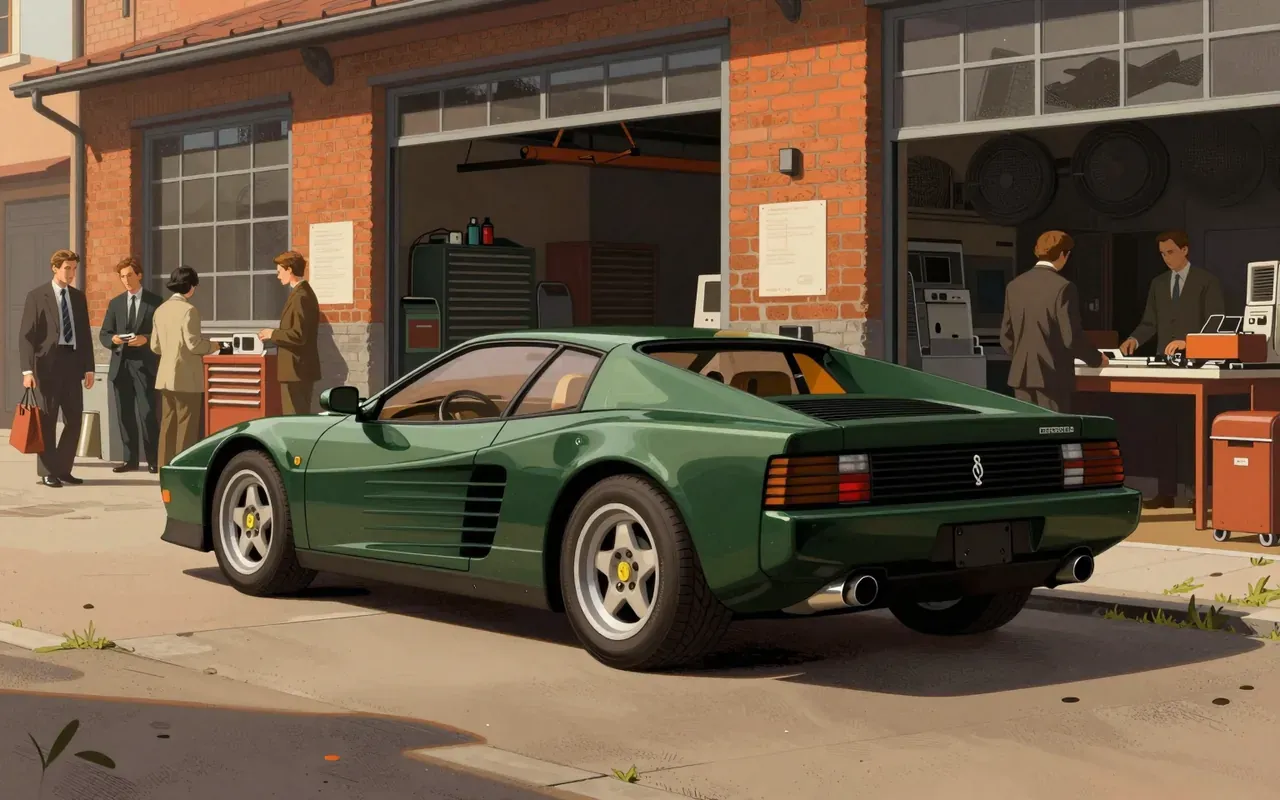
Ferrari Testarossa

Pininfarina · 1984 · 10:25

Ferrari built the Testarossa not to thrill drivers—but to stop the engine from cooking the gearbox.

10:25