What the car is and where it came from
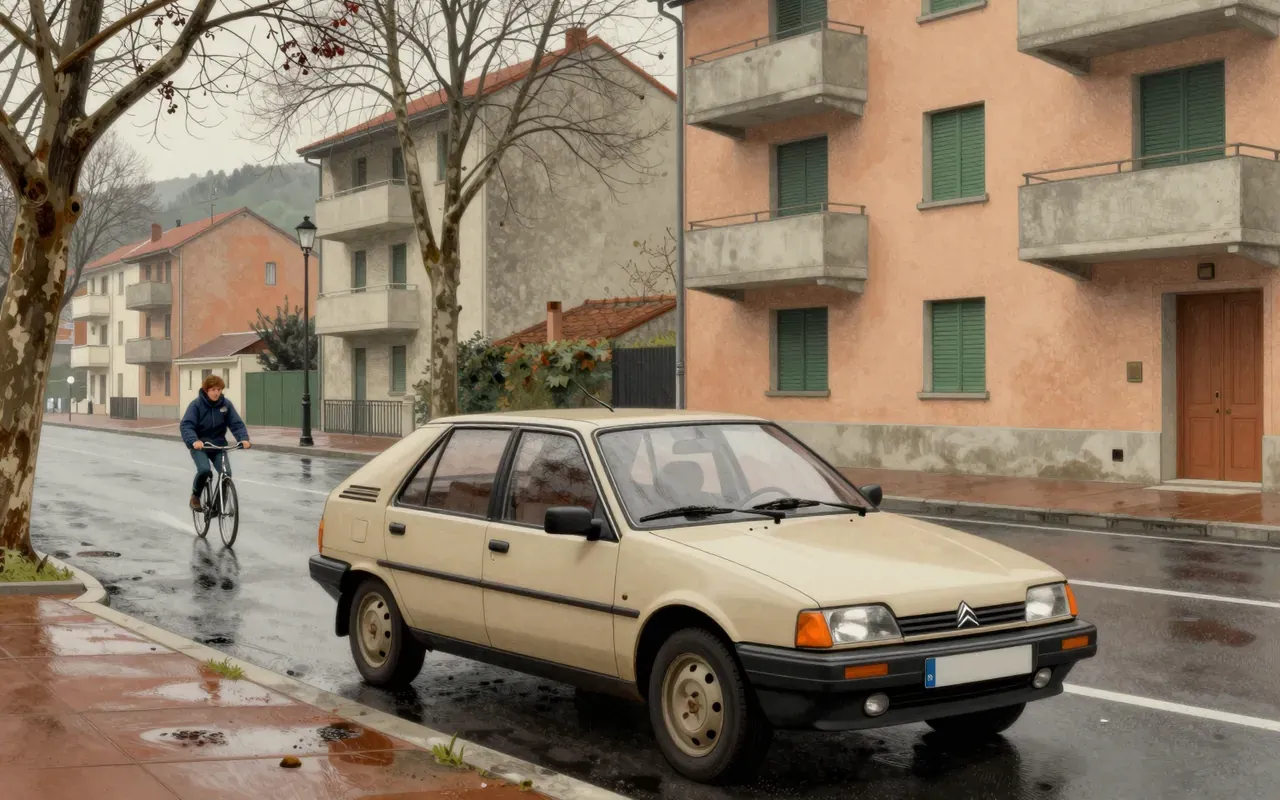
The Citroën BX is a large family car designed by Marcello Gandini and produced by Citroën from 1982 to 1994. It was built as a hatchback and estate, with 2,315,739 units made. It is French, midsize, and categorised among Gandini’s practical mass-production designs.
How it works, in terms someone would actually use
The BX uses hydropneumatic self-levelling suspension to maintain ride height regardless of load. It has front and rear disc brakes. Its plastic body panels — bonnet, tailgate, bumpers — reduce weight and resist corrosion. The driver feels a floaty, isolated ride, with steering that is light but vague.
What it gets right
It gets right the balance of space, comfort and mechanical resilience in a large family car. Its plastic panels cut weight and rust risk. Its angular shape allowed fewer body parts and faster assembly. Its suspension delivers consistent ride quality across uneven surfaces.
What it does not
It does not offer precise steering feedback. It does not have a rigid chassis structure — the lightweight plastic-and-steel body trades torsional stiffness for simplicity and weight savings. It does not share its rear suspension with the Peugeot 405.
What it changed
It proved hydropneumatic suspension could scale to mass-market family cars without sacrificing practicality or cost targets. It shifted Citroën’s design language from organic curves to sharp, modular geometry while retaining core engineering identity.
Who it is for, and who it is not
It is for drivers who prioritise ride comfort, long-term reliability, and functional design over sportiness or prestige. It is not for those who demand responsive handling, structural rigidity, or conventional visual cues of quality.
Is it worth your time
Yes — if you value a radical mainstream car that prioritised function, durability and low-cost production over conventional aesthetics or driver engagement.