automotivebriefs
9:22in productionCh. 1 · The Hatchback Was Born Here/ 9:22 · ceiling 15 min
Road

Renault 4

The Renault 4 didn’t invent the hatchback — it weaponised it.

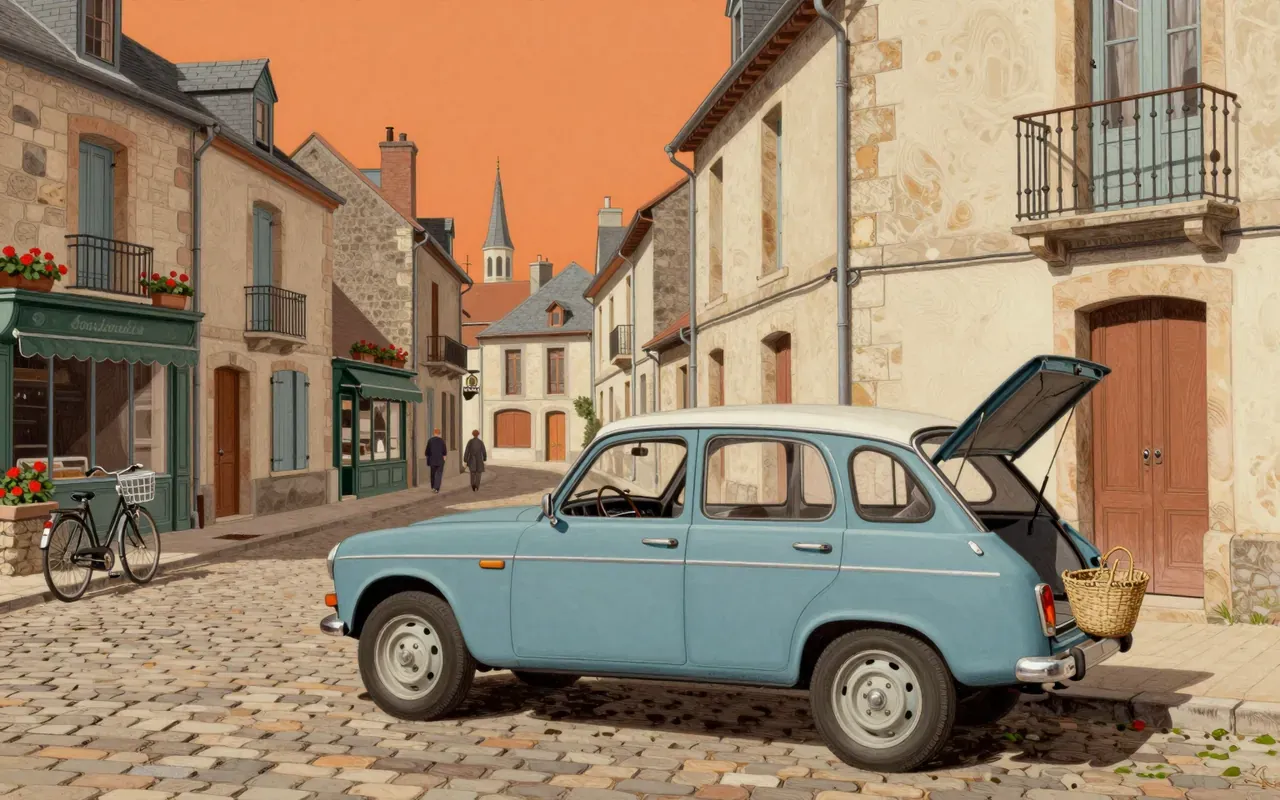
The Renault 4 is an economy car built by Renault from 1961 to 1994. It is the world’s first mass-produced hatchback. It is Renault’s first front-wheel drive family car with longitudinal engine placement.

Chapters & takeaways4
  1. 1:00
    The Hatchback Was Born Here

    It was the world’s first mass-produced hatchback — not by intent, but by consequence of its minimal rear body and top-hinged tailgate.

  2. 2:14
    Longitudinal FWD Was Its Compromise

    Renault chose longitudinal front-wheel drive for packaging and parts commonality — not innovation — and stuck with it for over a decade.

  3. 4:15
    It Won Because France Got Richer

    Its success came from launching at the exact moment French households gained disposable income and needed their first car.

  4. 5:57
    33 Years, 8 Million Cars, One Generation

    Eight million units across four continents in 33 years proves its formula scaled globally — longer-lived than almost any car in history.

Worth your time?

Yes. Drive the whole thing.

4.5/ 5
What works
  • value-for-money
  • timing
  • utility
What does not
  • performance
  • refinement
  • driver engagement
Drive it if
  • buyers prioritising affordability
  • buyers prioritising practicality
  • buyers prioritising mechanical simplicity
Skip it if
  • drivers seeking feedback
  • drivers seeking power
  • drivers seeking prestige
The written brief1 min read

What the car is and where it came from

The Renault 4 is an economy car built by Renault from 1961 to 1994. It is the world’s first mass-produced hatchback. It is Renault’s first front-wheel drive family car with longitudinal engine placement.

How it works, in terms someone would actually use

It opens with a top-hinged, single-piece tailgate. It drives front-wheel drive with the engine mounted longitudinally. It carries passengers and cargo in one volume, with no separate boot.

What it gets right

It gets value-for-money right. It gets timing right: launched as French prosperity rose and car ownership surged. It gets utility right: simple access, flexible space, durable construction.

What it does not

It does not offer performance, refinement or driver engagement. It makes no claim to sportiness, luxury or technical novelty beyond its layout and packaging.

What it changed

It proved the hatchback layout could scale to mass production. It normalised front-wheel drive with longitudinal engines for family cars — a configuration that persisted across Renault’s R5, R6 and R16, and echoed in Citroën, Audi and Saab models before transverse layouts dominated.

Who it is for, and who it is not

It is for buyers prioritising affordability, practicality and mechanical simplicity. It is not for drivers seeking feedback, power, prestige or precision.

Is it worth your time

Yes. Its design logic, longevity and global footprint make it a foundational machine for understanding modern mass-market car architecture.
Same garage · Road4 of 108
13:50
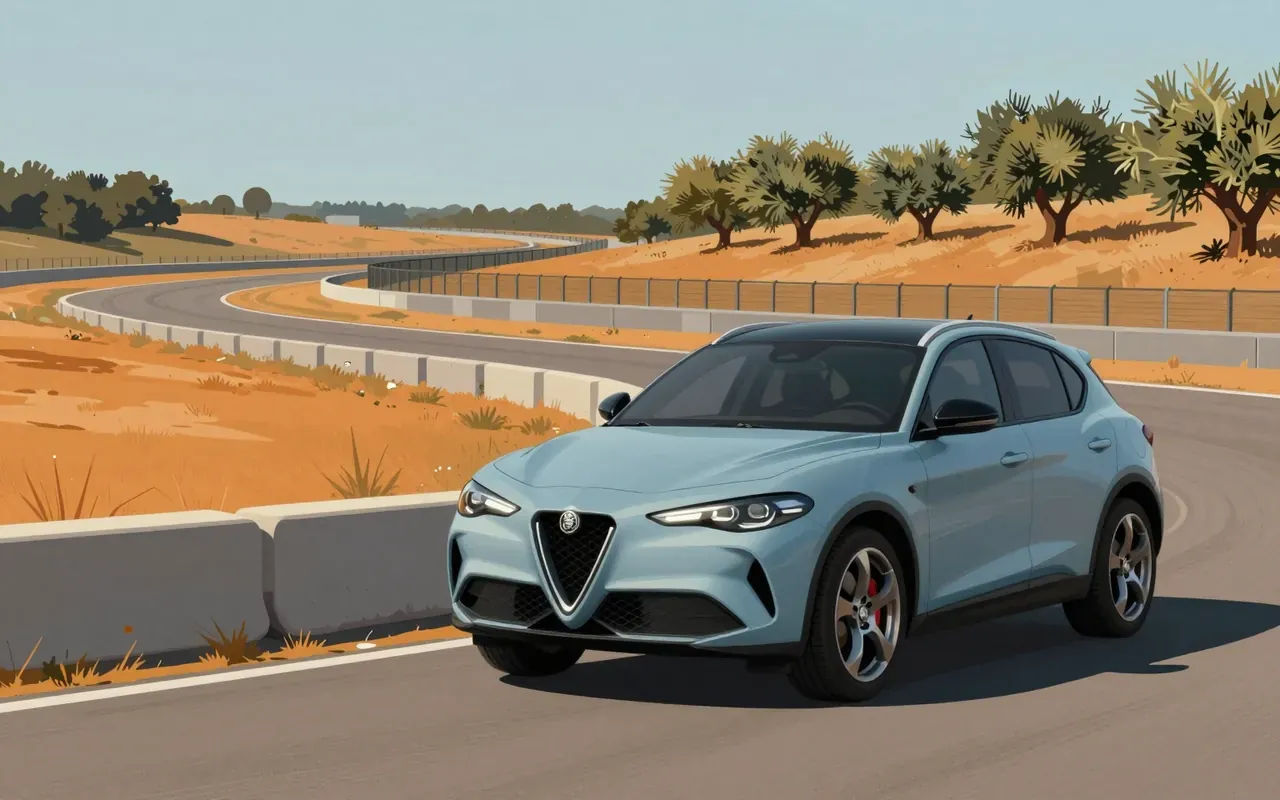
Alfa Romeo TonaleAlfa Romeo Centro Stile · 2022The Alfa Romeo Tonale is a compact luxury crossover SUV launched in February 2022. It is Alfa Romeo’s first hybrid vehicle and first new model in six years. It sits between the Junior and Stelvio in the SUV lineup. It uses a modified SCCS platform shared with the Jeep Compass. It offers mild-hybrid and plug-in hybrid variants, the latter with a 15.5 kWh battery and 48 km electric range. It was delayed from 2021 to 2022 due to semiconductor shortages and drivetrain requirements. A rebadged version, the Dodge Hornet, launched in North America in August 2022.
9:14
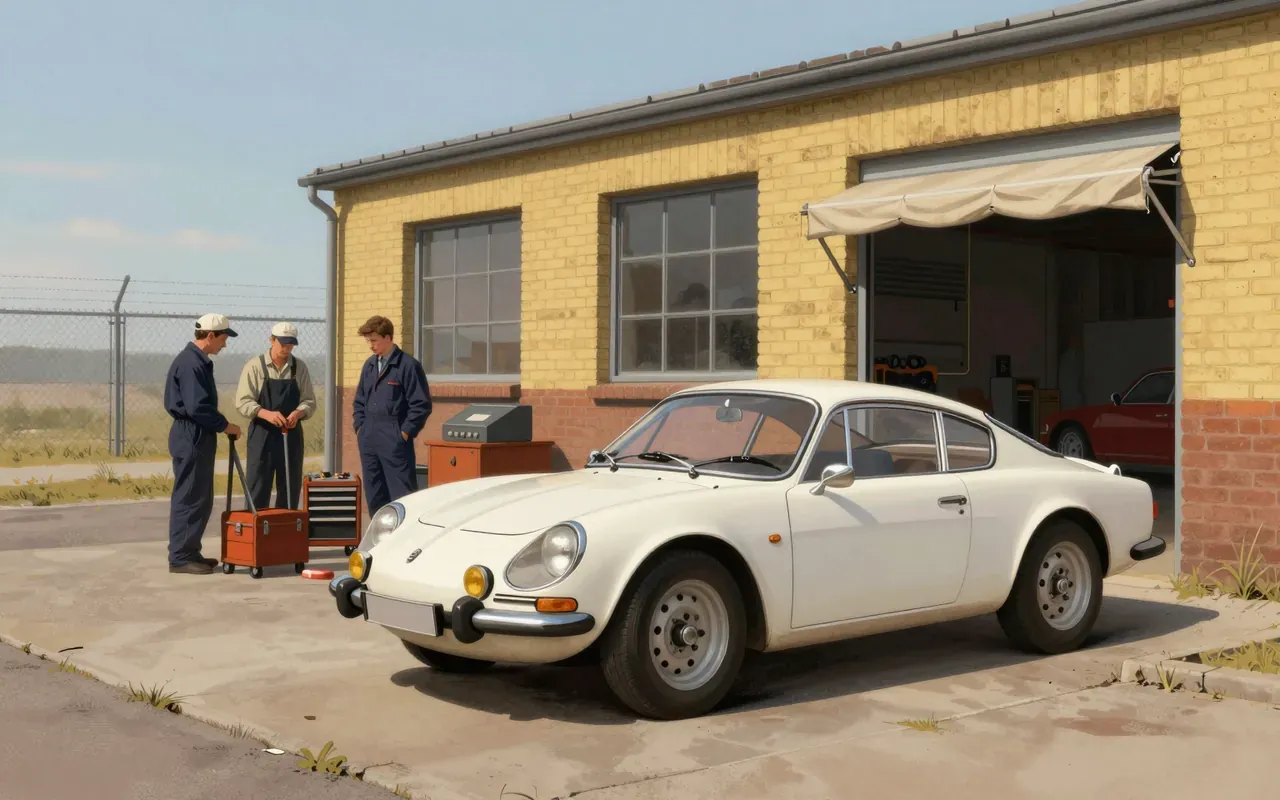
Renault Alpine GTA/A610Heuliez · 1984The Renault Alpine GTA is a rear-engined sports coupé launched in 1985 by Alpine under full Renault ownership. It replaced the A310, sharing its layout and V6 PRV engine. Marketed as the Alpine V6 GT or V6 Turbo in Europe—and as the Renault GTA in Britain—it featured aerodynamic design (Cx 0.28–0.30), lightweight composite body panels, and a steel backbone chassis. Production spanned 1984–1995, totalling ~7,300 units across both GTA and A610 models.
9:25
Audi A2Luc Donckerwolke · 1999The Audi A2 is a compact MPV-styled supermini produced by Audi from November 1999 to August 2005. Luc Donckerwolke designed both its 1997 Al2 concept and production form. It uses aluminium spaceframe construction, resulting in an average weight of 830 kg and class-leading efficiency — including the 3L diesel variant, Europe’s first five-door under-3 L/100 km. Built on a dedicated aluminium line in Neckarsulm, it featured advanced aerodynamics (Cd 0.25–0.29), a service hatch, and start-stop. Despite innovation and praise for design, it incurred €7,530 loss per unit and sold only 176,377 examples before discontinuation.
11:27
Bentley Continental GTDirk van Braeckel · 2003The 2003 Bentley Continental GT is a grand touring car. It launched after Volkswagen AG acquired Bentley in 1998. It was the first Bentley built using mass production techniques. It uses a 6.0 litre twin-turbocharged W12 engine and Torsen-based permanent four-wheel drive. The coupé has no B-pillar and fixed front quarter glass. Dirk van Braeckel designed it to outsell the Arnage. It sold 5,983 units in 2004 — 62% above forecast.
Up next in Automotive

Renault DeZir

Laurens van den Acker · 2010 · 9:28

A red-leather electric coupe that never drove — but rewired Renault’s entire design language.

9:28