automotivebriefs
10:44in productionCh. 1 · A designer’s last word/ 10:44 · ceiling 15 min
Saloons & estates · Road

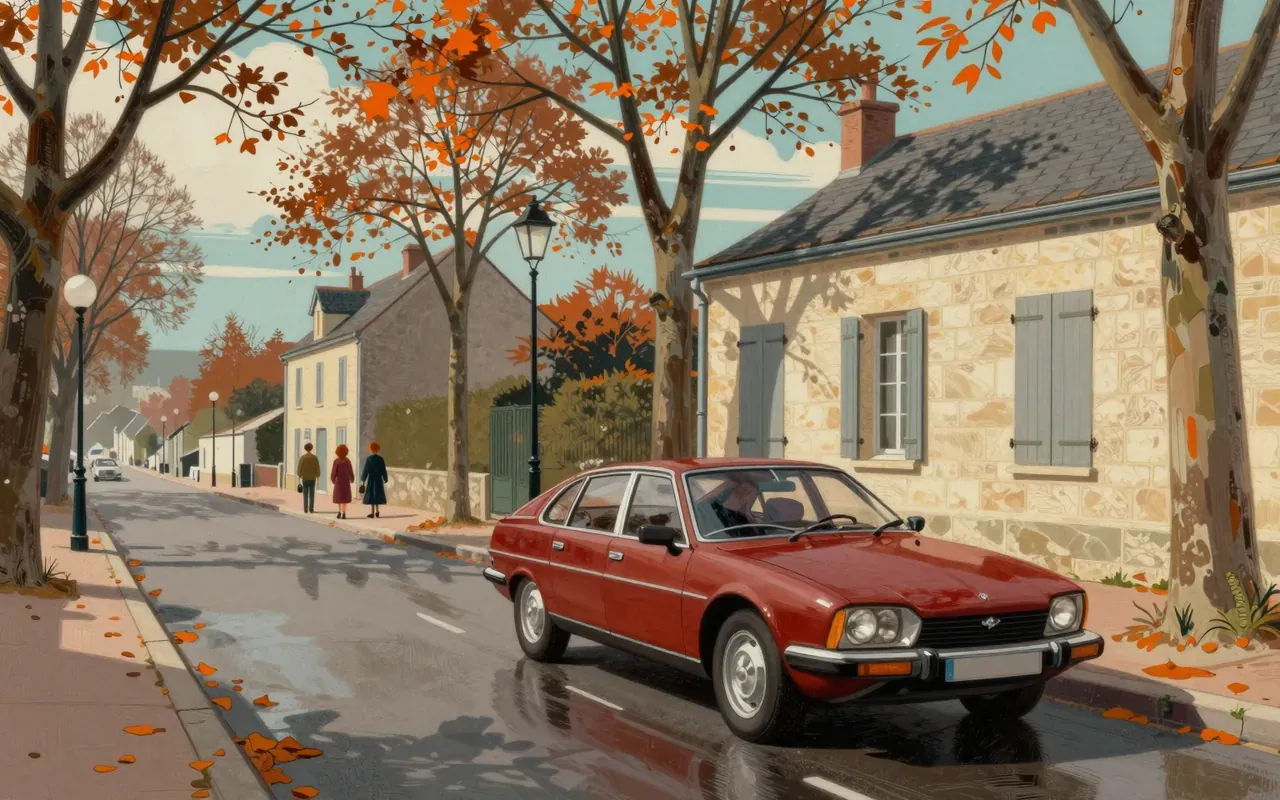
Citroën CX

The CX floats because it refuses to choose between luxury and logic.

The CX is the last complete expression of Citroën’s pre-merger philosophy: hydropneumatic suspension, front-wheel drive, fastback form, and aerodynamic discipline. It succeeded the DS without imitating it. It won European Car of the Year in 1975. It was Robert Opron’s final and favourite design. It marked the end of the 'big Citroën' era that began in 1934.

Chapters & takeaways6
  1. 1:16
    A designer’s last word

    Opron’s farewell to Citroën was a deliberate, self-contained evolution of the DS — not a reboot, but a refinement.

  2. 2:38
    Layout as hierarchy

    Front-wheel drive and stretched wheelbase options made the CX both space-efficient and socially graded — standard for executives, long for limousine duty.

  3. 3:46
    The end of an era, crowned

    Winning 1975 European Car of the Year confirmed it as the final successful model of a lineage stretching back to 1934.

  4. 4:57
    Built on the edge of bankruptcy

    Launched at the 1974 Paris Motor Show, it entered production just as Citroën collapsed — and left right-hand drive behind until 1975.

  5. 6:14
    Aerodynamics you can see

    Its 0.36 drag coefficient wasn’t theoretical — it shaped the fastback roofline, the flush glazing, and the underbody panelling.

  6. 7:25
    The last float

    It carried hydropneumatic suspension into the 1980s without compromise — the last big Citroën to do so.

Worth your time?

Yes. Drive the whole thing.

4.5/ 5
What works
  • It gets the fastback form right: clean, low-drag (0.36 Cd), and functional across saloon and estate variants.
  • It gets the hydropneumatic system right: refined, self-levelling, and calibrated for long-distance composure.
What does not
  • It does not offer rear-wheel drive.
  • It does not have a manual transmission option in right-hand drive until well into 1975.
  • It does not carry forward the DS’s glass-fibre roof or its structural daring.
Drive it if
  • It is for drivers who value ride integrity over steering feedback, aerodynamic honesty over stylistic repetition, and French engineering autonomy over corporate consolidation.
  • It is not for those who require driver engagement through mechanical linkage or chassis talk.
Skip it if
  • It is not for those who require driver engagement through mechanical linkage or chassis talk.
The written brief1 min read

What the car is and where it came from

The CX is a front-engined, front-wheel-drive executive car launched in 1974 as the successor to the DS. It was Robert Opron’s personal favourite and final Citroën design, developed as Projet L and debuted at the 1974 Paris Motor Show.

How it works, in terms someone would actually use

The CX uses front-wheel drive and hydropneumatic self-levelling suspension. It moves air and fluid to keep the ride height constant, regardless of load or road surface. The driver feels a floating, unbroken connection to the road — not isolation, but absorption.

What it gets right

It gets the fastback form right: clean, low-drag (0.36 Cd), and functional across saloon and estate variants. It gets the hydropneumatic system right: refined, self-levelling, and calibrated for long-distance composure.

What it does not

It does not offer rear-wheel drive. It does not have a manual transmission option in right-hand drive until well into 1975. It does not carry forward the DS’s glass-fibre roof or its structural daring.

What it changed

It ended the ‘big Citroën’ era that began in 1934. It proved a fastback saloon could be both executive and aerodynamic without abandoning hydropneumatic innovation.

Who it is for, and who it is not

It is for drivers who value ride integrity over steering feedback, aerodynamic honesty over stylistic repetition, and French engineering autonomy over corporate consolidation. It is not for those who require driver engagement through mechanical linkage or chassis talk.

Is it worth your time

Yes. It is the last car Citroën built as its own master. Its design logic is intact, legible, and uncompromised by merger-era cost-cutting or platform sharing.
Same garage · Saloons & estates4 of 60
9:19
Lucid AirDerek Jenkins · 2021The Lucid Air is a battery electric four-door luxury sedan, Lucid Motors' first production car, announced in December 2016 and launched in 2021. It highlights its record-setting EPA range (up to 520 miles for the Dream Edition), aerodynamic efficiency (Cd=0.21 pre-production, Cd=0.20 production), performance capabilities (e.g., 0–60 mph in 2.5 seconds, 235 mph top speed), and technical features including its 924-volt architecture, bidirectional charging, and DreamDrive ADAS with 32 sensors. The Air Pure, Touring, Grand Touring, and Dream Edition trims are detailed, along with battery capacities (88–112 kWh), power outputs (430–1,111 hp), and production milestones including commencement in late 2021 and deliveries beginning October 30, 2021. Design leadership is attributed to Derek Jenkins, and the vehicle is positioned against the Tesla Model S and German luxury models.
9:14
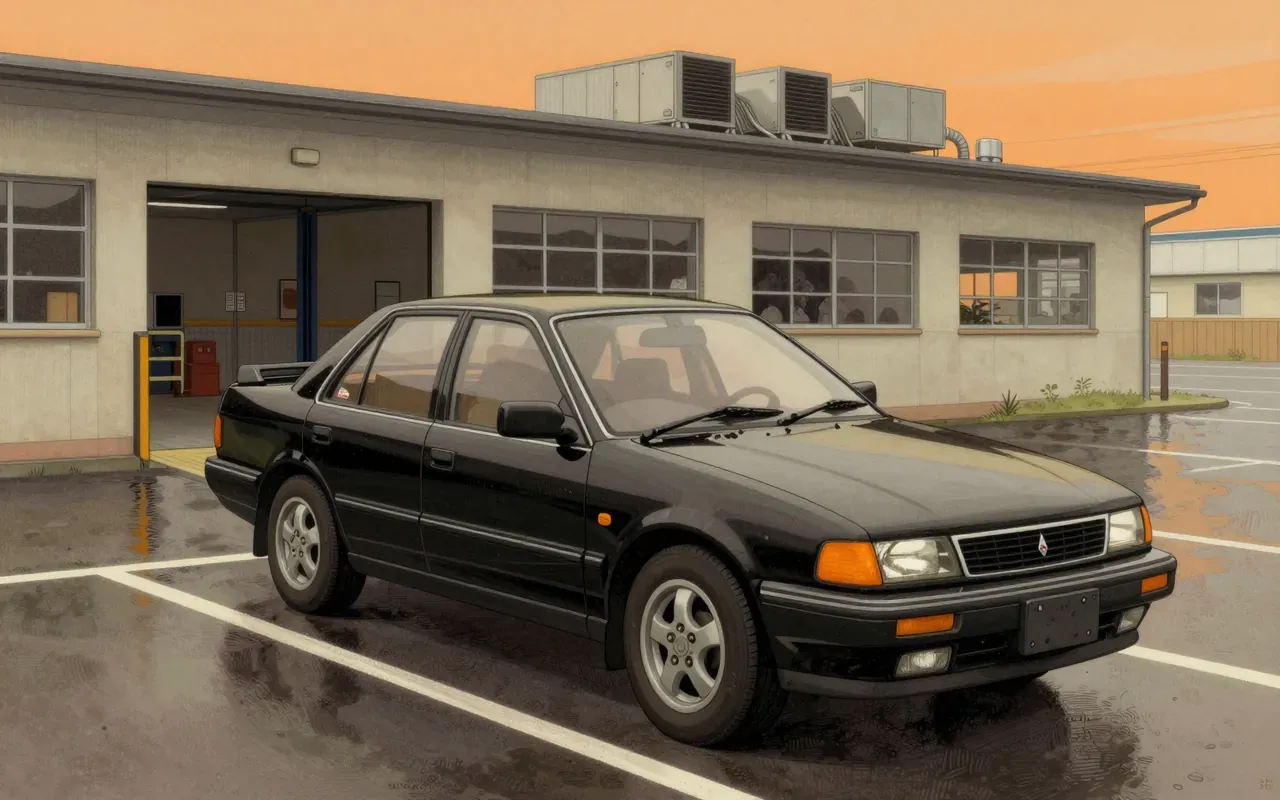
Mitsubishi Galant VR-4Mitsubishi · 1987The Galant VR-4 is Mitsubishi’s first high-performance all-wheel-drive sedan, developed for Group A rallying and launched in 1987. It introduced the Dynamic Four AWC system — a full-time four-wheel drive setup with viscous coupling, plus four-wheel steering and four-wheel ABS. It was sold globally to meet homologation requirements, including 2,000 units in the US in 1991 and 1,000 in 1992. Later generations added liftback (Eterna ZR-4) and station wagon (Legnum) variants. The eighth generation was initially JDM-only but gained overseas cult status via grey imports. In 2000, Ralliart officially imported 200 units to the UK. Production ended in 2002 due to revised Japanese emissions standards.
7:56
Mitsubishi Lancer EvolutionMitsubishi · 1999The Mitsubishi Lancer Evolution is a rally-bred sports sedan built on the Lancer platform. Ten generations were produced from 1992 to 2016. All used a two-litre intercooled turbo inline-four engine and all-wheel drive. It launched in Japan only, then reached the UK and Europe around 1997 via Ralliart dealers—starting with the Evolution IV.
10:45
Proton SagaMitsubishi · 1985The Proton Saga is a foundational Malaysian car—not a technical benchmark, but a political and industrial one.
Up next in Automotive

Citroën GS

Robert Opron · 1970 · 9:12

Aerodynamic logic, not styling, dictated every curve—and Citroën made it sell.

9:12