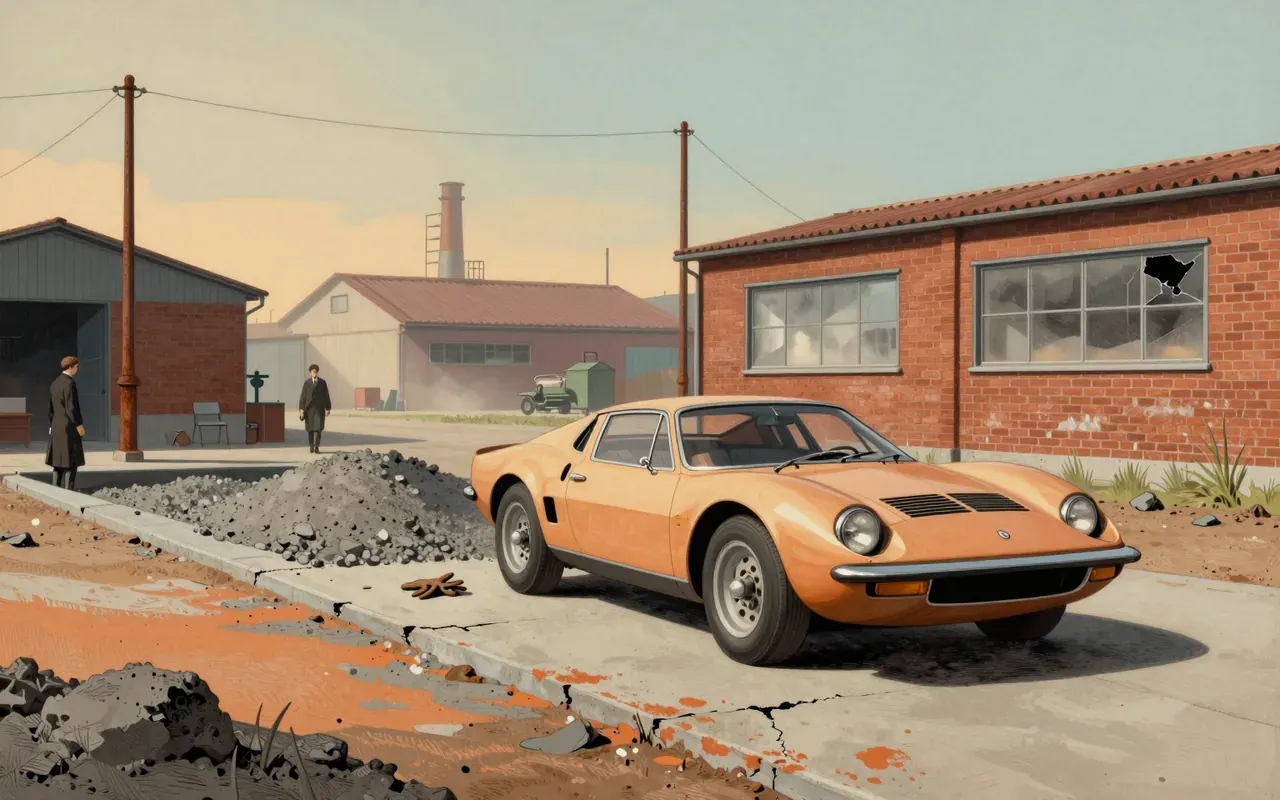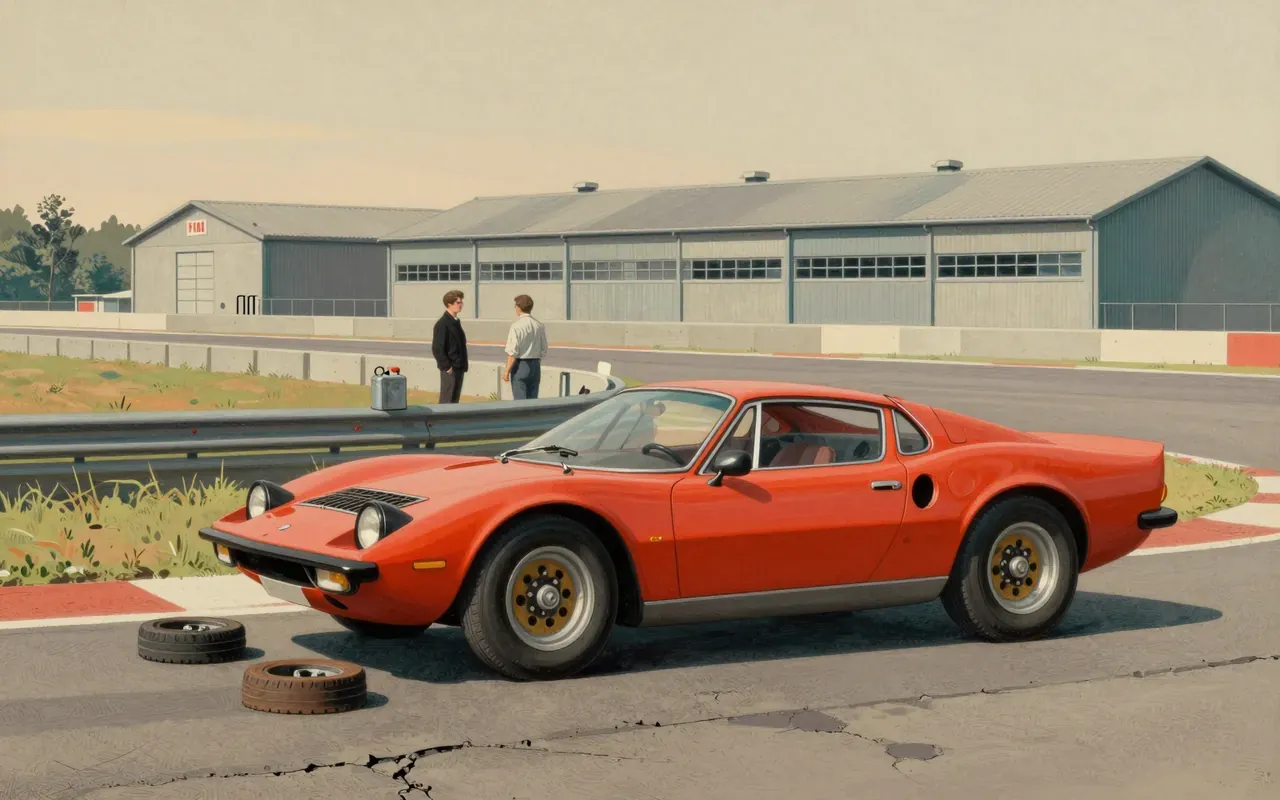
What the car is and where it came from
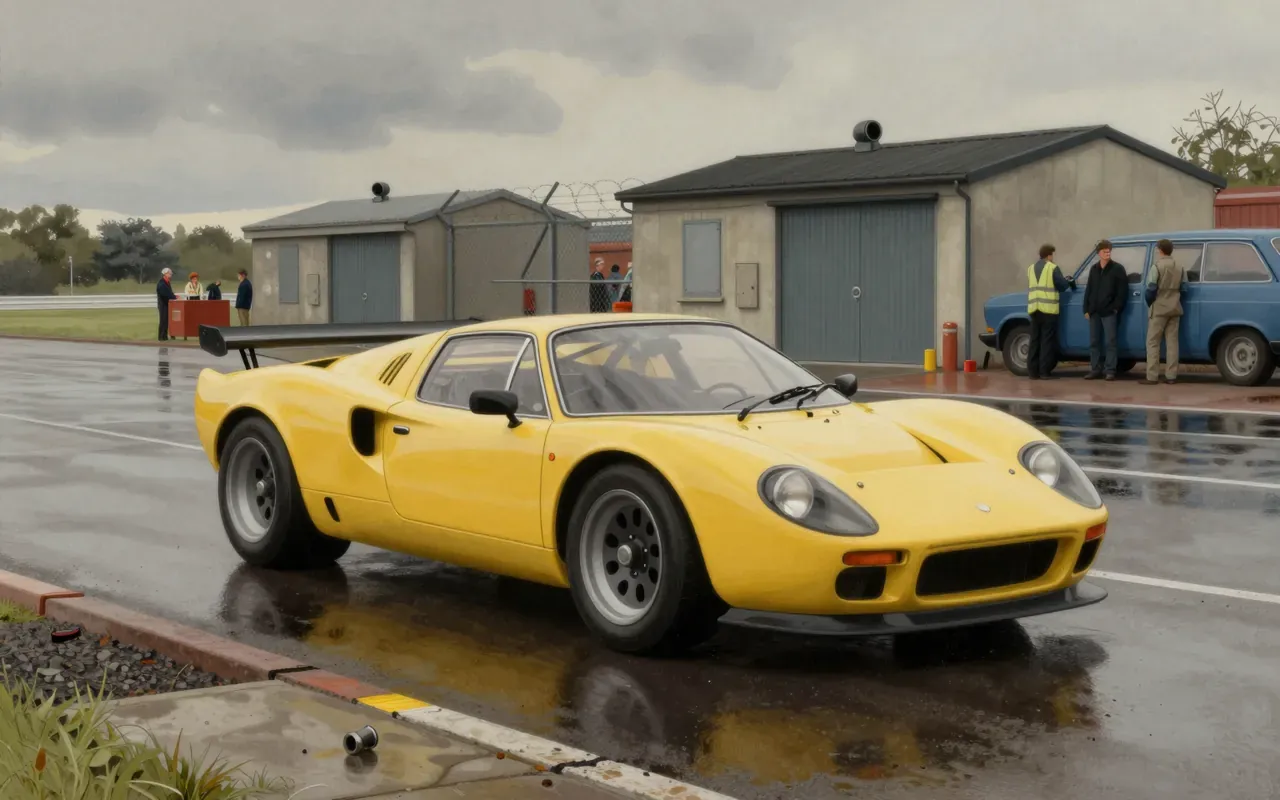
A rear mid-engined rally car designed by Marcello Gandini for Lancia and Bertone. First shown as a fluorescent red prototype at the 1971 Turin Motor Show. Final production version, the Stratos HF Stradale, launched in 1973 with a 2.4 L V6.
How it works, in terms someone would actually use
It places the driver low and central, behind a steeply raked semi-elliptic windshield. The rear mid-engine layout puts mass between the axles. The short wheelbase and wide track demand precise steering inputs. Visibility forward is excellent; rearward, almost none.
What it gets right
It gets right the relationship between driver position, cockpit volume and body width. It gets right the integration of glass and metal into one continuous surface. It gets right the visual compression of speed into static form: wedge, low nose, upward-swept door frames.
What it does not
It does not offer comfort, practicality or visibility for daily use. It does not isolate the driver from noise, heat or mechanical feedback.
What it changed
It proved a purpose-built rally car could be sold to the public. It shifted rally from modified road cars to machines conceived first as competition tools.
Who it is for, and who it is not
It is for people who want to understand how a car’s shape declares its intent before it moves. It is not for collectors seeking rarity alone, nor drivers expecting usability.
Is it worth your time
Yes — if you care about how rally cars forced design to serve function before aerodynamics or electronics entered the equation.