Saved
Sports cars

Iso Grifo

A front-engined Italian GT built to beat Ferrari—with a Chevy V8 and no apologies.

Worth your time?3.5/5Yes.Drive the whole thing.What works, what does not, who it is for ↓
11:06in productionCh. 1 · The Brief/ 11:06 · ceiling 15 min
6 chapters · 11:06Ceiling 15:00

The brief is written and checked. The video joins this page when it is cut.6 chapters · 1 min read · 11:06 planned

Read the brief

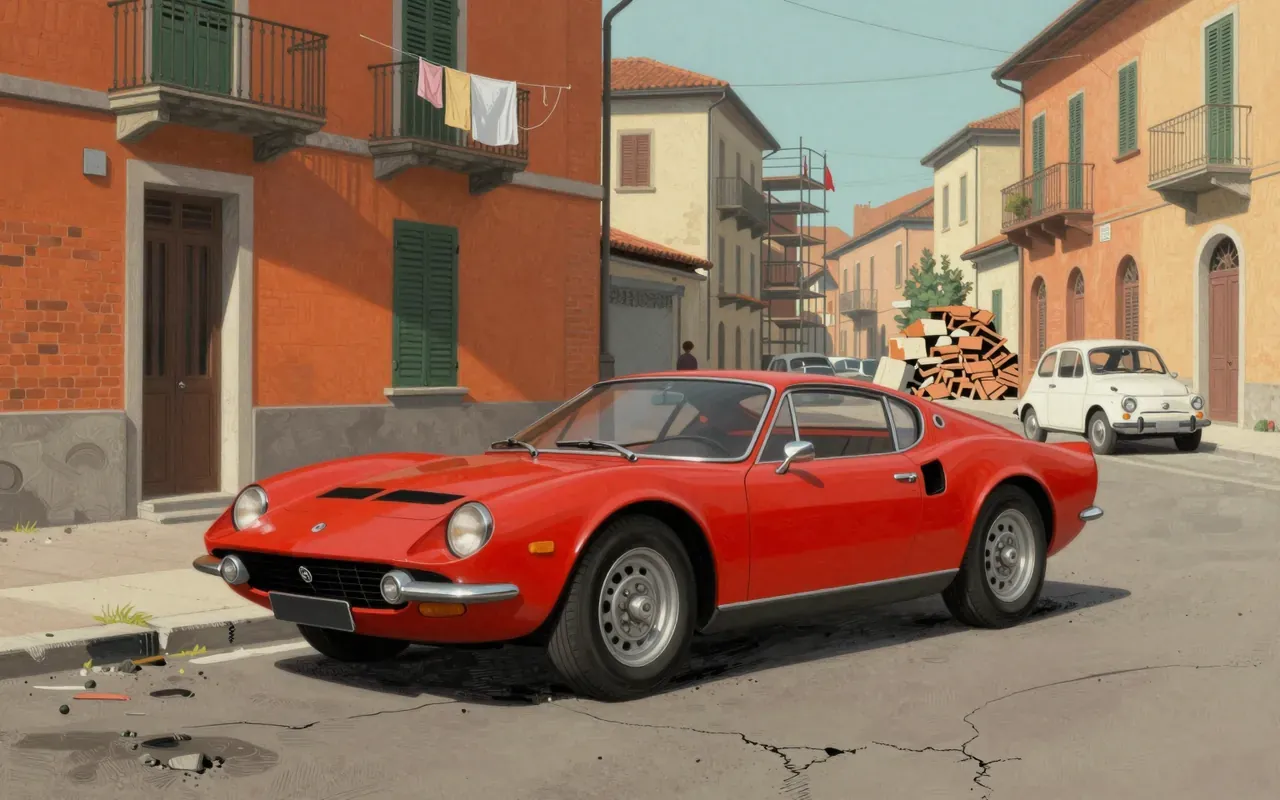
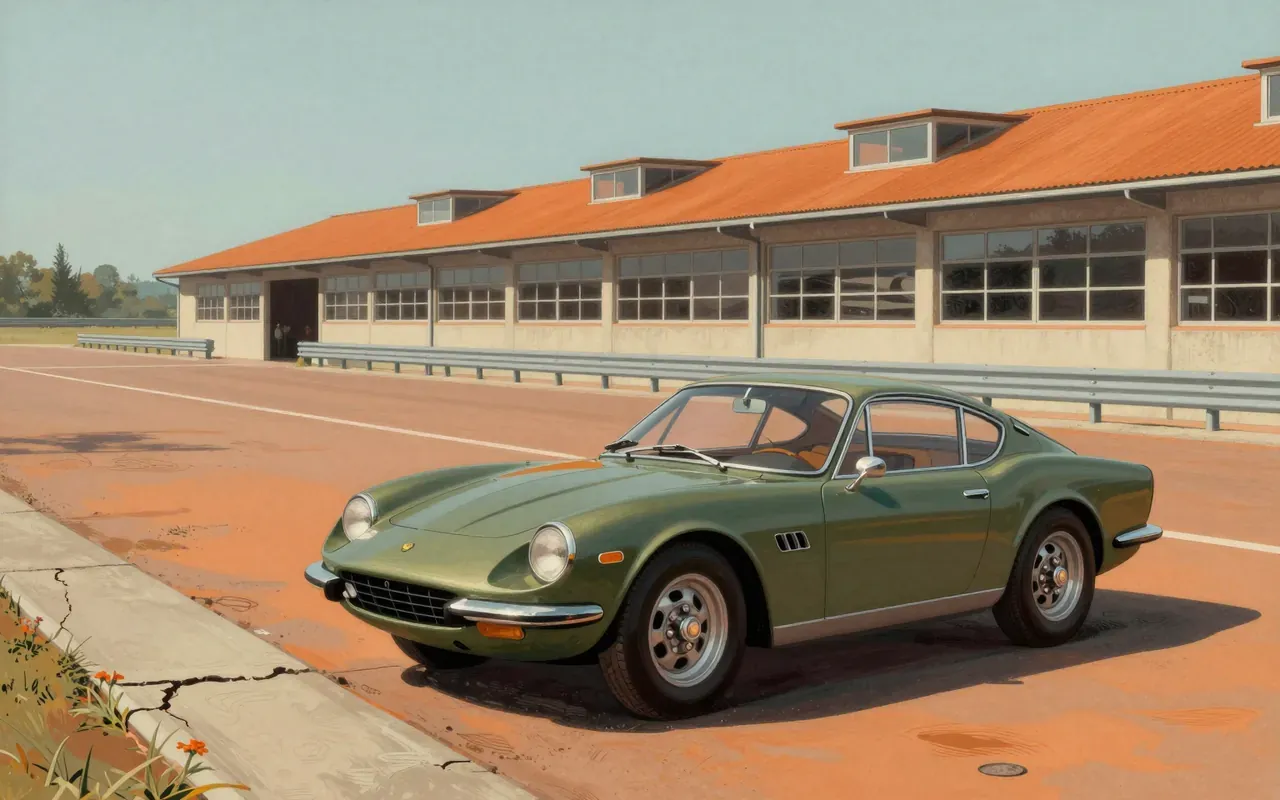
The Iso Grifo is a 1965 Italian grand tourer styled by Giorgetto Giugiaro at Bertone and engineered by Giotto Bizzarrini. It uses American-sourced Chevrolet V8 engines and Borg-Warner transmissions. Production ran from 1965 to 1974, totalling 413 units. It was intended to compete with Ferrari and Maserati GTs.

Chapters & takeaways6
  1. 1:01
    The Brief

    Giugiaro designed the Grifo in 1963 as Iso Rivolta’s answer to Ferrari and Maserati.

  2. 2:15
    The Split

    Bertone handled styling; Bizzarrini handled mechanicals—two masters, one car.

  3. 3:55
    The Powertrain

    The first GL models used a 5.4-litre Chevrolet V8 and Borg-Warner 4-speed manual.

  4. 5:06
    The Line

    Its arched, curving shape defined Giugiaro’s early design language—and influenced the Mangusta and Ghibli.

  5. 6:21
    The Target

    It was built to compete directly with Ferrari and Maserati GTs—not as a boutique experiment, but as a commercial challenge.

  6. 7:27
    The Sequence

    It sits between the IR 300 (1961) and Fidia (1967) in Giugiaro’s sequence of Iso Rivolta commissions.

3 more chaptersFewer chapters
Worth your time?

Yes. Drive the whole thing.

3.5/ 5
What works
  • the balance of long-hood proportion and compact cabin that defines the front-engined GT silhouette
  • its arched, curving body language gives visual cohesion without relying on ornament
  • the cockpit positions the driver centrally relative to the wheel, pedals, and shifter
What does not
  • deliver consistent build quality across its 413 units
  • isolate the driver from engine noise or chassis vibration
  • offer adjustable suspension, power steering, or any electronic driver aids
Drive it if
  • someone who values Giugiaro’s early arched and curving design language as a physical object
  • someone who cares about how Italian design reconciled American muscle with European grand touring intent in the mid-1960s
Skip it if
  • anyone who requires documentation, service support, or repeatable driving dynamics
Who should drive it, and who should skipHide who it is for
The written brief1 min read

What the car is and where it came from

The Iso Grifo is a limited-production Italian grand tourer made by Iso Autoveicoli S.p.A. between 1965 and 1974. Giorgetto Giugiaro designed it in 1963 at Bertone. Giotto Bizzarrini engineered the chassis and drivetrain. It was intended to compete with Grand Touring offerings from Ferrari and Maserati.

How it works, in terms someone would actually use

It places a Chevrolet 5.4-litre V8 behind the front axle, driving the rear wheels through a Borg-Warner 4-speed manual transmission. The driver shifts with a floor lever and feels engine torque directly through the wheel and seat.

What it gets right

It gets right the balance of long-hood proportion and compact cabin that defines the front-engined GT silhouette. Its arched, curving body language gives visual cohesion without relying on ornament. The cockpit positions the driver centrally relative to the wheel, pedals, and shifter.

What it does not

It does not deliver consistent build quality across its 413 units. It does not isolate the driver from engine noise or chassis vibration. It does not offer adjustable suspension, power steering, or any electronic driver aids.

What it changed

It proved that a non-prestige Italian manufacturer could commission a world-class designer and engineer to build a credible alternative to Ferrari and Maserati GTs—using off-the-shelf US powertrains as a strategic advantage.

Who it is for, and who it is not

It is for someone who values Giugiaro’s early arched and curving design language as a physical object—not as a collector’s trophy, but as evidence of a specific moment when Italian form met American engineering pragmatism. It is not for anyone who requires documentation, service support, or repeatable driving dynamics.

Is it worth your time

Yes—if you care about how Italian design reconciled American muscle with European grand touring intent in the mid-1960s. No—if you need verifiable performance data, production consistency, or modern usability.
Same garage · Sports cars4 of 157
10:04
De Tomaso MangustaGiorgetto Giugiaro · 1967De Tomaso Mangusta (1967) — a Giugiaro-designed mid-engined sports car built on a modified P70 steel backbone chassis, with Ford V8 power and a distinctive gull-wing bonnet. 401 units produced. Suffered from handling instability, cramped cabin, and low ground clearance.
9:02
Bizzarrini StradaGiorgetto Giugiaro · 1965The Bizzarrini Strada is a mechanically focused, front mid-engine sports car from 1964–1968. It uses a rearward-placed Chevrolet V8 to optimise weight distribution and handling. Its aluminium body was styled by Bertone, under Giorgetto Giugiaro’s influence. It exists in coupé, roadster, and Corsa forms. Its performance figures are verified: sub-7-second 0–100 km/h, 280 km/h top speed.
9:56
Maserati GhibliGiorgetto Giugiaro · 1967The 1967 Maserati Ghibli AM115 is Giugiaro’s final full expression of arched, flowing form — a front-engine, RWD, 2+2 fastback coupé defined by its shark nose, steel body, and 4.7 L V8. It launched as a 2-seater concept at Turin in 1966. Production ran 1967–1973. Variants followed in 1969: Spyder and SS. Total output: 1,295 units. It predates Giugiaro’s angular shift — the Bora arrived in 1971.
9:03
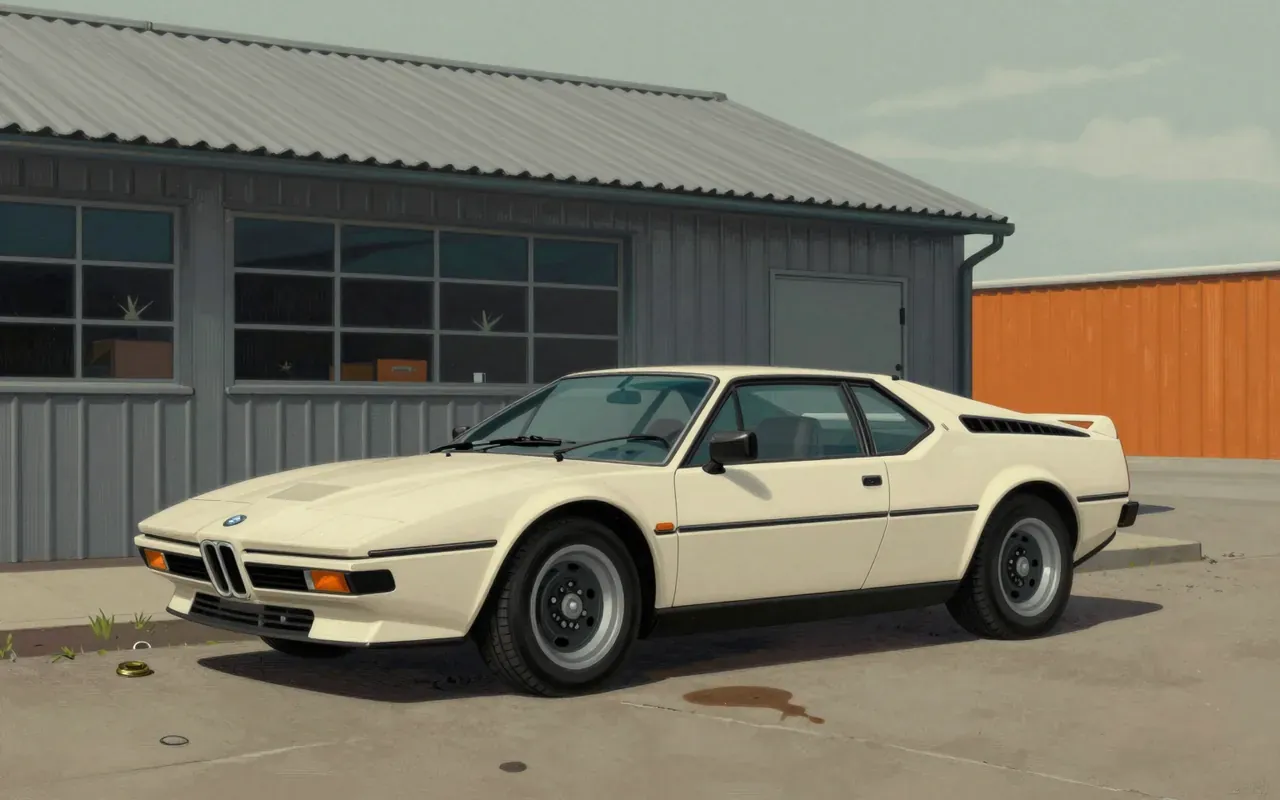
BMW M1Giorgetto Giugiaro · 1974The BMW M1 is a mid-engined, rear-wheel-drive coupé designed by Giorgetto Giugiaro in 1977. Hand-built from 1978 to 1981 as a homologation special, it was the first car developed solely by BMW M and the first mass-produced mid-engine BMW. Its fibreglass body reflects Giugiaro’s angular 'folded paper' design language. Only 453 units were produced.
Up next in Automotive

Iso Rivolta IR 300

Giorgetto Giugiaro · 1962 · 9:09

A grand tourer built not to thrill, but to travel—and the first proof that Giugiaro could make American steel feel Italian.

9:09