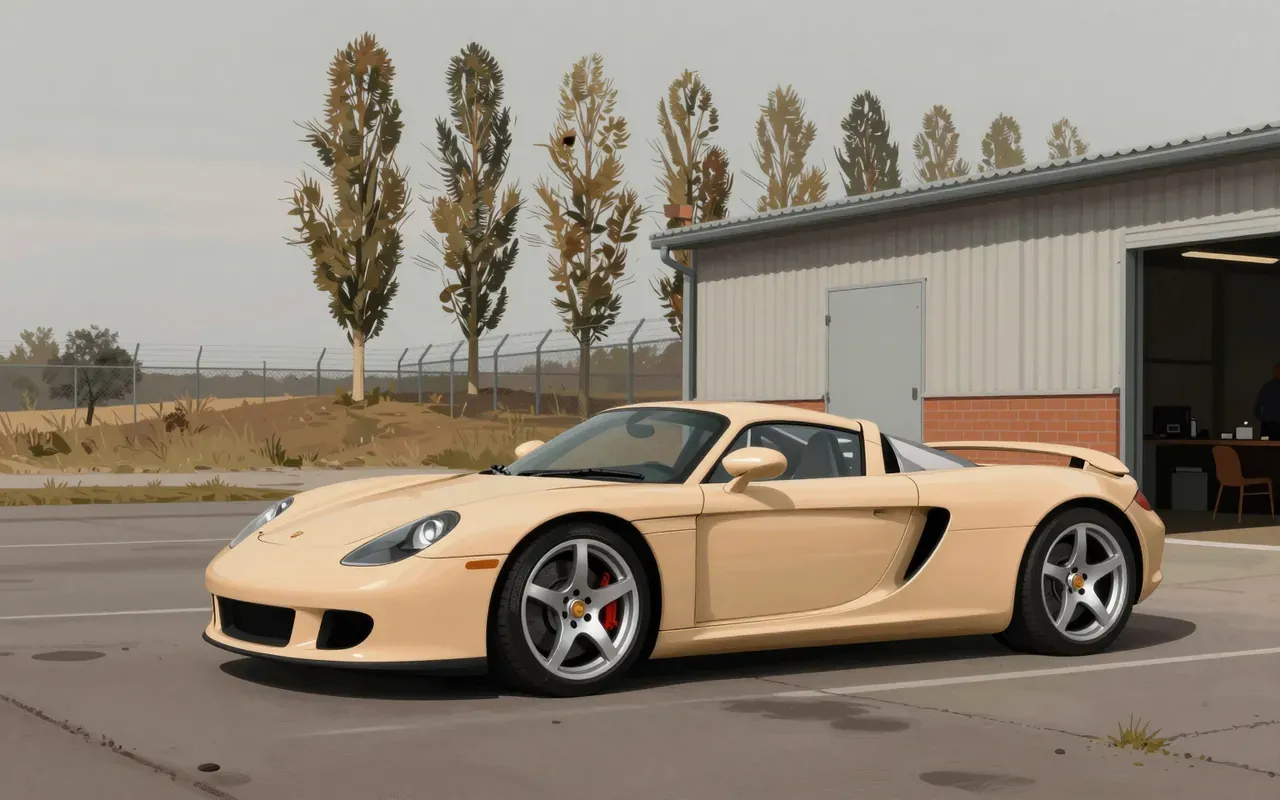
What the car is and where it came from
The Porsche 911 (993) is the fourth-generation 911, produced from 1994 to 1998. It is the final air-cooled 911. Tony Hatter designed its exterior. Porsche built it from the ground up, with only 20% parts shared with the 964.
How it works, in terms someone would actually use
It uses a rear-mounted 3.6-litre flat-six engine, air-cooled, driving the rear wheels or all four. The Weissach axle gives it a multi-link rear suspension with wishbones and coil springs. The driver feels direct mechanical feedback through the wheel, with less lift-off oversteer than earlier 911s.
What it gets right
It resolves decades of rear-engine compromise with the Weissach axle. It refines the 911’s visual language without erasing its identity: flared arches, smooth bumpers, teardrop mirrors, and an enlarged retractable wing all serve function and clarity.
What it does not
It does not offer water-cooling. It does not share major structural components with the 964 beyond the core cabin and body shell. It does not eliminate the rear-engine layout’s inherent weight bias.
What it changed
It ended the air-cooled era. It replaced the 964 with an almost entirely new car—only 20% parts carryover—and introduced the Weissach axle to tame rear-engine handling quirks.
Who it is for, and who it is not
It is for drivers who prioritise mechanical integrity, tactile feedback, and the historical significance of the air-cooled lineage. It is not for those needing daily usability, passive safety systems, or low-effort drivability.
Is it worth your time
Yes—if you value the last air-cooled 911’s engineering resolution and Tony Hatter’s clean exterior execution. No—if you need modern crash structures, infotainment, or emissions compliance.