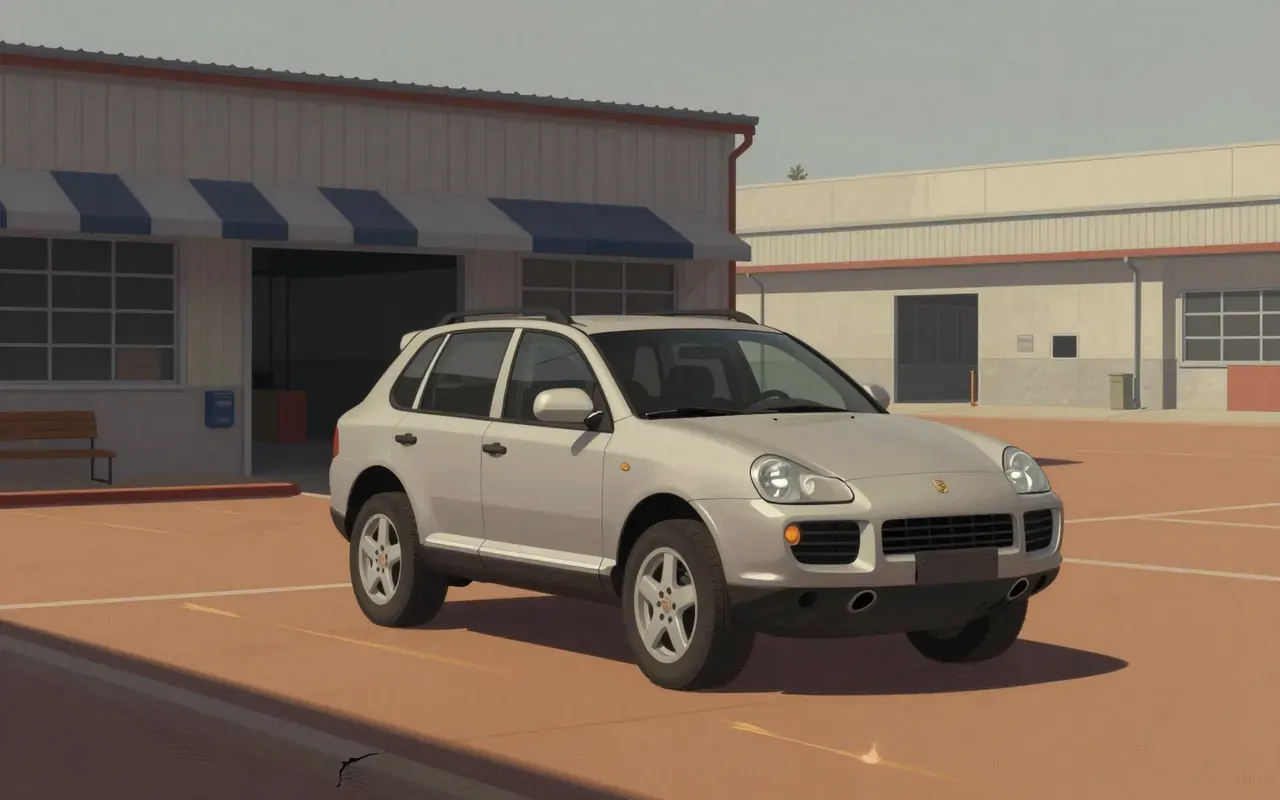
The Porsche Cayenne (2002) is Porsche’s first four-door production car and first V8-powered model since 1995. It is an E-segment luxury crossover SUV. It shares its platform, body frame, doors, and electronics with the Volkswagen Touareg and Audi Q7. It marked Porsche’s return to off-road vehicles after its 1950s tractors.
The Cayenne is Porsche’s first four-door production car and first off-road vehicle since the 1950s.
2:34
V8 Returns
It revived the V8 in Porsche’s lineup after a seven-year gap following the 928’s discontinuation.
4:05
Shared Bones
It shares its platform, body frame, doors, and electronics with the VW Touareg and Audi Q7.
5:50
Segment Anchor
It anchors Porsche’s SUV range as the larger sibling to the Macan, sold since 2014.
7:14
Generation Shift
The first generation (E1) was Type 9PA; the second (E2) debuted at the 2010 Geneva Motor Show.
8:20
Longevity
It has been manufactured since 2002 as an E-segment luxury crossover SUV.
3 more chaptersFewer chapters
Worth your time?
Yes. Drive the whole thing.
4/ 5
What works
driver engagement within E-segment packaging
fusion of sports-car identity and luxury SUV utility
What does not
standalone engineering
Drive it if
buyers wanting Porsche branding with SUV practicality
Skip it if
purists seeking a bespoke Porsche chassis or powertrain
Who should drive it, and who should skipHide who it is for
The written brief1 min read
What the car is and where it came from
The Porsche Cayenne is a four-door E-segment luxury crossover SUV. Porsche launched it in 2002 as Type 9PA (E1). It is Porsche’s first mass-produced four-door vehicle and first V8-powered model since 1995.
How it works, in terms someone would actually use
It shares its platform, body frame, doors, and electronics with the Volkswagen Touareg and Audi Q7. It works as a luxury crossover SUV with four doors and off-road capability.
What it gets right
It gets right the fusion of sports-car branding with practical luxury SUV packaging. It delivers driver engagement within an E-segment footprint.
What it does not
It does not stand alone mechanically. It shares major components with VW Group siblings — no bespoke chassis or powertrain in the first generation.
What it changed
It changed Porsche’s business model. It was the brand’s first four-door production car and first V8-powered vehicle since 1995. It marked Porsche’s return to off-road vehicles after its 1950s tractors.
Who it is for, and who it is not
It is for buyers who want Porsche branding, daily usability, and SUV space without sacrificing driving dynamics. It is not for purists seeking a standalone Porsche engineering statement.
Is it worth your time
Yes. It is Porsche’s best-selling line and established the premium SUV segment for sports-car makers.