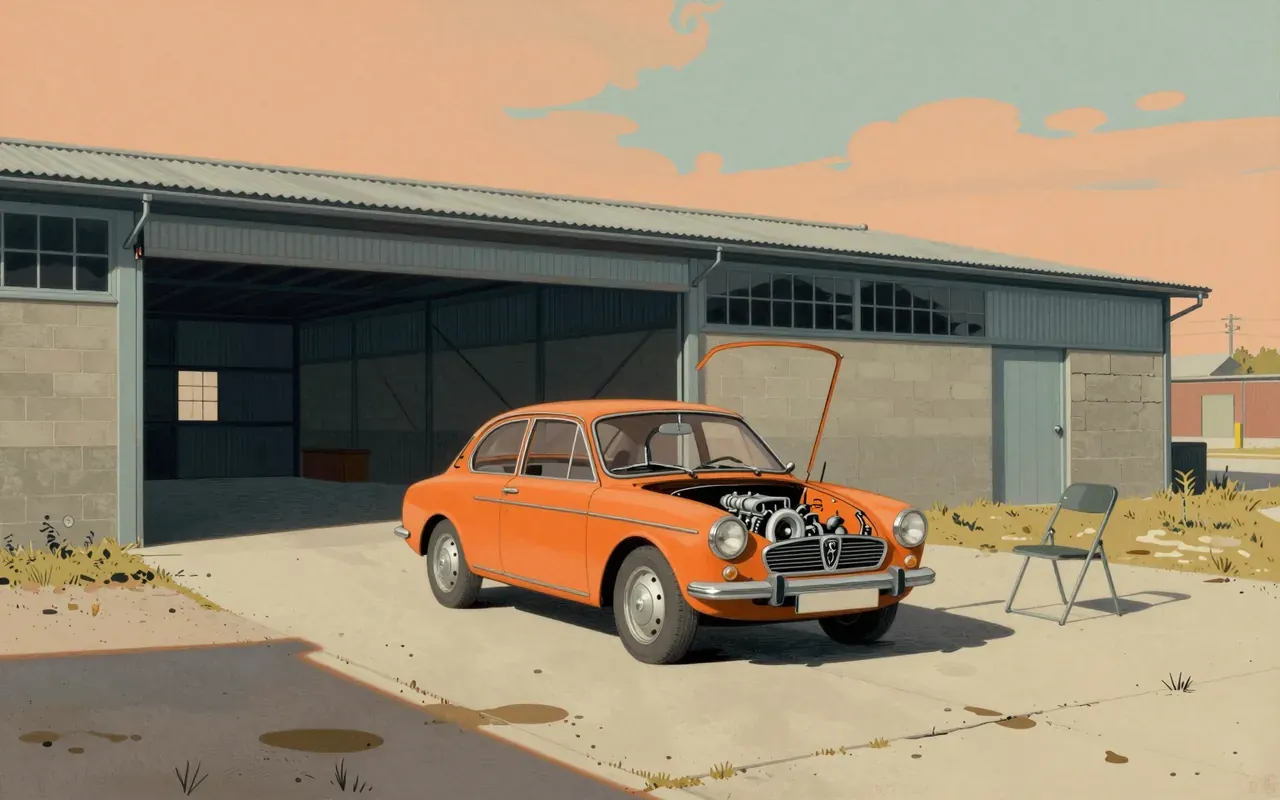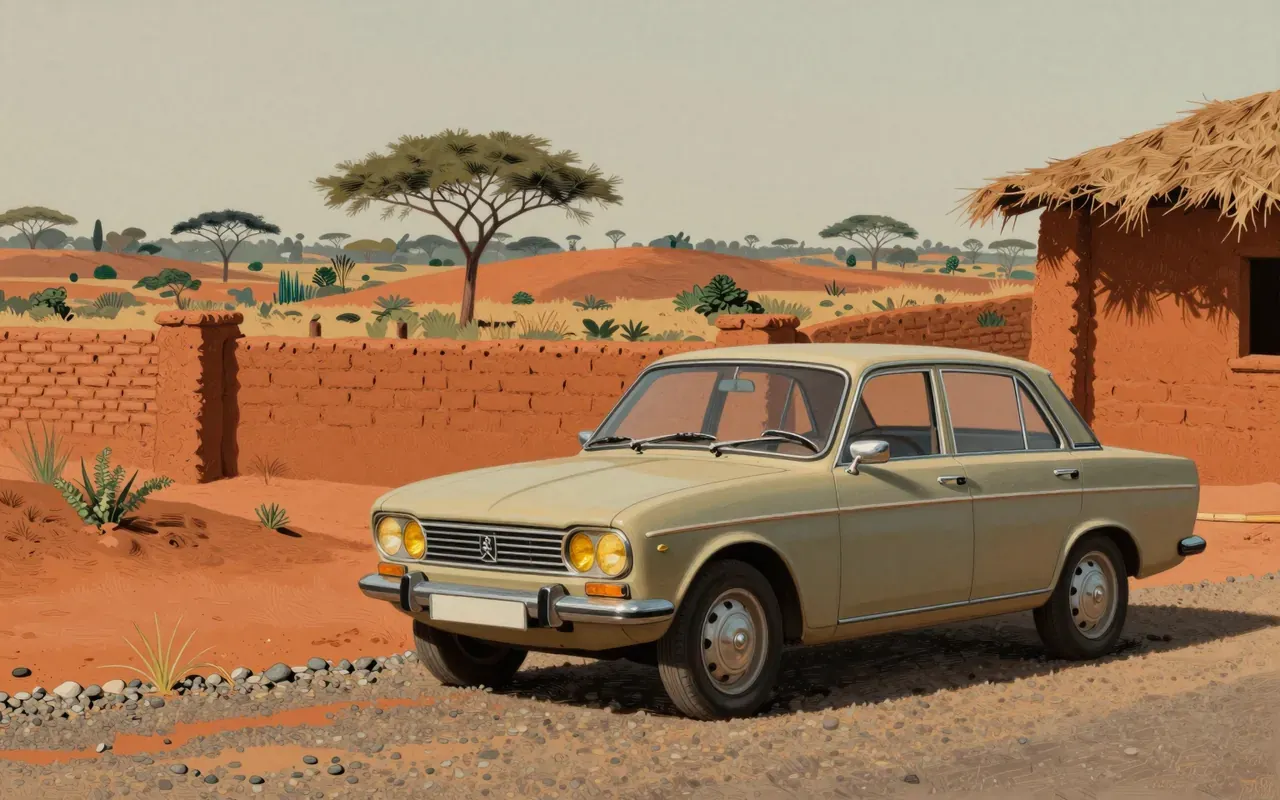
What the car is and where it came from
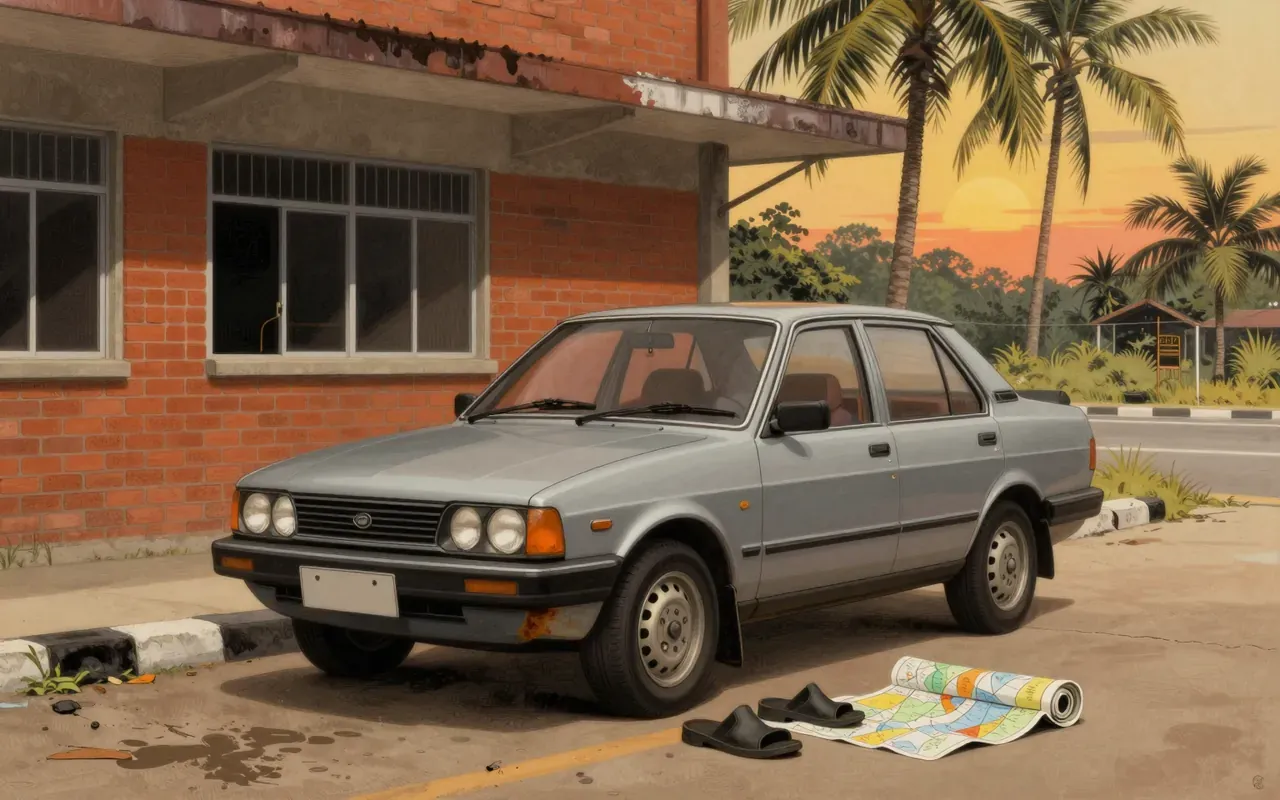
A mid-size, front-engine, rear-wheel-drive saloon designed by Aldo Brovarone at Pininfarina, launched in 1968 as Peugeot’s flagship. It was built for durability across terrain and time — not for speed or luxury.
How it works, in terms someone would actually use
It is a front-engine, rear-wheel-drive saloon with independent rear suspension and disc brakes on all four wheels. Its torque tube driveshaft connects gearbox and differential in a rigid tube. It has long suspension travel, high ground clearance, and large wheels.
What it gets right
It gets right the relationship between body stiffness, suspension travel, and drivetrain rigidity. The torque tube eliminates torque reaction at the chassis. The robust structure supports high ground clearance without compromising wheel articulation.
What it does not
It does not offer modern driver assistance, crash structures, or thermal efficiency. It does not prioritise low-speed refinement or cabin isolation.
What it changed
It proved that a single-generation European saloon could outlive its intended lifecycle by decades through structural integrity and mechanical simplicity — not software updates or marketing cycles.
Who it is for, and who it is not
It is for engineers, fleet operators, and historians who value mechanical legibility and proven field endurance. It is not for drivers who expect responsive steering feedback, tight body control, or integrated infotainment.
Is it worth your time
Yes — if you need to understand how robust mechanical architecture enables global longevity without digital systems or platform sharing.