automotivebriefs
9:12in productionCh. 1 · Form Without Fanfare/ 9:12 · ceiling 15 min
Saloons & estates

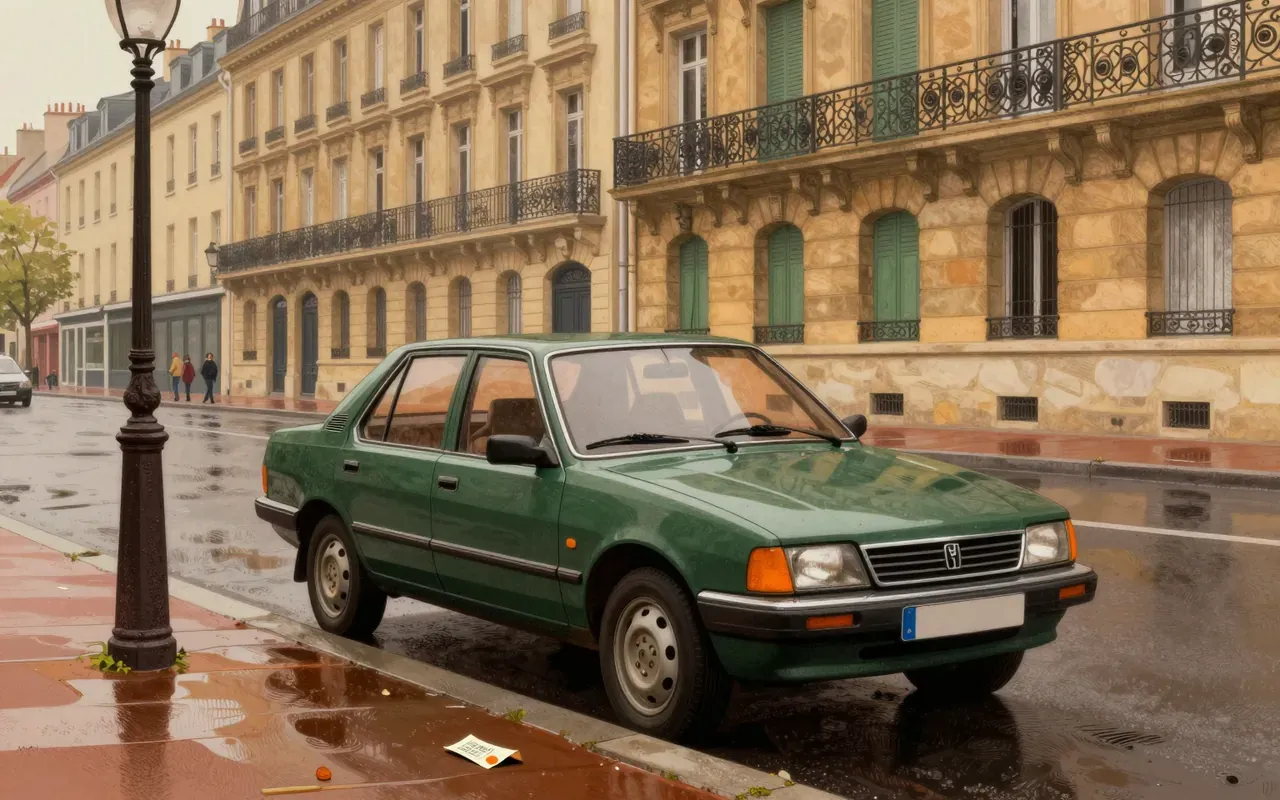
Peugeot 405

A saloon that won Car of the Year by refusing to be anything but itself.

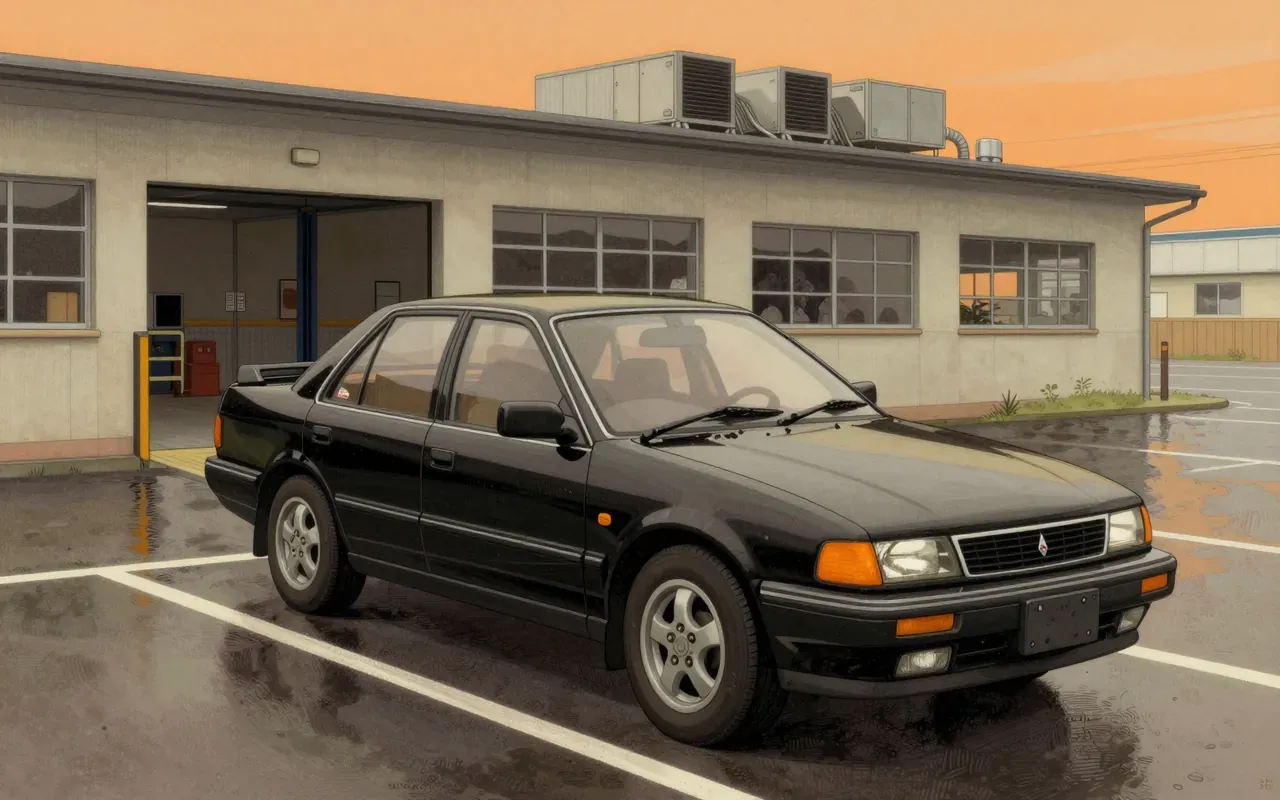
The Peugeot 405 is a large family car designed by Peugeot and styled by Pininfarina, produced from 1987 to 1997 in Europe and under license in Iran until 2020. It shares its floorpan with the Citroën BX but lacks hydropneumatic suspension except on 4x4 variants. It was voted European Car of the Year for 1988 by the largest number of votes in the history of the contest. About 2.5 million vehicles have been sold worldwide, both in left and right drive versions, as a saloon and estate. In early 2020, the 33-year production run of the Peugeot 405 was counted as the 'twentieth most long-lived single generation car in history'. Its appearance is similar to the Alfa Romeo 164, launched the same year and also styled by Pininfarina.

Chapters & takeaways4
  1. 1:15
    Form Without Fanfare

    Pininfarina gave the 405 a disciplined, horizontal silhouette—similar in stance to the Alfa Romeo 164, but stripped of theatrics.

  2. 2:35
    Chassis Compromise

    It shares the BX floorpan but abandons hydropneumatics—except on 4x4 models, where it adds them only to the rear axle.

  3. 4:10
    The Verdict Was Unanimous

    It won European Car of the Year 1988 with the most votes ever—on merit of coherence, not novelty.

  4. 5:32
    Longevity as Evidence

    2.5 million sold worldwide. A 33-year production run—the twentieth longest for a single-generation car.

Worth your time?

Yes. Drive the whole thing.

4/ 5
What works
  • cohesive, taut silhouette with strong horizontal lines and low beltline
  • usable interior space, clear sightlines and predictable responses
What does not
  • hydropneumatic suspension outside 4x4 variants
  • technical novelty
  • driver-focused dynamics
Drive it if
  • drivers who value legibility, durability and understated execution in a saloon
Skip it if
  • those seeking driver-focused dynamics, avant-garde form or mechanical distinction
The written brief1 min read

What the car is and where it came from

A large family car designed by Peugeot and styled by Pininfarina, produced from 1987 to 1997 in Europe and under license in Iran until 2020.

How it works, in terms someone would actually use

It is a front-wheel-drive large family car with a shared floorpan from the Citroën BX but no hydropneumatic suspension—except on 4x4 variants, which add it only to the rear axle. It uses TU/XU petrol and XUD diesel engines. It is offered as a saloon and estate.

What it gets right

It establishes a clean, taut silhouette anchored by strong horizontal lines and a low beltline—achieving presence without ornament. Its packaging delivers usable interior space, clear sightlines and predictable responses across engine and drivetrain variants.

What it does not

It does not offer hydropneumatic suspension outside its 4x4 variants. It does not share Pininfarina’s more dramatic design language with the Alfa Romeo 164 beyond surface similarity. It does not claim innovation in powertrain, chassis architecture or driver engagement.

What it changed

It proved that a large family car could win European Car of the Year by prioritising cohesion, usability and visual discipline over technical spectacle or brand theatre.

Who it is for, and who it is not

It is for drivers who value legibility, durability and understated execution in a saloon. It is not for those seeking driver-focused dynamics, avant-garde form or mechanical distinction.

Is it worth your time

Yes—if you want to understand how a pragmatic, mass-market European saloon won over critics and buyers alike through clarity of purpose, not novelty.
Same garage · Saloons & estates4 of 60
9:19
Lucid AirDerek Jenkins · 2021The Lucid Air is a battery electric four-door luxury sedan, Lucid Motors' first production car, announced in December 2016 and launched in 2021. It highlights its record-setting EPA range (up to 520 miles for the Dream Edition), aerodynamic efficiency (Cd=0.21 pre-production, Cd=0.20 production), performance capabilities (e.g., 0–60 mph in 2.5 seconds, 235 mph top speed), and technical features including its 924-volt architecture, bidirectional charging, and DreamDrive ADAS with 32 sensors. The Air Pure, Touring, Grand Touring, and Dream Edition trims are detailed, along with battery capacities (88–112 kWh), power outputs (430–1,111 hp), and production milestones including commencement in late 2021 and deliveries beginning October 30, 2021. Design leadership is attributed to Derek Jenkins, and the vehicle is positioned against the Tesla Model S and German luxury models.
9:14
Mitsubishi Galant VR-4Mitsubishi · 1987The Galant VR-4 is Mitsubishi’s first high-performance all-wheel-drive sedan, developed for Group A rallying and launched in 1987. It introduced the Dynamic Four AWC system — a full-time four-wheel drive setup with viscous coupling, plus four-wheel steering and four-wheel ABS. It was sold globally to meet homologation requirements, including 2,000 units in the US in 1991 and 1,000 in 1992. Later generations added liftback (Eterna ZR-4) and station wagon (Legnum) variants. The eighth generation was initially JDM-only but gained overseas cult status via grey imports. In 2000, Ralliart officially imported 200 units to the UK. Production ended in 2002 due to revised Japanese emissions standards.
7:56
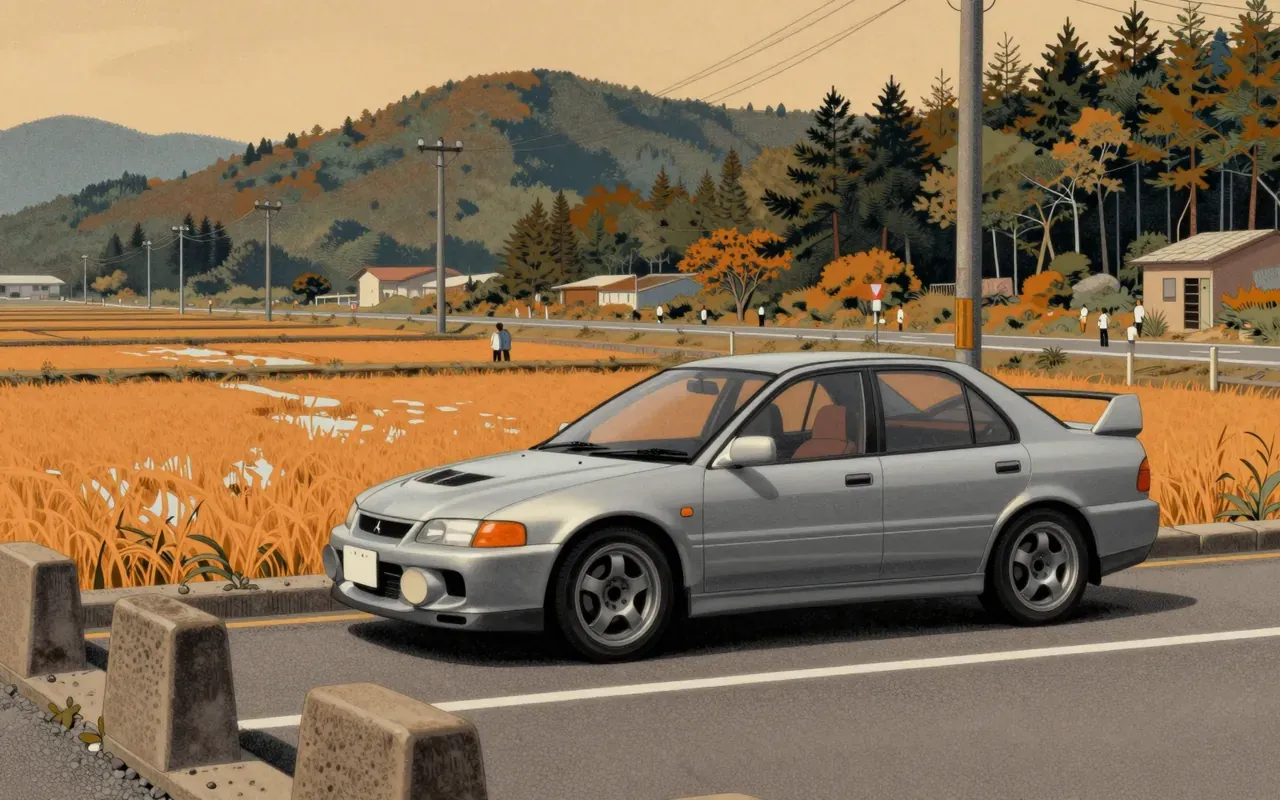
Mitsubishi Lancer EvolutionMitsubishi · 1999The Mitsubishi Lancer Evolution is a rally-bred sports sedan built on the Lancer platform. Ten generations were produced from 1992 to 2016. All used a two-litre intercooled turbo inline-four engine and all-wheel drive. It launched in Japan only, then reached the UK and Europe around 1997 via Ralliart dealers—starting with the Evolution IV.
10:45
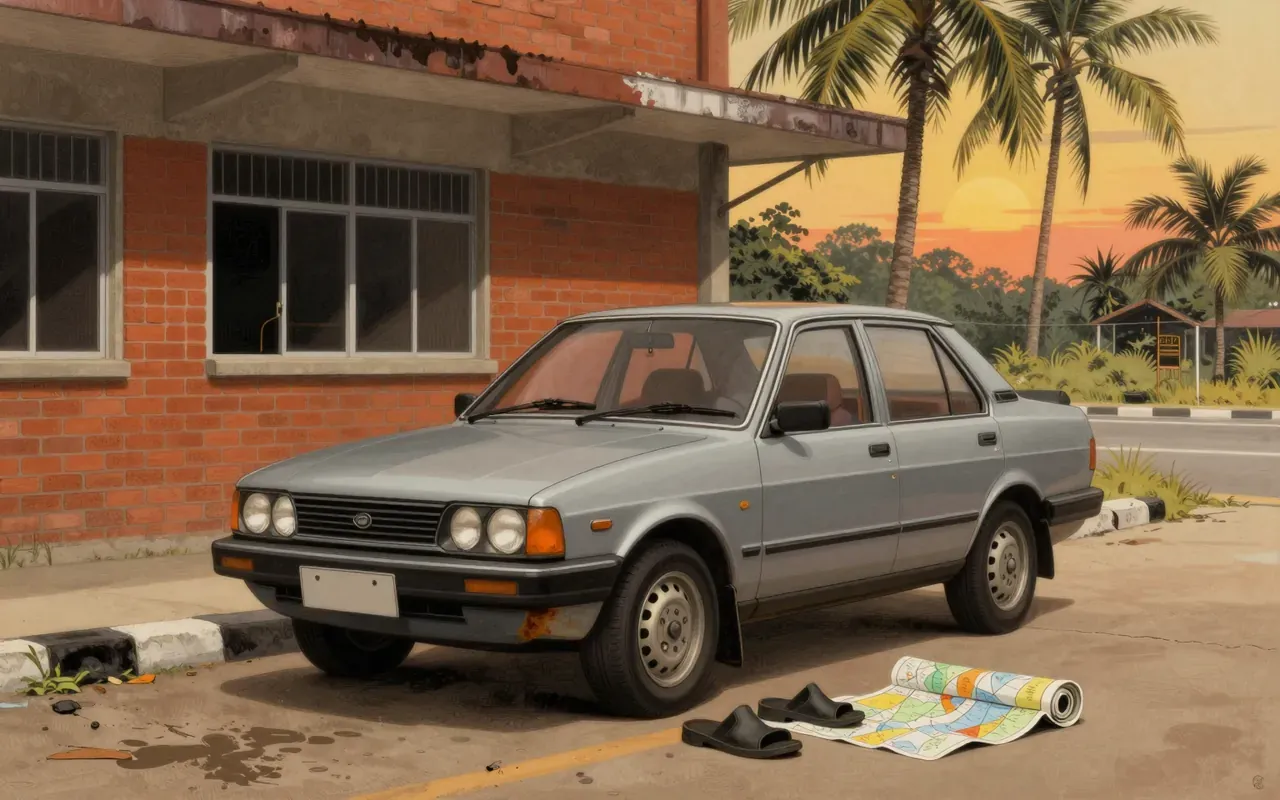
Proton SagaMitsubishi · 1985The Proton Saga is a foundational Malaysian car—not a technical benchmark, but a political and industrial one.
Up next in Automotive

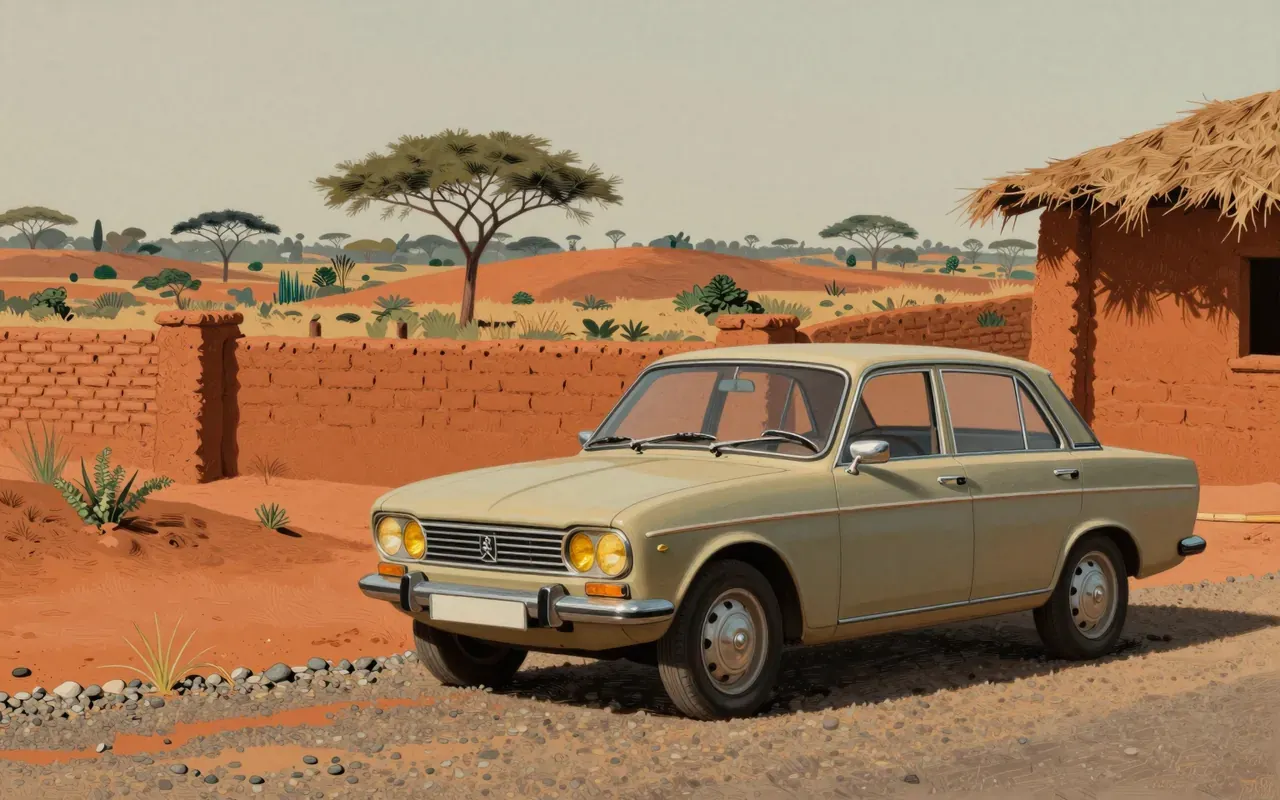
Peugeot 504

Pininfarina · 1968 · 10:24

A saloon built to survive Africa — not win awards in Paris.

10:24