automotivebriefs
9:52in productionCh. 1 · The Sole Model/ 9:52 · ceiling 15 min
Saloons & estates

Peugeot 203

Peugeot’s monocoque gamble didn’t reinvent the car — it redefined what a family saloon could reliably be.

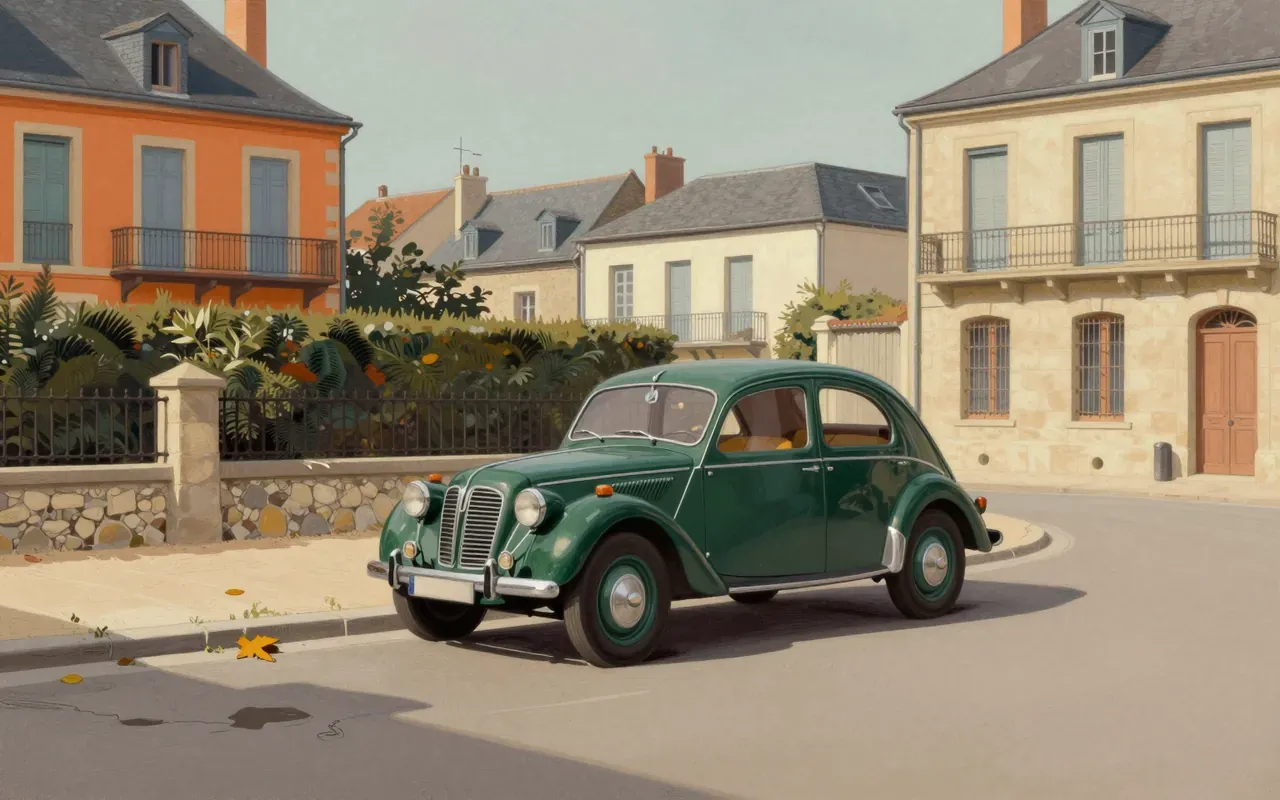
The Peugeot 203 is a foundational post-war saloon. Its monocoque structure, coil-sprung chassis and rack-and-pinion steering set new internal benchmarks. It carried Peugeot alone for six years. It sold nearly 700,000 units. It offered three body variants on two wheelbases. It used one engine, one drivetrain, one brake system. It was rational, not revolutionary.

Chapters & takeaways4
  1. 0:53
    The Sole Model

    It was Peugeot’s only car from 1949 to 1955 — a deliberate, singular bet on one design.

  2. 2:24
    One Shell, Three Bodies

    Monocoque construction arrived here first at Peugeot — paired with three distinct body forms on two wheelbases.

  3. 4:28
    The New Chassis Language

    Coil springs, rack-and-pinion steering and hydraulic brakes formed a new baseline for Peugeot road manners.

  4. 5:53
    The Volume Benchmark

    Nearly 700,000 built in Sochaux proves demand for rational, durable, repairable family transport.

Worth your time?

Yes. Drive the whole thing.

3.5/ 5
What works
  • monocoque construction delivers structural rigidity
  • rack-and-pinion steering gives direct feedback
  • hydraulic brakes replace outdated mechanical systems
  • three body variants scale practicality
What does not
  • front-wheel drive
  • independent rear suspension
  • disc brakes
  • multiple engine options
Drive it if
  • readers interested in how engineering choices shape mass mobility after total war
Skip it if
  • readers seeking innovation in propulsion, packaging or driver engagement beyond 1940s norms
The written brief1 min read

What the car is and where it came from

The Peugeot 203 is a small family car. Peugeot launched it in 1948 as its first post-war model. Development began before 1942. Production started late in 1948. Customer deliveries began in early 1949. Nearly 700,000 units were assembled in Sochaux.

How it works, in terms someone would actually use

The Peugeot 203 uses a rear-wheel-drive layout with a 1290 cc four-cylinder engine. It transmits power via a propeller shaft. Coil springs suspend all four wheels. Rack-and-pinion steering gives direct feedback. Hydraulic brakes replace outdated mechanical systems.

What it gets right

It delivers structural rigidity through monocoque construction. It prioritises driver control with precise steering and progressive braking. It scales practicality across variants: four-door saloon, five-door Commerciale estate, and six-seat Familiale with extended wheelbase.

What it does not

It does not offer front-wheel drive. It does not use independent rear suspension. It does not have disc brakes. It does not feature multiple engine options or body styles beyond saloon, Commerciale and Familiale.

What it changed

It replaced body-on-frame with monocoque construction at Peugeot. It made rack-and-pinion steering and hydraulic brakes standard in Peugeot’s mass-market offering. It established the sole-model strategy that sustained Peugeot for six years.

Who it is for, and who it is not

It is for readers interested in how engineering choices shape mass mobility after total war. It is not for readers seeking innovation in propulsion, packaging or driver engagement beyond 1940s norms.

Is it worth your time

Yes — if you care how post-war European industry rebuilt itself around monocoque construction, coil springs and rack-and-pinion steering. No — if you expect performance, novelty or technical variety beyond its single-engine, single-body architecture.
Same garage · Saloons & estates4 of 60
9:19
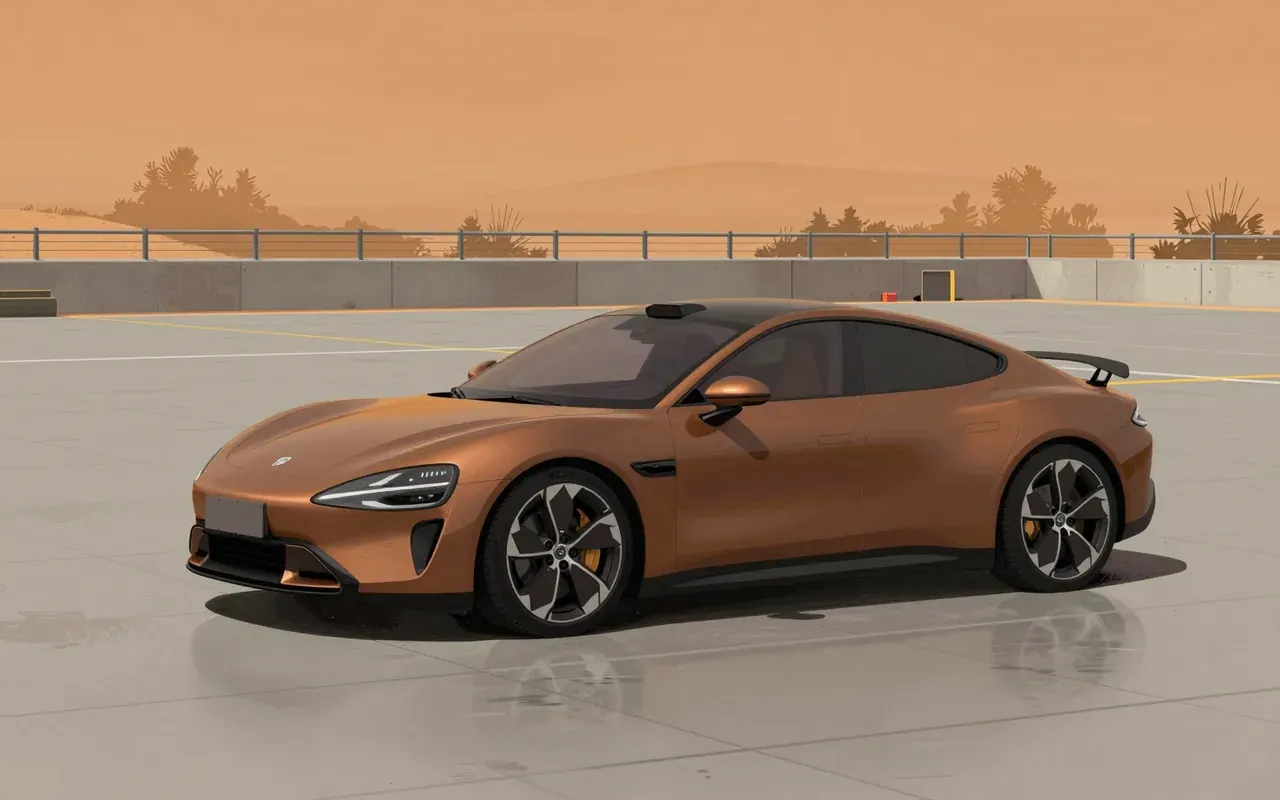
Lucid AirDerek Jenkins · 2021The Lucid Air is a battery electric four-door luxury sedan, Lucid Motors' first production car, announced in December 2016 and launched in 2021. It highlights its record-setting EPA range (up to 520 miles for the Dream Edition), aerodynamic efficiency (Cd=0.21 pre-production, Cd=0.20 production), performance capabilities (e.g., 0–60 mph in 2.5 seconds, 235 mph top speed), and technical features including its 924-volt architecture, bidirectional charging, and DreamDrive ADAS with 32 sensors. The Air Pure, Touring, Grand Touring, and Dream Edition trims are detailed, along with battery capacities (88–112 kWh), power outputs (430–1,111 hp), and production milestones including commencement in late 2021 and deliveries beginning October 30, 2021. Design leadership is attributed to Derek Jenkins, and the vehicle is positioned against the Tesla Model S and German luxury models.
9:14
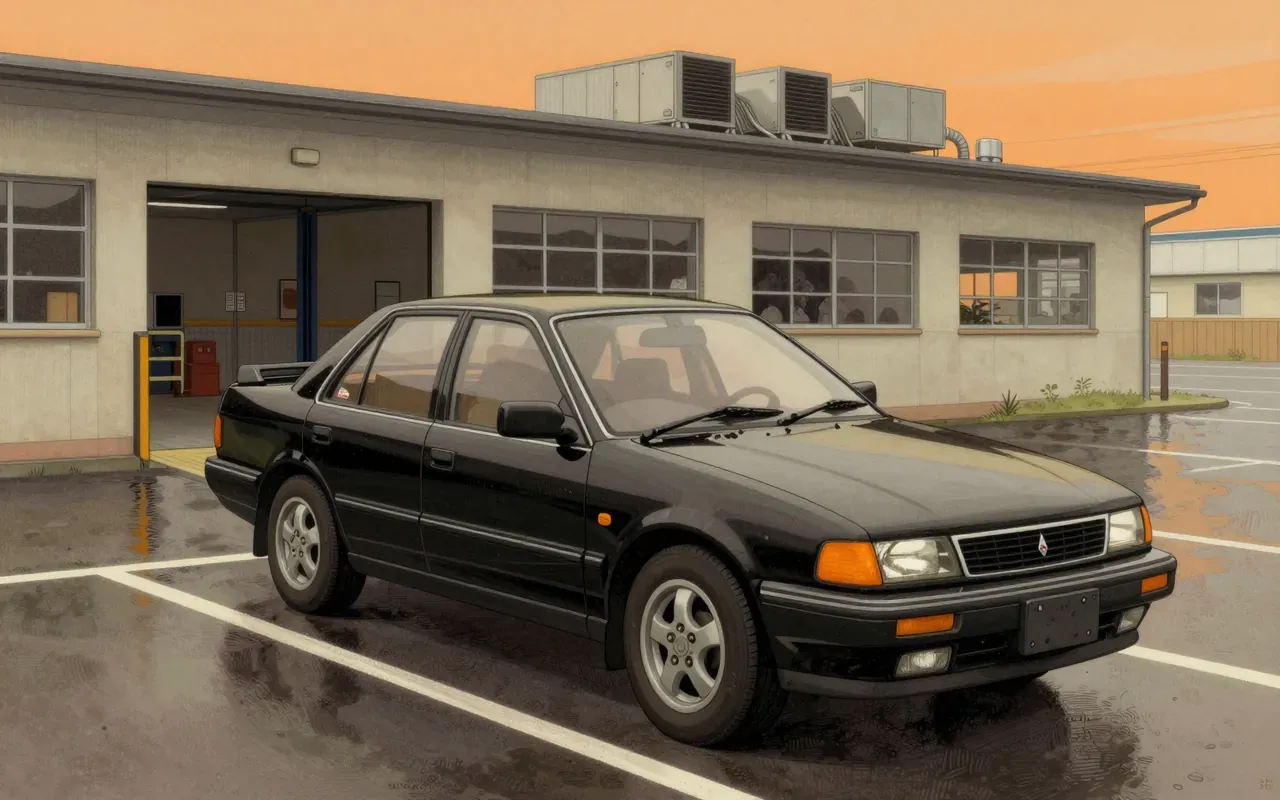
Mitsubishi Galant VR-4Mitsubishi · 1987The Galant VR-4 is Mitsubishi’s first high-performance all-wheel-drive sedan, developed for Group A rallying and launched in 1987. It introduced the Dynamic Four AWC system — a full-time four-wheel drive setup with viscous coupling, plus four-wheel steering and four-wheel ABS. It was sold globally to meet homologation requirements, including 2,000 units in the US in 1991 and 1,000 in 1992. Later generations added liftback (Eterna ZR-4) and station wagon (Legnum) variants. The eighth generation was initially JDM-only but gained overseas cult status via grey imports. In 2000, Ralliart officially imported 200 units to the UK. Production ended in 2002 due to revised Japanese emissions standards.
7:56
Mitsubishi Lancer EvolutionMitsubishi · 1999The Mitsubishi Lancer Evolution is a rally-bred sports sedan built on the Lancer platform. Ten generations were produced from 1992 to 2016. All used a two-litre intercooled turbo inline-four engine and all-wheel drive. It launched in Japan only, then reached the UK and Europe around 1997 via Ralliart dealers—starting with the Evolution IV.
10:45
Proton SagaMitsubishi · 1985The Proton Saga is a foundational Malaysian car—not a technical benchmark, but a political and industrial one.
Up next in Automotive

Peugeot 404

Pininfarina · 1960 · 9:12

Pininfarina dressed a French workhorse — and proved elegance need not cost durability.

9:12