What the car is and where it came from
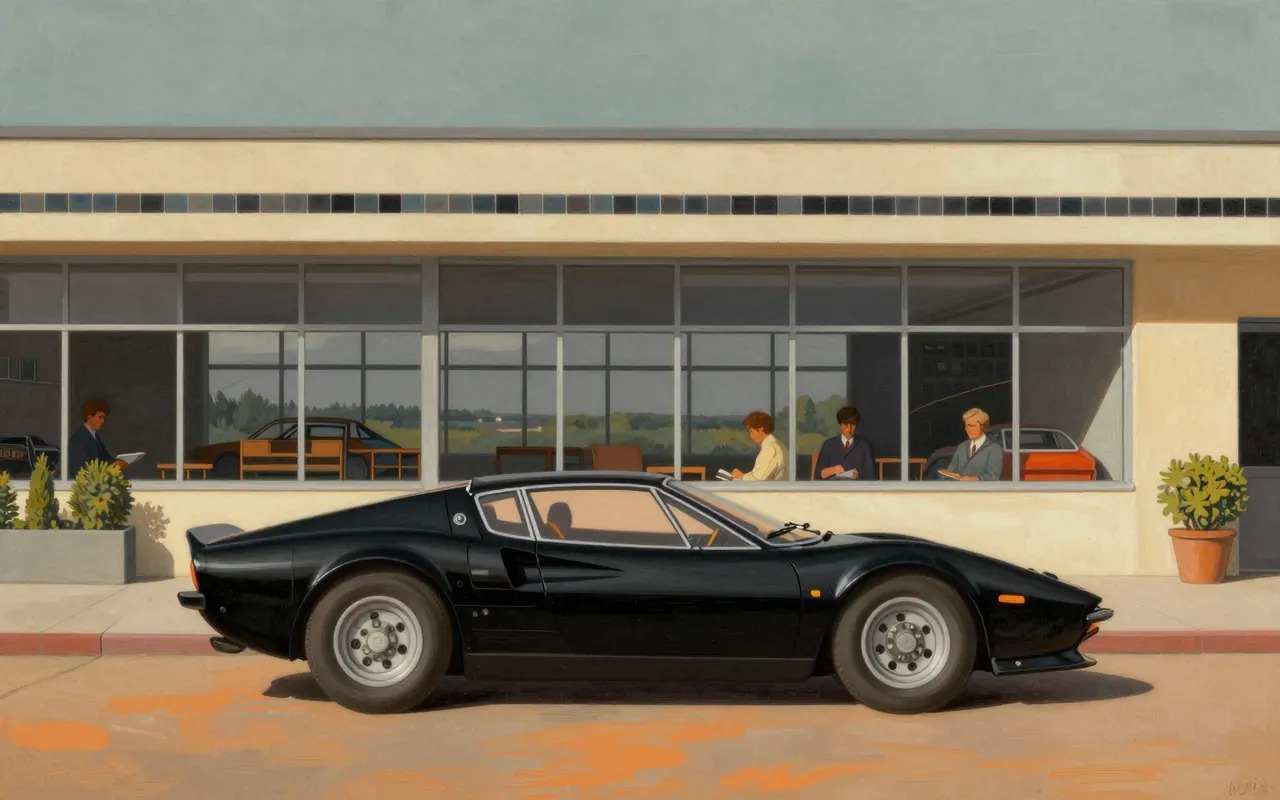
A one-off concept car built by Pininfarina on a stripped Ferrari 512 S chassis (#27), converted to 612 Can Am spec then de-powered. Designed by Paolo Martin. Unveiled black at Geneva 1970.
How it works, in terms someone would actually use
The Modulo is a non-functional concept car. It has no working engine or transmission. Entry is via a sliding glass canopy. Its wheels are partly covered. The V12 is visible through 24 holes in the engine cover — but it is static, not installed.
What it gets right
It solves for visual impact at standstill. Its low wedge profile, canopy entry and exposed engine layout create a singular, coherent statement about speed as form.
What it does not
It does not drive. It has no interior controls, no suspension tuning, no driver feedback. It does not accelerate, brake or corner. It exists only as a static object.
What it changed
It made wedge proportions mainstream in 1970s automotive design. Its silhouette appeared in production cars from Lamborghini to Lancia within five years.
Who it is for, and who it is not
Design historians, industrial designers, students of automotive form. Not for collectors seeking drivable Ferraris, nor for engineers assessing performance.
Is it worth your time
Yes — if you care about how design ideas travel. It is not drivable, but its shape changed how cars looked for a decade.