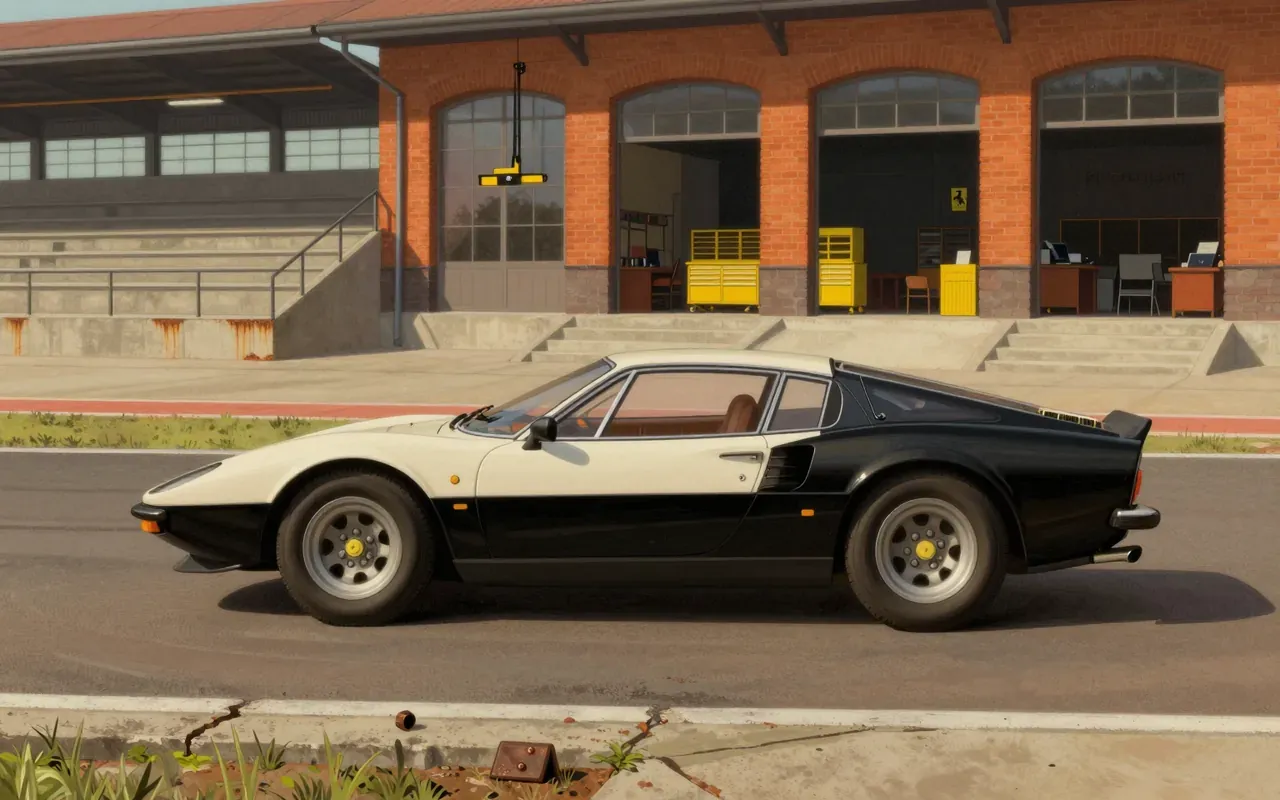
The 1976 Boxer enlarged its engine and revised lubrication within an established mid-engined layout.
The Ferrari 512 BB replaced the 365 GT4 BB in 1976. It belongs to the Berlinetta Boxer family, but this carburetted model should be distinguished from the later fuel-injected 512 BBi.
0:12
How it works, in terms someone would actually use
Its mid-mounted twelve-cylinder engine drove the rear wheels. Displacement increased to 4,943 cc, and dry-sump lubrication replaced the earlier model’s wet-sump arrangement.
0:21
What it gets right
The changes provide a concrete example of development within an existing architecture: Ferrari enlarged the engine and revised its lubrication rather than introducing the mid-engined layout for the first time.
0:33
What it does not
Neither the engine position nor its cylinder arrangement proves claims about steering feel, cabin heat or comfort. Those require driving evidence, which this brief does not supply.
0:44
What it changed
The fuel-injected 512 BBi succeeded it in 1981. Treating both as a single model conceals the change in fuel delivery and muddles their production dates.
0:54
Who it is for, and who it is not
It is a useful study subject for readers comparing successive versions of a sports car. Distinguish model-specific changes from features inherited from the wider family.
1:04
Is it worth your time
Worth studying beside the 365 GT4 BB and 512 BBi. Compare their engine specifications and fuel systems before attributing the whole Boxer series’ innovations to the 512 BB.
Worth your time?
Selectively. Start with the brief, then drive the parts we point at.
What works
What does not
Drive it if
Readers comparing Berlinetta Boxer variants
Skip it if
Readers seeking a road test
The written brief1 min read
What the car is and where it came from
The Ferrari 512 BB replaced the 365 GT4 BB in 1976. It belongs to the Berlinetta Boxer family, but this carburetted model should be distinguished from the later fuel-injected 512 BBi.
How it works, in terms someone would actually use
Its mid-mounted twelve-cylinder engine drove the rear wheels. Displacement increased to 4,943 cc, and dry-sump lubrication replaced the earlier model’s wet-sump arrangement.
What it gets right
The changes provide a concrete example of development within an existing architecture: Ferrari enlarged the engine and revised its lubrication rather than introducing the mid-engined layout for the first time.
What it does not
Neither the engine position nor its cylinder arrangement proves claims about steering feel, cabin heat or comfort. Those require driving evidence, which this brief does not supply.
What it changed
The fuel-injected 512 BBi succeeded it in 1981. Treating both as a single model conceals the change in fuel delivery and muddles their production dates.
Who it is for, and who it is not
It is a useful study subject for readers comparing successive versions of a sports car. Distinguish model-specific changes from features inherited from the wider family.
Is it worth your time
Worth studying beside the 365 GT4 BB and 512 BBi. Compare their engine specifications and fuel systems before attributing the whole Boxer series’ innovations to the 512 BB.

Up next in Automotive
Ferrari 365 GTB/4 Daytona
Leonardo Fioravanti · 1968 · 1:20
A front-mounted V12 and rear transaxle define Ferrari’s 1968 grand tourer.