Leonardo Fioravanti · 1975
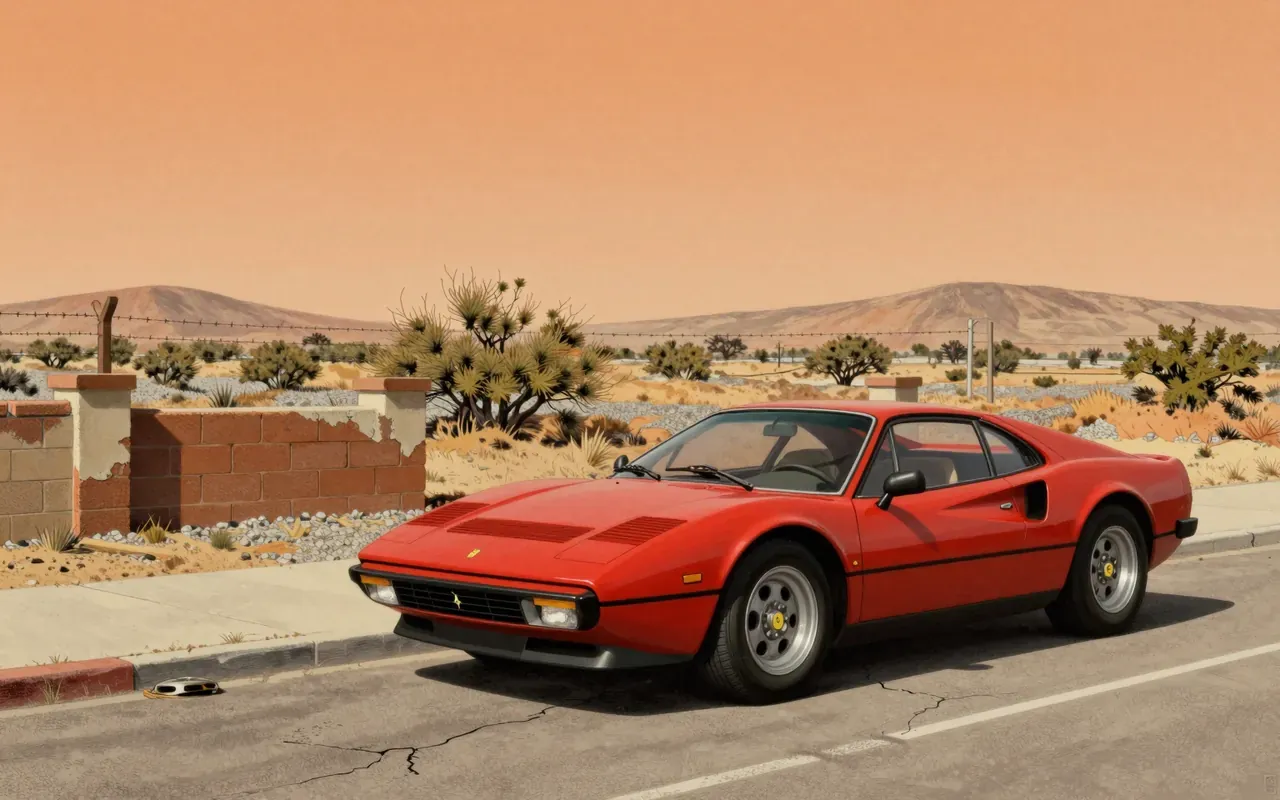
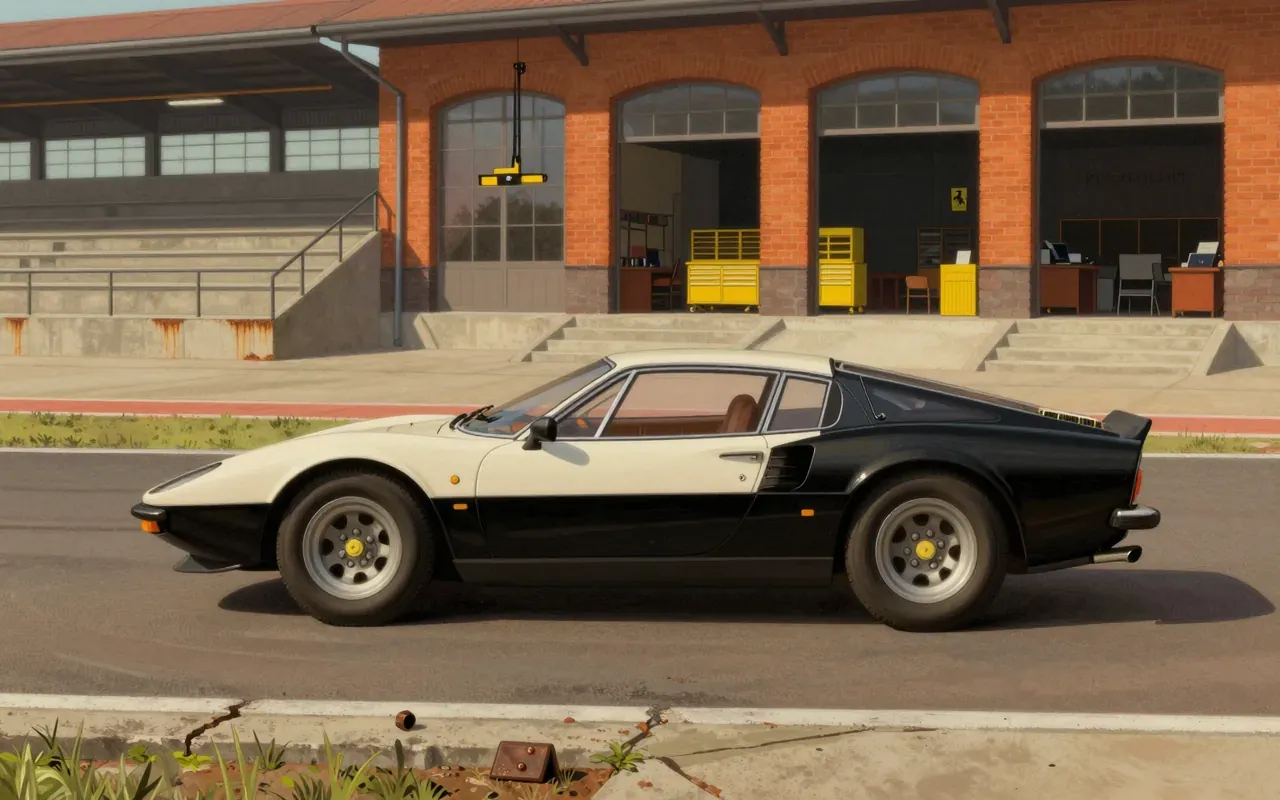
The Ferrari 308 GTB/GTS is a V8 mid-engined two-seater sports car designed by Leonardo Fioravanti at Pininfarina and produced by Ferrari from 1975 to 1985. It features a tube-frame chassis with a separate body, a transversely mounted flat-plane crankshaft 90-degree V8 engine with dual overhead camshafts per bank, a 5-speed dog-leg manual gearbox, limited-slip differential, all-independent double-wishbone suspension with anti-roll bars, four-wheel vented disc brakes, and unassisted rack-and-pinion steering. Early GTB models used GRP bodies (1975–1977), later switching to steel; all GTS models were steel-bodied. The model evolved through carburetted, fuel-injected (GTBi/GTSi), and quattrovalvole (four-valve) variants, with distinct power outputs and technical updates. Rally versions were developed by Michelotto for Group 4 and Group B competition, including the purpose-built GT/M. The car gained iconic status via its role in Magnum, P.I., and was named number five on Sports Car International’s Top Sports Cars of the 1970s list in 2004.