automotivebriefs
11:39in productionCh. 1 · Show-car origins/ 11:39 · ceiling 15 min
Concepts & prototypes

Ford Shelby GR-1

A Shelby that never raced, never sold, and never needed to—because its job was to make heritage feel like hardware.

The Ford Shelby GR-1 is a Ford-built concept car. It appeared first as clay at Pebble Beach 2004. It ran as a prototype at Detroit 2005. Its shape recalls the Shelby Daytona. Its chassis comes from the 2004 Shelby Cobra Concept. Its V10 engine shares components with the Ford GT. It makes 605 hp and 501 lb⋅ft. Superformance later built a V8 version in 2019 because no production V10 was available.

Chapters & takeaways6
  1. 0:48
    Show-car origins

    A Ford-built concept, shown first in clay at Pebble Beach 2004, then as a working car at Detroit 2005.

  2. 2:08
    Dual heritage, single shell

    It borrows the Daytona’s silhouette and the Cobra Concept’s chassis—two distinct Shelby lineages fused in one body.

  3. 3:28
    V10 power, GT provenance

    A 6.4L all-aluminum V10, rated at 605 hp and 501 lb⋅ft, sharing parts with the Ford GT.

  4. 4:36
    Same team, next iteration

    Led by Manfred Rumpel and Ford’s Advanced Product Creation group—the same team behind the 2004 Cobra Concept.

  5. 6:02
    Architecture graft

    Chassis and running gear from the Cobra Concept; engine architecture from the Ford GT.

  6. 7:20
    Ford’s Shelby, not Shelby’s Ford

    Built by Ford—not Shelby Automobiles—as a manufacturer-led concept, not a boutique commission.

Worth your time?

Yes. Drive the whole thing.

3.5/ 5
What works
  • heritage translation into modern proportion
  • V10 integration as functional proof point
  • clarity of Shelby-as-form-language
What does not
  • production intent
  • mechanical continuity with 1960s Shelby
  • driving relevance beyond show stands
Drive it if
  • design historians
  • Ford product strategy watchers
  • Shelby lineage analysts
Skip it if
  • buyers
  • restorers
  • racing enthusiasts
The written brief1 min read

What the car is and where it came from

The Ford Shelby GR-1 is a concept car developed and manufactured by Ford. It debuted as a clay model at the 2004 Pebble Beach Concours d’Elegance and as a functional prototype at the 2005 North American International Auto Show.

How it works, in terms someone would actually use

It is a front-engined, rear-wheel-drive concept with a 6.4L all-aluminum V10 engine derived partly from the Ford GT. It delivers 605 hp and 501 lb⋅ft of torque. Its chassis and running gear are based on the Ford Shelby Cobra Concept.

What it gets right

It resolves Shelby’s dual identity: race-bred aggression and road-going presence. The Daytona-inspired fastback profile works at scale. The GR-1’s proportions commit to long-hood, short-deck balance without optical tricks. Its functional prototype status confirms drivetrain integration was resolved, not just mocked up.

What it does not

It does not offer a production path. It does not use the Shelby Daytona’s chassis or aerodynamics. It does not retain the V10 in later licensed builds—Superformance substituted a supercharged V8 in 2019 due to lack of suitable production V10s.

What it changed

It reasserted Shelby as a design lineage—not just a badge—by linking Daytona’s silhouette to modern Ford performance architecture. It did not change production car development, but it sharpened Ford’s public framing of heritage as geometry and powertrain graft.

Who it is for, and who it is not

It is for people who track how legacy names get translated into contemporary form language. It is not for collectors seeking original examples, buyers seeking turn-key performance cars, or historians relying on mechanical continuity with the 1960s Daytona.

Is it worth your time

Yes—if you care about how Ford interpreted Shelby’s legacy through mid-2000s American concept-car ambition. No—if you need drivable reality, production intent, or engineering continuity beyond its show-car life.

Same garage · Concepts & prototypes4 of 24
11:02
Alfa Romeo CaraboMarcello Gandini · 1950The Alfa Romeo Carabo is a 1968 concept car designed by Marcello Gandini at Bertone. It debuted at the 1968 Paris Motor Show. It used the chassis of an Alfa Romeo 33 Stradale with a mid-mounted 2.0 L V8 engine and 6-speed Colotti manual transmission. It featured scissor doors — the first known use — and iridescent green-orange colouring inspired by Carabidae beetles. Built in ten weeks using fiberglass, it was never intended for production but was fully functional. It helped establish the wedge shape trend in 1970s supercars and concept cars. Gandini’s design philosophy prioritised vehicle architecture and mechanics over styling.
8:49
Buick Y-JobHarley Earl · 1950The Buick Y-Job is the first concept car — a 1938 Buick convertible built to test design ideas, not sell units. Designed by Harley Earl, it used a Buick Super chassis and featured power-operated hidden headlamps, electric windows, and styling cues that defined Buick for decades. It became Earl’s daily driver after public debut. It changed how mass manufacturers develop cars: by treating design as a public-facing experiment.
10:45
Cadillac SixteenBrian Smith · 2005The Cadillac Sixteen is a 2003 concept car. It has a proprietary 13.6 L V16 engine. It uses a four-speed automatic transmission driving the rear wheels. It references the 1930s Cadillac V-16. It weighs about 5,005 lb. It influenced later models including the Celestiq.
9:24
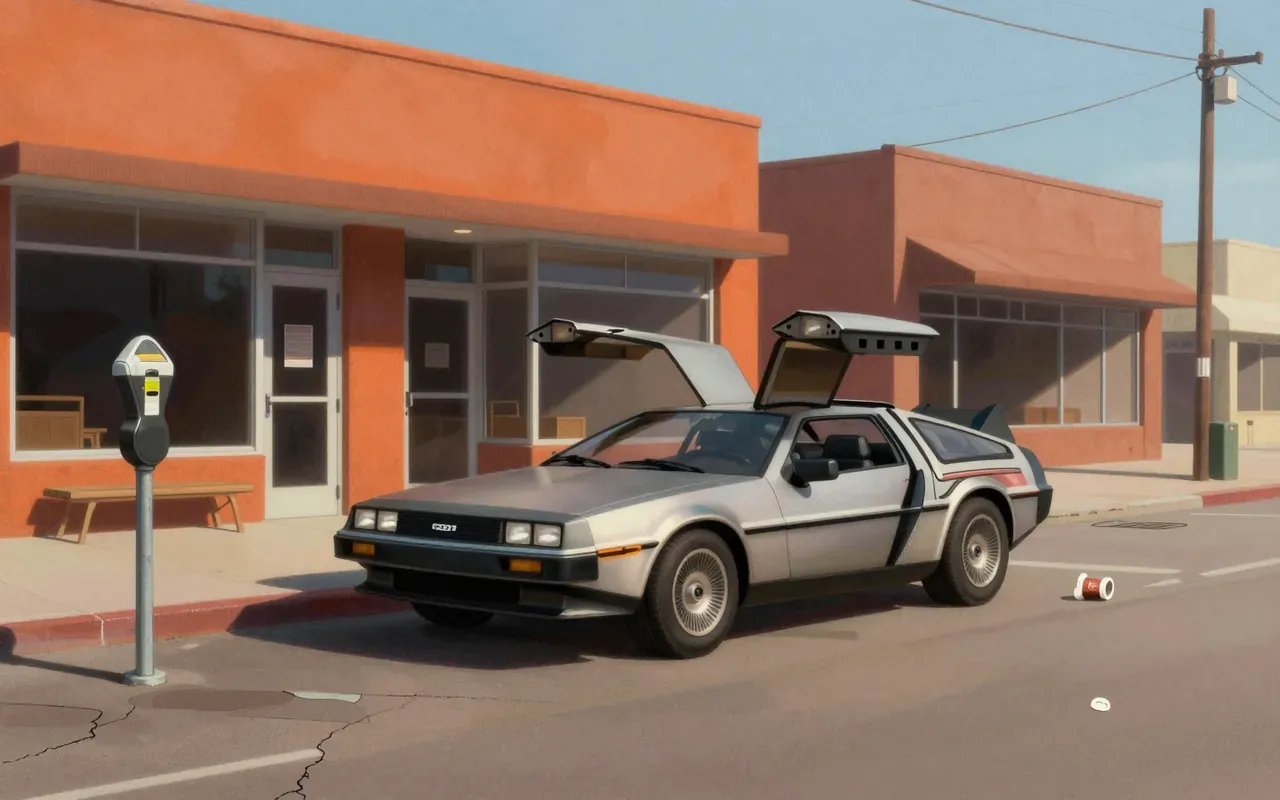
DMC DeLoreanGiorgetto Giugiaro · 1981The DMC DeLorean is a rear-engine, two-seat sports car designed by Giorgetto Giugiaro and produced by the DeLorean Motor Company from 1981 to 1983. It features gull-wing doors, unpainted brushed stainless-steel body panels, and a 2.85 L PRV V6 engine shared with Peugeot, Renault, and Volvo. Approximately 9,000 units were built before the company’s bankruptcy. Though criticized for modest performance and build quality, it gained iconic status through the Back to the Future films.
Up next in Automotive

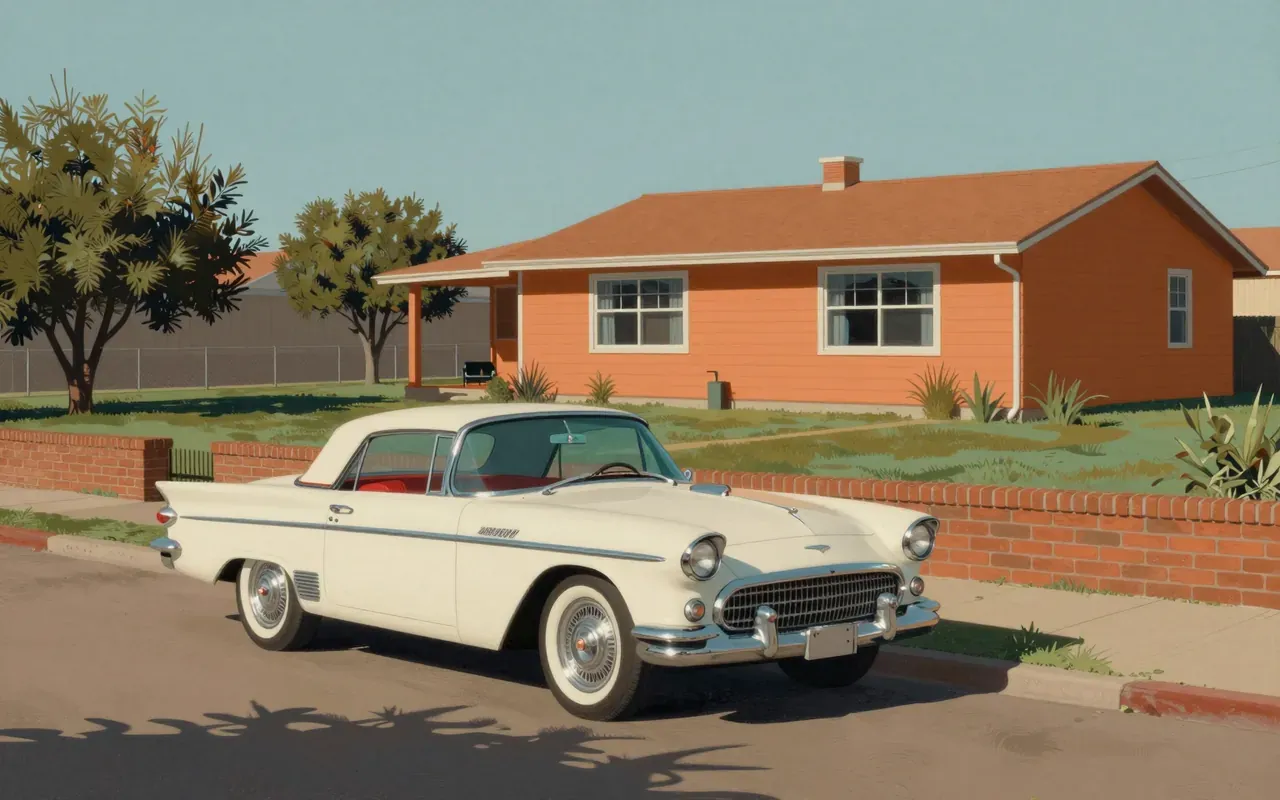
Ford Thunderbird (first generation)

George Walker team · 1955 · 8:46

It wasn’t a sports car — it was the first American car designed to make the driver feel like the main event.

8:46