automotivebriefs
9:45in productionCh. 1 · Why it existed/ 9:45 · ceiling 15 min
Road

Ford Model A (1927–1932)

The Model A wasn’t an upgrade—it was Ford’s surrender to the driver.

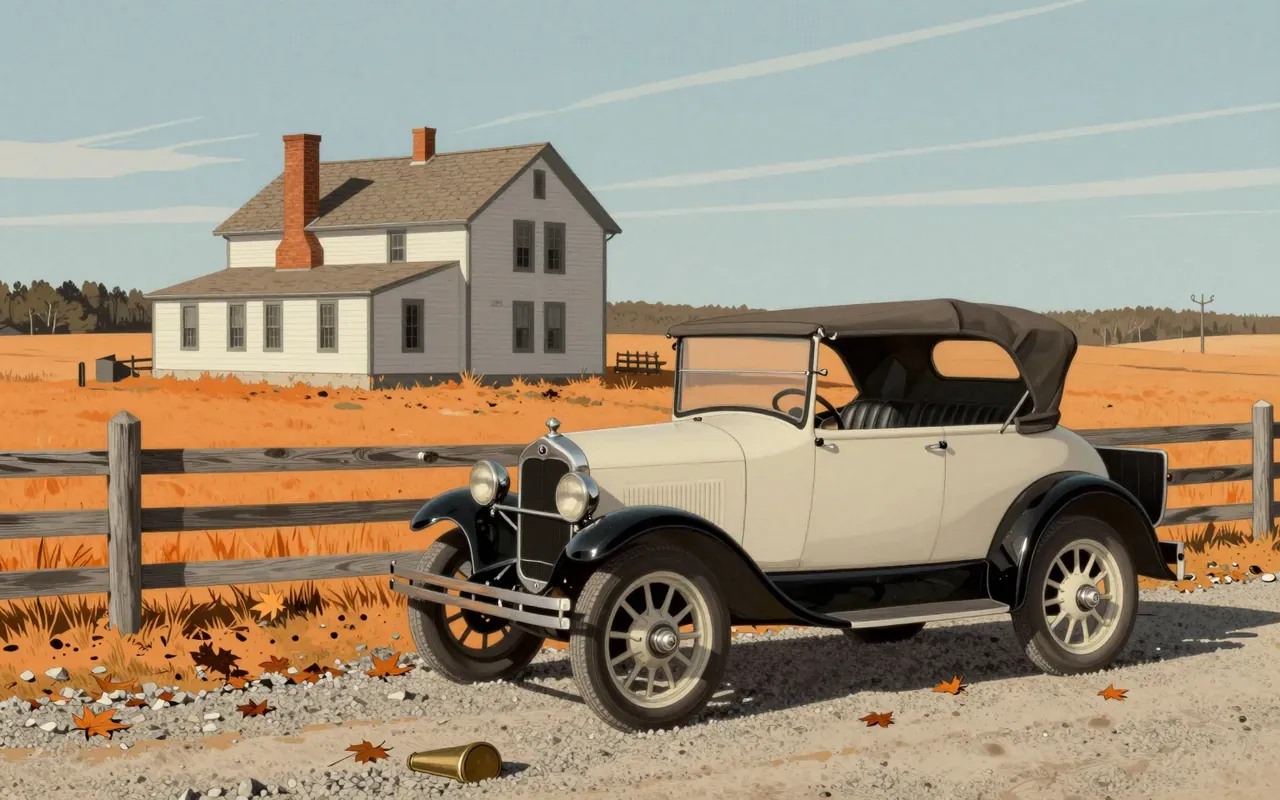
The Ford Model A (1927–1932) was Ford’s deliberate departure from the Model T. Edsel Ford led its body design with József Galamb. It introduced four-wheel mechanical brakes, a sliding-gear transmission, laminated windshields, and a water-cooled L-head inline-four. It sold 4,858,644 units between October 1927 and March 1932. It marked the end of the Model T’s dominance and the beginning of Ford’s driver-oriented era.

Chapters & takeaways6
  1. 0:50
    Why it existed

    The Model A replaced the Model T because the market demanded more than utility.

  2. 2:04
    What Edsel forced in

    Edsel Ford insisted on four-wheel brakes and a sliding-gear transmission—against Henry’s resistance.

  3. 3:18
    How it drove

    Its water-cooled L-head inline-four and mechanical brakes defined the new baseline for mass-market control.

  4. 4:35
    How fast it moved

    It sold nearly five million units in four years—proof that buyers would pay for progress.

  5. 5:46
    When it lived

    Production began October 20, 1927; launched December 2 as a 1928 model; ended March 1932.

  6. 6:55
    What it closed

    It was the first Ford built to replace another Ford—and the last Ford built before the Great Depression reshaped everything.

Worth your time?

Yes. Drive the whole thing.

4/ 5
What works
  • four-wheel mechanical brakes
  • sliding-gear transmission
  • laminated windshield
  • wider range of body styles
What does not
  • hydraulic brakes
  • synchromesh
  • independent suspension
  • unitary body
Drive it if
  • drivers needing more control and choice than the Model T offered
Skip it if
  • those expecting modern braking, gearshift ease, or structural refinement
The written brief1 min read

What the car is and where it came from

The Ford Model A (1927–1932) is Ford’s direct successor to the Model T. Edsel Ford led its body development with József Galamb. Production began on October 20, 1927. It was designated a 1928 model. It was developed in response to shifting market conditions.

How it works, in terms someone would actually use

Front-engine, rear-wheel drive. Water-cooled L-head inline-four engine. Sliding-gear transmission. Four-wheel mechanical brakes. Laminated windshield glass.

What it gets right

It delivers more responsive steering, better stopping power, and a wider range of body styles than the Model T. It establishes laminated glass as standard. It puts the driver at the centre of the control layout.

What it does not

It does not have hydraulic brakes. It does not have synchromesh. It does not have independent suspension. It does not have a unitary body.

What it changed

It ended the Model T era. It proved that mass production could deliver stylistic variety, improved safety, and driver-focused controls without sacrificing volume.

Who it is for, and who it is not

It is for drivers who needed more control, comfort, and choice than the Model T offered. It is not for those expecting modern braking, gearshift ease, or structural refinement.

Is it worth your time

Yes. It is the first Ford designed for driver control and modern road use—not just utility. Its scale, speed of adoption, and engineering concessions mark a decisive pivot in mass motoring.
Same garage · Road4 of 15
Up next in Automotive

Ford Model T

Childe Harold Wills · 1908 · 9:20

The Model T wasn’t designed to thrill—it was designed to outlive every other car on the road.

9:20