automotivebriefs
9:20in productionCh. 1 · Wills’ Handprint/ 9:20 · ceiling 15 min
Road

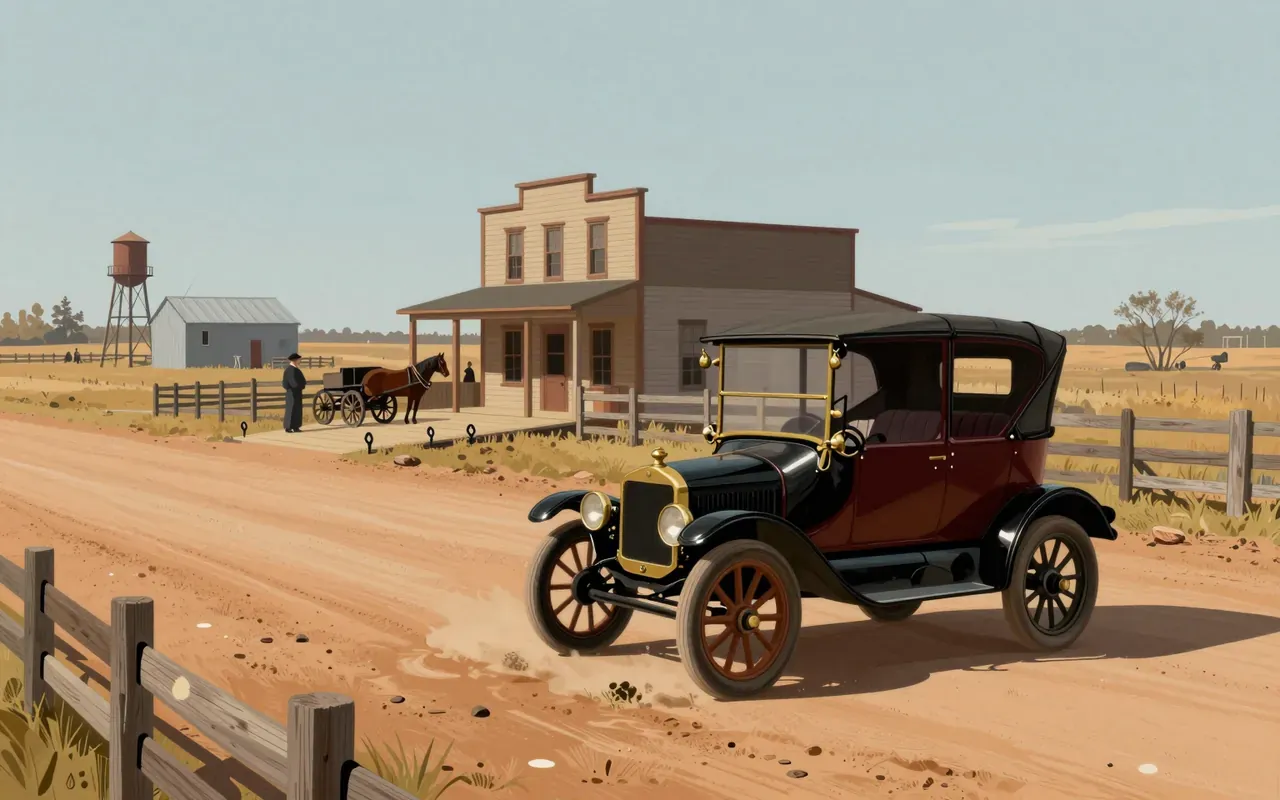
Ford Model T

The Model T wasn’t designed to thrill—it was designed to outlive every other car on the road.

The Ford Model T is the foundational mass-market automobile—engineered for repairability, built for scale, and priced for the middle class. Its innovations were procedural (assembly line) and mechanical (planetary transmission, detachable cylinder head), not aesthetic or performance-led.

Chapters & takeaways4
  1. 1:02
    Wills’ Handprint

    Childe Harold Wills was the chief contributor to the Model T’s design—and specifically engineered its planetary transmission and detachable cylinder head.

  2. 2:29
    Price as Engineering

    Its affordability came from assembly-line fabrication—not marketing or scale alone—and dropped its price by 63% in 14 years.

  3. 4:06
    Symbol Over Spec

    It became a symbol of modernisation because it delivered mobility at scale—not because it was fast or elegant.

  4. 5:38
    The Long Run

    Produced for nearly 19 years, it held the global sales record with over 15 million units until the Beetle overtook it in 1972.

Worth your time?

Yes. Drive the whole thing.

4.5/ 5
What works
  • affordability
  • serviceability
  • rugged simplicity
What does not
  • driver engagement
  • refinement
  • precision handling
Drive it if
  • middle-class Americans needing reliable, low-cost personal transport
Skip it if
  • drivers seeking performance, comfort, or technical sophistication
The written brief1 min read

What the car is and where it came from

The Ford Model T is a mass-produced automobile built by Ford Motor Company from 1 October 1908 to 26 May 1927. Childe Harold Wills was the chief contributor to its design, alongside Joseph A. Galamb and Eugene Farkas.

How it works, in terms someone would actually use

It uses a front-mounted 2.9 L inline-four engine driving the rear wheels. Its planetary transmission—designed by Wills—gives three forward speeds without a clutch pedal. The detachable cylinder head simplifies maintenance and repair.

What it gets right

It gets right affordability, serviceability, and rugged simplicity. The detachable cylinder head and planetary transmission prioritise durability and ease of repair over complexity.

What it does not

It does not offer driver engagement, refinement, or adaptability beyond basic rural and urban roads. It was not engineered for comfort, speed, or precision handling.

What it changed

It changed manufacturing, mobility, and class access to transport. Mass production dropped its price from $780 in 1910 to $290 in 1924. Over 15 million were sold before the Beetle surpassed it in 1972.

Who it is for, and who it is not

It is for middle-class Americans needing reliable, low-cost personal transport. It is not for drivers seeking performance, comfort, or technical sophistication.

Is it worth your time

Yes. It redefined what an automobile could be—not as luxury, but as infrastructure. Its engineering choices shaped mass production itself.
Same garage · Road4 of 15
Up next in Automotive

Honda S800

Honda · 1966 · 10:36

A 791 cc chain-driven sports car that revs to 10,000 rpm isn’t an anomaly — it’s Honda’s manifesto.

10:36