What the car is and where it came from
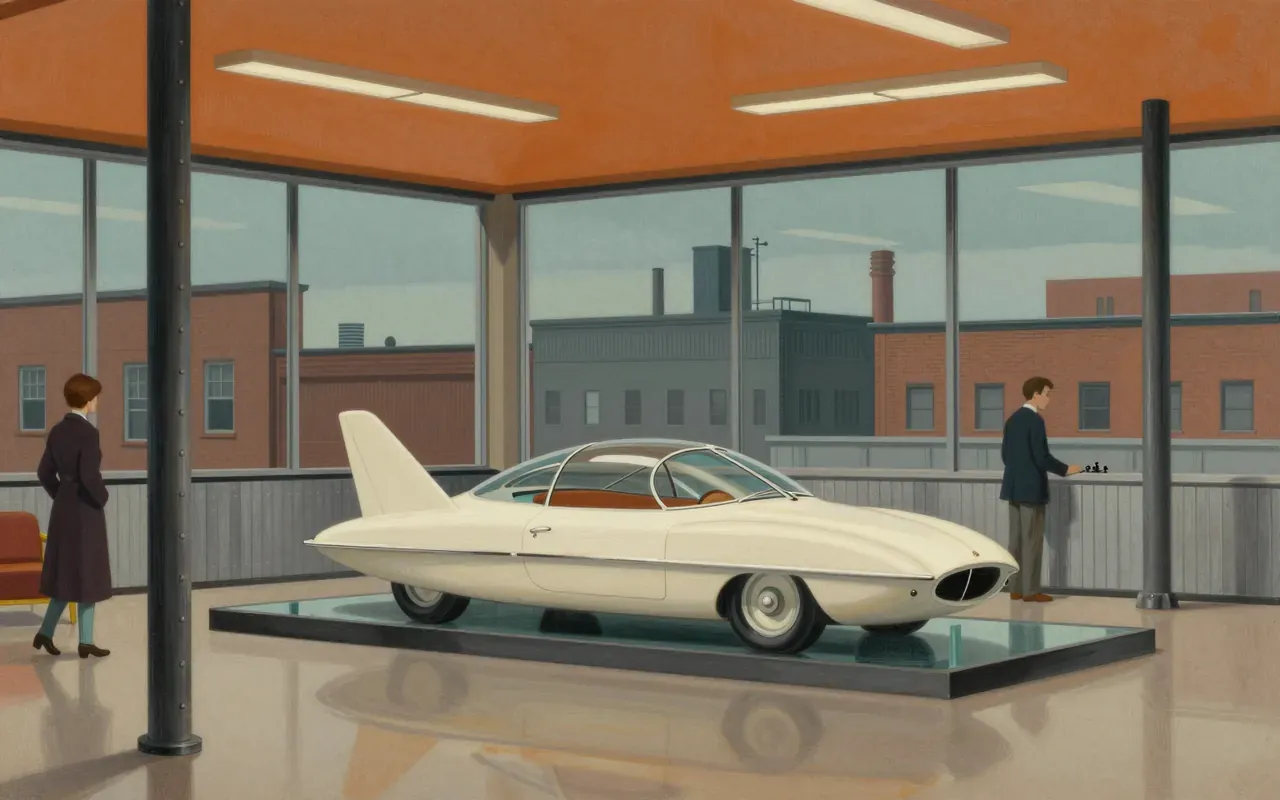
The Firebird I is a 1953 non-production prototype — designated XP-21 — designed by Harley Earl for GM’s Motorama show. It is the first US-tested gas turbine car, built as a single-seat, aircraft-inspired statement.
How it works, in terms someone would actually use
It runs on a gas turbine engine — not a piston engine — with exhaust hot enough to melt aluminium. The driver sits alone under a bubble canopy, feet forward in a jet-style cockpit, steering a machine built for spectacle, not roads.
What it gets right
It gets the jet-age gesture right: the bullet fuselage, vertical fin, and canopy make the turbine’s purpose legible at 50 paces. It communicates propulsion-as-identity without a single word.
What it does not
It does not drive like a car meant for use. It has no practical interior layout, no road-legal visibility, no passenger accommodation, and no production intent. It sacrifices usability for silhouette.
What it changed
It redefined the concept car as a theatrical platform: no longer a styling exercise, but a stage for aerospace metaphors, turbine hype, and corporate futurism. It made ‘Motorama’ synonymous with automotive theatre.
Who it is for, and who it is not
It is for engineers testing turbine viability, designers exploring aerospace abstraction, and executives pitching innovation to shareholders. It is not for drivers, passengers, regulators, or anyone needing luggage space.
Is it worth your time
Yes — if you want to understand how Detroit sold the future as a product, not a promise. No — if you’re looking for engineering that translated to real cars or driving experience that survives on paper.