Saved
Concepts & prototypes

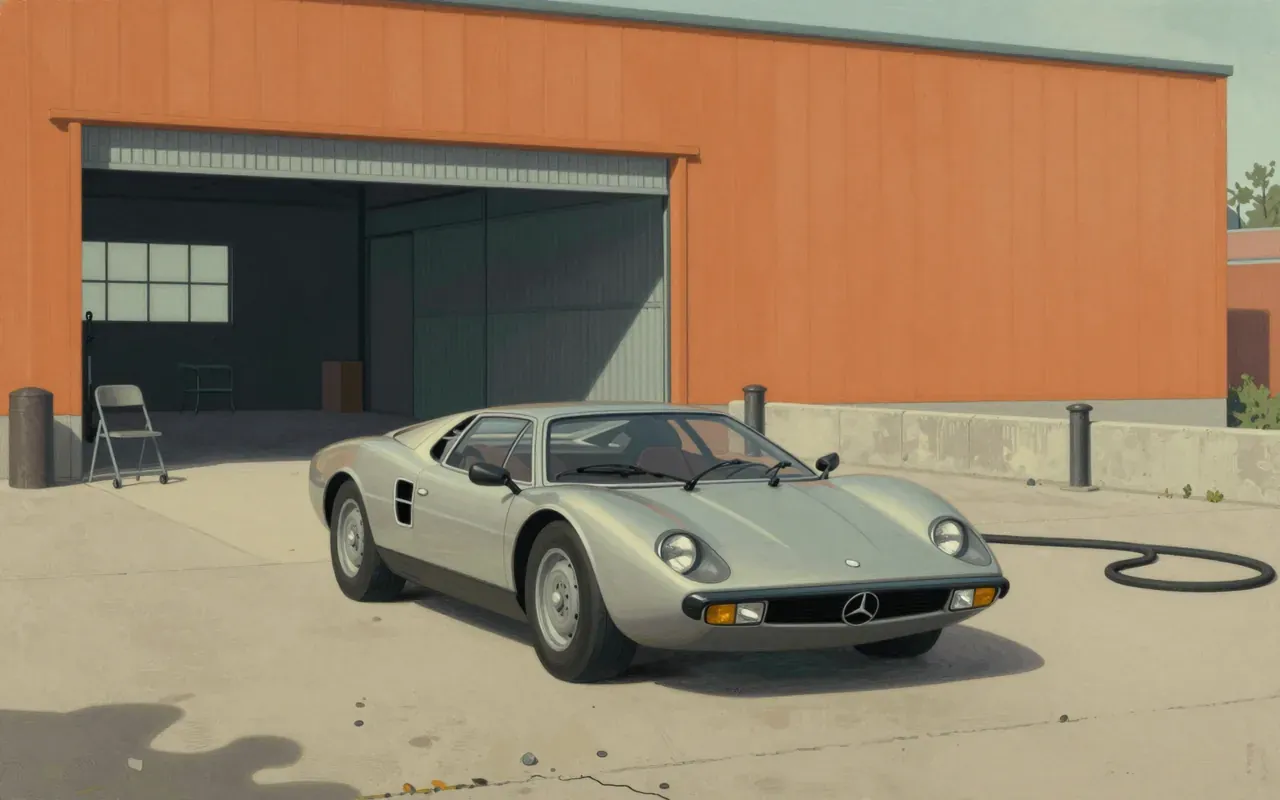
Mercedes-Benz C111

A fibreglass testbed—not a car—that proved Wankel engines could hit 300 km/h before Mercedes killed the project.

Worth your time?4/5Yes.Drive the whole thing.What works, what does not, who it is for ↓
8:20in productionCh. 1 · Not for sale. Built for testing./ 8:20 · ceiling 15 min
4 chapters · 8:20Ceiling 15:00

The brief is written and checked. The video joins this page when it is cut.4 chapters · 1 min read · 8:20 planned

Read the brief

The C111 is a concept car built by Daimler-Benz in 1969. Bruno Sacco designed it. It was never intended for sale. Sixteen were built across four generations between 1969 and 1979.

Chapters & takeaways4
  1. 0:47
    Not for sale. Built for testing.

    The C111 was a non-production concept car built by Daimler-Benz in 1969 to explore radical engineering paths.

  2. 2:06
    Wankel at the core

    It used a mid-mounted three-rotor Wankel engine in 1969, upgraded to a four-rotor unit making 349 hp by 1970.

  3. 3:15
    Form follows function—strictly

    Its gull-wing doors, fibreglass shell, and multi-link rear suspension were all chosen to serve its role as a high-speed test mule.

  4. 4:46
    Speed as data

    It reached 300 km/h on the Nardò Ring—a record-setting result made possible by its drag-reducing shape and engine output.

1 more chapterFewer chapters
Worth your time?

Yes. Drive the whole thing.

4/ 5
What works
  • integration of experimental hardware into a coherent test platform
  • validation of Wankel, diesel, and turbocharged V8 powertrains
  • use of gull-wing doors, fibreglass shell, and multi-link rear suspension to serve high-speed testing
What does not
  • deliver everyday usability
  • offer production intent
  • provide cabin ergonomics for long journeys
  • include luggage space
Drive it if
  • engineers
  • historians
  • designers
Skip it if
  • buyers
  • collectors seeking drivable classics
  • enthusiasts expecting performance continuity with later Mercs
Who should drive it, and who should skipHide who it is for
The written brief1 min read

What the car is and where it came from

The C111 is a concept car built by Daimler-Benz in 1969. Bruno Sacco designed it. It was never intended for sale. Sixteen were built across four generations between 1969 and 1979.

How it works, in terms someone would actually use

It places the driver behind a mid-mounted Wankel engine, with gull-wing doors for entry and a multi-link rear suspension for stability at speed.

What it gets right

It gets right the integration of experimental hardware—fibreglass body, gull-wing access, multi-link rear suspension—into a coherent, functional test platform.

What it does not

It does not deliver everyday usability. It is not a road car. It has no production intent, no cabin ergonomics for long journeys, no luggage space, no crash safety certification.

What it changed

It proved Wankel and diesel engines could be packaged in a low-drag, mid-engined layout for high-speed testing.

Who it is for, and who it is not

It is for engineers, historians, and designers interested in how Mercedes validated Wankel, diesel, and turbocharged V8 powertrains. It is not for buyers, collectors seeking drivable classics, or enthusiasts expecting performance continuity with later Mercs.

Is it worth your time

Yes—if you care about how Mercedes tested radical powertrains and aerodynamics without committing to production.
Same garage · Concepts & prototypes4 of 26
Up next in Automotive

Mercedes-Benz CLK GTR

Gerhard Leiska · 1997 · 9:39

A race car that faked being a road car — and won because of it.

9:39