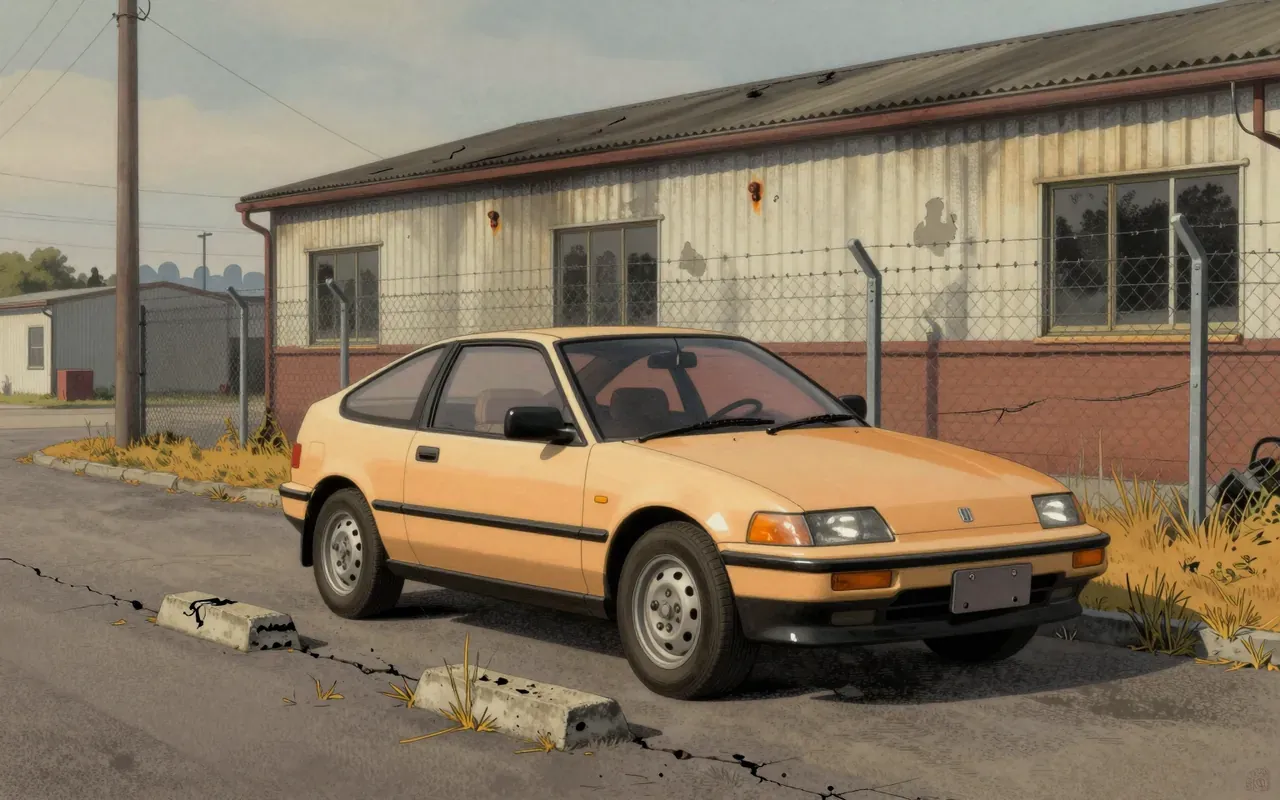
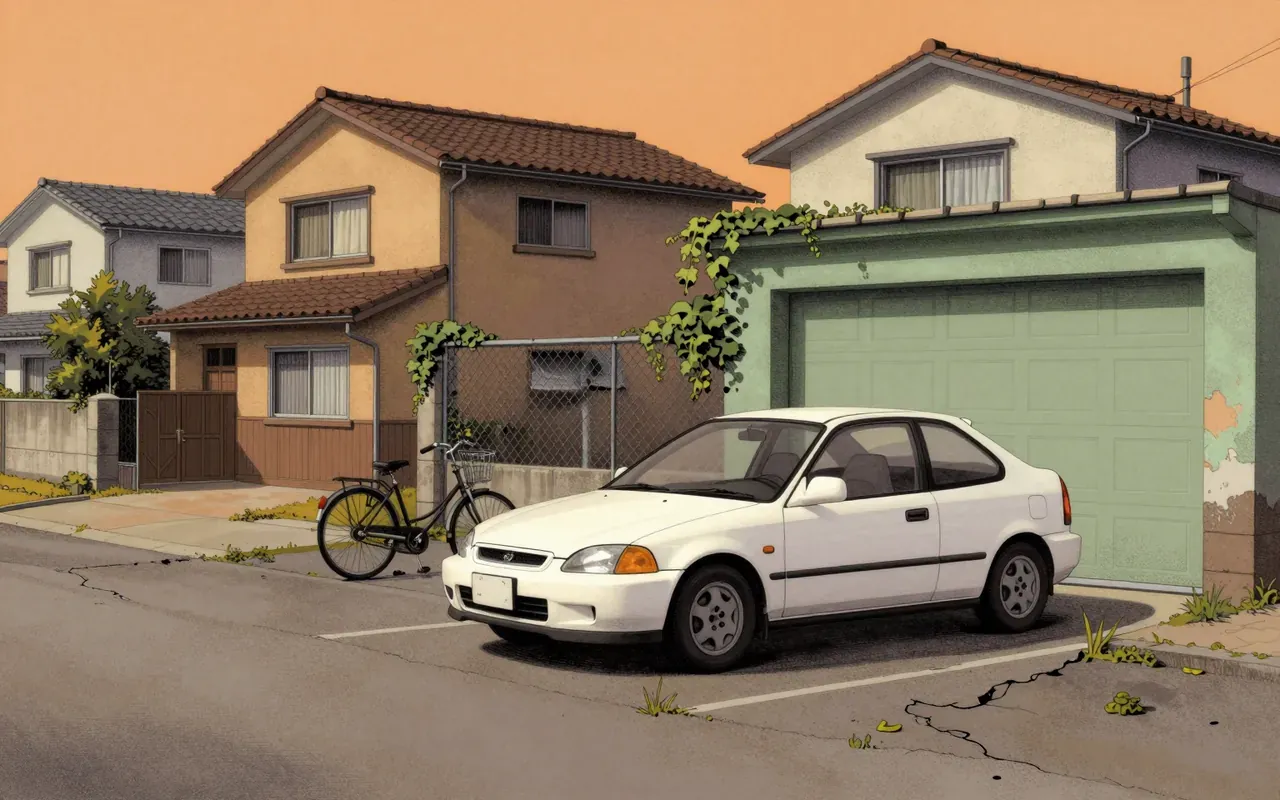
Honda didn’t build a sports car — they built a Civic that refused to compromise on steering feel.
The Honda CR-X (1983) redefined what a compact front-wheel-drive car could do — not by adding power or luxury, but by removing mass and complication. It was never a sports car in form or intent. It was a Civic sharpened for feedback, visibility, and agility. Its global variations — two-seat in North America, 2+2 elsewhere — show Honda’s willingness to tailor packaging without fragmenting engineering. It changed expectations for economy cars: they could be fun to drive, not just efficient to own.
CR-X stands for 'Civic Renaissance Experimental' — and it lives entirely inside the Civic family.
2:56
Seating by market
North America got two seats. Japan and Europe got a 2+2 — with a rear seat Honda called a 'one-mile seat'.
4:01
FWD by design
Front-wheel drive was non-negotiable — and central to its packaging, efficiency, and handling character.
6:25
Scale proves the concept
Nearly 400,000 units were built — proof that this idea resonated beyond early adopters.
Worth your time?
Yes. Drive the whole thing.
4/ 5
What works
lightweight packaging
direct steering response
global market adaptation
Civic-derived serviceability
What does not
kei car
four-door sedan
rear-wheel drive
four full seats
Drive it if
drivers who value steering feel over passenger space
owners who prioritise service simplicity and parts availability
Skip it if
families
long-distance passengers
those needing cargo volume
The written brief1 min read
What the car is and where it came from
The Honda CR-X is a sport-compact car made by Honda from 1983 to 1991. Nearly 400,000 were built. Its name stands for ‘Civic Renaissance Experimental’. It was sold as part of the Civic range — and briefly the Ballade range — in Japan, Europe and North America.
How it works, in terms someone would actually use
It is front-wheel drive. It seats two in North America, or two plus a token rear seat elsewhere. It shares its platform and engineering lineage with the Civic.
What it gets right
It gets right the balance of lightness, visibility, and direct steering response. Its compact dimensions make it agile in tight spaces. Its Civic-derived layout keeps servicing simple.
What it does not
It does not offer four full seats. It does not use rear-wheel drive. It does not belong to the kei car segment.
What it changed
It proved that a lightweight front-wheel-drive hatchback could be marketed globally as both economical and driver-focused — not just practical.
Who it is for, and who it is not
It is for drivers who prioritise responsiveness over space or luxury. It is not for families, long-distance passengers, or those needing cargo volume.
Is it worth your time
Yes — if you want to understand how Honda sharpened sport-compact packaging without adding weight or complexity.