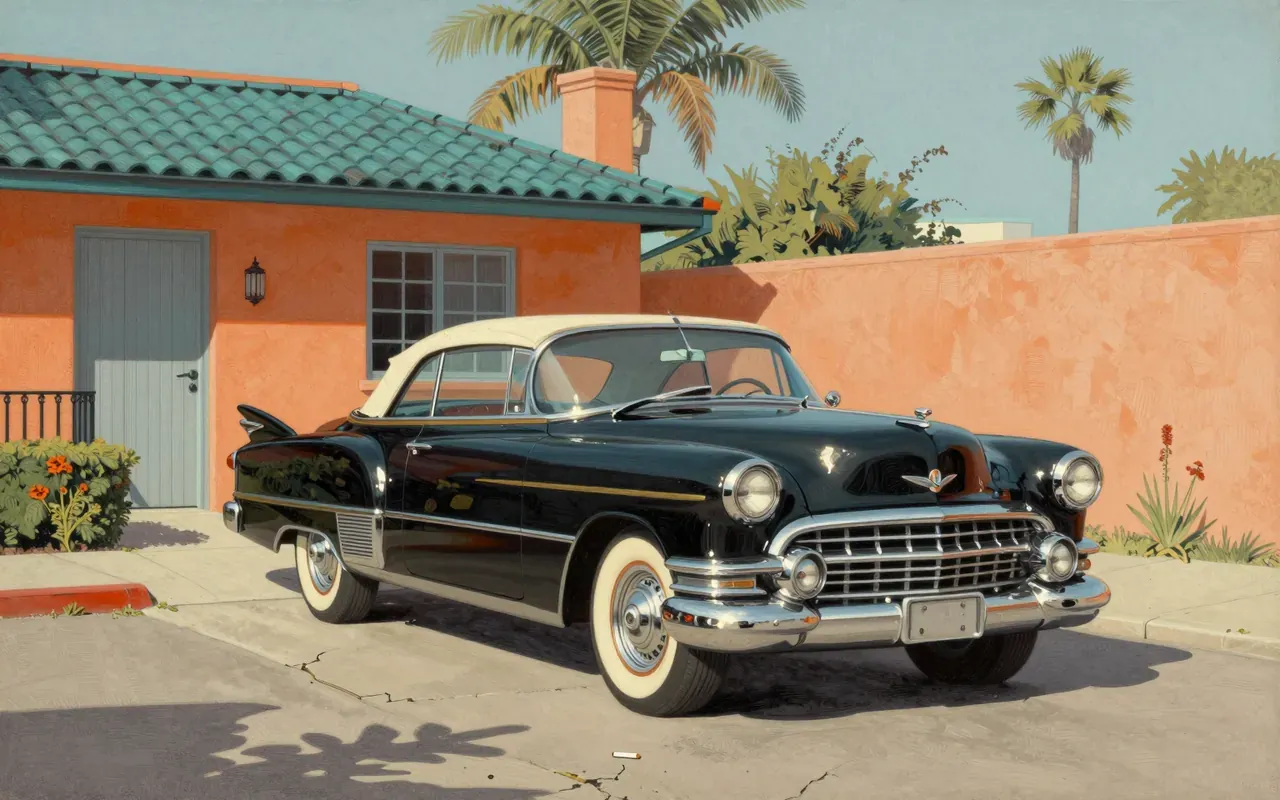
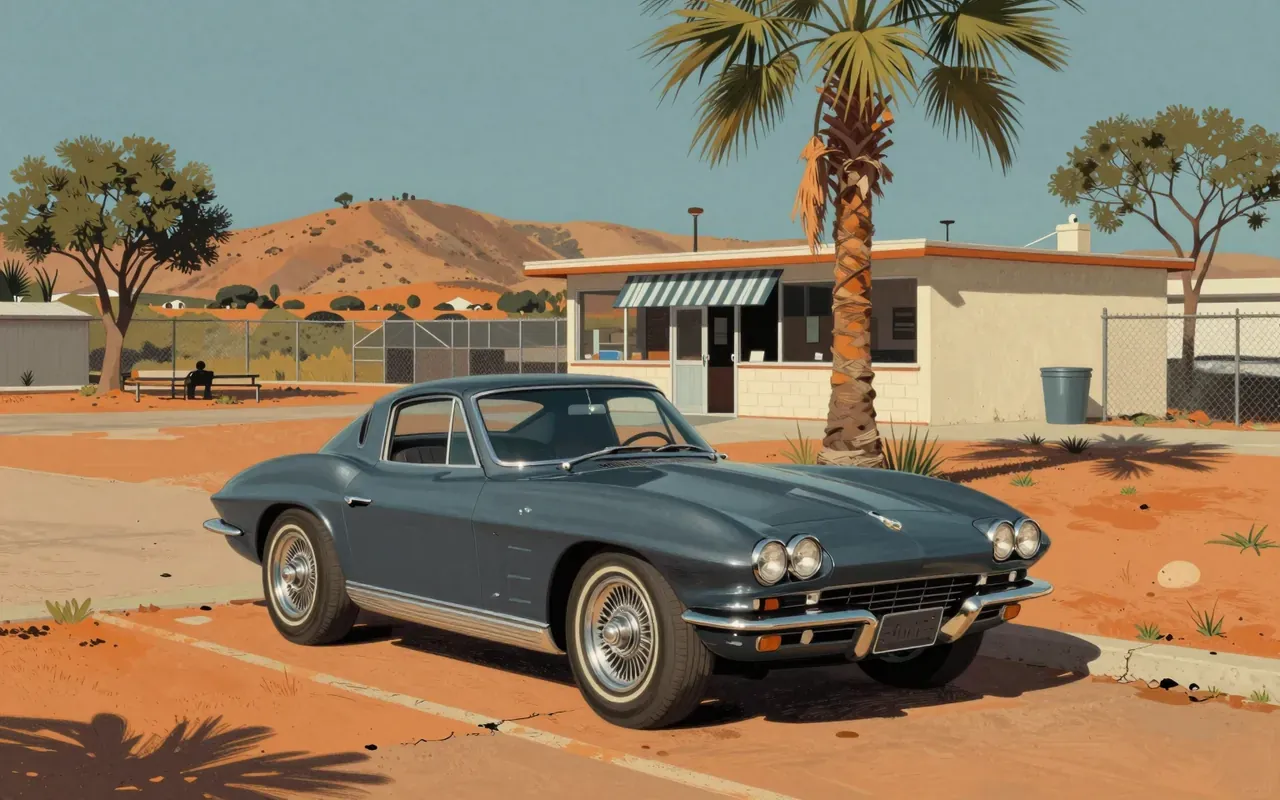
The 1953 Cadillac Eldorado is a foundational expression of postwar American automotive hierarchy: a limited-run, top-priced convertible defined by bespoke bodywork and Harley Earl’s tailfin language. It establishes no new powertrain or chassis architecture — but it does cement styling as a primary tool of luxury positioning.
A twelve-generation luxury line that began in 1952 as Cadillac’s most expensive convertible.
2:45
Hierarchy
It sat second only to the Series 75 limousine in price until 1966 — a deliberate hierarchy.
4:34
Body & Badging
Its 1953 body was unique; later, it carried the Fleetwood name to evoke pre-war V-12 and V-16 roadsters.
6:11
Fins
Harley Earl authorised its tailfin language — inspired by the P-38 Lightning and space rockets.
1 more chapterFewer chapters
Worth your time?
Yes. Drive the whole thing.
3.5/ 5
What works
positions itself unambiguously at the top of Cadillac’s hierarchy
uses unique bodywork to signal exclusivity and price leadership
extends Harley Earl’s 1948 tailfin design language into a top-tier production model
What does not
introduce front-wheel drive
feature automatic climate control
include electronic systems
establish new engineering benchmarks
Drive it if
buyers who prioritise status signalling through distinctive sheetmetal and brand hierarchy
Skip it if
buyers seeking mechanical innovation or broad usability
Who should drive it, and who should skipHide who it is for
The written brief1 min read
What the car is and where it came from
The 1953 Cadillac Eldorado is a limited-production, high-priced convertible launched by Cadillac, General Motors’ luxury division.
How it works, in terms someone would actually use
It is a two-door convertible. It uses rear-wheel drive. Its body is distinct from other Cadillacs of 1953.
What it gets right
It positions itself unambiguously at the top of Cadillac’s hierarchy. It uses unique bodywork to signal exclusivity and price leadership.
What it does not
It does not establish new engineering benchmarks. It does not introduce front-wheel drive, automatic climate control, or electronic systems — those came later.
What it changed
It established tailfins as a signature Cadillac motif, extending Harley Earl’s 1948 design language into a top-tier production model.
Who it is for, and who it is not
It is for buyers who prioritise status signalling through distinctive sheetmetal and brand hierarchy. It is not for buyers seeking mechanical innovation or broad usability.
Is it worth your time
Yes — if you need to understand how American automotive luxury and styling authority were codified in the early 1950s.