automotivebriefs
10:06in productionCh. 1 · A New Generation/ 10:06 · ceiling 15 min
Sports cars · Road

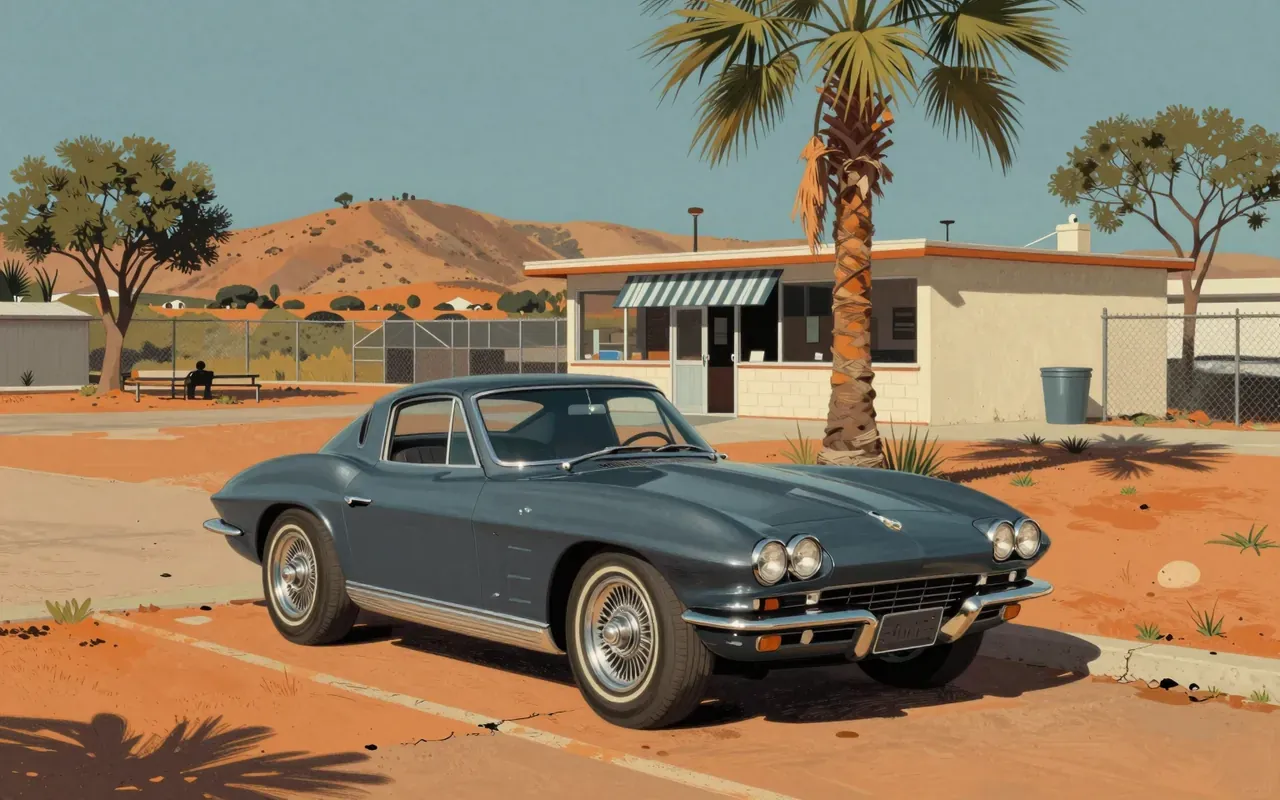
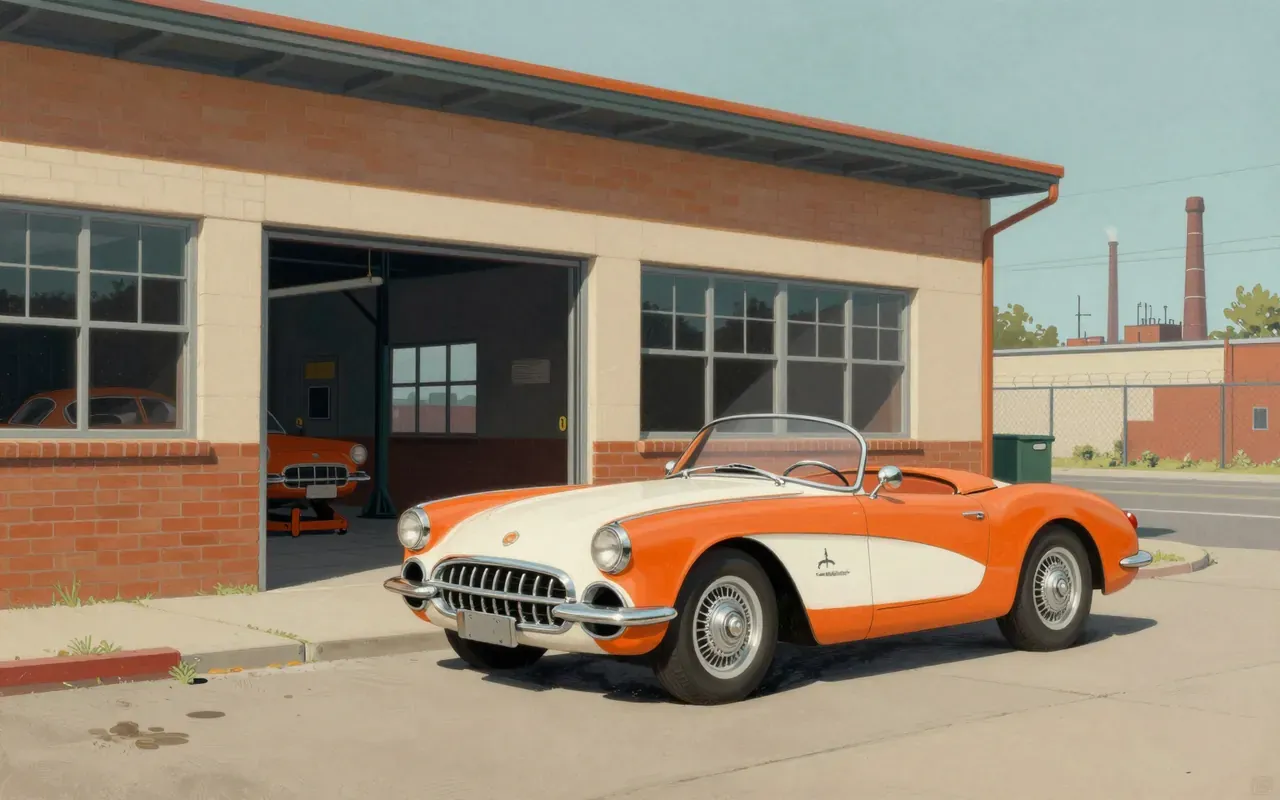
Chevrolet Corvette (C2)

The C2 didn’t just look faster—it proved aerodynamics could drive production car design in Detroit.

The Chevrolet Corvette (C2) redefined what a mass-market American sports car could be—not through engineering leaps, but through disciplined, wind-tunnel-informed packaging and a bold, structural fastback form.

Chapters & takeaways5
  1. 1:08
    A New Generation

    It was the second-generation Corvette—and the first to be built for five consecutive model years: 1963 to 1967.

  2. 2:38
    The First Sting Ray Coupe

    It was the first-ever production Corvette coupe, defined by its fastback roofline and bisected rear window.

  3. 4:04
    Form Follows Wind Tunnel

    Fiberglass panels stayed, but wind tunnel testing shaped the final shape—for aerodynamics, space, and tooling.

  4. 5:39
    Designed by Committee, Named by Mitchell

    Bill Mitchell named it. Larry Shinoda led styling. Pete Brock helped define its silhouette.

  5. 6:41
    Same Bones, Stronger Frame

    Its front suspension kept the unequal-length A-arm layout—but now supported a stiffer, more rigid structure.

Worth your time?

Yes. Drive the whole thing.

4/ 5
What works
  • It works as a statement of intent: that form must serve function—including airflow, visibility, and stamping feasibility.
  • It works as a bridge between hand-formed concept cars and wind-tunnel-validated production vehicles.
  • It works as a template for how GM would approach future performance models.
What does not
  • It does not introduce independent rear suspension.
  • It does not switch to mid-engine layout.
  • It does not use unitary construction.
Drive it if
  • For students of automotive design history.
  • For readers tracking how aerodynamics entered mainstream production planning.
  • Not for enthusiasts seeking drivetrain novelty or chassis revolution.
Skip it if
  • Enthusiasts seeking drivetrain novelty or chassis revolution.
The written brief1 min read

What the car is and where it came from

The Chevrolet Corvette (C2) is the second-generation Corvette sports car, produced by Chevrolet for the 1963 through 1967 model years. Bill Mitchell dubbed it ‘Sting Ray’.

How it works, in terms someone would actually use

It is a front-engine, rear-wheel-drive sports car with a fastback coupe body. Its front suspension uses unequal-length upper and lower A-arms on coil springs concentric with the shocks, plus a standard anti-roll bar.

What it gets right

It gets right the integration of wind tunnel testing into production car design—shaping its form for aerodynamics, interior space, and manufacturability all at once.

What it does not

It does not abandon the Corvette’s reliance on fiberglass outer panels, nor does it depart from the front-engine, rear-wheel-drive layout.

What it changed

It changed the Corvette’s identity from an open-top, loosely structured sports car into a purpose-built, structural fastback coupe—the first production Corvette coupe ever made.

Who it is for, and who it is not

It is for people interested in how industrial design solves real constraints—wind resistance, tooling limits, visibility—while asserting a new visual language. It is not for those seeking technical innovation in suspension or powertrain.

Is it worth your time

Yes—if you want to understand how American sports-car design pivoted from roadster convention to integrated, aerodynamically informed packaging.
Same garage · Sports cars4 of 22
9:28
Alfa Romeo AlfettaAlfa Romeo Centro Stile · 1972The Alfetta is a front-engine saloon and fastback coupé produced from 1972 to 1987. It used a rear transaxle and De Dion tube rear suspension to improve weight distribution and handling. Coupé models featured a central tachometer. All models left the factory with Pirelli Cinturato 165HR14 tyres.
9:22
Alfa Romeo 105/115 Series CoupésGiorgetto Giugiaro · 1963The Alfa Romeo 105/115 Series Coupés are foundational Giugiaro — not as a stylistic endpoint, but as a working method: take a proven platform, impose a strong, arched silhouette, and let coachbuilders extend it. They are compact, alloy-engined, live-axle sports coupés that prioritise form coherence over mechanical innovation. Their legacy is visual, not technical.
10:50
Alfa Romeo Giulia TZZagato · 1965The Giulia TZ is a focused, lightweight racing coupé built to exploit Alfa’s existing engine and suspension in a new structural format. Its value lies in how it redefined what ‘lightweight’ meant for a front-engined RWD car in 1963—not through novelty, but through discipline.
9:02
Bizzarrini StradaGiorgetto Giugiaro · 1965The Bizzarrini Strada is a mechanically focused, front mid-engine sports car from 1964–1968. It uses a rearward-placed Chevrolet V8 to optimise weight distribution and handling. It was never designed by Giugiaro. It exists in coupé, roadster, and Corsa forms. Its performance figures are verified: sub-7-second 0–100 km/h, 280 km/h top speed.
Up next in Automotive

Ferrari 365 GTB/4 Daytona

Leonardo Fioravanti · 1968 · 1:20

A front-mounted V12 and rear transaxle define Ferrari’s 1968 grand tourer.

1:20