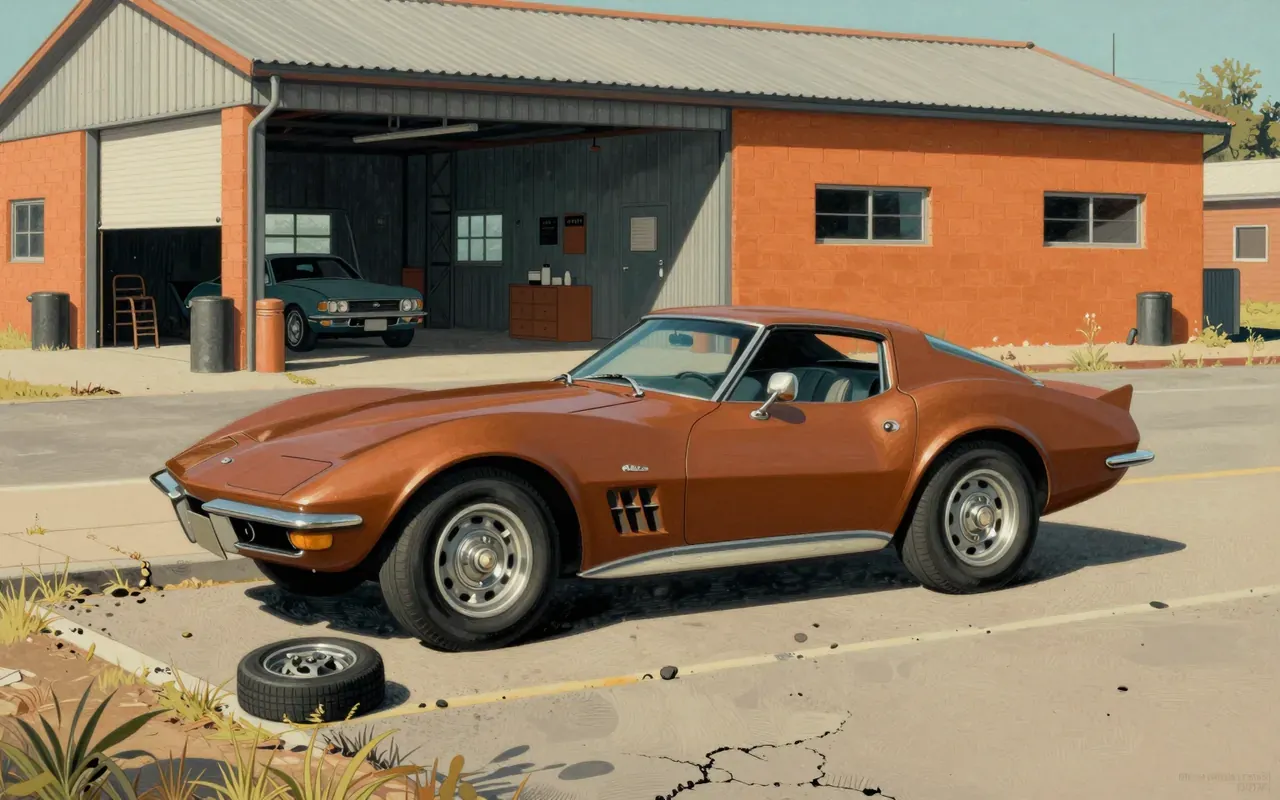
What the car is and where it came from
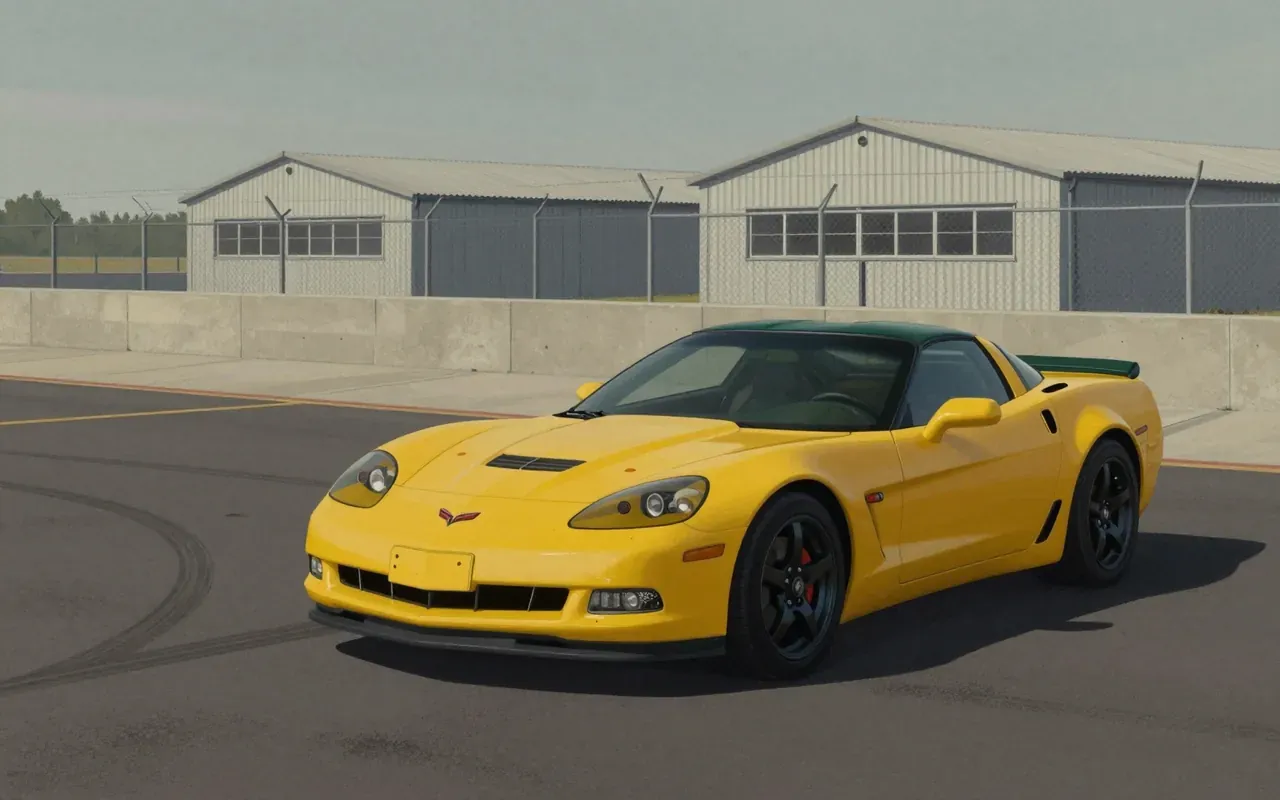
The third-generation Chevrolet Corvette (C3), produced from 1968 to 1982. Designed by David Holls’ team, it adapts Larry Shinoda’s Mako Shark II concept—originally mid-engined—to the existing front-engine Stingray chassis.
How it works, in terms someone would actually use
It uses the existing Stingray chassis with mostly carried-over engines and chassis components. The body and interior are new. The rear window and roof section above the seats were designed to be removable.
What it gets right
It gets the balance of drama and usability right. The sugar-scoop roof and vertical rear window deliver visibility and light while reinforcing the Mako Shark II’s predatory silhouette. The lower body retains the concept’s aggressive stance but softens contours for production feasibility.
What it does not
It does not introduce new mechanical architecture. It does not solve for weight distribution or thermal management inherent in front-engine layouts. It does not abandon the constraints of its predecessor’s underpinnings.
What it changed
It redefined the Corvette’s visual language for fifteen years, shifting from the C2’s split-window austerity to a sculpted, shark-inspired form that prioritised presence over packaging efficiency.
Who it is for, and who it is not
It is for people who value bold automotive sculpture shaped by compromise, not purity. It is not for those seeking engineering innovation or chassis evolution.
Is it worth your time
Yes—if you care about how American sports-car design resolved mid-engined ambition into production reality using existing hardware.