What the car is and where it came from
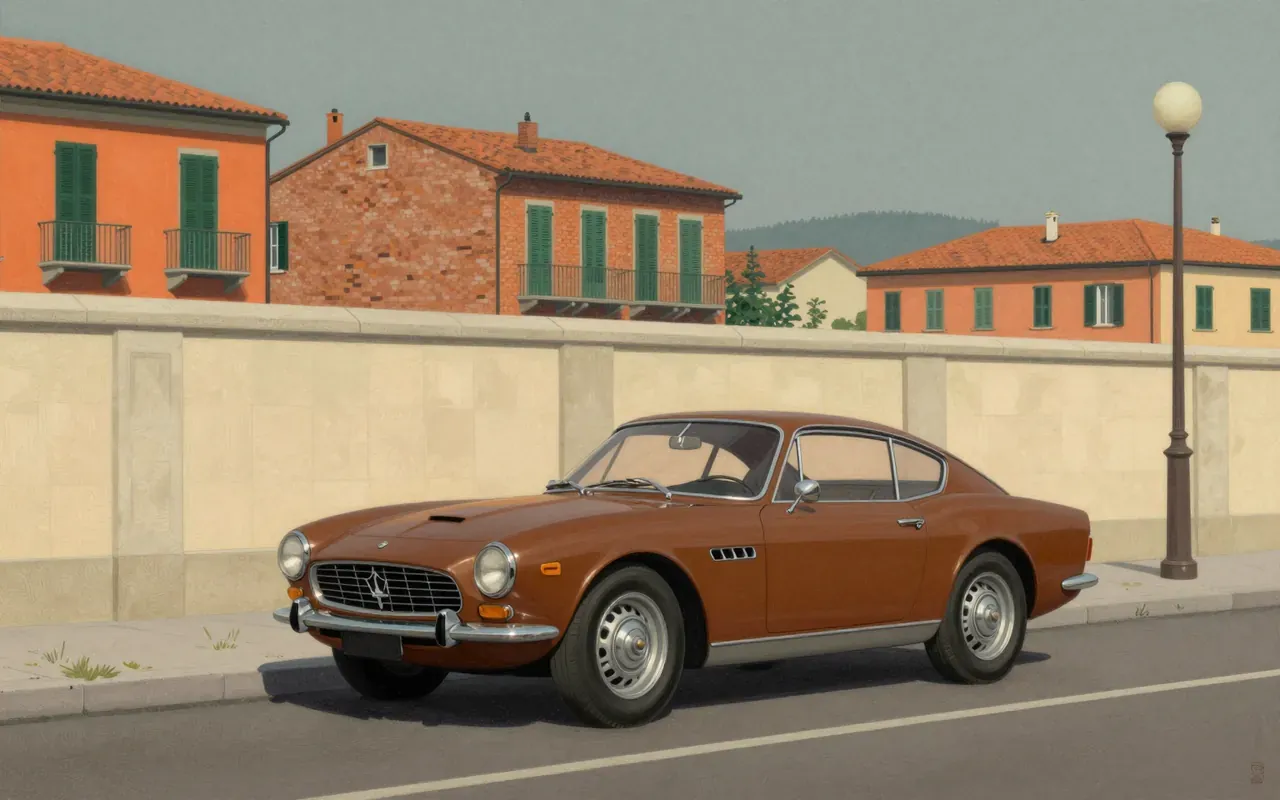
A 2-door coupé and convertible grand tourer built by Maserati between 1957 and 1964. Developed 1956–57. Designed by Carrozzeria Touring after an introduction by Franco Cornacchia. First shown as the white ‘Dama Bianca’ prototype at the March 1957 Geneva Salon.
How it works, in terms someone would actually use
It is a front-engined, rear-wheel-drive grand tourer with a 2+2 seating layout and superleggera aluminium bodywork. The driver sits behind a tall, upright grille and a long bonnet, with direct mechanical feedback through a thin-rimmed steering wheel.
What it gets right
It gets right the balance of presence and purpose: a long-hooded silhouette, clean Touring lines, and a chassis tuned for sustained high-speed travel on imperfect roads. The superleggera construction delivers responsiveness without over-engineering.
What it does not
It does not offer modern ergonomics, structural rigidity or thermal management. Its aluminium body is light but not stiff by later standards. Its 2+2 layout sacrifices rear legroom for packaging.
What it changed
It changed Maserati’s business model: from low-volume racing specialist to series-production GT manufacturer. It proved a road car could carry the Maserati name without Formula 1 pedigree.
Who it is for, and who it is not
It is for students of automotive transition, Italian design history, and post-war GT evolution. It is not for drivers seeking daily usability, crash safety or drivetrain refinement.
Is it worth your time
Yes — if you want to understand how Maserati pivoted from racing to road cars, and how Italian coachbuilding shaped the GT formula in the late 1950s.