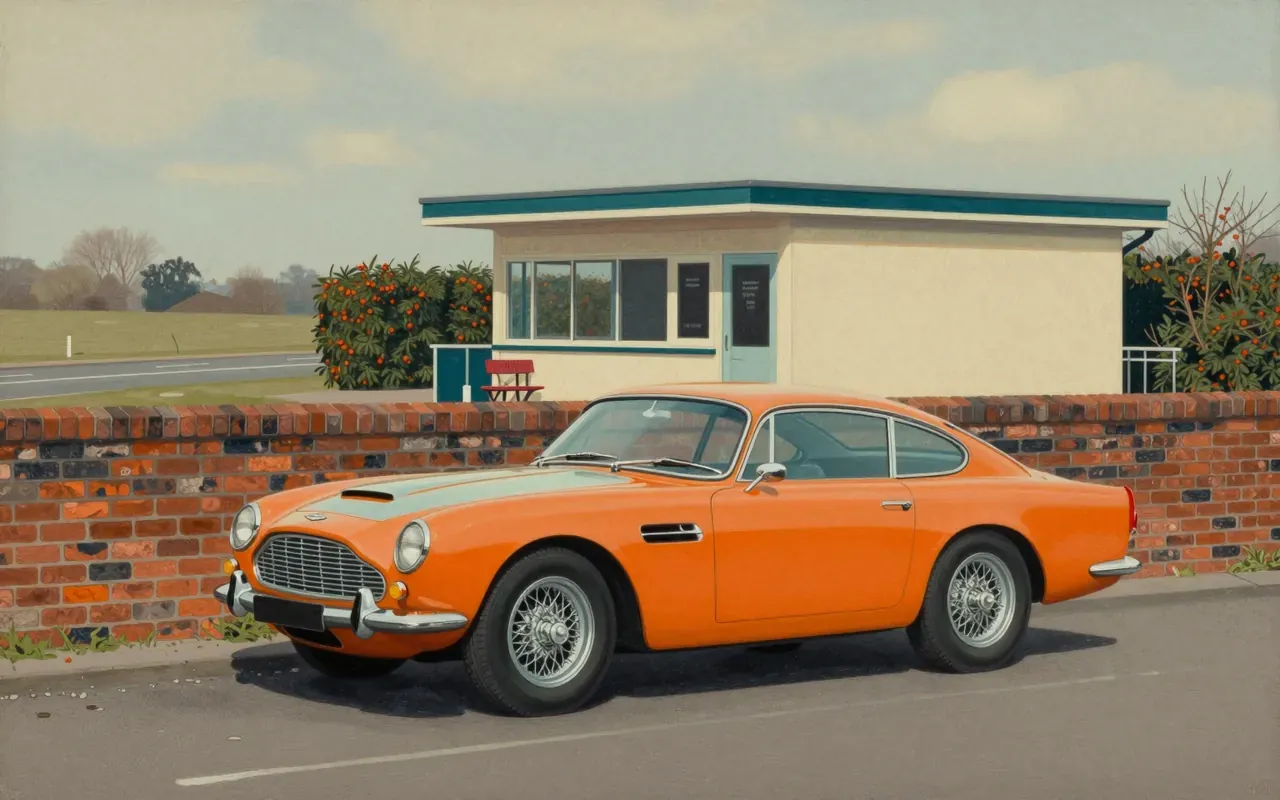
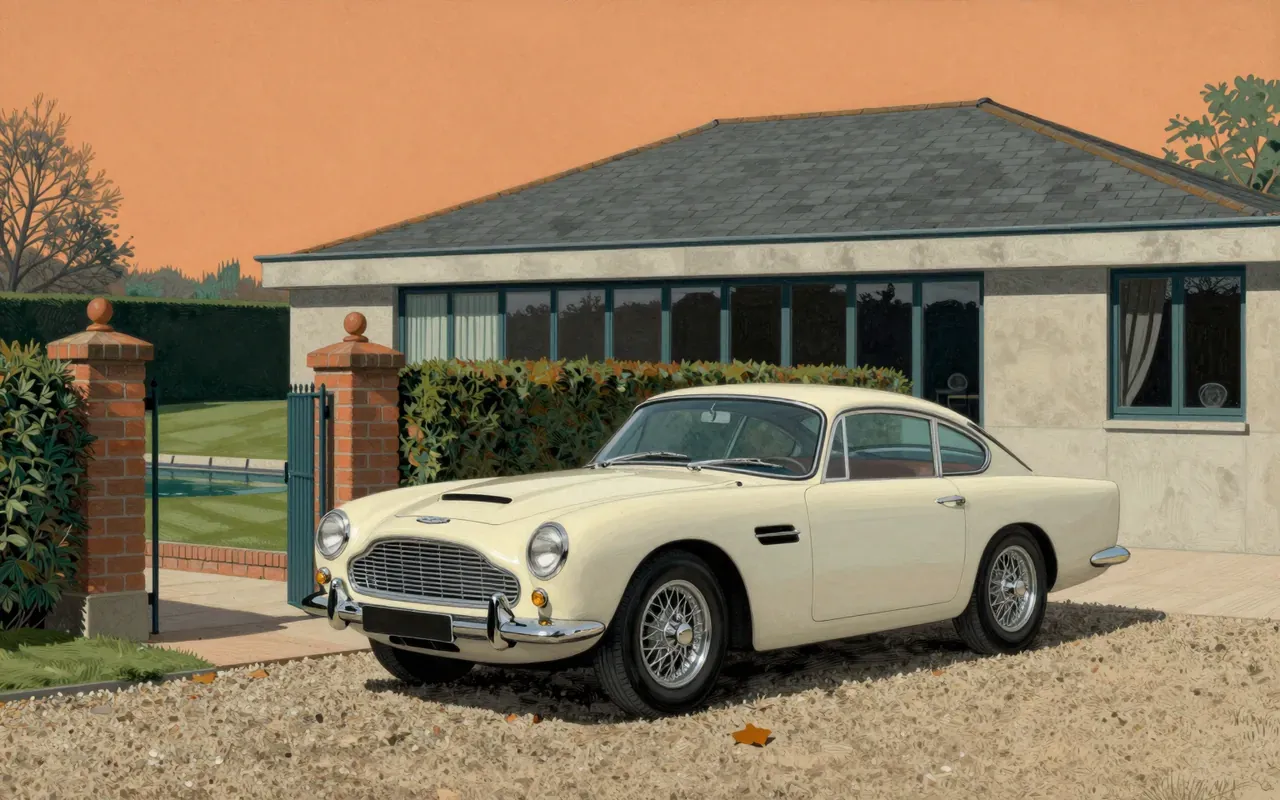
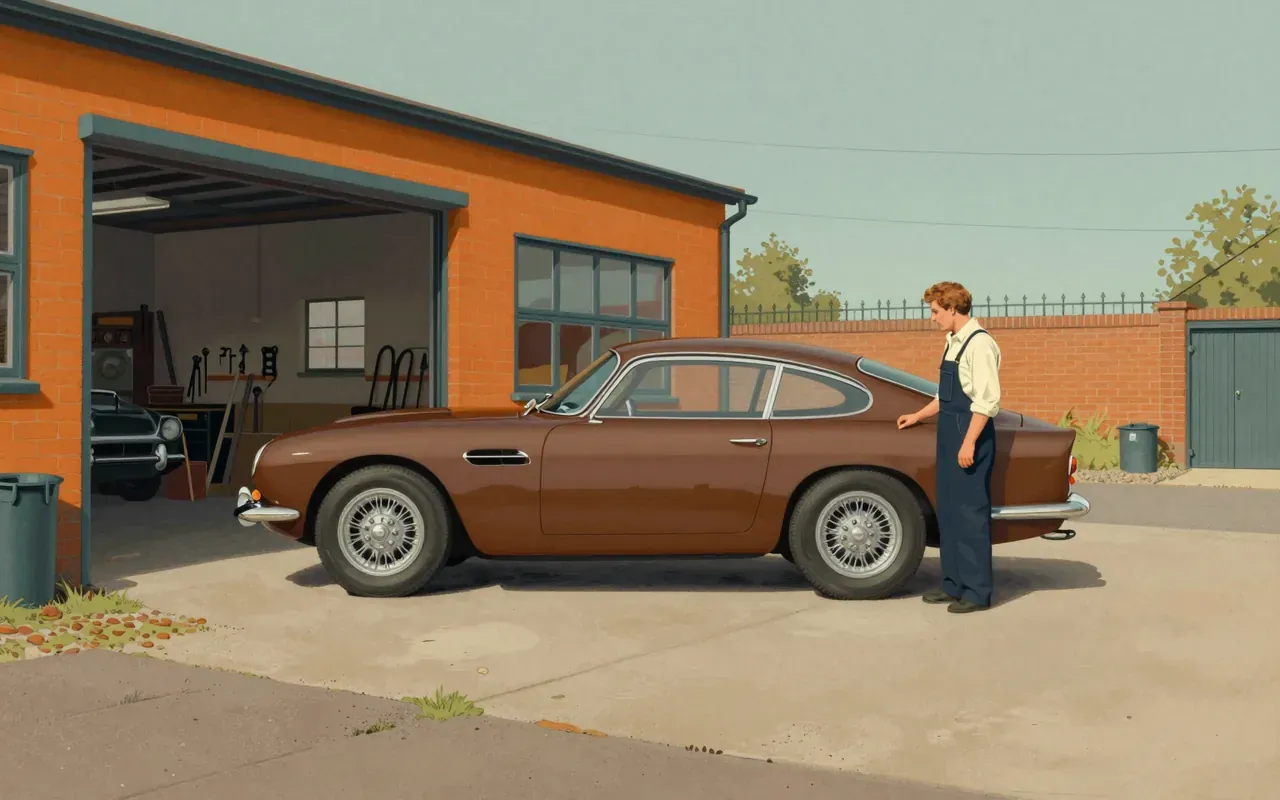
The DB4 wasn’t a step forward — it was a reset, drawn in Milan and built in Buckinghamshire.
The DB4 is a grand tourer designed by Carrozzeria Touring, built at Newport Pagnell, and powered by a Tadek Marek–designed 3.7 L DOHC straight-6. It features servo-assisted disc brakes, independent front suspension with rack-and-pinion steering, and a live rear axle with Watt's linkage. Its design influenced later models including the DB4 GT Zagato and Lagonda Rapide. Technically distinct from both predecessor and successor, it was produced from 1958 to 1963.
The DB4 was the first Aston Martin built at Newport Pagnell — and the first to define the brand’s post-war grand touring identity on its own terms.
3:12
Milan’s Frame, Newport’s Build
Touring’s superleggera body gave the DB4 its shape — and became the basis for the DB4 GT Zagato and Lagonda Rapide.
4:48
No Carry-Over Engineering
Rack-and-pinion steering, servo-assisted disc brakes, and a DOHC straight-6 made the DB4 technically distinct from everything before and after it.
6:12
Not a Link. A Landmark.
The DB4 shares no lineage with the DB Mark III or the DB5 — it stands alone as a deliberate break.
Worth your time?
Yes. Drive the whole thing.
4.5/ 5
What works
Touring’s superleggera body
integration of rack-and-pinion steering and servo-assisted disc brakes
establishment of visual and mechanical template for DB4 GT Zagato and Lagonda Rapide
What does not
DB Mark III
DB5
Drive it if
people who want to understand how Aston Martin redefined itself after the DB Mark III
Skip it if
those seeking performance continuity with earlier or later models
The written brief1 min read
What the car is and where it came from
The DB4 is a grand tourer designed by Carrozzeria Touring in Milan, built at Newport Pagnell from 1958 to 1963, powered by a Tadek Marek–designed 3.7 L DOHC straight-6.
How it works, in terms someone would actually use
The DB4 uses independent front suspension with ball-jointed wishbones, coil springs and rack-and-pinion steering. It has servo-assisted disc brakes all round. Its live rear axle uses Watt’s linkage. The engine is a 3.7 L double overhead cam straight-6 designed by Tadek Marek.
What it gets right
It delivers Continental elegance through Touring’s lightweight superleggera body. It integrates advanced braking and steering systems into a cohesive driver interface. Its proportions and stance remain legible as Aston Martin’s first true post-war grand tourer.
What it does not
It is not a development of the DB Mark III. It does not evolve into the DB5. It does not use a de Dion or independent rear suspension.
What it changed
It established the visual and mechanical template for the DB4 GT Zagato and the Lagonda Rapide. It was the first Aston built at Newport Pagnell, and the first to use Touring’s superleggera body construction in-house.
Who it is for, and who it is not
It is for people who want to understand how Aston Martin redefined itself after the DB Mark III — not as an evolution, but as a clean-sheet departure. It is not for those seeking performance continuity with earlier or later models.
Is it worth your time
Yes — if you care about how British grand touring evolved from hand-built tradition into structural modernity, and how Italian design language entered the Aston Martin lineage at Newport Pagnell.