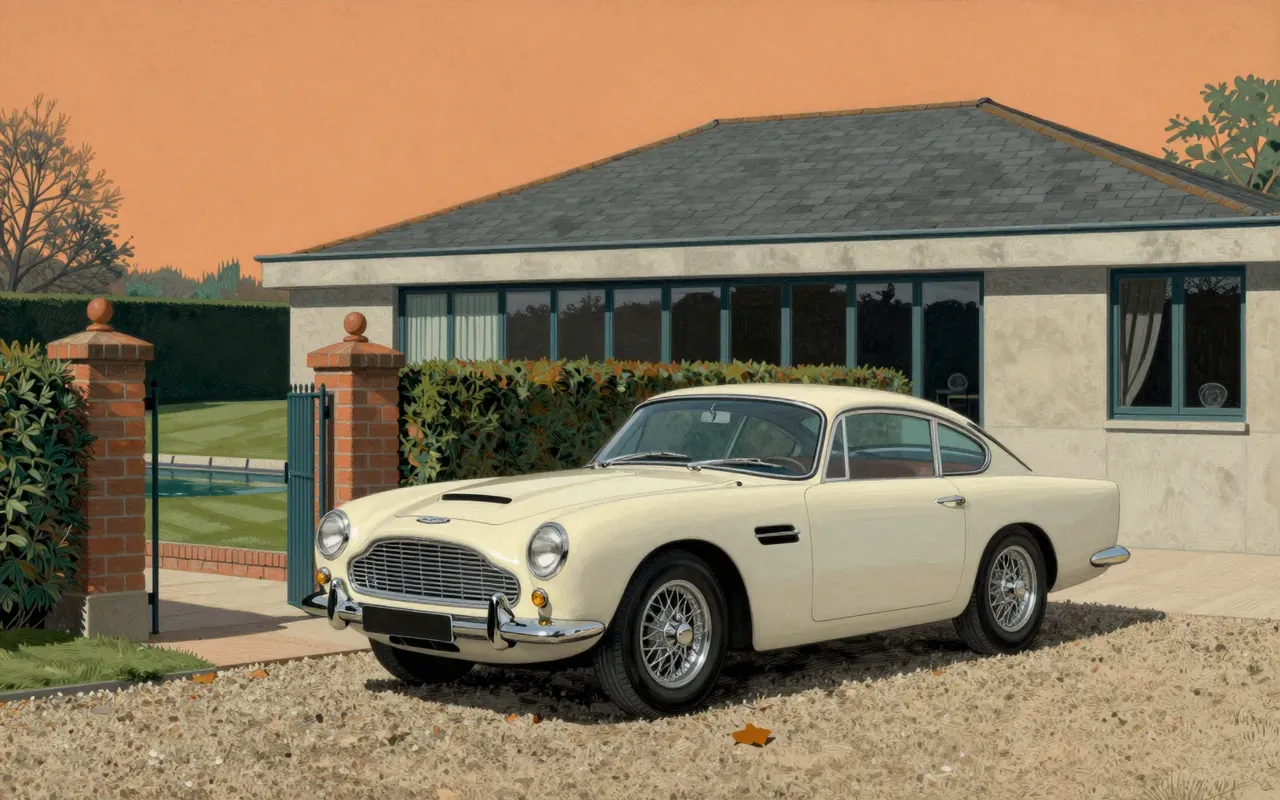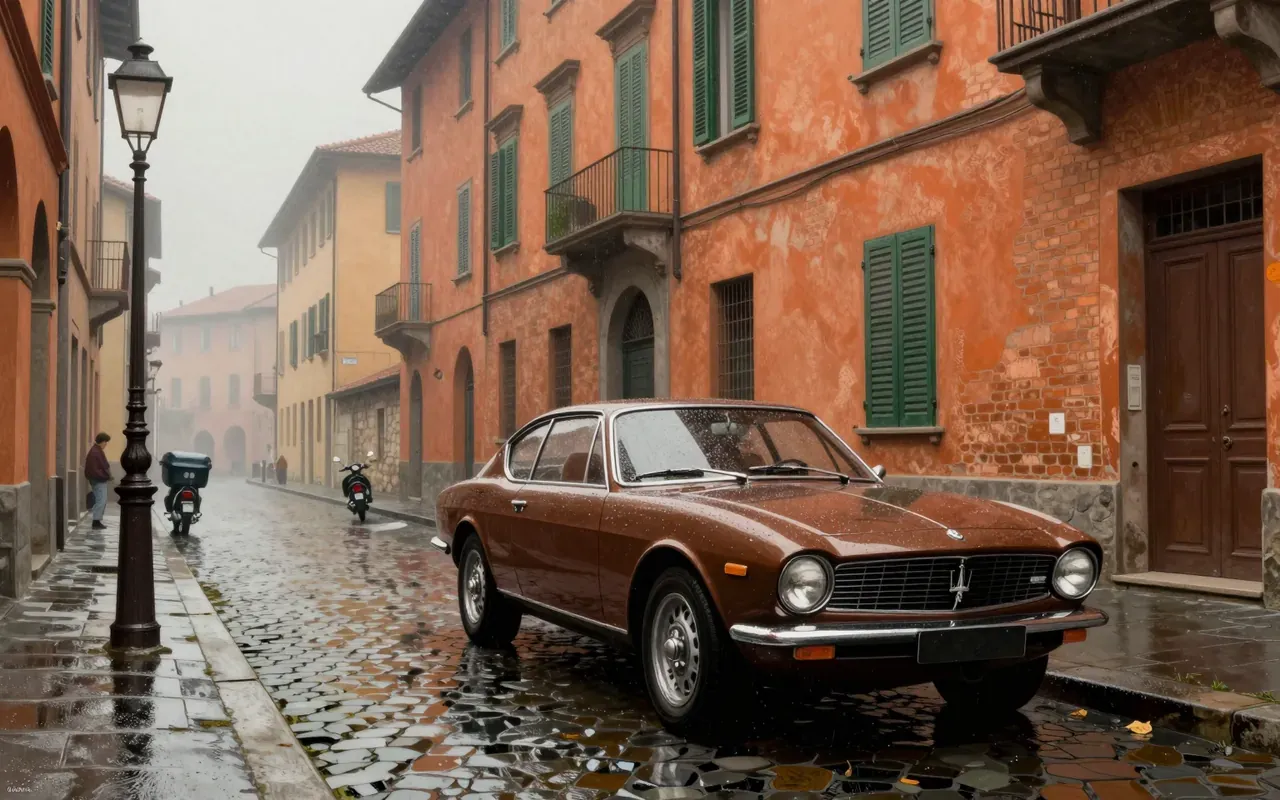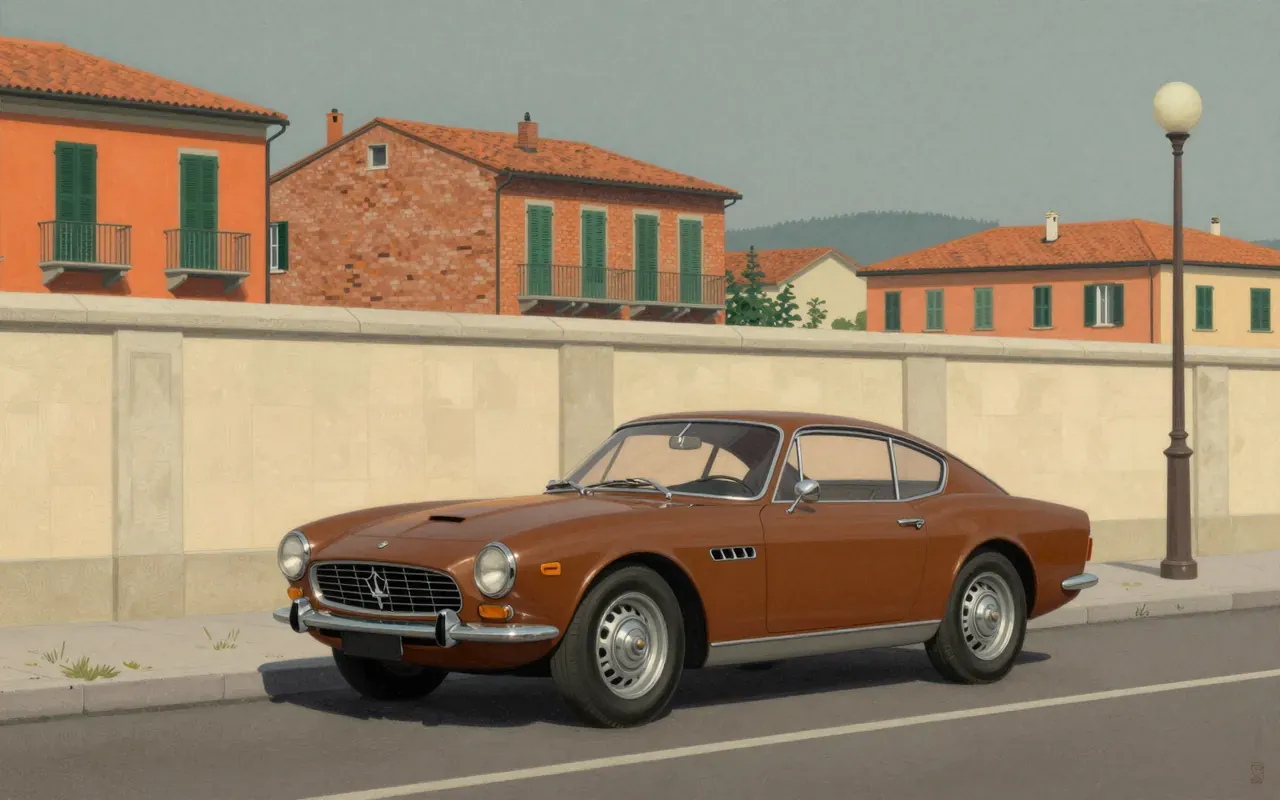
What the car is and where it came from
The Maserati 5000 GT is a 2-door coupé grand tourer made by Maserati from 1959 to 1966. It began as a commission from Mohammad Reza Pahlavi, the Shah of Persia, who demanded a more exclusive car after testing the 3500 GT.
How it works, in terms someone would actually use
It places a modified 450S racing V8 into the 3500 GT’s chassis. The driver sits in a two-seat coupé with a superleggera tubular frame and aluminium body. The layout is front-engine, rear-wheel drive. The car was built for high-speed travel over long distances, not circuit agility or daily practicality.
What it gets right
It answers a precise brief: the Shah wanted the usability of the 3500 GT fused with the power of the 450S. Maserati delivered that fusion. Touring delivered a lightweight, elegant two-seat body using superleggera construction.
What it does not
It does not offer four seats. It does not use a new chassis—it reuses and strengthens the 3500 GT’s. It does not represent mass production: only 34 units were made, each bodied by a different coachbuilder.
What it changed
It shifted Maserati’s sales strategy: Omar Orsi mailed brochures for the 3500 GT and 450S to wealthy buyers, using the Shah’s commission as proof that a hybrid road-racer could attract elite clients.
Who it is for, and who it is not
It is for collectors and historians interested in bespoke Italian GTs shaped by royal patronage and racing lineage. It is not for drivers seeking documented performance metrics, modern ergonomics, or factory-backed service history.
Is it worth your time
Yes—if you care about how a bespoke grand tourer bridges racing ambition and road usability. No—if you expect performance data, driving impressions, or engineering documentation beyond what the sources confirm.