automotivebriefs
8:58in productionCh. 1 · Sixth in line/ 8:58 · ceiling 15 min
Supercars · Sports cars

Saleen S7

A mid-engine American supercar built by committee—and it worked.

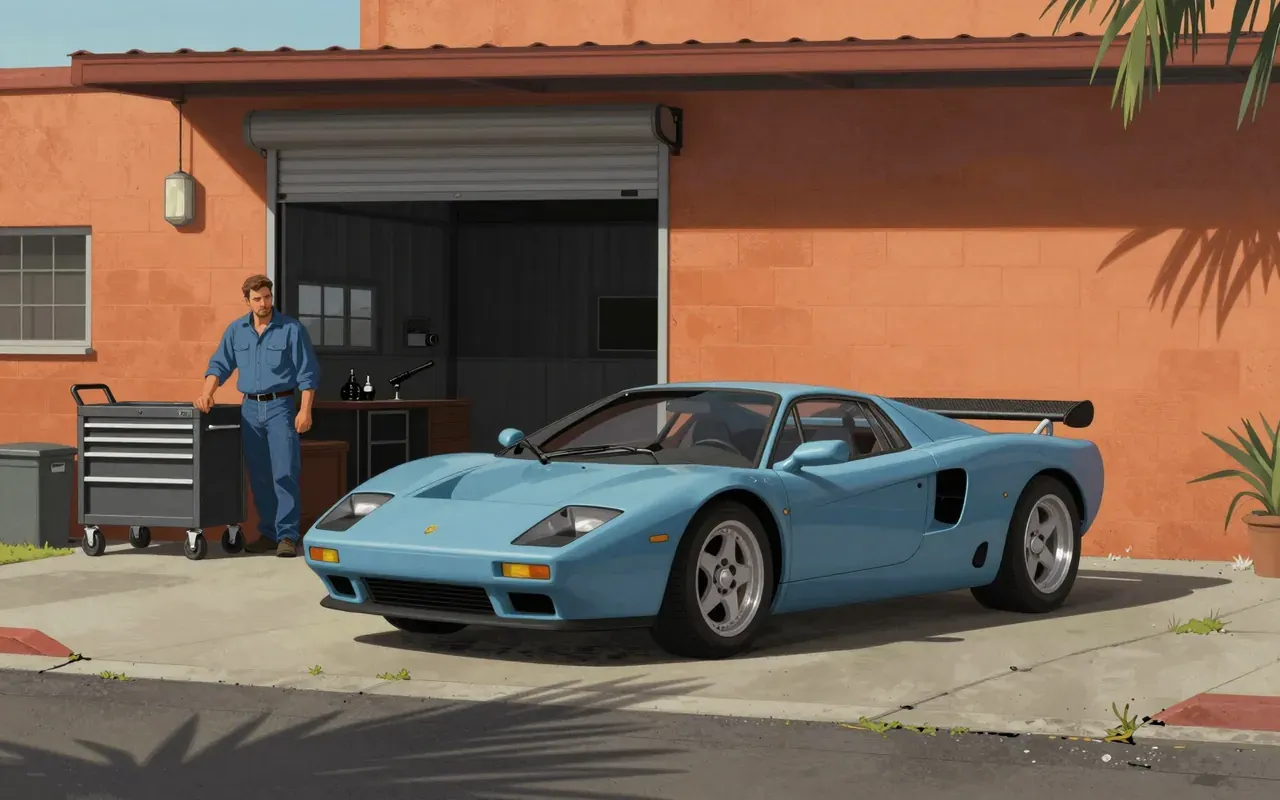
The Saleen S7 is an American hand-built, high-performance sports car. It debuted on August 19, 2000, at the Monterey Historic Races. It was the first fully proprietary car produced by Saleen. Phil Frank contributed the body and interior CAD design and development. Its all-aluminium engine is a bored-and-stroked derivative of Ford's 351 Windsor small block with Cleveland-style canted valve heads. It is not based on the FE big-block. It produces 550 hp (410 kW) at 6,400 rpm.

Chapters & takeaways4
  1. 1:00
    Sixth in line

    The S7 was Saleen’s first fully proprietary car—and America’s sixth mid-engine production sports car.

  2. 2:31
    CAD and debut

    Phil Frank designed the body and interior in CAD. It debuted at Monterey on August 19, 2000.

  3. 4:08
    Small-block, big displacement

    Its all-aluminium V8 is a bored-and-stroked 351 Windsor derivative—not a big-block—with Cleveland heads and 550 hp.

  4. 5:33
    Fully proprietary

    It proved a US boutique could build a mid-engine supercar from scratch, no OEM platform required.

Worth your time?

Yes. Drive the whole thing.

4/ 5
What works
  • It establishes a clear hierarchy of responsibility: RML handled chassis, suspension and aerodynamics; Saleen led concept, direction and engine; Phil Frank delivered body and interior CAD design and development.
  • It is the first fully proprietary car from Saleen.
What does not
  • It does not use a big-block engine.
  • It is not based on the FE architecture.
  • It is not a mass-produced vehicle.
  • It does not predate the Pontiac Fiero, Consulier GTP, Mosler Raptor, Vector W8 or M12 as a mid-engine production sports car.
Drive it if
  • It is for people who care about how specialist roles—CAD design, chassis engineering, engine development—converge in a single machine.
  • It is not for those seeking proven longevity, broad service networks or evolutionary continuity.
Skip it if
  • It is not for those seeking proven longevity, broad service networks or evolutionary continuity.
The written brief1 min read

What the car is and where it came from

The Saleen S7 is an American hand-built, high-performance sports car. It debuted on August 19, 2000, at the Monterey Historic Races. It was developed jointly by Steve Saleen, Hidden Creek Industries, Ray Mallock Ltd. and Phil Frank.

How it works, in terms someone would actually use

It is a mid-engine, hand-built sports car with an all-aluminium, naturally aspirated V8 engine derived from Ford’s 351 Windsor small block. The engine uses Cleveland-style canted valve heads and displaces 427 cubic inches (7.0 L). It delivers 550 hp (410 kW) at 6,400 rpm.

What it gets right

It establishes a clear hierarchy of responsibility: RML handled chassis, suspension and aerodynamics; Saleen led concept, direction and engine; Phil Frank delivered body and interior CAD design and development. It is the first fully proprietary car from Saleen.

What it does not

It does not use a big-block engine. It is not based on the FE architecture. It is not a mass-produced vehicle. It does not predate the Pontiac Fiero, Consulier GTP, Mosler Raptor, Vector W8 or M12 as a mid-engine production sports car.

What it changed

It proved that a US-based firm could design, engineer and build a fully proprietary mid-engine supercar without relying on an OEM platform or foreign chassis supplier.

Who it is for, and who it is not

It is for people who care about how specialist roles—CAD design, chassis engineering, engine development—converge in a single machine. It is not for those seeking proven longevity, broad service networks or evolutionary continuity.

Is it worth your time

Yes—if you are interested in the mechanics of American mid-engine ambition at the turn of the millennium, and how a boutique manufacturer assembled expertise across continents to produce its first proprietary car.
Same garage · Supercars4 of 28
9:57
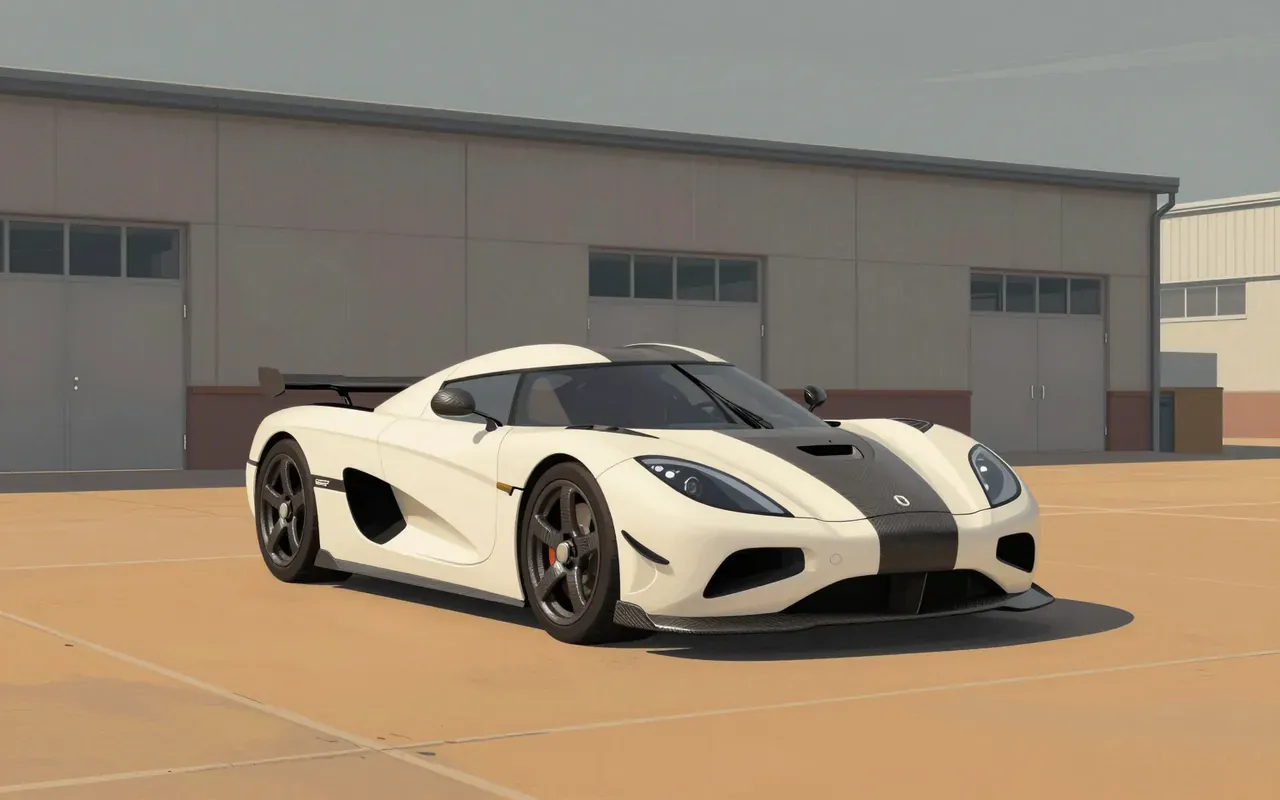
Koenigsegg CC8SChristian von Koenigsegg · 2002The CC8S is the first production car from Koenigsegg Automotive. It is a mid-engine, rear-wheel-drive targa top sports car built from 2002 to 2004 in six units. It introduced the dihedral synchro-helix doors and front-trunk roof stowage. It won the Guinness World Record for Most Powerful Production Engine and design awards from Red Dot and Utmärkt Svensk Form. It was developed from the CC prototype after eight years of research and development beginning in 1994. Chassis, suspension, brakes and other components were designed in-house. The pre-production car debuted at the 2000 Paris Auto Show. Its unique features include the front-trunk roof storage (unlike the Ferrari F50), the dihedral synchro-helix doors, and a central free-flowing exhaust based on the 'Rocket Cat Principle'. Christian von Koenigsegg and David Crafoord co-created the design concept.
9:26
Volkswagen W12Giorgetto Giugiaro · 1997The Volkswagen W12 was a series of five mid-engined concept cars developed by Volkswagen Passenger Cars between 1997 and 2001 in collaboration with Italdesign and Giorgetto Giugiaro, featuring a 5.6 L W12 engine and designed to showcase Volkswagen Group's supercar and high-performance engine capabilities; variants included the W12 Syncro Coupé (AWD), W12 Roadster (RWD), and W12 Nardò Coupé/Record Car (high-speed variant), with the latter setting a 24-hour endurance speed record at the Nardò Ring in 2002.
9:59
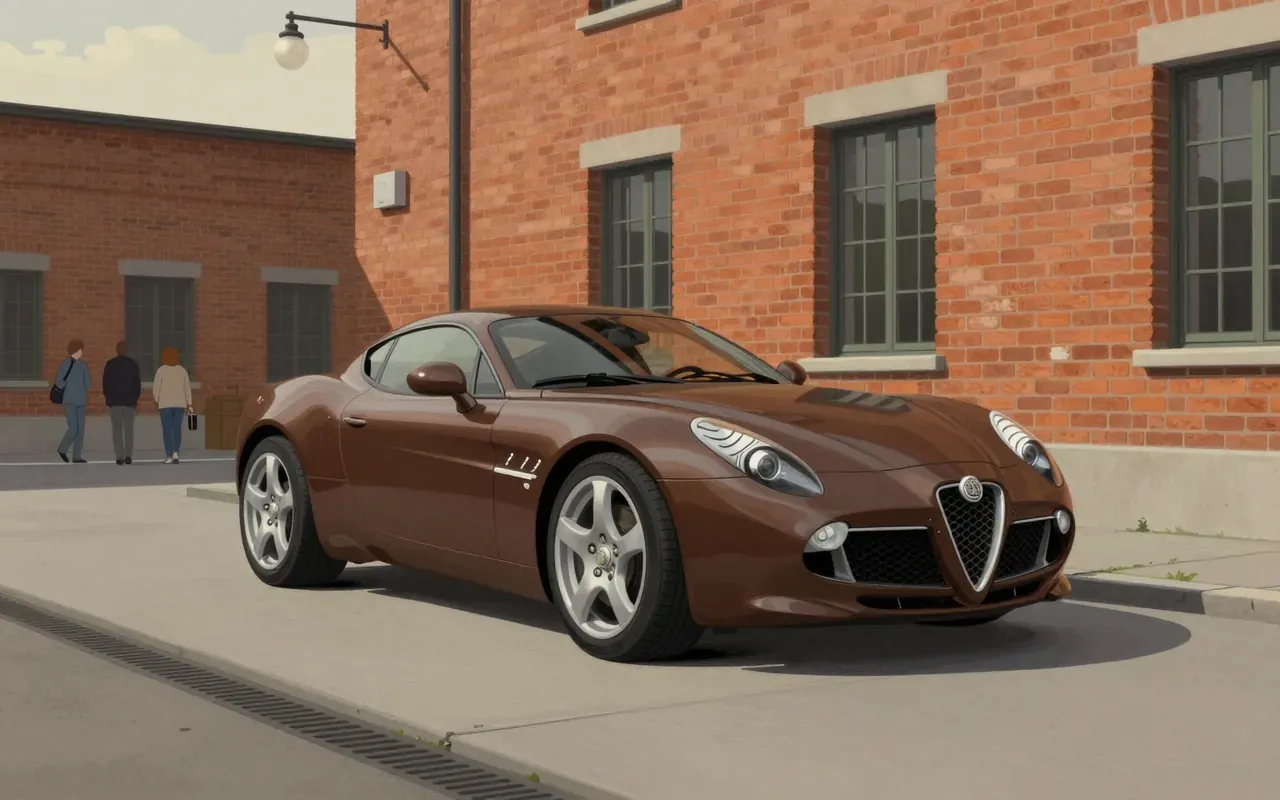
Alfa Romeo 8C CompetizioneWolfgang Egger · 2007The Alfa Romeo 8C Competizione is a limited-production sports car developed by Alfa Romeo between 2007 and 2010. It was first shown as a concept at the 2003 Frankfurt Motor Show. Its name refers to its eight-cylinder engine and Alfa Romeo's racing pedigree. Maserati engineers created the production version using components from both Maserati and Ferrari. Development proceeded in parallel with the GranTurismo, and production coincided with the global crisis. Over 1,400 orders were received, but only 500 coupés and 329 spiders were delivered. It was designed by Wolfgang Egger and Daniele Gaglione at Centro Stile Alfa Romeo, echoing styling from Alfa Romeo automobiles of the 1950s and 1960s.
10:51
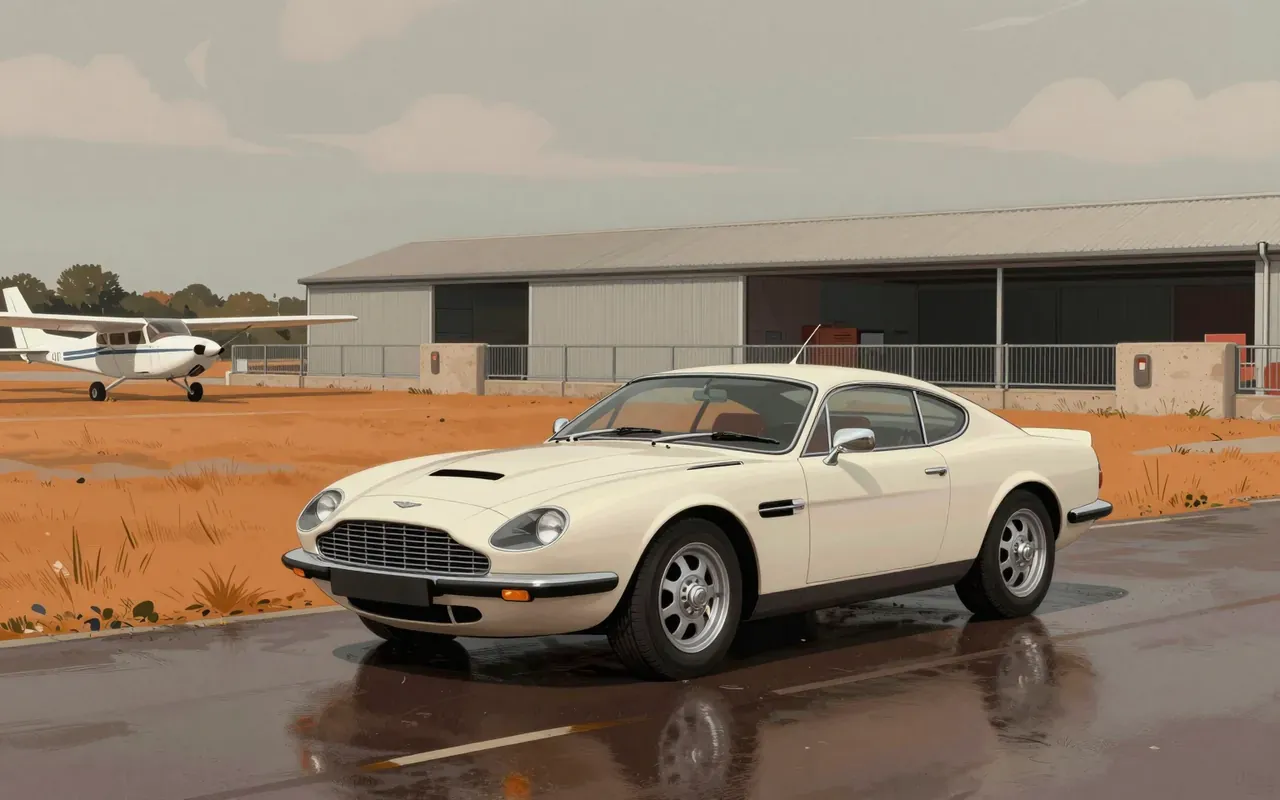
Aston Martin VanquishIan Callum · 2001The 2001 Aston Martin Vanquish is Ian Callum’s definitive statement on Aston Martin’s early-2000s direction: a V12 coupé evolved without deviation from his 1998 Project Vantage concept, styled with DB4 GT Zagato aggression, and built as the last all-new car at Newport Pagnell.
Up next in Automotive

Volkswagen W12

Giorgetto Giugiaro · 1997 · 9:26

Volkswagen didn’t build a supercar — it built a credential machine.

9:26