Saved
Supercars · Concepts & prototypes

Volkswagen W12

Volkswagen didn’t build a supercar — it built a credential machine.

Worth your time?3.5/5Yes.Drive the whole thing.What works, what does not, who it is for ↓
9:26in productionCh. 1 · The 1997 debut/ 9:26 · ceiling 15 min
4 chapters · 9:26Ceiling 15:00

The brief is written and checked. The video joins this page when it is cut.4 chapters · 1 min read · 9:26 planned

Read the brief

The Volkswagen W12 was a series of five mid-engined concept cars developed by Volkswagen Passenger Cars between 1997 and 2001 in collaboration with Italdesign and Giorgetto Giugiaro, featuring a 5.6 L W12 engine and designed to showcase Volkswagen Group's supercar and high-performance engine capabilities; variants included the W12 Syncro Coupé (AWD), W12 Roadster (RWD), and W12 Nardò Coupé/Record Car (high-speed variant), with the latter setting a 24-hour endurance speed record at the Nardò Ring in 2002.

Chapters & takeaways4
  1. 1:05
    The 1997 debut

    Two 1997 concepts — coupé and roadster — launched Volkswagen’s bid to prove itself in high-performance engineering.

  2. 2:54
    Piech’s brief, delivered

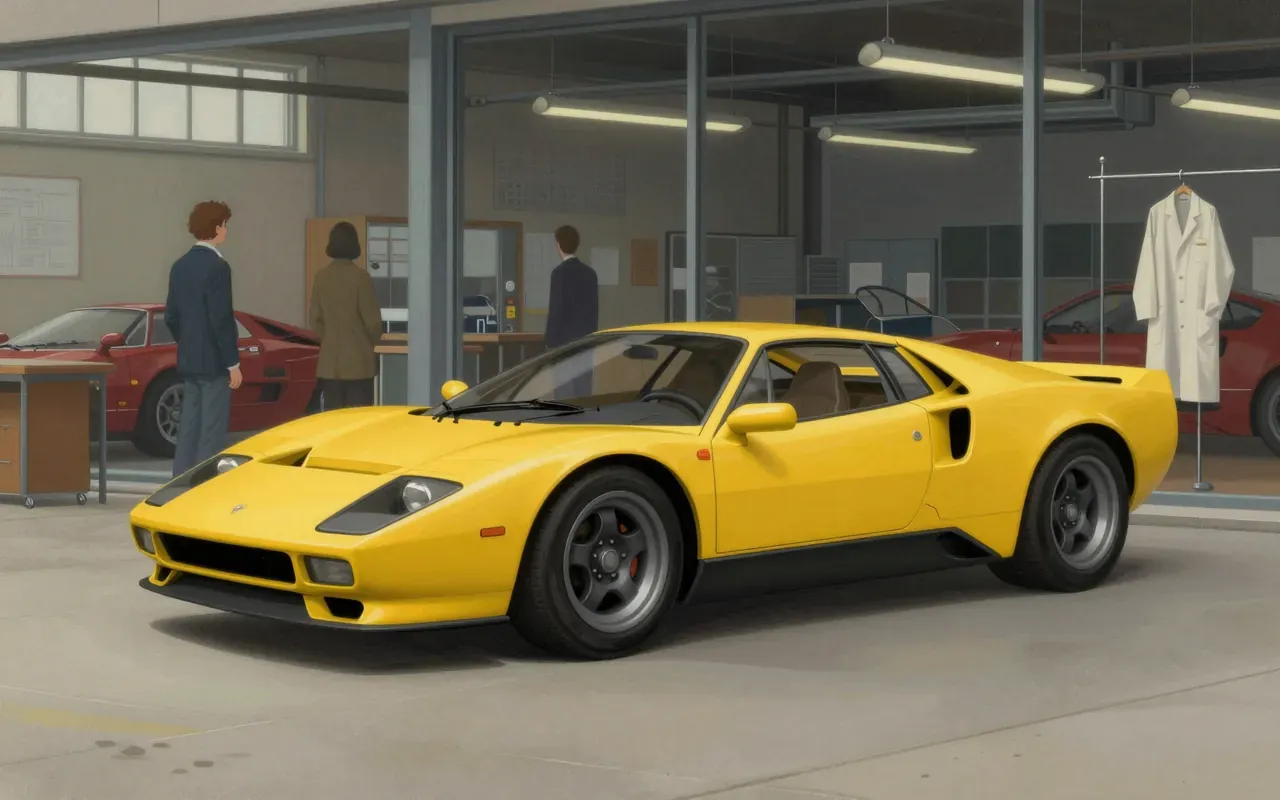
    Ferdinand Piech demanded a mid-engined W12 sports car compatible with Syncro AWD — and got it in yellow and red.

  3. 4:11
    Engine first, car second

    Five prototypes were built to demonstrate flagship engine capability — for the Audi A8, Phaeton, and Touareg.

  4. 5:12
    Nardò proof

    A W12 coupé set a 24-hour endurance record at Nardò in 2002 — proving sustained high-speed stability.

1 more chapterFewer chapters
Worth your time?

Yes. Drive the whole thing.

3.5/ 5
What works
  • proves W12 packaging feasibility
  • fulfils Piech’s AWD+mid-engine brief
  • establishes visual clarity for powertrain-first design
What does not
  • deliver driver feedback
  • offer cabin usability
  • translate to production
Drive it if
  • engineers
  • executives
  • journalists
Skip it if
  • collectors
  • drivers
  • enthusiasts seeking usability
Who should drive it, and who should skipHide who it is for
The written brief1 min read

What the car is and where it came from

A pair of 1997 concept cars — a yellow coupé and a red roadster — designed by Giorgetto Giugiaro at Italdesign for Volkswagen Passenger Cars. Five prototypes were built between 1997 and 2001.

How it works, in terms someone would actually use

It places a 5.6 L W12 engine mid-ship. It offers either Syncro all-wheel drive or rear-wheel drive. It is a concept car — not road-legal, not for sale, not built to be driven daily.

What it gets right

It solves Ferdinand Piech’s brief precisely: mid-engined layout, W12 packaging, Syncro compatibility. It establishes visual clarity — low, wide, taut surfaces — with purpose-built proportions for engine and drivetrain placement.

What it does not

It does not deliver usable cabin space. It does not offer driver engagement beyond visual and conceptual impact. It does not translate into a production model — no W12 sports car entered series production.

What it changed

It proved Volkswagen Group could package a W12 engine in a mid-engined layout and integrate it with its own AWD system. It shifted perception: Volkswagen was no longer just about front-wheel-drive family cars.

Who it is for, and who it is not

It is for engineers, executives, and journalists assessing Volkswagen Group’s technical ambition in the late 1990s. It is not for collectors seeking drivable icons, nor for drivers seeking feedback or balance.

Is it worth your time

Yes, if you want to understand how Volkswagen Group positioned itself in the late 1990s as an engineering conglomerate capable of supercar-grade powertrains and chassis integration. No, if you seek production relevance, driver feedback, or real-world usability.
Same garage · Supercars4 of 63
10:20
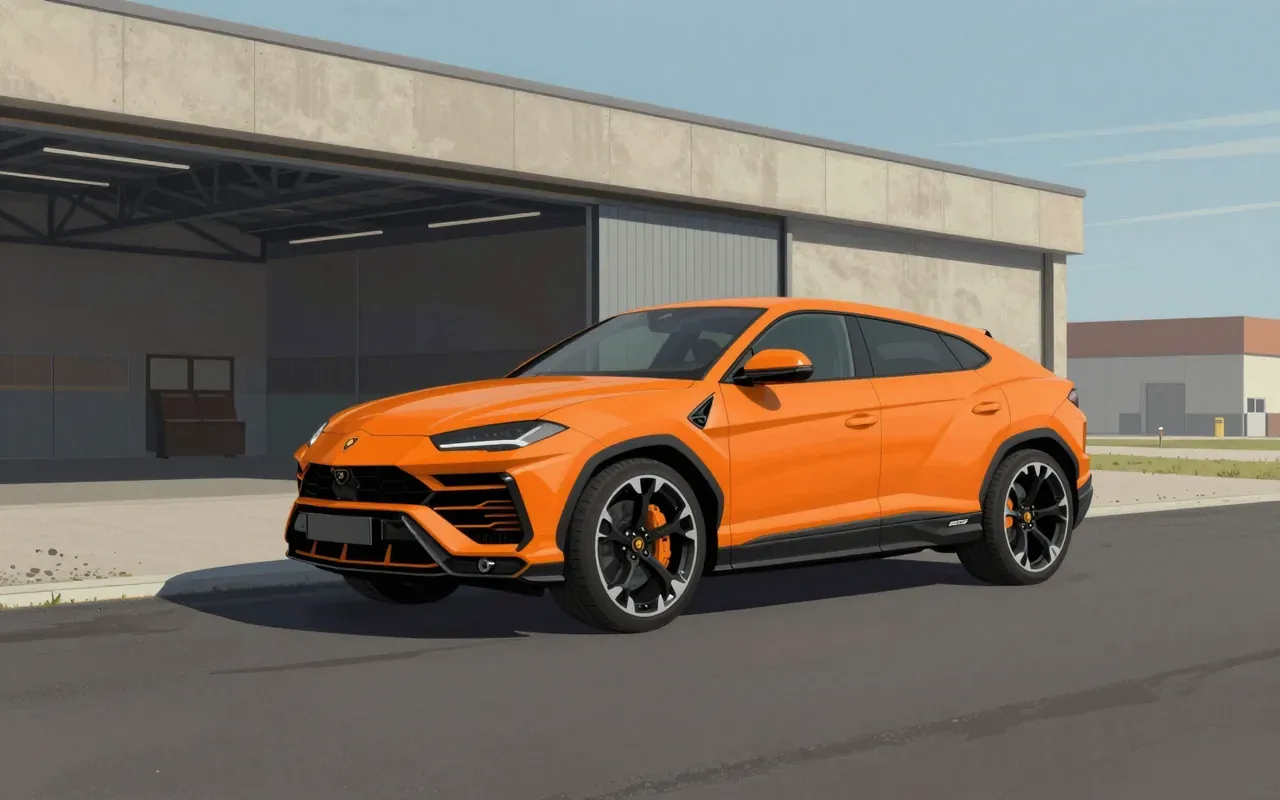
Lamborghini UrusMitja Borkert · 2018The Lamborghini Urus is a high-performance luxury SUV. It is Lamborghini’s first SUV under Volkswagen ownership and its second ever, after the LM002. Introduced in December 2017 as a 2018 model, it is built on the Volkswagen Group MLB Evo platform and shares components with the Audi Q7, Bentley Bentayga, Porsche Cayenne, and Volkswagen Touareg. Its name derives from urus, the aurochs. The production model uses a modified 4.0-litre twin-turbo V8 — not the concept’s 5.2-litre V10 — and features a front-engine, all-wheel-drive layout. With a top speed of 312 km/h, the Urus SE is the fastest production SUV in the world. It is Lamborghini’s best-selling model, reaching 20,000 units by 2022.
9:45
SSC Ultimate AeroJerod Shelby · 2006The SSC Ultimate Aero is a mid-engined sports car built by SSC North America from 2004 to 2013. It held the Guinness World Records production car speed record from 2007 until 2010. Jerod Shelby stated the early design philosophy was to make it a driver's car where throttle input could influence steering. The Aero features butterfly doors similar to those on the McLaren F1 and Ferrari Enzo. Carbon fibre and titanium are used throughout the car.
9:07
Ferrari F40Pietro Camardella · 1987The Ferrari F40 is a mid-engine, rear-wheel drive sports car designed by Pietro Camardella under Pininfarina, powered by a 2.9 L twin-turbocharged and intercooled V8, produced from 1987 to 1993 in 1,311–1,315 units, all originally in Rosso Corsa and left-hand drive, and that it was Ferrari's final forced induction engine until 2014.
13:32
Bentley Continental RJohn Heffernan · 1991The Bentley Continental R is a luxury coupé built from 1991 to 2003 on the Rolls-Royce SZ platform, featuring a unique non-Rolls-Royce body, a 6.75 L turbocharged V8 engine, front-engine RWD layout, Cd=0.37 aerodynamics, roof-cut door frames, and a subtle rear spoiler. It was the fastest, most expensive, and most powerful Bentley of its day—and the most expensive production car in the world at launch.
Up next in Automotive

AC Cobra

AC Cars · 1962 · 11:37

A British chassis grafted with American torque — not a fusion, but a controlled explosion.

11:37