Lamborghini sold its soul to the SUV — and made it the fastest, best-selling car in its history.
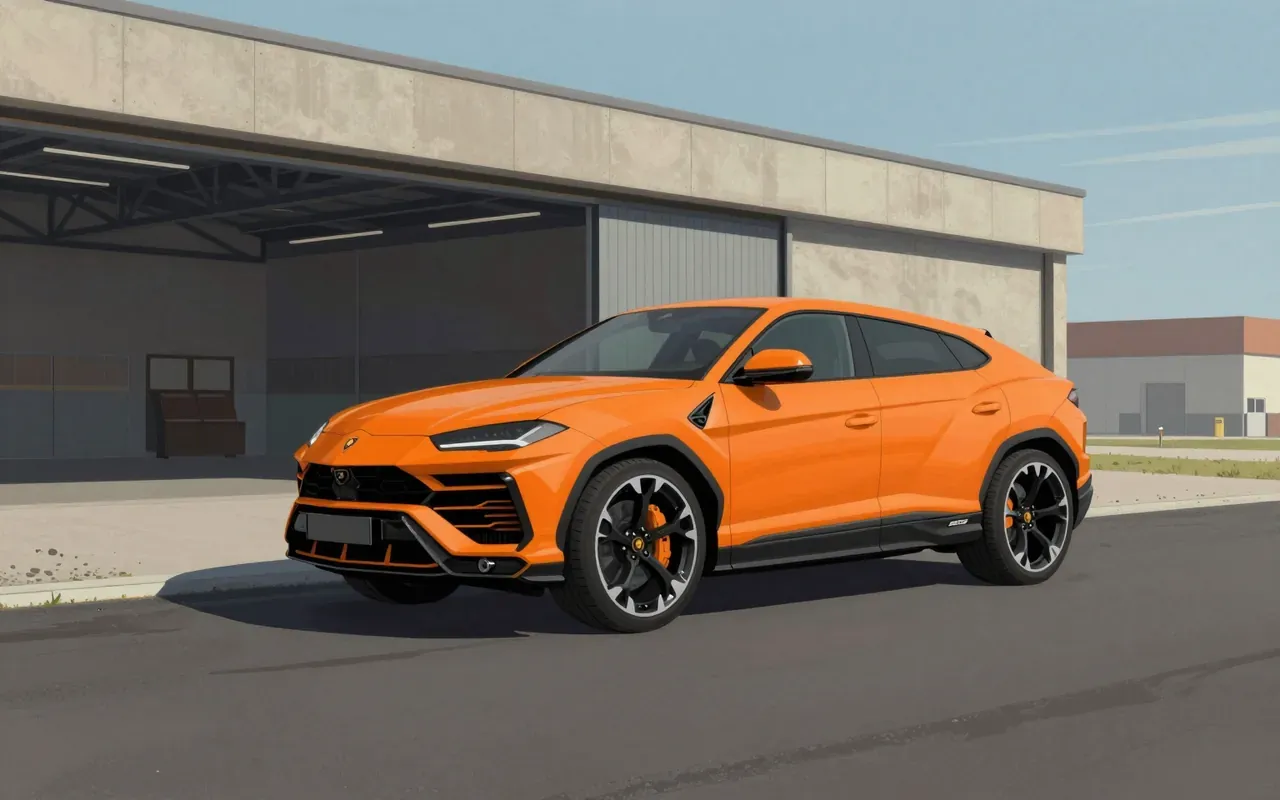
The Lamborghini Urus is a high-performance luxury SUV. It is Lamborghini’s first SUV under Volkswagen ownership and its second ever, after the LM002. Introduced in December 2017 as a 2018 model, it is built on the Volkswagen Group MLB Evo platform and shares components with the Audi Q7, Bentley Bentayga, Porsche Cayenne, and Volkswagen Touareg. Its name derives from urus, the aurochs. The production model uses a modified 4.0-litre twin-turbo V8 — not the concept’s 5.2-litre V10 — and features a front-engine, all-wheel-drive layout. With a top speed of 312 km/h, the Urus SE is the fastest production SUV in the world. It is Lamborghini’s best-selling model, reaching 20,000 units by 2022.
The Urus is Lamborghini’s first SUV under Volkswagen — and its second ever.
2:10
Built on VW’s MLB Evo platform
It shares its bones with the Audi Q7, Bentley Bentayga, Porsche Cayenne, and Volkswagen Touareg.
3:25
Fastest SUV in the world
The Urus SE holds the world record for top speed among production SUVs: 312 km/h.
4:25
From concept to showroom in five years
The concept debuted in Beijing in 2012. The production car arrived in December 2017 as a 2018 model.
5:29
V10 dream, V8 reality
The concept used a 5.2-litre V10. The production car uses a modified 4.0-litre twin-turbo V8.
6:40
The SUV that saved Lamborghini’s balance sheet
It is Lamborghini’s best-selling model — 20,000 units by 2022 — and its most commercially transformative car.
Worth your time?
Yes. Drive the whole thing.
4/ 5
What works
synthesises Lamborghini visual aggression and SUV practicality
establishes the fastest production SUV benchmark (312 km/h)
delivers five doors and daily usability without abandoning the brand's stance
What does not
use the concept's 5.2-litre V10
avoid shared VW Group architecture
escape recalls (2020 fuel line, 2024 hood latch)
Drive it if
buyers wanting Lamborghini branding, SUV utility, and extreme performance
Skip it if
buyers seeking mechanical exclusivity or a naturally aspirated engine
The written brief1 min read
What the car is and where it came from
The Lamborghini Urus is a high-performance luxury SUV. It is Lamborghini’s first SUV under Volkswagen ownership and its second ever, after the LM002 (1986–1993). It launched in December 2017 as a 2018 model.
How it works, in terms someone would actually use
It is a front-engine, all-wheel-drive SUV built on the Volkswagen Group MLB Evo platform. It shares components with the Audi Q7, Bentley Bentayga, Porsche Cayenne, and Volkswagen Touareg.
What it gets right
It gets right the synthesis of Lamborghini visual aggression and SUV practicality. It establishes the fastest production SUV benchmark (312 km/h for the SE variant). It delivers five doors and daily usability without abandoning the brand’s stance.
What it does not
It does not use the concept’s 5.2-litre V10. It does not break from shared VW Group architecture. It does not avoid recalls — fuel line connectors in 2020, hood latch rivets in 2024.
What it changed
It changed Lamborghini from a low-volume supercar maker into a volume luxury brand. It made the SUV the company’s best-selling model, reaching 20,000 units by 2022.
Who it is for, and who it is not
It is for buyers who want Lamborghini branding, SUV utility, and extreme performance in one package. It is not for buyers seeking mechanical exclusivity, a naturally aspirated engine, or a non-shared platform.
Is it worth your time
Yes — if you need a high-performance luxury SUV that delivers record top speed and has redefined Lamborghini’s commercial reach. No — if you expect a bespoke, non-VW-platform Lamborghini driving experience or V10 sonority.