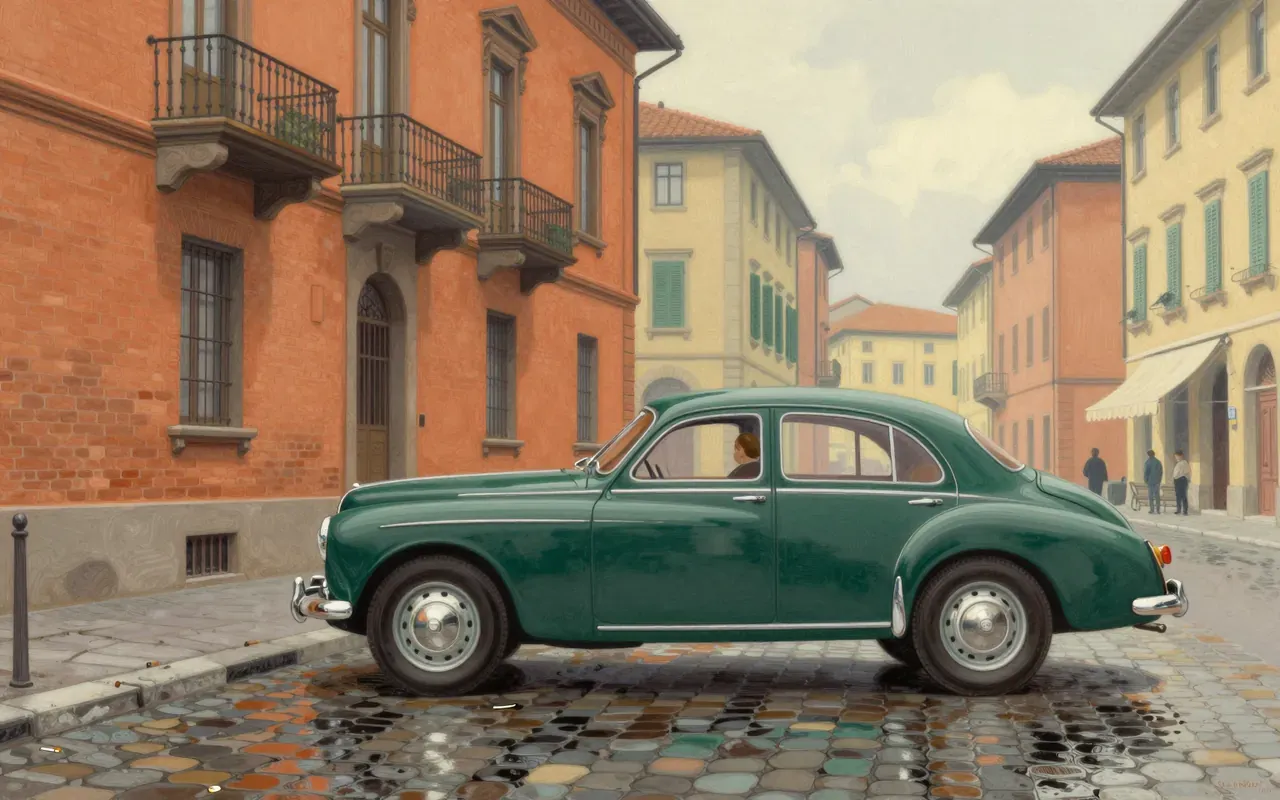
What the car is and where it came from
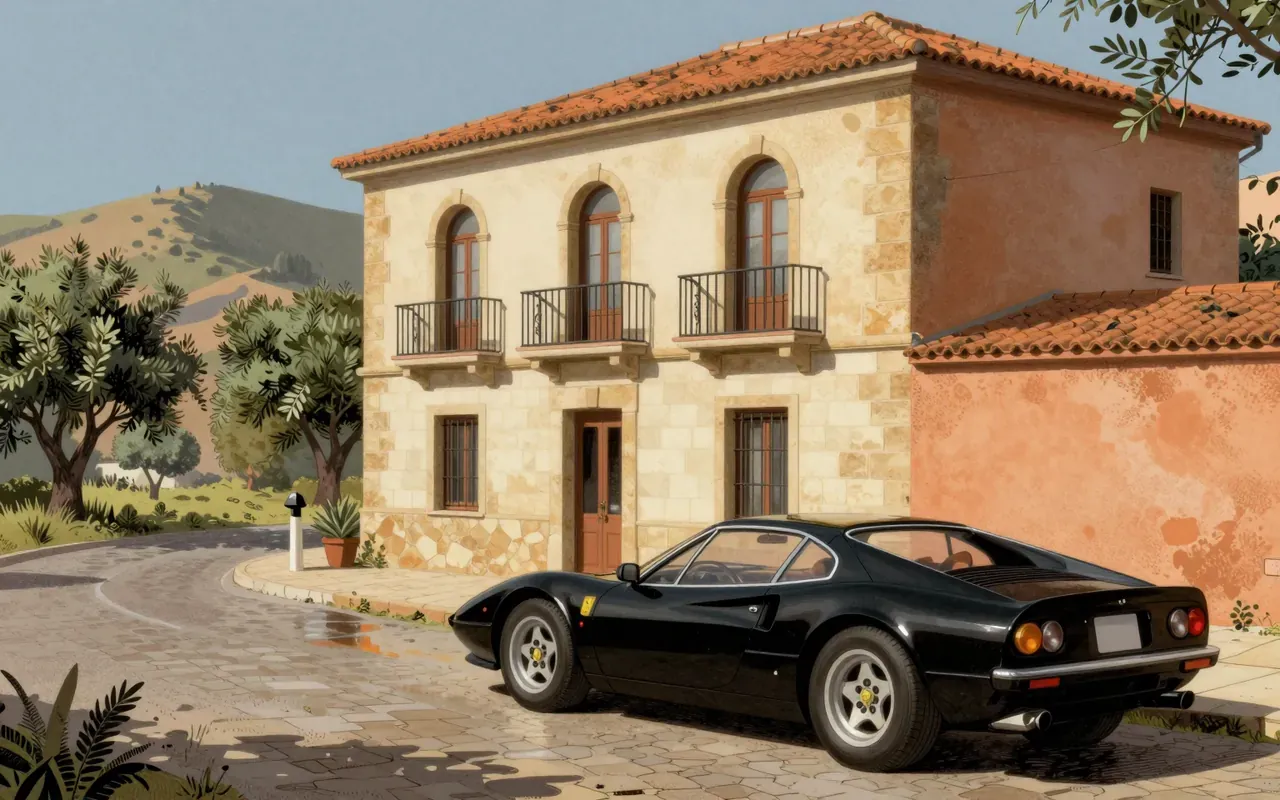
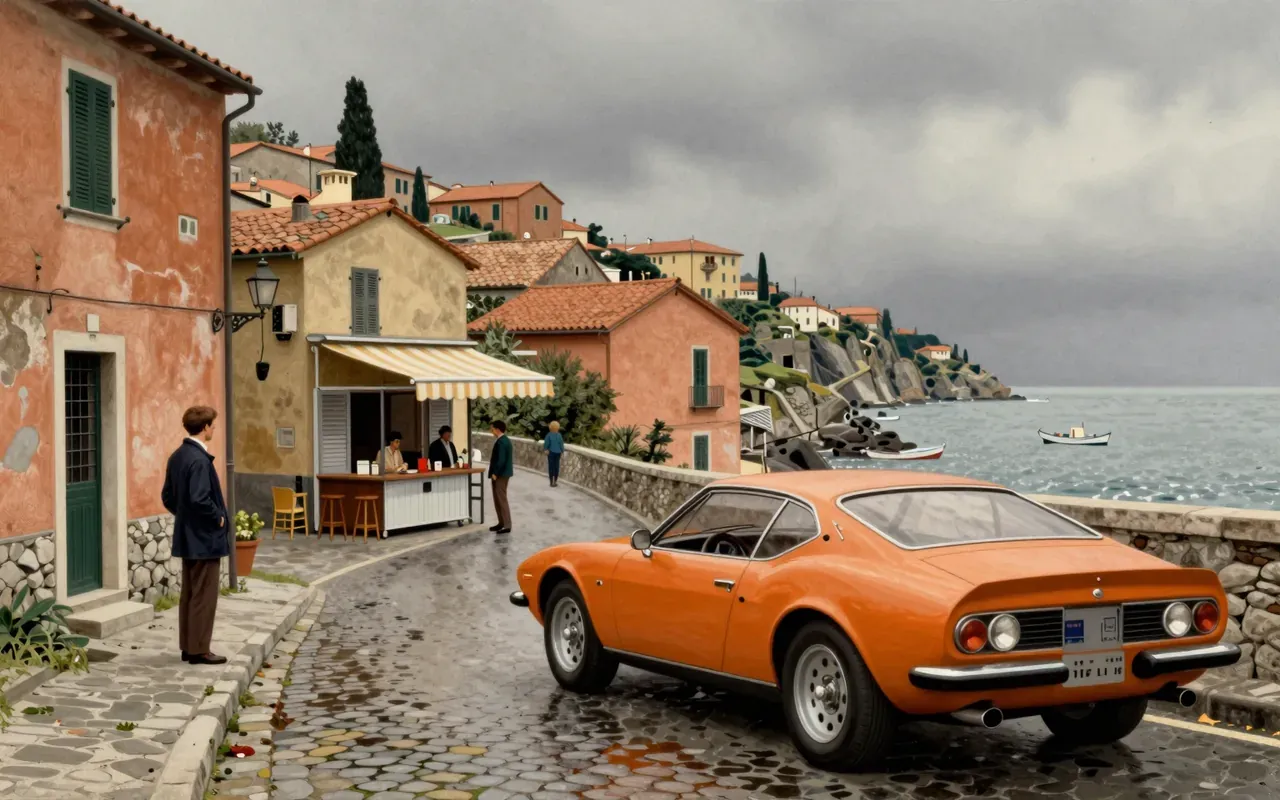
The B20 GT is the two-door grand touring coupé of the Lancia Aurelia. Lancia built the Aurelia from 1950 to the summer of 1958, over six series, as a four-door saloon, a cabriolet, a coupé, a spider and a rolling chassis for coachbuilders. The coupé appeared in 1951, the year the B21 saloon arrived with a larger 1,991 cc engine. It rode on a shorter wheelbase and wore a Ghia-designed body built by Pinin Farina. The name comes from the Via Aurelia, the Roman road from Rome to Pisa, and the car was designed under the direction of engineer Vittorio Jano.
How it works, in terms someone would actually use
The engine is a 60-degree V6 developed by Francesco de Virgilio, who worked under Jano. It is an all-alloy pushrod design with one camshaft between the cylinder banks and hemispherical combustion chambers. In the first B20 the 1,991 cc unit made 75 hp. At the rear sits a transaxle that combines gearbox, clutch and differential, with the drum brakes mounted inboard. The front suspension is a sliding-pillar design, and from the fourth series a de Dion tube replaced the semi-trailing arms at the back. The Aurelia was also the first car fitted with radial tyres as standard.
What it gets right
The coupé changed from series to series. The second series raised power to 80 hp, improved the brakes, swapped aluminium bumpers for chromed ones and added a dashboard with two larger gauges. The third series, in 1953, brought a 2,451 cc engine and lost the tail fins. The fifth series, in 1956, was more luxurious and had a split-case transaxle that was more robust and similar to the one later used in the Flaminia, plus a revised driveshaft to reduce vibration. The sixth series coupés had vent windows and were the most touring-oriented of the B20 line.
What it does not
Early B20s were not offered in left-hand drive; the fourth series was the first to be. The coupé was never the open car either. That role went to the B24 Spider and later the B24 Convertible, built on a wheelbase eight inches shorter than the coupé’s. Power did not simply keep rising either: for the 1957 sixth series it was down to 112 hp, with more torque to offset the greater weight of the later car.
What it changed
The Aurelia is noted for one of the first series-production V6 engines, and for putting radial tyres on a car as standard. The Aurelia also carried Lancia into competition. In the 1951 Mille Miglia, a 2-litre Aurelia driven by Giovanni Bracco and Umberto Maglioli finished second, beaten only by a Ferrari 340 America. The same year an Aurelia took its class and finished twelfth overall at Le Mans. In 1954 an Aurelia GT driven by Louis Chiron and Ciro Basadonna won the Monte Carlo Rally, the first of Lancia’s many overall wins there.
Who it is for, and who it is not
It suits someone who wants to understand how the V6 and the transaxle arrived in a production car, and how one model changed from series to series. It is not for someone who wants a convertible, or a full set of specifications, since only a few power figures are on record here.
Is it worth your time
Yes. The B20 GT is a short, clear case of a coupé revised over six series, with one of the first series-production V6 engines and radial tyres as standard.