automotivebriefs
9:15in productionCh. 1 · Replacing the Karmann Ghia/ 9:15 · ceiling 15 min
Hot hatches · Sports cars

Volkswagen Scirocco Mk1

A Giugiaro-styled coupe on the Golf's platform that reached showrooms before the Golf did, and ran from 1974 to 1981.

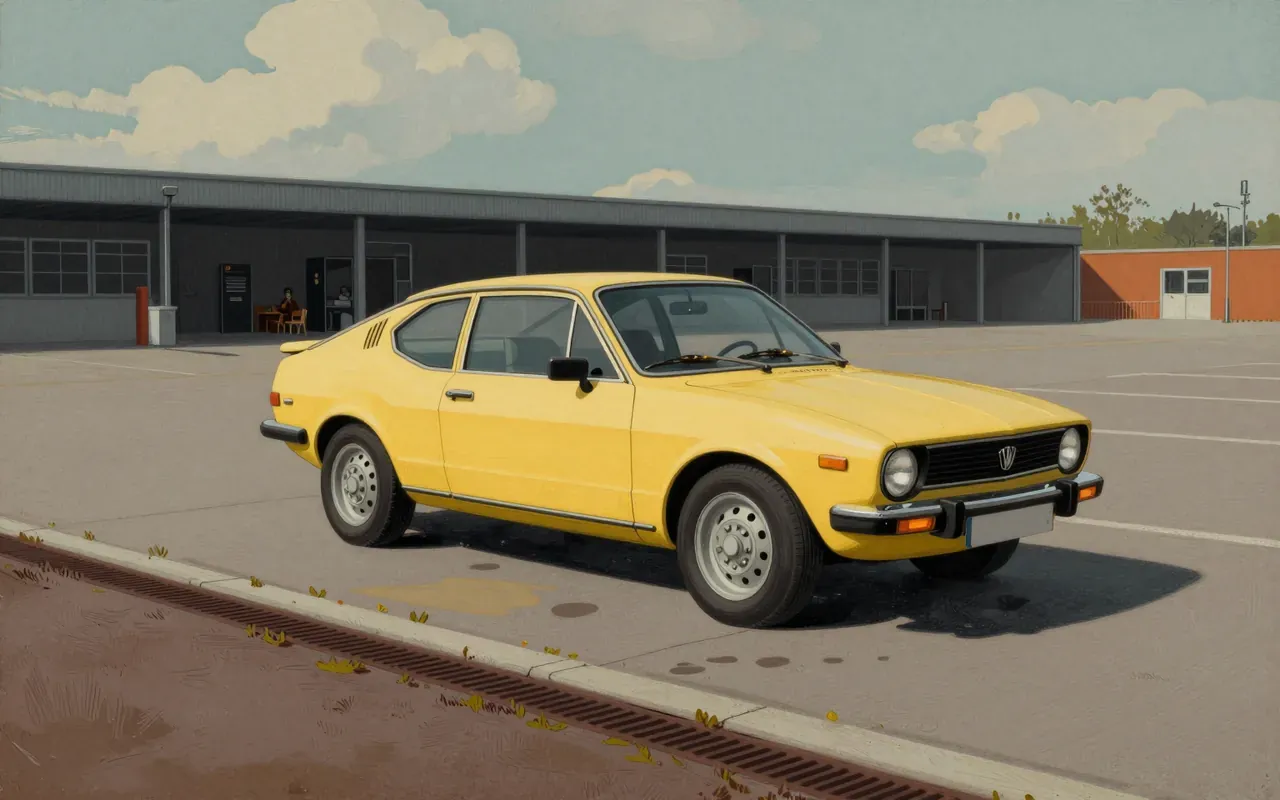
The first-generation Volkswagen Scirocco, internally the Typ 53, replaced the Karmann Ghia. Giorgetto Giugiaro styled it on the Golf's platform with almost every part re-engineered. It went on sale in 1974, six months before the Golf, and its GTi entered production before the Golf GTI was unveiled.

Chapters & takeaways4
  1. 0:57
    Replacing the Karmann Ghia

    Work began in the early 1970s on the Typ 53, built on the Golf's platform but restyled by Giugiaro.

  2. 2:02
    Launched before the Golf

    It debuted at Geneva in 1973 and went on sale in 1974, six months ahead of the Golf, to clear teething troubles first.

  3. 3:04
    The GTi

    The Scirocco GTi entered production in summer 1976, and the Golf GTI was not unveiled until that autumn.

  4. 4:02
    Markets and special editions

    Four round headlights in the US, Sidewinder and Storm editions, and a replacement by the second generation in March 1981.

Worth your time?

Yes. Drive the whole thing.

4/ 5
What works
  • new Giugiaro styling on the Golf's platform, with almost every part re-engineered
  • a GTi with fuel injection, ventilated front discs and anti-roll bars
What does not
  • keep the same headlights in the US as in Europe, which needed four round units
  • continue past 1981 in this body
Drive it if
  • people interested in Giugiaro's early Volkswagen styling
  • anyone tracing the Scirocco and Golf GTI timeline
Skip it if
  • buyers who want more than the four-cylinder, single-camshaft engines of 1.1 to 1.7 litres
The written brief2 min read

What the car is and where it came from

The first-generation Volkswagen Scirocco is a three-door hatchback with a front engine and front-wheel drive, and it takes its name from the Mediterranean wind. Volkswagen began work in the early 1970s as the replacement for the ageing Karmann Ghia coupe and called it the Typ 53 internally. It debuted at the 1973 Geneva Motor Show.

How it works, in terms someone would actually use

The Golf’s platform underpinned it, but almost every part was re-engineered for new styling by Giorgetto Giugiaro that was sleeker and sportier than the Golf’s. The Type 1 range used four-cylinder engines of 1.1 to 1.6 litres, with a 1.7 offered in North America, all with a single overhead camshaft and two valves per cylinder. An automatic transmission option arrived in January 1975.

What it gets right

Volkswagen launched it six months before the Golf, so teething troubles could be resolved before the high-volume hatchback went into production. The Scirocco went on sale in Europe in 1974 and in North America in 1975.

The Scirocco GTi entered production in summer 1976, and the Golf GTI was not unveiled until that autumn. Its 1.6-litre engine made 81 kW (109 hp) with mechanical fuel injection. It also had a duckbill-style front spoiler, ventilated front discs in place of solid ones, and anti-roll bars at the front and rear.

What it does not

Rectangular headlights lacked D.O.T. approval, so US cars needed four round ones. Many European owners of smaller-engined cars fitted four round lights too, to remove the visual gap to the bigger engines. The European TS, rated at 85 PS, was easy to tell from the 50 and 70 PS L and S versions, which had two rectangular lights.

What it changed

Through the production run there were small changes: a single wiper after August 1975, a wrap-around orange side lens in August 1977, a black B-pillar, and one-piece bumpers. Special versions included the Sidewinder, Champagne Edition and S, and the Storm, with 250 cars in each of two colours. In Japan it was sold by Yanase from 1976. The second generation replaced it in March 1981 in Europe.

Who it is for, and who it is not

It suits anyone interested in the first Scirocco’s styling and its place in the Golf’s timeline. It does not suit someone who wants more than its four-cylinder, single-camshaft engines.

Is it worth your time

Yes, for how the Typ 53 reached showrooms ahead of the Golf, and for the GTi that came before the Golf GTI.
Same garage · Hot hatches4 of 10
8:57
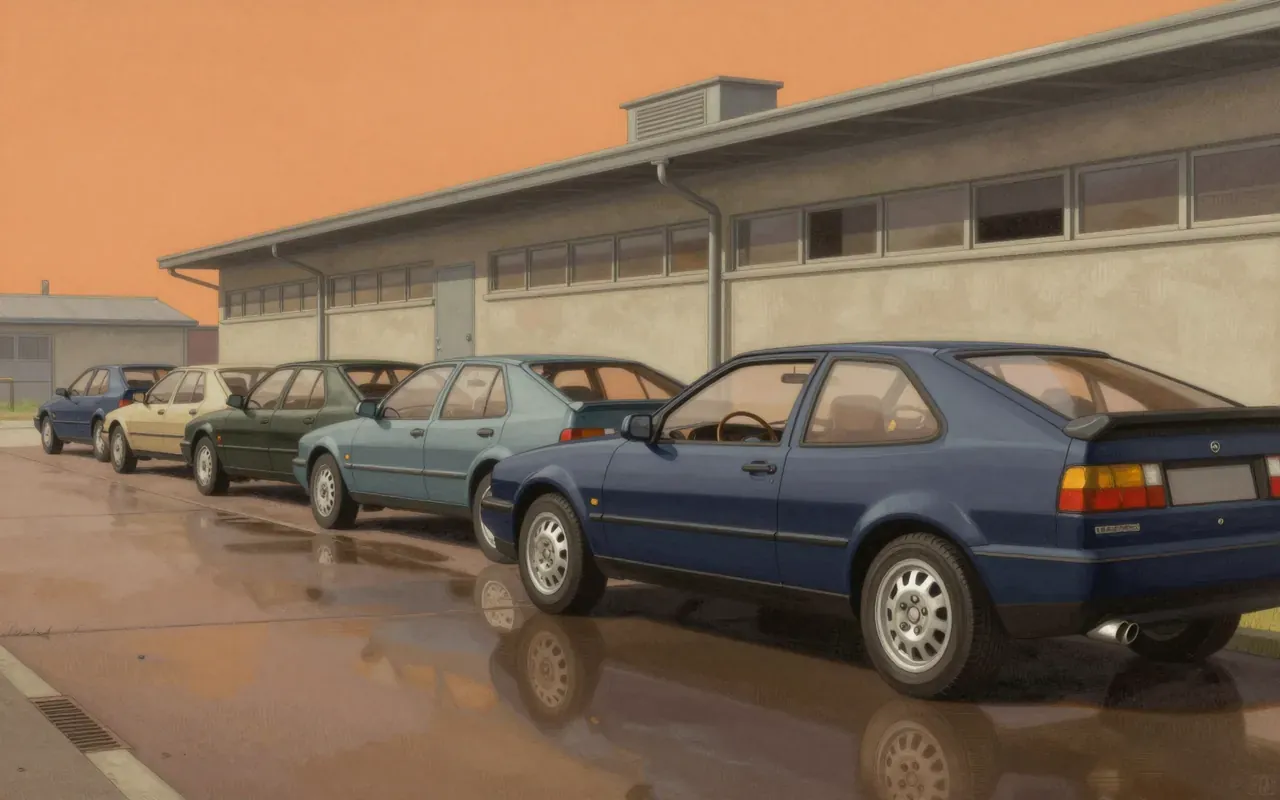
Volkswagen CorradoHerbert Schäfer · 1988The Corrado is a front-wheel-drive sport compact coupé designed by Herbert Schäfer and built by Karmann in Osnabrück from 1988 to 1995. It uses the Volkswagen Group A2 platform—the same as the Golf Mk2—with flush-mounted windows and an active rear spoiler that deploys above 100 km/h. It seats four in a 2+2 layout and is a three-door liftback. 97,521 units were produced.
10:38
Peugeot 205Gérard Welter · 1983The Peugeot 205 is a supermini developed from Projet M24 and launched on 25 February 1983. It replaced the Peugeot 104 and Talbot Samba. Its styling is an in-house design by Gérard Welter — not Pininfarina, who only styled the Cabriolet. It used MacPherson struts at the front and trailing arms with torsion bars at the rear. The rear suspension was designed to minimise intrusion into the boot, giving a wide flat loadspace while providing excellent ride and handling. It won What Car?'s Car of the Year for 1984 and was declared 'car of the decade' by CAR Magazine in 1990. It is often credited as the car that turned Peugeot's fortunes around.
10:10
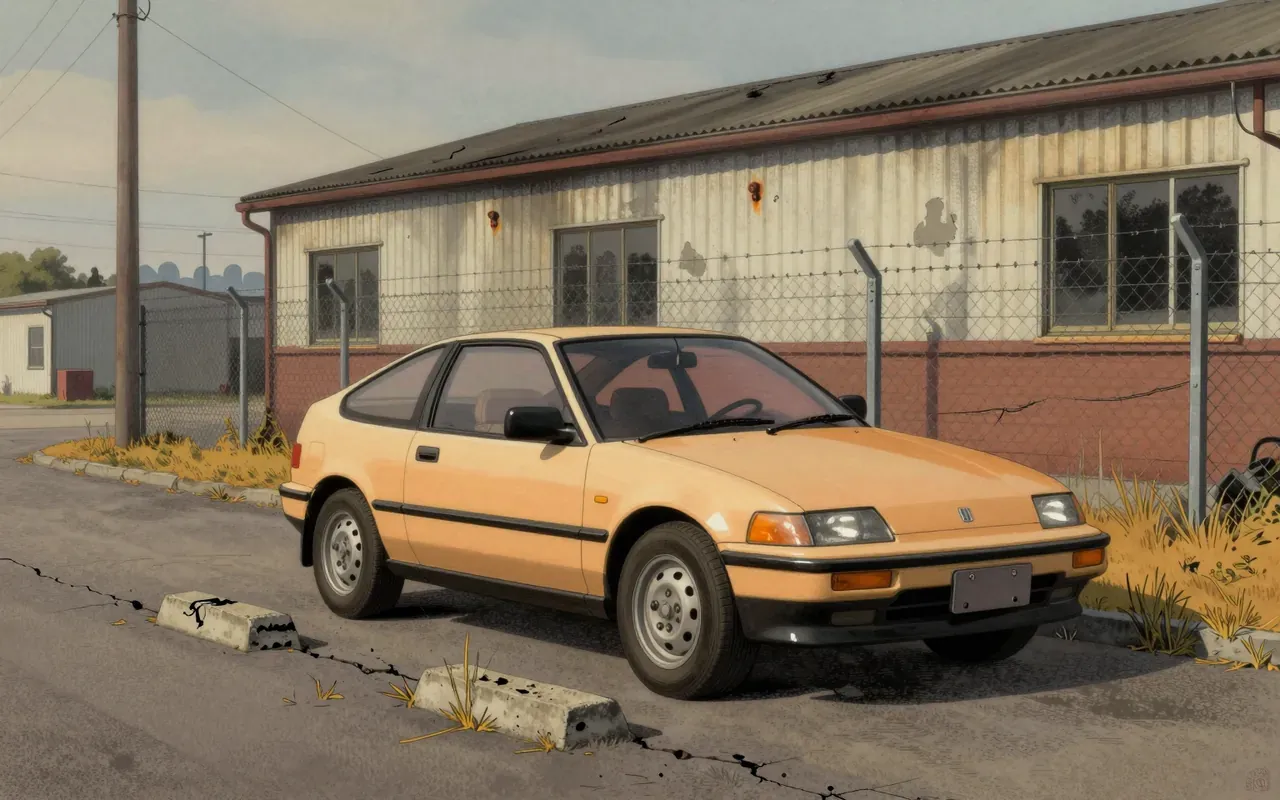
Honda CR-XHonda · 1983The Honda CR-X (1983) redefined what a compact front-wheel-drive car could do — not by adding power or luxury, but by removing mass and complication. It was never a sports car in form or intent. It was a Civic sharpened for feedback, visibility, and agility. Its global variations — two-seat in North America, 2+2 elsewhere — show Honda’s willingness to tailor packaging without fragmenting engineering. It changed expectations for economy cars: they could be fun to drive, not just efficient to own.
10:46
Audi RS 2 AvantAudi · 1994The Audi RS 2 Avant is Audi's first RS model and first high-performance Avant — a limited-edition, jointly developed Audi-Porsche estate car built on the B4 platform from March 1994 to July 1995. It features a modified 2,226 cc inline-five turbocharged petrol engine producing 315 PS and 410 N⋅m, paired with a six-speed manual transmission and quattro permanent all-wheel drive. Assembly occurred at Porsche’s Rossle-Bau plant. Approximately 2891 units were built, including only 180 right-hand-drive examples.
Up next in Automotive

Volvo 240

Jan Wilsgaard · 1974 · 9:09

Volvo's saloon and estate, on sale from 1974 to 1993, built on the 140's body with the safety lessons of the VESC prototype.

9:09