What the car is and where it came from
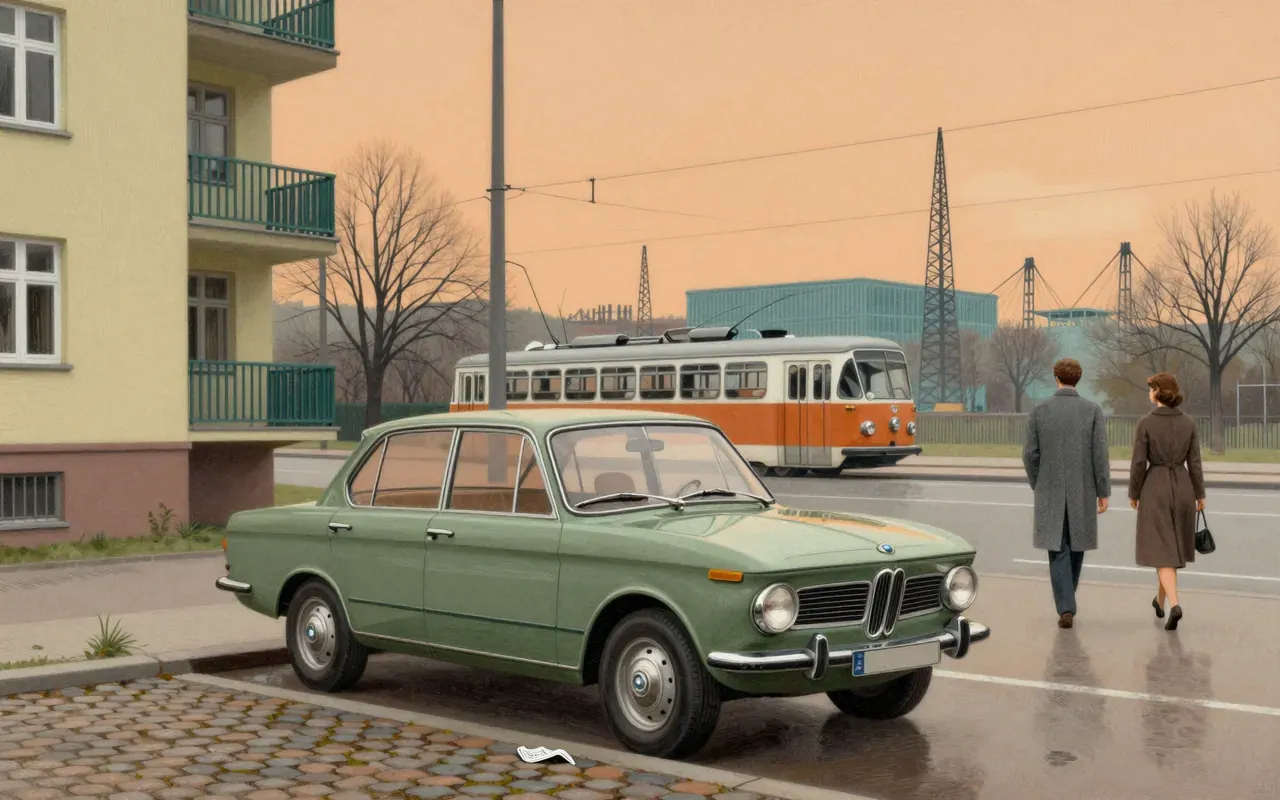
A line of sedans and coupes produced by BMW between 1962 and 1972. Born from financial crisis. Built around the M10 OHC four-cylinder engine. Named ‘New Class’ because BMW had abandoned the 1.5–2.0 litre segment after World War II.
How it works, in terms someone would actually use
Front-engine, rear-wheel-drive layout. Compact executive sedan or luxury coupe. Four-cylinder OHC engine driving the rear axle through a manual gearbox. The driver feels direct mechanical feedback through the steering wheel and a taut, responsive chassis tuned for agility over comfort.
What it gets right
It gets right the balance of size, weight and drivetrain placement to deliver agile handling in a compact package. It establishes visual hierarchy with clean lines, a low beltline, and the kinked C-pillar that signals intent before the engine starts.
What it does not
It does not offer six-cylinder refinement, automatic transmission, or structural rigidity by later standards. It was not built for high-speed autobahn cruising or long-distance isolation.
What it changed
It replaced BMW’s pre-war identity with a new one: driver-focused, mid-sized, rear-driven sedans and coupes. It seeded the 02 Series, the E9, and the E12—and locked in the Hofmeister kink as a design constant.
Who it is for, and who it is not
It is for people who care about lineage, restraint, and the logic of automotive evolution. It is not for those who prioritise power, space, or technological novelty.
Is it worth your time
Yes—if you want to understand how BMW defined the modern sports sedan. It is not a car to drive for speed or luxury alone, but to see how packaging, proportion and purpose converged under constraint.