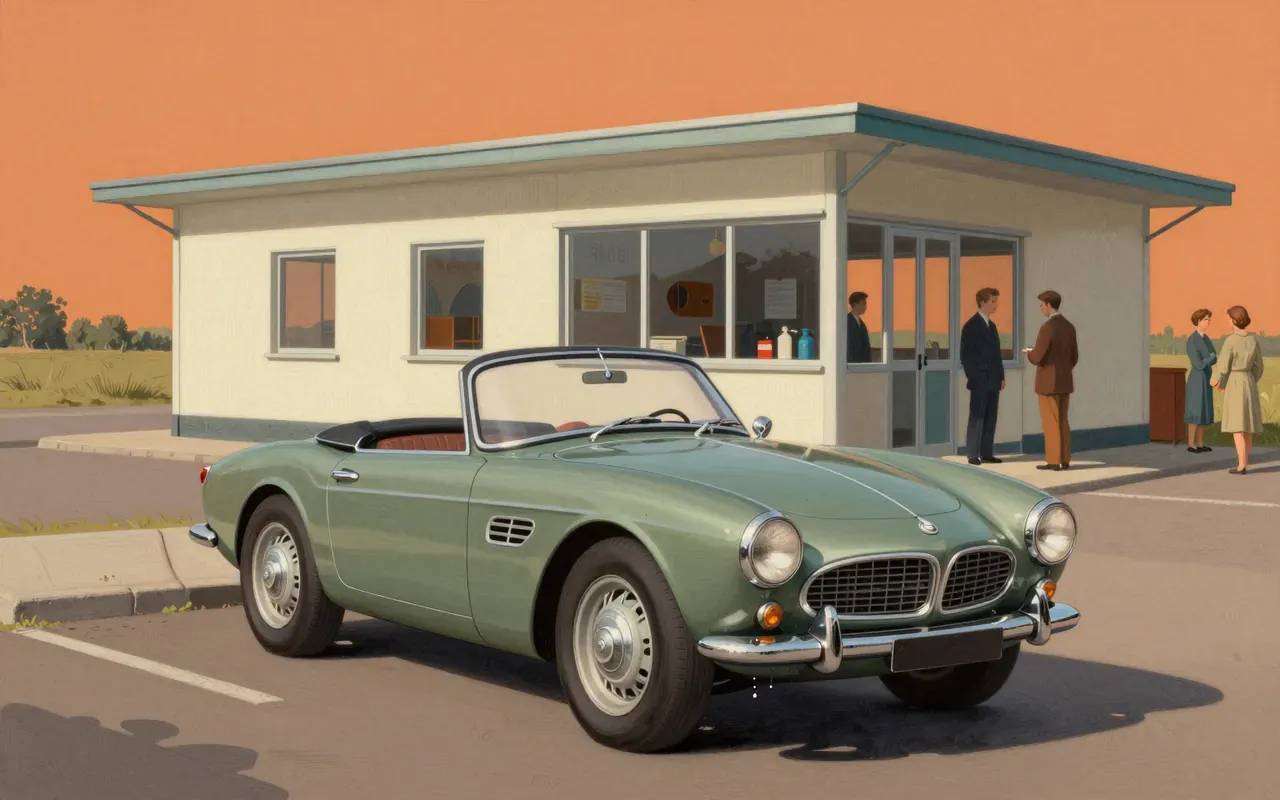
What the car is and where it came from
The BMW 507 is a luxury grand touring convertible, conceived in 1954 by US importer Max Hoffman and designed by Albrecht von Goertz in 1955, built from 1956 to 1959.
How it works, in terms someone would actually use
It is a two-seat convertible with a shortened BMW 503 frame, hand-formed aluminium body, and a 3.2 L V8 engine driving the rear wheels through a close-ratio four-speed manual transmission.
What it gets right
It gets right the balance of long-hood grand touring presence and compact roadster agility—achieved by shortening the 503 frame and shaping each body by hand.
What it does not
It does not deliver mass-market viability. It was too expensive to produce, too low-volume to sustain, and too compromised by its hand-built process to scale.
What it changed
It redefined BMW’s design language for luxury sports cars and established Albrecht von Goertz as a transatlantic design force.
Who it is for, and who it is not
It is for historians of industrial design, students of postwar German manufacturing, and collectors who value rarity over utility. It is not for drivers seeking reliability, parts availability, or everyday usability.
Is it worth your time
Yes—if you are researching how ambition, cost, and craftsmanship collide in postwar German automotive design.