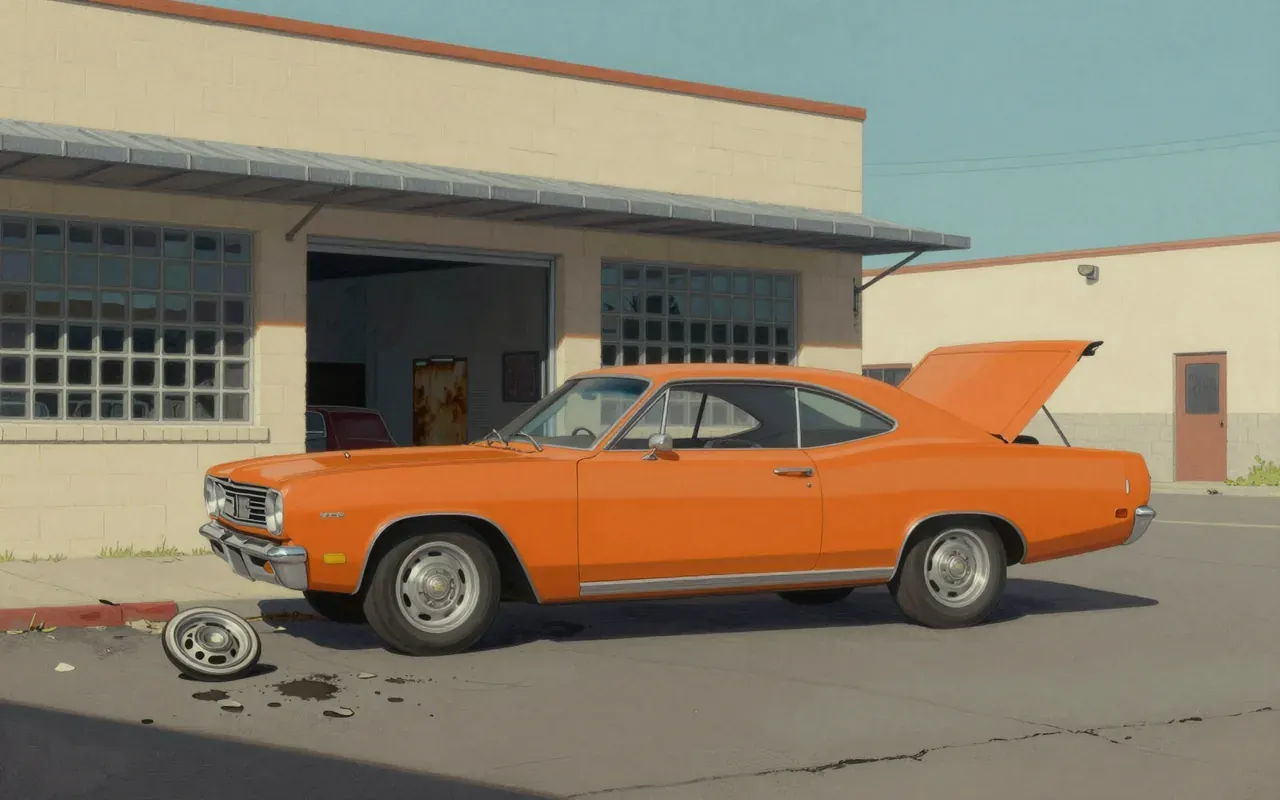
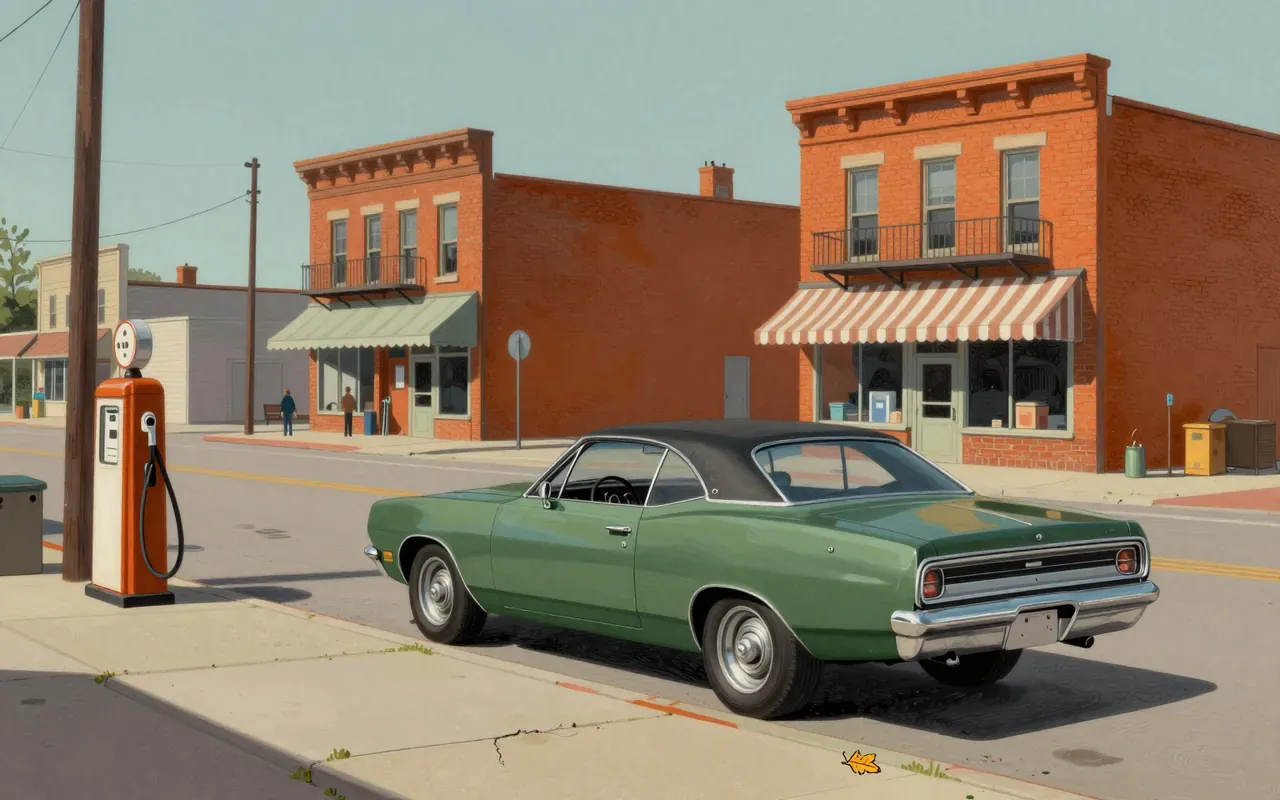
A Valiant in a glass cape — the Barracuda proved you could sell audacity without changing the engine bay.
The 1964 Plymouth Barracuda is a fastback rebody of the Valiant, built on the Chrysler A-body. Its innovation was optical, not mechanical: the largest rear window ever fitted to a standard production car. It offered no new powertrain or chassis architecture at launch — only a new silhouette grafted onto an existing car. It beat the Mustang to market by two weeks, but did not define the pony car category on its own terms. It is significant as a case study in low-risk styling iteration, not as a driver’s machine or engineering departure.
It is a pony car built on the Valiant’s A-body — not a clean-sheet design, but a fastback rebody.
2:29
No B-pillar. No compromise on glass.
Its defining feature is structural: a pillarless hardtop fastback shape with no B-pillar.
3:47
The biggest rear window in the world — by measurement, not marketing.
Its 14.4 sq ft rear window was the largest ever fitted to a standard production car in 1964.
4:38
Same engine. Same gearbox. Same chassis. Different silhouette.
Powertrains were identical to the Valiant’s — starting with slant-6 engines, no V8 at launch.
6:00
More shapes, same bones.
The second generation added notchback and convertible variants — but kept the A-body.
6:53
The fastback died when the platform changed.
The third generation moved to the E-body — exclusive to Barracuda and Challenger — and dropped the fastback.
Worth your time?
Yes. Drive the whole thing.
3.5/ 5
What works
establishes the fastback silhouette as a viable production car format in the US
uses existing underpinnings to beat the Mustang to market by two weeks
delivers the largest rear window on any standard production car at launch
What does not
offer mechanical distinction
break from Valiant-derived powertrains or chassis geometry
establish driver-focused dynamics
Drive it if
people who study how mass-market cars absorb stylistic risk without retooling entire platforms
Skip it if
those seeking mechanical distinction or driver-focused dynamics
The written brief1 min read
What the car is and where it came from
The Plymouth Barracuda is a two-door pony car launched in 1964 by Chrysler Corporation. It was designed by Elwood Engel’s team as a fastback variant of the Valiant.
How it works, in terms someone would actually use
It is a two-door hardtop fastback built on the Chrysler A-body platform. It shares most parts with the Plymouth Valiant, including its slant-6 engines and suspension layout.
What it gets right
It gets the rear window right: 14.4 sq ft of wraparound glass, the largest on any standard production car at launch.
What it does not
It does not offer unique mechanical architecture. It does not break from Valiant-derived powertrains or chassis geometry.
What it changed
It established the fastback silhouette as a viable production car format in the US, using existing underpinnings to beat the Mustang to market by two weeks.
Who it is for, and who it is not
It is for people who study how mass-market cars absorb stylistic risk without retooling entire platforms. It is not for those seeking mechanical distinction or driver-focused dynamics.
Is it worth your time
Yes — if you care about how packaging constraints forced radical glasswork, or how early pony cars were engineering compromises dressed as style statements.